DbcultAccessing Vault...
Cult Review
Senior Film Conservator

Boneyard Blues
Earl Hurd’s Boneyard Blues is a cinematic odyssey that defies conventional narrative structures. The film is set in a desolate graveyard, where the boundary between the living and the dead blurs, creating a surreal and nightmarish atmosphere. Earl Hurd, the creator and sole writer, employs a rich tapestry of visual elements and a cryptic plot to explore complex existential questions.
The story revolves around a series of mysterious events that unfold within the boneyard. The protagonist, whose identity is never fully revealed, becomes entangled in a series of encounters with spectral figures and eerie artifacts. As the narrative progresses, the line between reality and delusion becomes increasingly hazy, leaving the audience to question the nature of truth and reality itself.
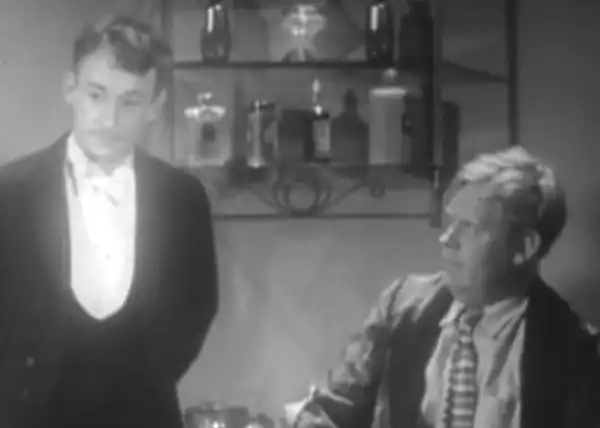
Visually, Boneyard Blues is a feast for the eyes. Earl Hurd’s cinematography is nothing short of extraordinary. The film’s use of lighting and shadow creates a palpable sense of dread and unease, while the set design, with its gothic architecture and macabre decorations, adds to the overall atmosphere of foreboding. The costumes and makeup are equally impressive, with characters often appearing as both corporeal and ethereal beings.
The performances in Boneyard Blues are a testament to Earl Hurd’s visionary approach. The protagonist, played by the director himself, delivers a hauntingly enigmatic performance. His eyes seem to hold the weight of centuries, and every gesture carries a deeper meaning. Supporting actors, despite their roles being somewhat enigmatic, add to the overall sense of unease and mystery.
One of the most striking aspects of Boneyard Blues is its exploration of existential themes. Through the protagonist’s journey, Earl Hurd delves into questions of identity, memory, and the human condition. The film’s use of allegory and symbolism is particularly effective, with the boneyard itself becoming a metaphor for the subconscious mind. The spectral figures encountered by the protagonist can be seen as representations of repressed memories, unresolved emotions, and the subconscious.
Boneyard Blues stands out among its contemporaries, particularly in its willingness to push the boundaries of conventional storytelling. While it shares some thematic similarities with films like Squire Phin, it also draws inspiration from a broader range of artistic movements, including absurdist theater and surrealism. The film’s narrative structure, with its non-linear progression and ambiguous conclusions, challenges the audience to engage with the material on a deeper level.
In conclusion, Boneyard Blues is a film that rewards close attention and multiple viewings. Its intricate narrative, haunting visuals, and profound exploration of existential themes make it a must-watch for anyone interested in avant-garde cinema. While it may not be to everyone’s taste, it is undoubtedly a work of art that challenges and inspires. Earl Hurd’s visionary approach to filmmaking sets a new standard for storytelling, and Boneyard Blues is a testament to his unique artistic vision.

IMDb 6.2
1934
Community
Log in to comment.