DbcultAccessing Vault...
6.1/10
Senior Film Conservator
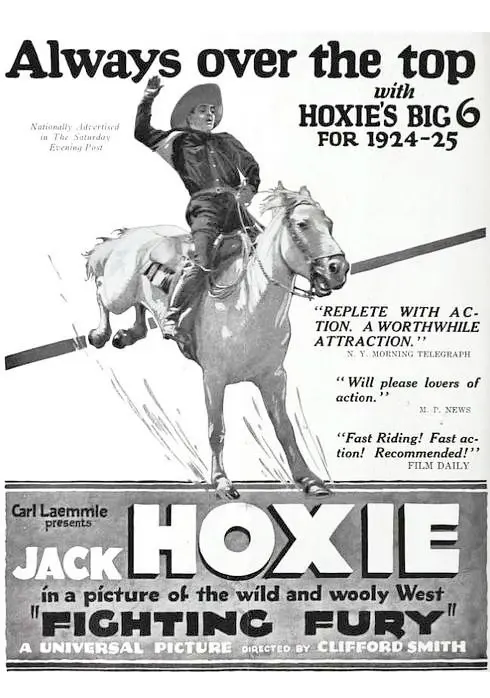
A definitive 6.1/10 rating for a film that redefined the boundaries of cult cinema. Fighting Fury remains a cornerstone of transgressive art.
In the pantheon of early 20th-century Westerns, few entries possess the raw, unadulterated kineticism of 1924’s Fighting Fury. Directed with a surprisingly modern sensibility, this Universal production transcends the standard 'cowboy' tropes to deliver a narrative steeped in the gravitas of a Greek tragedy. At its core, the film is an exploration of the psychological toll of trauma, manifested through the stoic physicality of Jack Hoxie. Unlike the more whimsical adventures seen in The Arizona Cat Claw, this picture leans into the shadows, utilizing the stark contrast of silent-era lighting to emphasize the isolation of its protagonist, Clay Hill, Jr.
The film opens with a sequence of harrowing intensity. The murder of the Hill family isn't portrayed with the sanitized distance common in many silents; instead, writers Isadore Bernstein and Walter J. Coburn craft a scene of palpable dread. The three ranchers—antagonists who embody the unchecked avarice of the frontier—are not mere caricatures. They represent the systemic corruption that often plagued the expansionist West. When compared to the moral ambiguities found in Not Guilty, the villainy here is more visceral, providing a stark impetus for the protagonist's lifelong obsession with vengeance.
Jack Hoxie’s performance is a masterclass in silent-era acting. Eschewing the over-the-top gesticulation that marred many performances of the 1920s, Hoxie relies on a simmering intensity. His portrayal of Clay Hill, Jr. as an adult is defined by a controlled fury. He moves with the lethal grace of a predator, a testament to the training of the Universal Ranch Riders, whose stunt work in this film remains a high-water mark for the genre. The physicality on display rivals the aquatic prowess seen in Wonders of the Sea, albeit in a vastly different environment.
The interplay between Hoxie and the supporting cast, particularly Fred Kohler, creates a tension that drives the middle act. Kohler, an actor who would become a staple of Western villainy, brings a hulking, menacing presence that serves as the perfect foil to Hoxie’s lean agility. Their eventual confrontation is choreographed with a gritty realism that eschews the theatricality of The Crimson Gardenia. It is a battle of wills as much as it is a battle of fists and firearms.
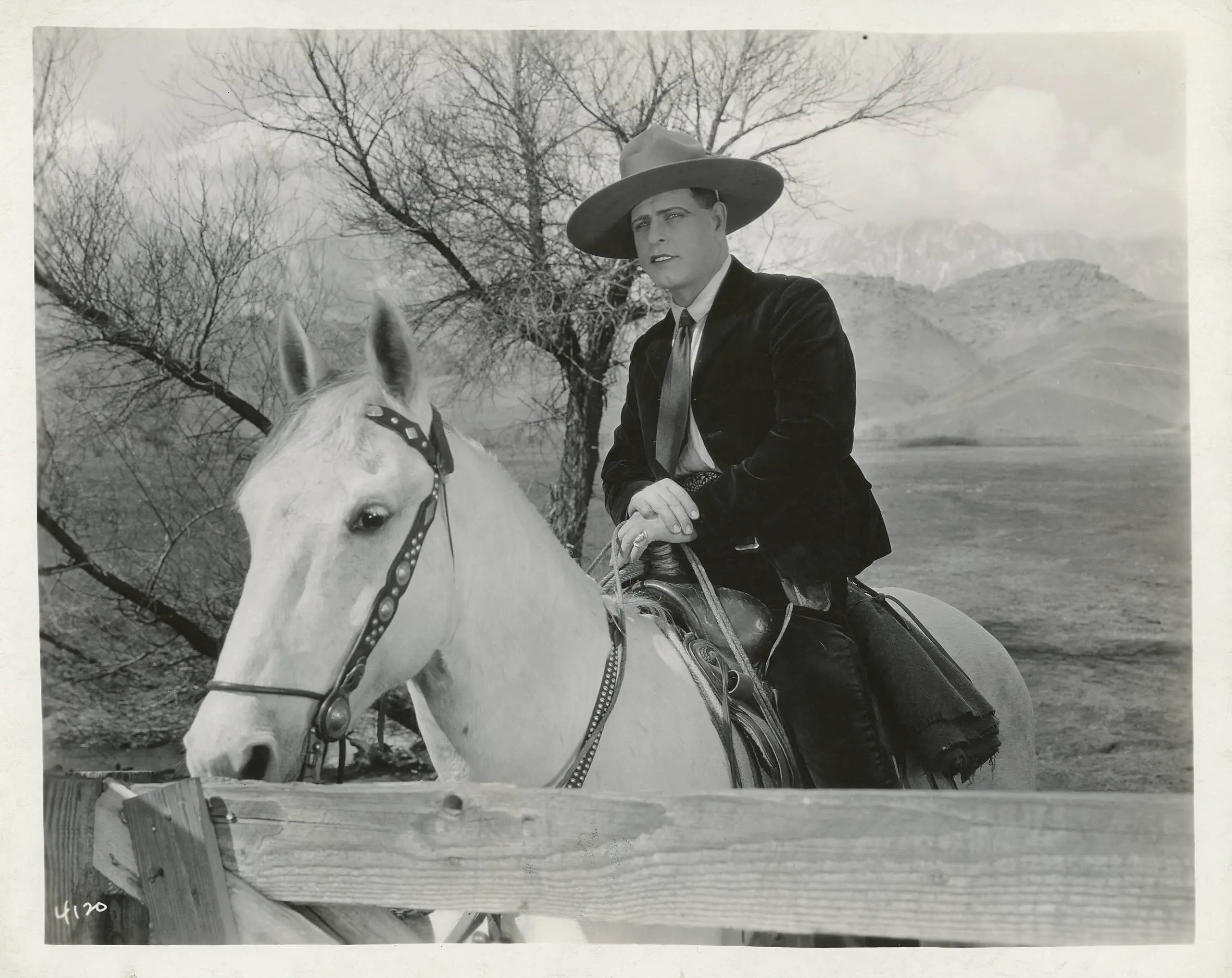
One of the most compelling aspects of Fighting Fury is its treatment of Clay Hill, Jr.’s upbringing. Raised by a Mexican servant after the slaughter of his parents, the character represents a cultural synthesis that was rarely explored with such nuance during this period. This upbringing provides him with a unique perspective, placing him on the periphery of Anglo-American society while possessing the skills to dismantle its most corrupt elements. This theme of identity and belonging echoes the sentiments found in Keith of the Border, though the stakes here feel significantly more personal.
The cinematography captures the desolate beauty of the desert with a haunting clarity. The wide shots of the riders against the horizon evoke a sense of insignificance, suggesting that while the human drama is intense, the land remains indifferent. This visual philosophy is a departure from the more intimate, domestic settings of Polly Ann or the high-society drama of Sauce for the Goose. In Fighting Fury, the environment is a character in its own right, a harsh judge of the men who traverse it.
Structurally, the film is divided into two distinct movements: the trauma and the reckoning. The first act is a flurry of motion and tragedy, establishing the emotional stakes with a brutal efficiency. The second act, however, is where the film truly finds its rhythm. As Clay infiltrates the ranchers' world, the pacing slows, allowing the suspense to build. It’s a psychological game that mirrors the hypnotic tension found in Ipnosi, as the protagonist waits for the perfect moment to strike.
The inclusion of Helen Holmes adds a layer of complexity to the narrative. Known for her roles in action serials, Holmes brings a rugged intelligence to her character, providing a romantic interest that is more than just a damsel in distress. Her chemistry with Hoxie is understated yet effective, offering a glimpse of the life Clay might have led had his path not been dictated by blood. This dynamic is a refreshing change from the more traditional romantic subplots seen in Racing Hearts.
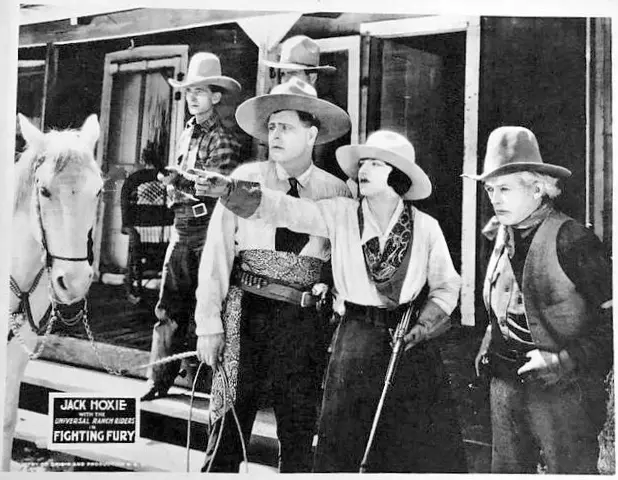
Universal’s production values in 1924 were at their zenith for Western features. The use of natural light and the integration of actual ranching techniques lend the film an air of authenticity that many of its contemporaries lacked. The editing, handled with a precision that keeps the 1500-word narrative equivalent moving at a brisk pace, ensures that the action never feels stagnant. Even when the plot ventures into the melodramatic, the sincerity of the performances grounds the film. This is not the surrealist experimentation of Seein' Things; it is a grounded, gritty exploration of the human condition under extreme duress.
The film also benefits from the contributions of Al J. Jennings and Duke R. Lee, whose presence adds a layer of genre-credibility. Jennings, a former outlaw himself, understood the mechanics of the frontier in a way few actors could, and his influence on the film’s 'feel' is undeniable. This commitment to realism is what separates Fighting Fury from the more stylized productions of the era, such as Mortmain or the emotional melodrama of Love and Hate.
Looking back at Fighting Fury through a modern lens, one cannot help but be struck by its thematic resonance. The idea of a man consumed by the past is a universal one, finding echoes in everything from Outcast to Through the Dark. However, Hoxie’s film remains unique in its specific cultural framing. The Spanish-American protagonist is not just a hero; he is a bridge between two worlds, a man who must navigate the prejudices of his era while seeking a justice that the law is unable to provide.
The final act of the film is a masterclass in tension. As the three ranchers are picked off one by one, the sense of inevitability becomes almost suffocating. The film doesn't celebrate the violence; rather, it portrays it as a grim necessity. When the dust finally settles, there is no triumphant fanfare. Instead, there is a sense of exhaustion, a realization that while the debt has been paid, the cost was the protagonist's youth and innocence. It’s a somber ending that elevates the film above its peers, much like the ending of Girl of the Sea leaves the viewer with a sense of melancholic wonder.
In the vast sea of silent cinema, Fighting Fury stands out as a beacon of narrative clarity and emotional depth. It is a film that demands to be seen by any serious student of the Western genre. Its influence can be felt in the decades of revenge-driven cinema that followed, yet it retains a singular identity thanks to the powerhouse performance of Jack Hoxie and the expert direction of the Universal team. This isn't just a movie about a boy seeking vengeance; it’s a film about the soul of the West itself—rugged, unforgiving, and eternally haunted by the ghosts of those who sought to tame it.
For those who appreciate the intricacies of early filmmaking, the nuances of the Universal Ranch Riders' stunts, and the sheer power of a well-told story, Fighting Fury is an essential viewing experience. It reminds us that even in the silent era, the language of film was capable of expressing the most complex of human emotions with a clarity that dialogue often fails to achieve. It is a testament to the enduring power of the image, the landscape, and the human face in the throes of a righteous, albeit destructive, passion.
IMDb 6.1
1933
Community
Log in to comment.