DbcultAccessing Vault...
4/10
Senior Film Conservator
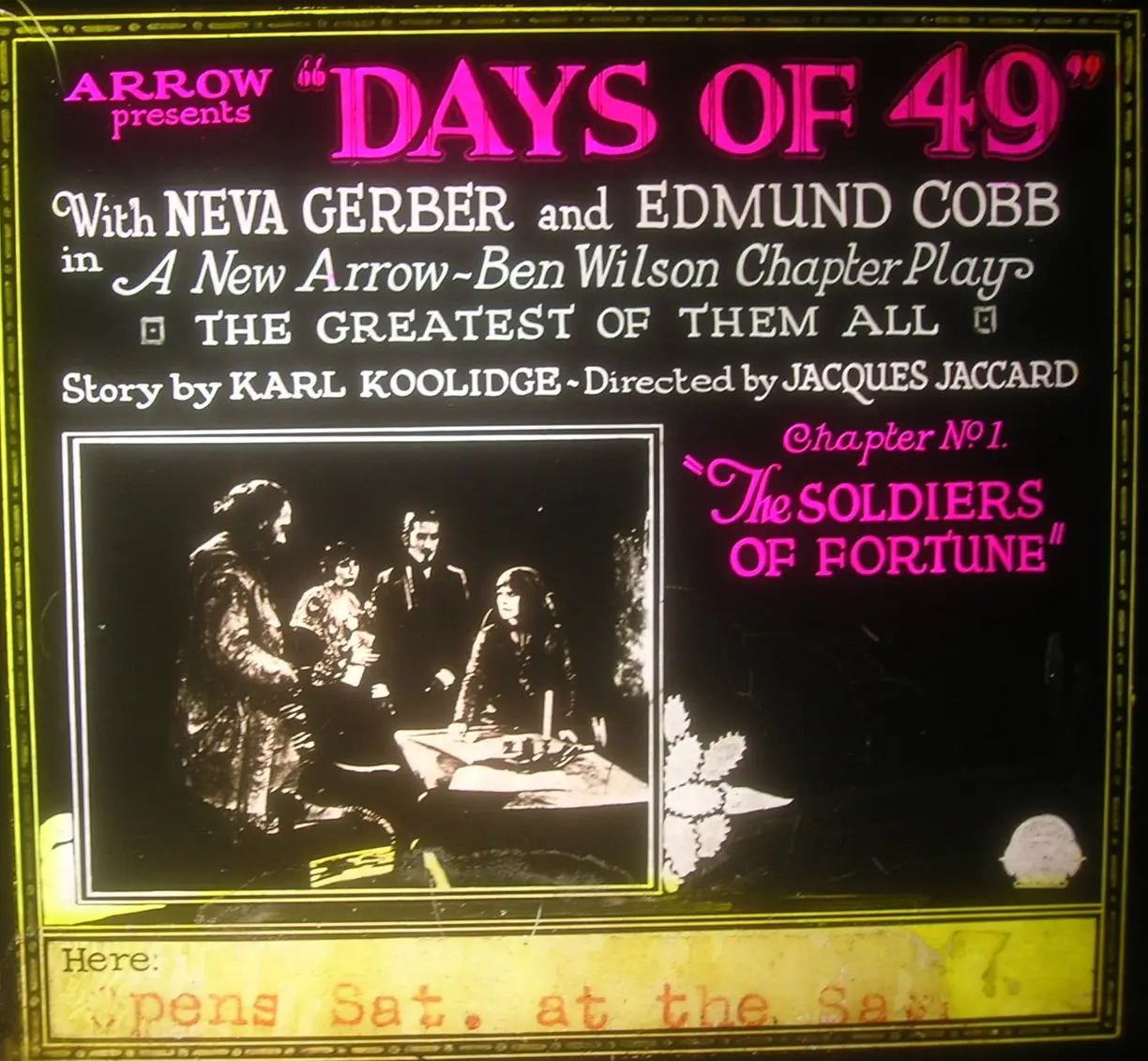
A definitive 4/10 rating for a film that redefined the boundaries of cult cinema. Days of '49 remains a cornerstone of transgressive art.
Ah, the silent serial. A cinematic form often overlooked in the grand tapestry of film history, yet one that, in its heyday, captivated audiences with a relentless parade of cliffhangers, daring feats, and episodic narratives designed to ensure weekly attendance. Among these fascinating relics, Ben F. Wilson’s 1924 opus, Days of '49, stands as a particularly intriguing specimen. This 15-chapter saga, co-written by Wilson, Karl R. Coolidge, and Jay Marchant, plunges headfirst into one of America’s most mythologized periods: the California Gold Rush and the preceding, often controversial, American acquisition of the territory. It’s a film that demands to be viewed not just as entertainment, but as a cultural artifact reflecting the prevailing narratives and romanticized historical perspectives of its time.
From the outset, Days of '49 signals its grand ambitions. The plot, while framed as a fanciful depiction, attempts to encapsulate the monumental General Fremont expedition into Spanish California—a pivotal, if aggressive, maneuver to annex the sun-drenched lands for the United States. This historical backdrop provides a fertile ground for adventure, intrigue, and the inevitable clash of cultures. The film doesn't merely chronicle events; it amplifies them, transforming historical figures into archetypal heroes and villains, and turning political machinations into high-stakes melodrama. It’s less a documentary and more a vibrant, exaggerated fresco of Manifest Destiny in motion, tinged with the intoxicating promise of untold riches.
What truly sets this serial apart, and indeed anchors its enduring fascination, is its intricate weaving of the gold discovery at Sutter's Mill into the fabric of Fremont’s expansionist agenda. This isn't just a side note; it's the catalyst that transforms a territorial dispute into a full-blown societal upheaval. The sudden, electrifying revelation of gold transforms the landscape, attracting a motley crew of dreamers, desperadoes, and honest folk alike, all driven by the potent siren call of instant wealth. The film captures this chaotic energy with a palpable sense of urgency, illustrating the rapid transformation of a tranquil, albeit contested, Spanish outpost into a lawless frontier town teeming with ambition and peril. The narrative deftly navigates the shift from military conquest to economic frenzy, showing how these two forces converged to define an era.
The cast, a vibrant ensemble of silent-era stalwarts, brings this tumultuous period to vivid life. Clark B. Coffey, with his earnest demeanor, often anchors the heroic narrative, embodying the pioneering spirit. Edmund Cobb, a familiar face in Westerns and action serials, brings a rugged authenticity to his role, often serving as a foil or a steadfast ally. But it’s Yakima Canutt, the legendary stuntman and actor, who truly ignites the screen with his unparalleled athleticism and daring. Every fall, every horse chase, every fistfight bears the unmistakable stamp of Canutt’s genius, elevating the action sequences beyond mere spectacle into a form of visceral ballet. His presence alone provides a masterclass in physical storytelling, making the dangers faced by the characters feel genuinely perilous. One cannot help but draw parallels to the raw, untamed energy found in other action-packed Westerns of the era, such as Border Law, where the landscape itself becomes a character, and the physical prowess of the actors is paramount.
Neva Gerber, a prolific actress of the silent era, brings a much-needed emotional depth and strength to the proceedings. Her character, often caught amidst the machinations of men and the dangers of the frontier, isn't a mere damsel in distress but a figure of resilience, reflecting the fortitude of women who ventured into the untamed West. Elias Bullock, Charles Brinley, and Wilbur McGaugh, alongside Al Hoxie and Ruth Royce, fill out the supporting roster, each contributing to the rich tapestry of frontier life. Brinley, in particular, often excelled at portraying menacing figures, adding a layer of villainy that was essential for the serial's episodic conflict. The clear delineation between good and evil, while perhaps simplistic by modern standards, was a hallmark of the serial format, ensuring that audiences could easily track allegiances and anticipate the next dramatic confrontation.
The writing team of Ben F. Wilson, Karl R. Coolidge, and Jay Marchant faced the formidable task of sustaining narrative momentum across fifteen distinct chapters. This required not only a compelling overarching plot but also a constant stream of mini-climaxes and cliffhangers. Each installment had to deliver a satisfying chunk of story while leaving the audience desperate for the next resolution. This episodic structure, while thrilling, often necessitated a certain degree of narrative contrivance, with characters frequently finding themselves in seemingly inescapable predicaments only to be miraculously saved at the last possible moment. It's a formula that, when executed well, as it largely is here, creates an addictive viewing experience. One might compare this relentless pacing and the emphasis on continuous peril to the structure of other silent serials like The Masked Avenger, where the identity of the hero and the constant threat of revelation drive much of the suspense.
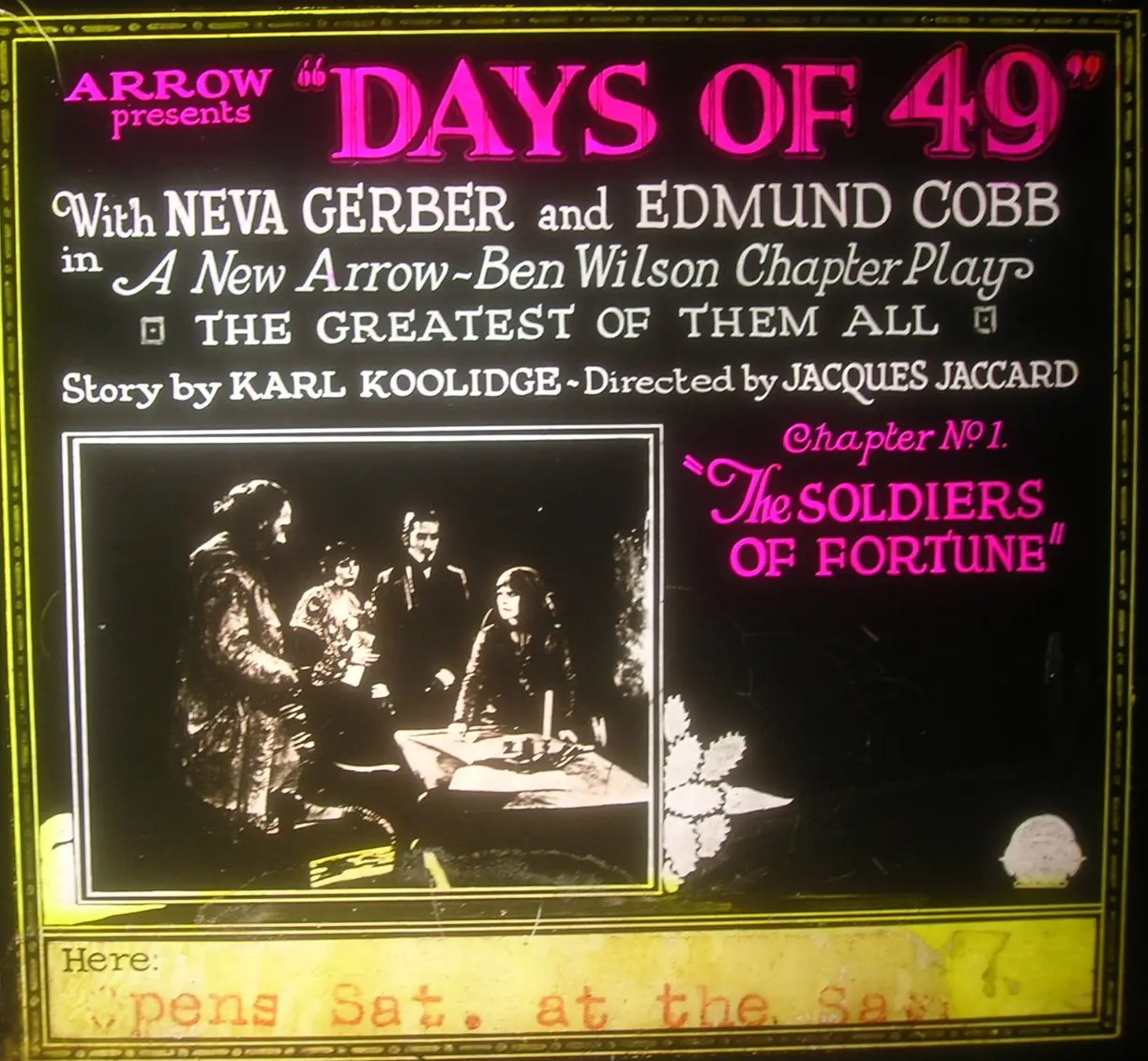
Ben F. Wilson, who not only co-wrote but also directed the serial, demonstrated a keen understanding of what made these episodic adventures work. His direction prioritizes action and clear storytelling, ensuring that even without dialogue, the audience could follow the intricate plot threads. The use of natural landscapes for many of the exterior shots lends an air of authenticity to the frontier setting, even if the historical accuracy of the events themselves is liberally interpreted. The vastness of the Californian terrain becomes a character in itself, emphasizing the daunting challenges faced by the pioneers and adventurers. This effective utilization of setting is a common thread in many silent Westerns, where the rugged beauty and inherent dangers of the environment often dictated the tone and scope of the narrative.
The film’s historical liberties, while noticeable to a discerning eye, are entirely in keeping with the popular entertainment of the era. Serials were not designed to be meticulously accurate historical documents but rather thrilling adventures that used historical backdrops as a launchpad for dramatic escapades. The portrayal of General Fremont’s expedition, for instance, is less about political nuance and more about the heroic, almost mythic, quest for American expansion. This approach allowed for greater freedom in crafting exciting scenarios, from daring rescues to fierce skirmishes, all designed to keep the audience on the edge of their seats. The romanticized depiction of historical events finds echoes in other period dramas of the time, where dramatic license often trumped factual precision for the sake of compelling storytelling.
Beyond the immediate thrills, Days of '49 subtly explores themes that resonate even today. The insatiable human desire for wealth, epitomized by the gold rush, drives many of the characters' actions, leading to both heroic sacrifices and despicable betrayals. The film doesn't shy away from depicting the darker side of this avarice, showing how the promise of gold can corrupt even the most upright individuals. This thematic exploration of greed and its consequences is a recurring motif in cinematic history, from early Westerns to contemporary thrillers. One can see similar cautionary tales about the corrupting influence of wealth in films like The Mints of Hell, which also delves into the perilous pursuit of fortune.
The clash between established Spanish California and the incoming American settlers also provides a rich vein of dramatic conflict. The film, from its early chapters, portrays the tension inherent in territorial acquisition, the struggle for dominance, and the eventual, often violent, assimilation of one culture by another. While presented through the lens of early 20th-century American triumphalism, these conflicts still offer a glimpse into the complexities of nation-building and the human cost of expansion. It’s a narrative thread that, while perhaps not deeply explored with modern sensitivities, nonetheless provides a foundational element to the serial’s dramatic structure, giving context to the actions of both the protagonists and antagonists.
In considering the overall impact of Days of '49, it's essential to appreciate it within its historical context. This was a form of mass entertainment designed to be consumed weekly, building anticipation and fostering a loyal audience. The technical limitations of the era, coupled with the rapid production schedules inherent in serial filmmaking, meant that artistic flourishes were often secondary to narrative propulsion and thrilling action. Yet, within these constraints, the film achieves a remarkable degree of success. The performances, particularly Canutt’s, are compelling, the action sequences are frequently exhilarating, and the overarching story, despite its historical inaccuracies, remains an engaging exploration of a transformative period in American history.
For modern audiences, viewing Days of '49 offers more than just entertainment; it’s a portal to a bygone era of filmmaking. It allows us to witness the foundational elements of the Western genre taking shape, to understand the appeal of serialized storytelling, and to appreciate the sheer physical artistry of silent cinema. The film serves as a testament to the ingenuity and resourcefulness of early filmmakers who, with limited technology, managed to craft narratives of epic scope and thrilling adventure. It might not possess the psychological depth of later cinematic masterpieces, but it compensates with an unbridled enthusiasm for storytelling and a relentless commitment to spectacle.
Ultimately, Days of '49 is more than just a historical curiosity; it’s a vibrant, if stylized, depiction of a pivotal moment in American history, brought to life by a dedicated cast and crew. It stands as a robust example of the silent serial's power to enthrall, educate (albeit loosely), and entertain. Its influence, though perhaps subtle, can be traced through subsequent Westerns and adventure films, proving that the tales of gold, daring, and destiny in the American West continue to resonate. The sheer volume of content across its fifteen chapters ensures a comprehensive, albeit whirlwind, journey through a period that forever altered the course of a nation. It's a gold mine of cinematic history, waiting to be rediscovered by those willing to embark on its episodic adventure.
IMDb —
1920
Community
Log in to comment.