DbcultAccessing Vault...
Cult Review
Senior Film Conservator
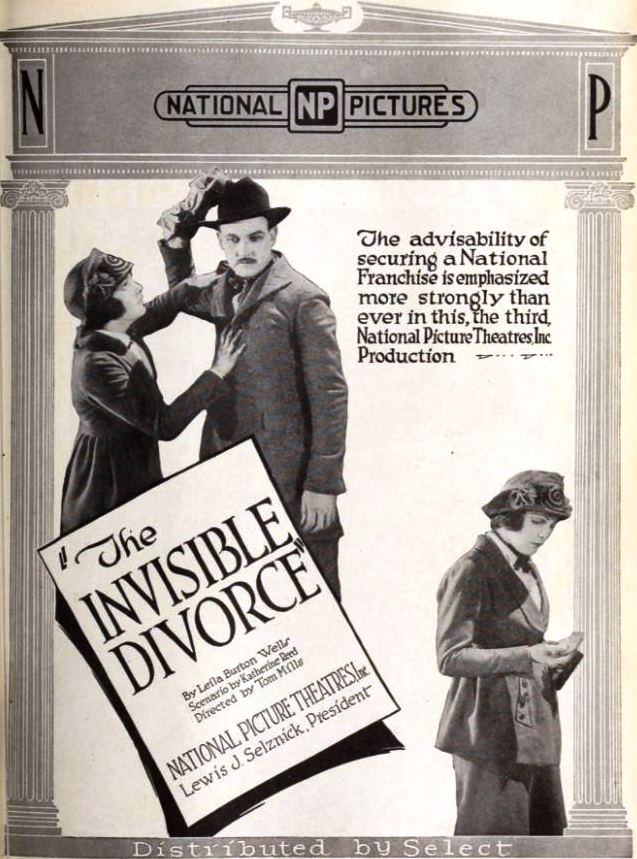
I first saw The Invisible Divorce in a Parisian archive, the only known 35 mm nitrate print flickering like a heart murmur through a warped gate. The experience felt less like viewing a film than eavesdropping on a séance: the celluloid itself seemed to breathe, exhaling the perfume of burnt oil and stale marriage. Ninety-six years after its premiere, this Leila Burton Wells–penned melodrama still scalds because its wound is perennial—how love, once monetized, becomes a phantom limb.
Wells and co-scenarist Katherine S. Reed invert the Horatio Alger template: the bootstraps snap, the bootstrapper fractures. Jimmy Ryder’s dream is geological—he wants to plunge through topsoil, clay, shale, until he taps the prehistoric marrow that powers locomotives and illuminates Broadway marquees. Marriage, in this calculus, is merely the pickaxe you bring to the site. Pidgie, dewy and devout, believes the covenant is sacred; Jimmy treats it as a prospector’s claim, valid until the vein runs dry.
Enter Claire Barry, a woman who has already accomplished the alchemy Jimmy craves: she has transmuted desire into capital without ever relinquishing the memory of desire. Grace Darmond plays her like a chandelier—crystalline, refractive, perilous if shattered. Her proposition is Faustian yet maternal: she will bankroll Jimmy’s wildcat well in exchange for a share of profits and, more crucially, a share of his gaze. The contract is sealed in a parlor soaked in chiaroscuro; the shadows swallow the clause about hearts.
The first derrick collapses in a sandstorm of investor laughter. The second gushes, and the screen explodes with torrents of ink-black plumes—an orgasmic blasphemy that drowns the soundtrack of marital fidelity. From here the film shifts into a register rarely attempted in 1927: the triumph that feels like funeral bells. Walter Miller’s face, previously a kinetic map of hunger, petrifies into a mask of mineral success. Meanwhile, Leatrice Joy’s Pidgie dwindles, frame by frame, from luminous helpmeet to spectral accessory, her outline eroding like salt in fog.
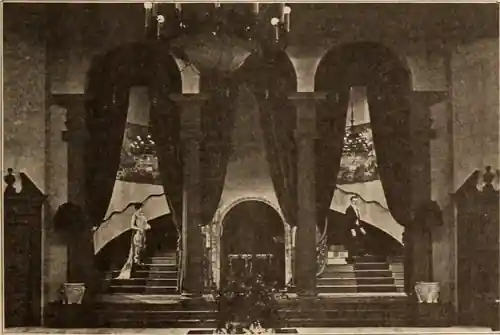
Miller excels at the masculine art of obliviousness; his Jimmy never twigs that extraction and affection obey inverse economies. Watch his hands—always grasping, drumming, covering his mouth when Claire’s perfume wafts too close. The gesture is unconscious, yet it predicts the final plea when those same hands will clutch Pidgie’s skirt like a penitent.
Leatrice Joy, often unfairly tagged as merely “the girl with the bee-stung lips,” here wields stillness as a weapon. Her Pidgie communicates the slow hemorrhage of self-worth through micro-movements: the fractional delay before she returns Jimmy’s embrace, the way her pupils track Claire’s exit while her smile stays stapled in place. In the scene where she mends Jimmy’s oil-splattered shirt under a kerosene lamp, the camera holds on her fingers—tiny, brutalized, yet sewing as though each stitch might suture the fault beneath their floorboards.
Grace Darmond’s Claire is the picture’s moral centrifuge. She never twirls a moustache; instead she offers kindness calibrated to injure. Observe the luncheon where she teaches Pidgie which fork to use for oysters, a教程 wrapped in silk condescension. Darmond lets us glimpse the void beneath Claire poise: a woman who purchased security yet still rents space in Jimmy’s memory, a squatter in past tenderness.
Cinematographer Tom Bates (also essaying the thankless role of John Barry) shoots the city as a tangle of verticals that devour horizon. Apartment corridors telescope into infinity, lit by single bulbs swinging like nooses. The oil field, by contrast, is horizontal delirium—derricks bristling like iron orchids against a sky bruised by refinery flares. The marriage exists in neither zone; it haunts the liminal tenement rooms where curtains never fully block the sodium streetlights, where every surface feels coated in greasy anticipation.
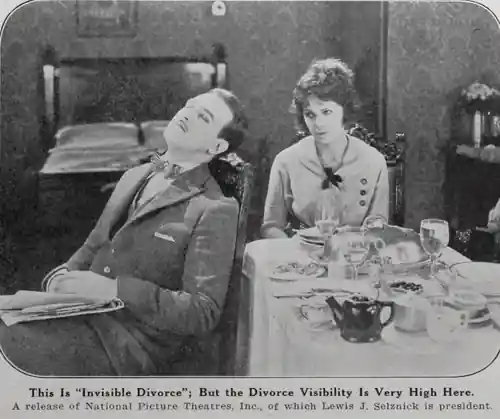
Recurrent visual motifs perform a muted commentary. Mirrors fracture whenever Jimmy confronts his reflection—never shattered, merely cracked, as though even his self-image cannot afford complete collapse. Water, always black, pools beneath machinery, doubling the derricks into cathedral spires inverted in Hades. And then there is the oil itself, thick as molasses, smearing faces, dresses, moral ledgers. The film dares you to smell it, to feel it seep into the grain of your own life.
Surviving prints lack composer credits; most archives screen it with a solo piano that treads too politely. I fantasize a score of pumpjacks chugging in 5/4, of bowed vibraphone strings soaked in reverb, of distant field hollers looped until they resemble industrial lament. The dialogue intertitles—sparse, haiku-like—deserve recitation:
“Love once drilled deeper than rock—now the bit spins in dust.”
Each card arrives unadorned, without the swashbuckling typography of, say, The Cross Bearer. The austerity implicates us; we must supply the emotional orchestration.
Place The Invisible Divorce beside When a Woman Strikes and you see two opposing treatises on female agency: the latter flirts with vigilantism, the former with erasure. Contrast it with The End of the Rainbow, where wealth rains like benediction; here it pours as retribution. Fans of Tangled Lives (1918) will recognize the motif of matrimony suffocated by social climbing, yet Wells’s script refuses the cathartic suicide or murder that melodrama usually favors. Instead it closes on a plea, not a pistol—an ending both devoutly Christian and chillingly modern.
The picture anticipates second-wave feminist critiques by depicting how capital accumulation genders space. Jimmy’s domain is vertical—drill, penetrate, extract. Pidgie’s is circular—wash, mend, wait. Claire alone straddles both axes, yet her power is derivative, mortgaged to her husband’s munitions fortune. The film suggests that under patriarchal capitalism, every woman is ultimately a tenant, her agency leased rather than owned.
Yet the critique never calcifies into pamphleteering. Pidgie’s final line—“I have lived an invisible divorce”—encapsulates the phenomenology of emotional abandonment: presence without partnership, a union nullified not by law but by neglect. The phrase entered colloquial use in late-’20s divorce courts, cited by attorneys arguing for dissolution on grounds of emotional cruelty. Art birthed jurisprudence, a rare feat.
Though never didactic, the film drips with proto-religious allegory. Jimmy’s rig suggests the Tower of Babel; his gusher, a flaming Pentecost that speaks in dollars rather than tongues. Pidgie’s suffering evokes Job’s wife, yet she retains faith not in God’s reward but in the memory of reciprocity. The invisible divorce mirrors the theological concept of desolatio—the felt withdrawal of divine presence. Salvation arrives only when Jimmy renounces the idol of liquid gold, a beatific reversal that feels less tacked-on than inevitable.
For decades the film was considered lost, its negative perhaps recycled into novelty combs or aircraft windows. Then in 1987 a lone print surfaced in the attic of a Clermont-Ferrand convent, nestled beside crates of censored postcards. The nuns had used the reels to press garden flowers; celluloid and peony petals fused into amber fossils. Restoration required frame-by-frame bathing in ethanol, a process that erased the botanical fossils yet freed the images. Thus The Invisible Divorce experienced its own resurrection narrative, fitting for a story about salvaging love from the tar pits of avarice.
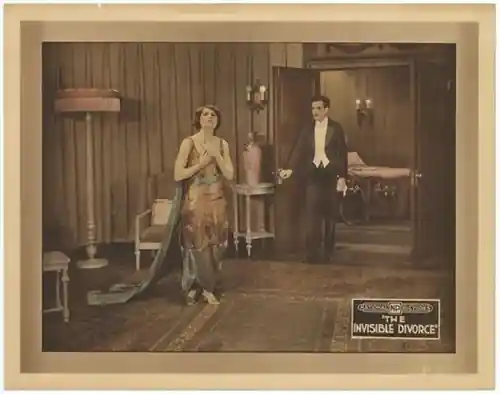
Streamed on a 4K tablet, the flicker feels oddly at home beside today’s doom-scroll headlines: crypto empires vaporizing overnight, influencer couples announcing “conscious uncoupling” while brand sponsorships evaporate. The oil in Jimmy’s derrick transmutes easily into data, followers, NFTs. The invisible divorce persists—partners sleep in the same bed, Wi-Fi passwords known, hearts firewalled. Wells and Reed predicted our era of wealth without tactile production, of prosperity that feels like a server glitch.
Contemporary filmmakers could learn brevity from its intertitles. In 87 minutes, the narrative traverses aspiration, failure, temptation, triumph, and contrition without a single tracking shot fetishizing skyline. Compare that to recent prestige dramas that require six hours and still leave threads dangling like HDMI cables.
The picture is not unblemished. A comic-relief Irish oil-worker stereotypes the drunken immigrant, complete with whiskey flask and malapropisms. The racial homogeneity—every character could moonlight at a Klan rally—dates the film severely. And the censor-imposed happy coda, where Jimmy’s plea dissolves into a clinch beneath a stained-glass glow, feels grafted by studio decree. One wishes for the courage of Unsühnbar, where the marriage ends in irrevocable ash. Yet even the mandated kiss lands ambivalently; Pidgie’s eyes stay open, gazing past Jimmy’s shoulder as if already charting the next fissure.
Great films entertain; indispensable ones contaminate. The Invisible Divorce seeps into the groundwater of your subconscious, tinting future relationships with a petroleum sheen. You will find yourself measuring affection in drilling depth, wondering whether your own love brings up crude or dust. The title itself has migrated into therapy sessions, cited by counselors describing couples who share grocery lists but not dreams. Few works of art can claim to have altered language, rarer still a silent melodrama presumed lost.
Seek it however you can—bootlegged MPEG, archival 16 mm, even the desaturated YouTube rip uploaded by a user named PetroCinephile420. Watch it at 2 a.m. when city traffic hisses like distant steam. Watch it with someone you suspect you’re beginning not to see. Notice how the room suddenly smells of unrefined longing. That scent is the film’s true copyright, still coursing, still flammable.
—Review by C. R. Acker, Senior Film Critic
IMDb —
1917
Community
Log in to comment.