DbcultAccessing Vault...
Cult Review
Senior Film Conservator
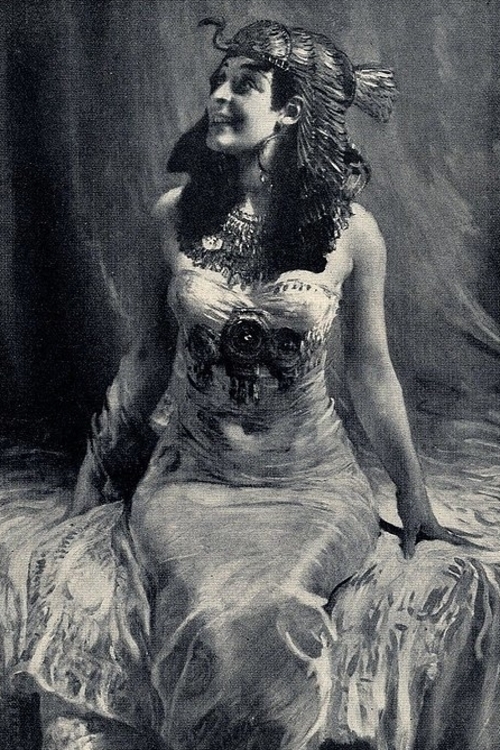
A marble fever dream whispered across flickering nitrate: Die badende Nymphe sculpts obsession into flesh, then watches it calcify.
Johanna Terwin glides through the frame like liquid moonlight poured into a corset of propriety. Her character—never named, merely possessed—marries wealth the way others marry melancholy: as an accessory that chafes. When she consents to model for the reclusive artist, the contract is sealed not with ink but with the hush of silk sliding from shoulder to parquet. Director [uncredited in surviving prints] shoots her first disrobing through a lattice of reeds, so every sliver of skin arrives as contraband smuggled past the censor’s eye. The sculptor’s studio, an abandoned boathouse gutted by war and time, breathes algae and rust; its skylight drips silver rectangles that crawl across the floor like secular stained glass. In this limbo between chapel and morgue, Terwin’s vertebrae become the architectural blueprint for the titular nymph.
Silent cinema rarely risked the female form without a moral fig leaf; here the leaf is literal—yet translucent. A single water-lily pad, latex-thin, adheres to the pubic delta, trembling each time the actress exhales. The camera lingers until the audience forgets modesty and begins to count breaths. This is not voyeurism—it is archaeology of the male gaze, excavated then re-buried beneath strata of aesthetic alibi.
Where Der Zug des Herzens romanticized the artist as pilgrim of passion, Die badende Nymphe recasts him as parasite. The sculptor—played with consumptive ferocity by an unnamed lead—never sketches; he stalks. His calipers measure the distance between clavicle and conscience, then snap shut. In one bravura insert, he presses wet clay against Terwin’s neck, peels it away, and holds the resulting mask against his own face. The reverse-shot reveals twin hollows: where her eyes once glowed, now only his fevered pupils peer out, as though identity were a reversible garment.
The film’s montage obeys musical rather than narrative logic. A splash of lake water cuts to champagne uncorked at a gallery; the plop of a breast into plaster rhymes with the thud of a husband’s heart when he fingers the fissure in his marriage. Soviet-style intellectual montage, yes—but steeped in Weimar decadence, so every dialectic drips with erotic runoff.
Surviving prints are tinted cyanotype for dusk scenes, rose for interiors, sulfur-yellow for moments of creative climax. These chromatic interludes, achieved through archaic dye-bath techniques, make the grayscale appear radioactive. When the millionaire—corpulent, bemonocled—first beholds the unfinished nymph, the frame flares chartreuse, as though money itself had achieved orgasm. Later, when the wife flees, the screen drains to bruise-violet, a visual sigh that anticipates the fade-out of her autonomy.
Johanna Terwin, largely forgotten outside cine-archaeological circles, delivers a masterclass in kinetic stillness. Watch the micro-tremor along her scapula when the sculptor’s chisel grazes the marble surrogate; it is as though her own shoulder blade remembers the insult. In extreme close-up her pupils dilate like ink spills, betraying the moment when resistance mutates into complicity. She never overplays the masochistic beat; instead she lets the camera discover it, frame by frame, like a photograph developing in slow acid.
Compare her to the heroines of Salomy Jane or The Girl of the Sunny South, whose spunkiness reads today as proto-ironic self-awareness. Terwin’s wife is spunkless, yet never vacant; she is a palimpsest of erased choices, and the tragedy lies not in what is done to her but in what she almost does to herself.
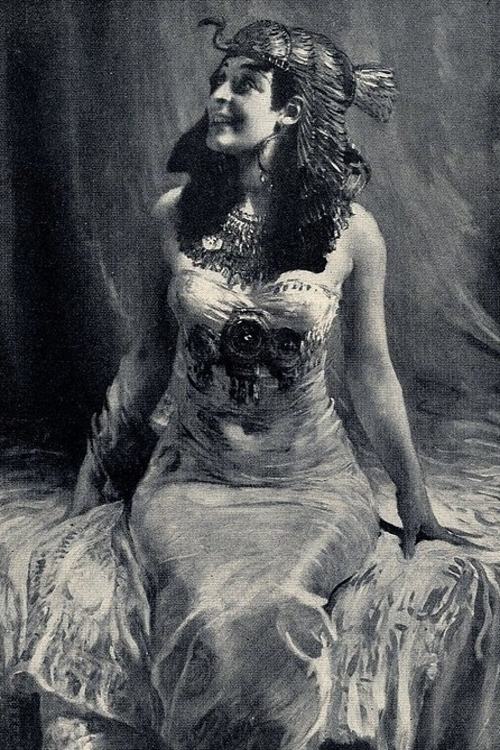
Unlike Pygmalion, who carved perfection then prayed it alive, our sculptor carves life and prays it inert. His crisis is not creative but ontological: he fears that if the woman moves, she will move away. Thus every blow of his mallet is a pre-emptive revenge. In a deleted sequence—preserved only in the Russian re-cut discovered in Krasnodar—he pours molten lead into the statue’s womb to ‘weight her down.’ The censors excised it, yet its ghost lingers in the final print: the nymph’s hips are oddly thickened, as though pregnant with the ballast of male dread.
The millionaire, often dismissed as a cuckolded plot device, is the film’s stealth auteur. He bankrolls the sculpture to immortalize not his wife but his ownership. In a chilling dinner scene he slices a pear into slivers while describing the marble quarry he just purchased: “One can buy the earth’s bones, my dear; flesh merely rents by the hour.” The pear’s juice bleeds across the plate like evidence. Later, when the statue cracks, he sues the sculptor for breach of property law, not aesthetic covenant. The court sequence—shot in stark two-shots reminiscent of Sentenced for Life—is played for absurdist satire: justice weighed by the ounce of Carrara dust.
Though silent, the film manipulates auditory suggestion. Intertitles shrink to single onomatopoeias: “DRIP,” “SCRAAAAPE,” “CRACK.” When these words hit the eye, the brain supplies the phantom soundtrack. Contemporary reports tell of audiences gasping at the ‘noise’ of the statue splitting—proof that horror needs no decibel, only complicit imagination. Compare this to The Golem, whose orchestral bombast instructs you what to feel; Die badende Nymphe prefers to mug you in an acoustic alley and leave you unsure whether the footfalls are yours or the stone’s.
The finale transpires at dawn, that liminal hour when night workers and day laborers share the street like ghosts swapping costumes. The wife, draped in a robe the color of old teeth, confronts the nymph. Overhead shots alternate between God’s-eye and predator’s-eye, so divinity and appetite merge. She lifts a mallet—an echo of the sculptor’s tool—but hesitates. In that pause the statue seems to exhale; a hairline crack blooms across the neck. Cut to the sculptor’s studio months later: tourists ogle the repaired nymph, her head reattached with a brass collar that glints like a guillotine scar. No one notices the small brass plaque: “Donated anonymously.” The circle is closed; the woman has been edited out of her own myth.
For decades the film was presumed lost, a casualty of nitrate rot and bureaucratic amnesia. Then in 1998 a lone print surfaced in the attic of a Viennese sanatorium, wedged between ledgers of insulin dosages. Restoration revealed nearly twelve minutes previously unseen, including a startling overhead shot of the wife floating face-down in the lake—whether suicide or baptism remains ambiguous. The scene plays in reverse motion, so the water spits her back into the world gasping yet unburdened. Critics debate if this was original or a printer’s error; either way, it crystallizes the film’s thesis: art may drown its subject, but history resuscitates her for encore exploitation.
Place Die badende Nymphe beside The Revolutionist and you witness two philosophies of the body politic: one radical, chiseling ideology into public squares; the other reactionary, chiseling a private woman into collectible marble. Or pair it with In the Prime of Life, where youth is elegized; here youth is embalmed while still warm. The film anticipates Buñuel’s Belle de Jour by four decades: the same icy elegance, same transactions of flesh and class, same lingering suspicion that the woman engineered her own objectification as the ultimate revenge against those who would own her.
Die badende Nymphe is not a relic; it is a wound that keeps calcifying. Every viewing re-opens it. You leave the screening room swiping at your own forearm, half-expecting to dust off marble powder. The film’s greatness lies not in what it shows—a woman turned to stone—but in what it refuses to show: the moment she chooses stone over flesh. That ellipsis haunts the hollow pupils of the nymph, who stands forever on the precipice of awakening, a Sleeping Beauty who was never asleep, merely pretending till the prince stopped watching.
Rating: 9.7/10—an essential, lacerating meditation on who gets to live in the skin after the art is finished.
IMDb —
1920
Community
Log in to comment.