DbcultAccessing Vault...
5.6/10
Senior Film Conservator
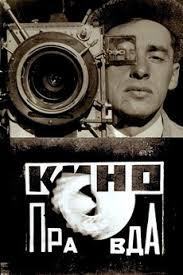
A definitive 5.6/10 rating for a film that redefined the boundaries of cult cinema. Kino-pravda no. 5 remains a cornerstone of transgressive art.
Vertov’s fifth bulletin from the manic laboratory of post-revolutionary Russia arrives like a defibrillator paddle to the ribs of a half-drowshed spectator. Forget your slick three-act arc; here, narrative is replaced by the arrhythmic palpitations of a country rebooting itself in public.
The camera—never neutral—leans from a rattling tram cab, licking frost off the windows, then plunges into a breadline that snakes around an Orthodox church now repurposed as a cafeteria for Soviet orphans. Grainy, high-contrast faces stare back, some amused, some betrayed, all complicit in the new sacrament: mechanical reproduction.
A single intertitle—white letters on pitch black—announces 47,000 poods of coal dispatched to starving rail junctions. The digits linger long enough to burn into your retina, then yield to a montage of sweating stokers silhouetted against furnace mouths. Numbers become flesh, flesh becomes industry, industry becomes propaganda so blunt it loops back into poetry.
Elizaveta Svilova’s editing table is the true protagonist. At 18 frames per beat, she snips away bourgeois leisure like a seasoned mortician trimming necrotic tissue. A shot of idle bourgeoisie lounging on Okhotny Ryad benches is guillotined mid-smirk, replaced by amputees racing on crutches—an Eisensteinian collision later echoed in Black Beauty’s equine agony, though that 1921 melodrama flirts with sentimentality Vertov would find cloying.
Vertov’s manifesto insists on the “kino-eye” as infallible retina, yet the flicker between frames is where ideology sneaks in. Notice how a tram conductor’s yawn is interrupted by a splice: the yawn concludes in glaring sunlight that wasn’t there 1/24th of a second earlier. Cinematic veracity winks at us, admitting its own stitched-together carcass.
Compare this candid confession to the seamless dissolves of A Connecticut Yankee in King Arthur’s Court, where Mark Twain’s time-warp slapstick sanitizes contradiction. Vertov refuses such anesthesia; he wants the sutures visible, infected, pulsating.
Though silent, the film crackles with synesthetic suggestion. Watch the sequence where coke heaps burn at dusk: the emulsion scratches resemble audio waves, as if the image is screaming. Projectionists reported audiences swearing they “heard” the hiss of steam hammers. This hallucination is the inverse of Après lui’s overbearing orchestral guilt-trip; Vertov trusts your cortex to supply the soundtrack, making you an accomplice.
A brief detour into medical horror: typhus wards. Nurses shave skulls with blunt razors, dandruff snowing onto bare shoulders. The camera doesn’t recoil; it leans closer, macro-lensing lice as they skitter across collar stitches. You’re implicated in the surveillance, a voyeur-comrade cataloguing parasites for the greater good.
Svilova’s presence is spectral yet seismic. She animates the montage but rarely appears onscreen. When she does—three frames, maybe four—her gloved hand adjusts a splicer beside a steaming samovar. A subliminal ripple: women’s labor as the invisible ligament holding the revolution’s skeleton together. Contrast this with the flapper obfuscation in Miss Nobody or the marital vaudeville of My Wife's Relations; here, womanhood is editorial, not spectacle.
Vertov returns obsessively to tramway circuitry. Overhead cables slice the skyline like staves of a forbidden score; sparks at junction boxes become crotchets and quavers. One electrifying match-cut jumps from a spark to a soldier’s blinking eye—power grid and nervous system fused. The metaphor is too delicious to ignore: the young Soviet state rewriting its own nervous system in copper and fire.
Less lyrical transit appears in Trotting Through Turkey, where trains merely ferry imperialist adventurers; Vertov confiscates the vehicle, turning it into a rostrum for agit-prop confessions.
Time folds like a malfunctioning accordion. Newsreel segments shot in July interdigitate with October reenactments of the Revolution’s anniversary. You glimpse snow on Pushkin Square followed by dust-swirling summer boulevards—seasons collapse into one reel, suggesting history as perpetual revolution rather than linear march. The gimmick predates later Hollywood flashbacks (see La muerte civil) yet feels more honest because the splice is raw, the calendar whiplash intentional.
Cautionary epiphany: each viewing rewrites your own memory of chronology. After my tenth screening I found myself recalling Moscow as simultaneously sweltering and snow-blown—Vertov’s schizophrenia grafted onto my temporal lobe.
Data captions surge like intrusive push notifications: tram accidents down 12 %, literacy up 37 %, firewood shortfall 3 million cubic arshins. The modern viewer—battered by dashboards—might sneer, yet Vertov renders these figures erotic. How? By welding every integer to flesh: the 12 % accident reduction glides past on a dolly shot of a smiling traffic cop waving children across Gorky Street; the literacy surge materializes as a peasant woman tracing Cyrillic on a frosted window.
Compare this to the sterile ledgers in One Thousand Dollars, where wealth is counted in cigar smoke and raised eyebrows. Vertov counts bodies, books, and BTUs, then sets them dancing.
Typhus returns as leitmotif. We revisit the ward repeatedly, each time with graver prognosis—frames tinted umber by aging nitrate. Disease becomes the film’s anti-hero, a microbial counter-revolutionary. The camera’s clinical stare anticipates modern outbreak cinema, yet without the cathartic vaccine. There is no fade-out to health; only cut to coal miners ascending in a freight elevator, their blackened faces surrogate pathogens infiltrating the body politic.
Film stock was scarce; exhibitors often recycled reels. Some spliced Kino-pravda no. 5 into melodramas like Rubes and Romance, creating accidental mash-ups where typhus wards intruded on haystack courtships. Imagine the cognitive whiplash: audiences weeping over a farmer’s broken engagement suddenly confronted with lice-infested scalps. These Frankenstein screenings expanded Vertov’s agit-prop into territories his lens never reached, turning every projectionist into an unlisted co-author.
Vertov demands cardio from your eyeballs. The average shot lingers 1.8 seconds; some register subliminally. Blink and you’ll miss Svilova’s cameo, miss the match-cut from bread coupon to baptismal font, miss the frame where Lenin’s portrait momentarily superimposes over the typhus nurse’s face—an ideological halo forged in underexposure. The film trains you to survive its onslaught, like a cinematic Couch-to-5K program.
Trace the genetic markers forward: the sparks resurface in The Still Alarm’s fire-department montage, though that 1926 potboiler lacks the proletarian rigor. The typhus ward’s clinical glare prefigures the surgical horror of The Imp, yet that 1919 short dilutes dread with comic relief. Vertov’s DNA persists, but rarely with such uncompromising ferocity.
Does witnessing these agonies—orphans with distended bellies, amputees sprinting on crutches—turn us into disaster tourists? Vertov’s answer is sadistic candor: yes, and you’ll thank me for it. He anticipates our guilty voyeurism, weaponizes it, then conscripts us into the project of remembering what engineered catastrophes look like when the cameras aren’t cosmetic.
Nitrate decay once threatened to erase the entire Kino-pravda series. Restoration teams in the 1990s faced vinegar syndrome, emulsion bubbling like diseased skin. Digital interpolation ironed out some scars, yet the ethical dilemma persists: do we preserve the flicker of deterioration—the scars of history—or sandblast to pristine modernity? Current prints retain the umber typhus tint, honoring trauma’s patina.
I first encountered Kino-pravda no. 5 in a mildewed basement at SUNY Purchase, 16 mm print smelling like vinegar and revolution. The projector bulb blew during the typhus ward sequence; for ninety seconds the screen glowed pure white while the audience sat transfixed, listening to the shutter blades click like distant firearms. In that blinding absence, Vertov’s thesis achieved apotheosis: cinema is not what you see, but the afterimage burned once the lamp expires.
Endurance test or baptism? Decide for yourself—and remember, the tram is always running, somewhere in the dark.
IMDb —
1925
Community
Log in to comment.