DbcultAccessing Vault...
6.2/10
Senior Film Conservator
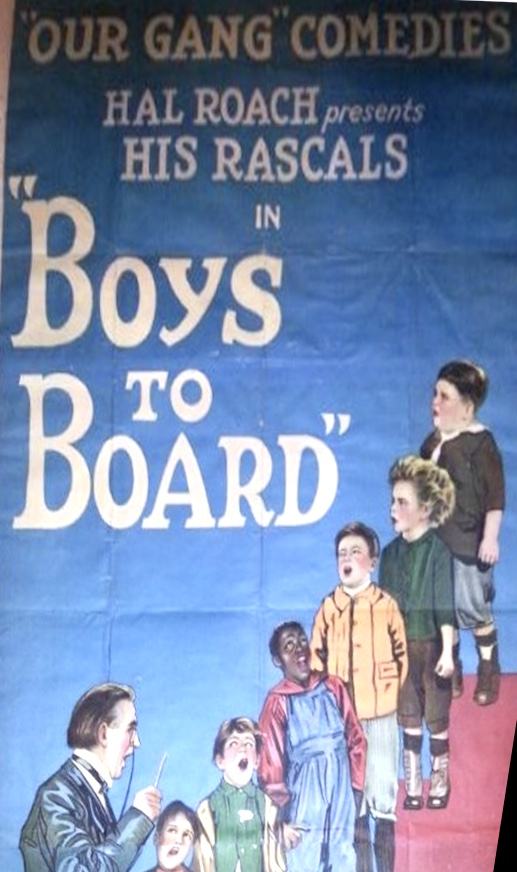
A definitive 6.2/10 rating for a film that redefined the boundaries of cult cinema. Boys to Board remains a cornerstone of transgressive art.
In the pantheon of early American cinema, the 'Our Gang' series stands as a monumental testament to the unvarnished spontaneity of youth. Boys to Board (1923), directed by Tom McNamara and produced by the legendary Hal Roach, represents a pivotal moment where the series transitioned from mere vignettes into more structurally complex narratives. This short film is not merely a collection of pratfalls; it is a sophisticated exploration of the friction between societal structures and the irrepressible spirit of childhood. The narrative arc, which begins in the suffocating atmosphere of a cruel boarding school, serves as a socio-political microcosm of the era's pedagogical rigidity.
The film opens with a visceral depiction of institutional malaise. The boarding school, a recurring trope in silent cinema, is rendered here with a specific brand of malice that makes the subsequent escape feel not just necessary, but righteous. Unlike the more whimsical depictions of education seen in The Simp, the school in Boys to Board is a landscape of deprivation. The writing by H.M. Walker and Tom McNamara utilizes title cards to sharp, satirical effect, highlighting the absurdity of the adult world through the prism of the children's suffering.
The performance of Richard Daniels as the kindly schoolteacher provides the emotional anchor for this segment. His character acts as a bridge between the tyrannical administration and the vulnerable pupils. This dynamic of the 'benevolent elder' is a theme Roach explored elsewhere, though perhaps with less frantic energy than in The Padre. In Boys to Board, the teacher's complicity in the escape elevates the film from a simple 'kids-at-play' short to a subversive commentary on authority. The escape itself is choreographed with a rhythmic precision that mirrors the kinetic energy of Flip's Circus, yet it maintains a grounded, almost gritty realism.
The second act of the film takes a sharp, almost surreal turn. By thrusting the gang into a bootlegger's booby-trapped house, Roach and McNamara tap into the zeitgeist of 1923. Prohibition was not just a legal reality but a cultural obsession, often lampooned in films like Seeing America Thirst. However, Boys to Board treats the bootlegger's lair as a mechanical funhouse of horrors. The house is a character in its own right, filled with trapdoors, moving walls, and automated defenses that predate the complex set pieces of modern action-comedy.
The visual language here is remarkably advanced. The use of space and the interaction between the child actors and the mechanical gags require a level of timing that is often overlooked in contemporary assessments of silent shorts. Mickey Daniels and Jack Davis exhibit a precocious understanding of physical comedy, their reactions to the house's 'surprises' feeling genuinely spontaneous. This is where the film diverges from the more theatrical melodrama of The Heart of Midlothian; it is cinema of the moment, focused on the immediate visceral response to a changing environment.
One cannot discuss Boys to Board without highlighting the presence of Allen 'Farina' Hoskins. Even in these early stages, Hoskins possessed a magnetic screen presence that often eclipsed his co-stars. His performance here is a blend of wide-eyed wonder and stoic resilience. While the racial dynamics of the 1920s are undeniably present, the 'Our Gang' shorts were unique for their era in portraying a relatively integrated group of children working toward a common goal. This camaraderie is the secret sauce of the series, providing a warmth that is absent in the more cynical Envy.
Joe Cobb, with his infectious enthusiasm, and the understated Jackie Condon round out a cast that feels like a genuine community. Their collective plight in the booby-trapped house creates a sense of stakes that, while comedic, never feels entirely trivial. There is a genuine tension as they navigate the bootlegger's traps, a tension reminiscent of the suspense found in Blindfolded, albeit filtered through a lens of childhood innocence. The cinematography captures their smallness against the backdrop of adult criminality, emphasizing their status as outsiders in a world they are only beginning to understand.
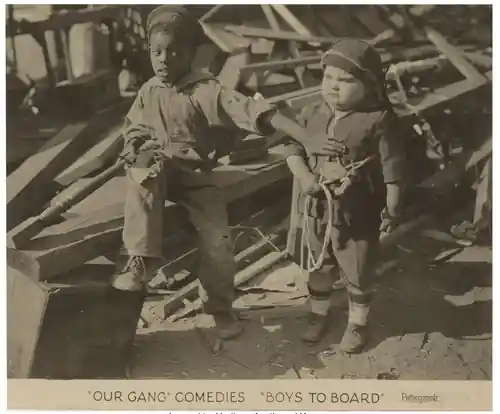
Tom McNamara’s direction in Boys to Board is characterized by a fluid camera and a keen eye for framing. The transition from the wide, desolate shots of the boarding school exterior to the cramped, claustrophobic interiors of the booby-trapped house creates a visual narrative of entrapment. This stylistic shift is as effective as the psychological transformations seen in The Masquerader. McNamara understands that comedy thrives in the details—the way a floorboard creaks, the specific angle of a falling object, or the lingering shot on a child's face as they realize they are not alone.
The writing by H.M. Walker deserves special mention. Walker was the king of the title card, providing the 'voice' of the Our Gang series. His ability to distill complex emotions and social critiques into a few witty lines is unparalleled. In Boys to Board, his writing bridges the gap between the physical gags and the narrative's heart. He avoids the saccharine sentimentality that plagued many silent child-centered films, opting instead for a dry, observational wit that appeals to both children and adults. This tonal balance is something that even international efforts like Les amours d'un escargot struggled to achieve with such consistency.
When placed alongside other films of the period, such as The Third Kiss or Dawn of Revenge, Boys to Board stands out for its lack of pretension. It does not strive for grand operatic gestures; instead, it finds the epic in the everyday. The struggle for a decent meal or a safe place to sleep is presented with the gravity of a Shakespearean drama, yet it is resolved through the ingenuity and resilience of youth. This thematic core is what has allowed the 'Our Gang' series to endure while other contemporaries have faded into obscurity.
The film also serves as a fascinating precursor to the 'home defense' subgenre. The bootlegger's house, with its mechanical ingenuity, feels like a silent ancestor to the traps of later cinema. The way the children turn the environment to their advantage—or are victimized by it—mirrors the domestic anxieties explored in Married Life (1921) or the absurdist domesticity of Are Married Policemen Safe?. However, by removing the adult protagonists and replacing them with children, Roach amplifies the stakes and the humor simultaneously.
Boys to Board is a masterclass in the economy of storytelling. In a relatively short runtime, it manages to establish a compelling conflict, a diverse cast of characters, and a thrilling climax. It captures a specific moment in American history—the intersection of the Victorian pedagogical leftovers and the wild, unregulated energy of the 1920s. It is a film that rewards multiple viewings, as the background details and the subtle interactions between the gang members reveal new layers of humor and pathos.
For those interested in the evolution of comedy, this film is essential viewing. It demonstrates how slapstick can be elevated through character-driven stakes and social awareness. Whether compared to the primal energy of Az ösember or the visual experimentation of Das wandernde Auge, Boys to Board remains a uniquely American artifact—a blend of optimism, rebellion, and the belief that no matter how booby-trapped the world may be, a group of friends can always find a way through.
Technical Note: The restoration of this short highlights the impressive depth of field achieved by the Roach cinematographers, making the bootlegger's house feel like a sprawling, dangerous playground that still resonates with audiences a century later.
IMDb —
1921
Community
Log in to comment.