DbcultAccessing Vault...
Cult Review
Senior Film Conservator
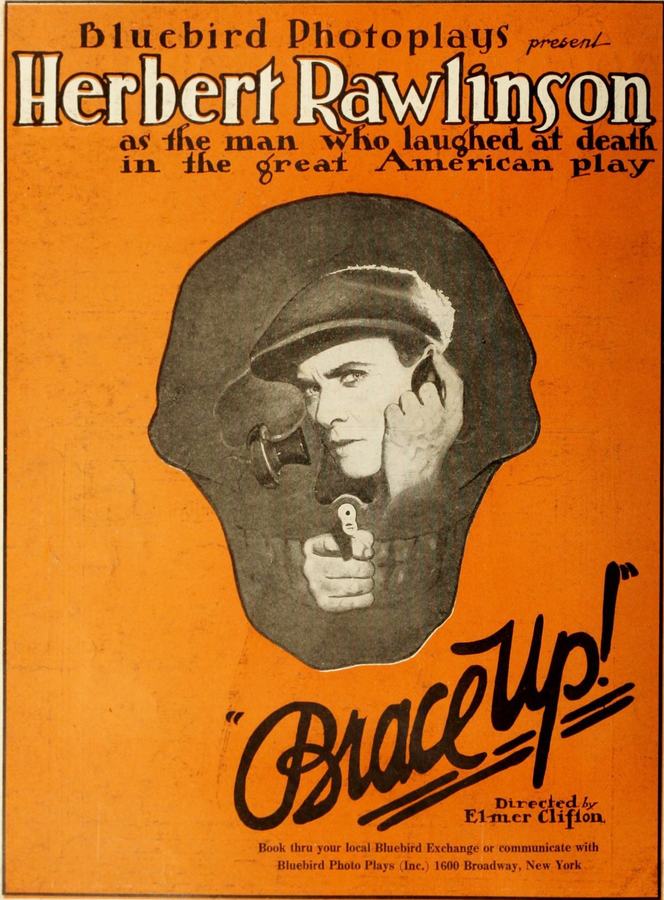
Stepping back into the annals of early cinema, one often encounters narratives that, while seemingly straightforward on the surface, reveal layers of fascinating societal anxieties, burgeoning psychological theories, and the nascent art of storytelling. Elmer Clifton's 1918 silent film, Brace Up, is precisely such a cinematic artifact. It’s a film that, at first glance, presents itself as a thrilling espionage yarn, but beneath its surface, it grapples with profound questions of masculinity, inherited expectations, and the very nature of courage itself. For those accustomed to the rapid-fire narratives of modern thrillers, Brace Up offers a different kind of intensity, one built on nuanced performances, evocative intertitles, and a surprisingly audacious plot twist that speaks volumes about the era’s fascination with the unseen forces of the human mind.
At its core, Brace Up is a paternal drama, albeit one set against the high-stakes backdrop of the Secret Service. Colonel Court, portrayed with a stern yet ultimately loving hand by Alfred Allen, embodies the archetypal strong, silent type—a man for whom courage is not merely a virtue but a fundamental prerequisite for existence. His distress over his son Henry’s occasional, indeed, recurrent, lapses in courage forms the emotional bedrock of the film. Herbert Rawlinson, as Henry, navigates this filial tension with a palpable vulnerability. He is a college athlete, a symbol of physical prowess, yet his internal fortitude remains stubbornly elusive. This dichotomy, the athletic body housing a timid spirit, is a rich vein for dramatic exploration, and Rawlinson subtly conveys Henry’s internal turmoil through his expressions and body language, a testament to the power of silent acting.
The narrative gains considerable momentum, and a refreshing layer of complexity, with the introduction of Ellen, Henry’s sweetheart, played by the captivating Claire Du Brey. What begins as a seemingly conventional romantic subplot quickly subverts expectations: Ellen is not merely a damsel in distress or a decorative love interest; she is, in fact, a Secret Service agent herself, actively engaged in a perilous mission to apprehend a notorious radium smuggler known as "National" Jim. This revelation is a stroke of genius, injecting a dose of progressive female agency into a narrative that could have easily succumbed to more traditional gender roles. Du Brey imbues Ellen with a quiet determination and intelligence, making her an admirable figure whose capabilities rival, and initially surpass, those of her male counterpart. Her character could certainly stand alongside the resilient protagonists seen in films like Her Triumph or The Heroine from Derna, showcasing a nascent but powerful trend of strong female characters in early cinema.
Colonel Court, unaware of Ellen’s professional involvement, sees an opportunity to toughen Henry, to instill in him the very courage he believes is lacking. He assigns his son to the same case, hoping that the crucible of real danger will forge the steel within him. This paternalistic intervention, however, backfires spectacularly. When confronted with the genuine peril of the mission, Henry’s courage again falters, leaving him despondent and his father gravely disappointed. This failure is crucial, not just for dramatic tension, but for setting the stage for the film’s most unusual and thought-provoking element. It forces Henry, and by extension the narrative, to look beyond conventional solutions, pushing the boundaries of what was considered plausible or even desirable in a hero’s journey.
Here is where Brace Up truly distinguishes itself, veering into territory that feels remarkably ahead of its time, or perhaps, deeply rooted in the spiritual and pseudo-scientific currents of the early 20th century. Desperate to overcome his inherent timidity, Henry decides to explore the uncharted waters of the human psyche. He hires three men, not for physical training or strategic advice, but to communicate "power and courage" to him through intense concentration. This concept, bordering on the telepathic or the mystical, is a fascinating reflection of an era grappling with nascent psychological theories, spiritualism, and the potential of the mind over matter. It’s a bold narrative choice by writers Waldemar Young and Elmer Clifton, one that elevates the film beyond a mere spy thriller into a psychological drama of self-discovery through unconventional means. One might draw thematic parallels to films like The Spirit of the Poppy, which also explored internal struggles and the power of the mind, albeit through different narrative devices. The struggle against an internal foe, a lack of courage, resonates with the thematic depth found in films such as Fear, where characters confront their deepest anxieties.
The scheme, astonishingly, works. Bolstered by this psychic infusion of courage, Henry undergoes a remarkable transformation. He enters "National" Jim’s house – a lair of villainy brought to life by the menacing presence of Sam De Grasse – with a newfound resolve. The ensuing confrontation is a classic silent film showdown, replete with dramatic close-ups and dynamic physical action. Henry, now fully 'braced up,' defeats Jim, locates the hidden radium, and crucially, saves Ellen from peril. This climactic sequence serves as both a thrilling resolution to the espionage plot and a symbolic triumph for Henry, who has finally overcome his internal demons through a truly unique path.
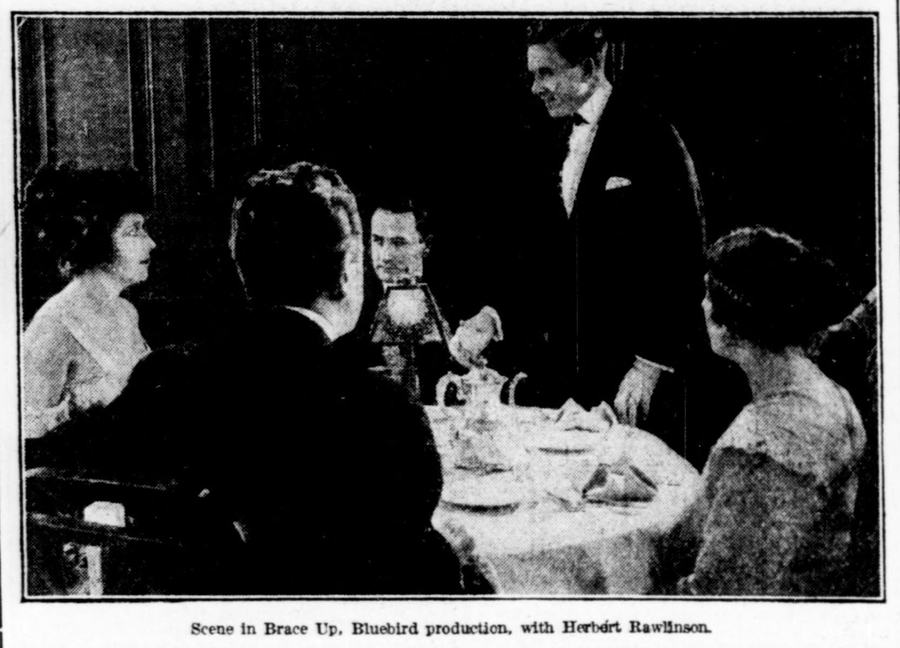
Director Elmer Clifton handles the various narrative threads with a steady hand. His pacing, a critical element in silent cinema, allows the emotional beats to register without dragging, while the action sequences are clear and impactful. The visual language of the film, through its use of intertitles, expressive acting, and carefully composed shots, effectively conveys the urgency of the spy plot and the internal struggles of its protagonist. The film’s production design, while perhaps not as opulent as some contemporary epics like From the Manger to the Cross, is effective in creating distinct environments, from the respectable home of Colonel Court to the shadowy lair of "National" Jim.
The performances are uniformly strong. Herbert Rawlinson’s portrayal of Henry is particularly noteworthy for its arc; he convincingly transitions from a diffident young man to a hero, making the audience believe in his transformation, however implausible its catalyst might seem. Alfred Allen’s Colonel Court is more than just a stern father; his underlying concern and eventual pride in his son are subtly communicated. Claire Du Brey, as Ellen, is a standout, embodying intelligence and resilience that make her character a compelling counterpoint to Henry's initial weakness. Her agency is not merely a plot device but an integral part of the film's progressive leanings. And Sam De Grasse, as the villain, delivers a performance that is appropriately menacing and theatrical, fitting for the silent era's often larger-than-life antagonists.
Thematically, Brace Up is a rich tapestry. It explores the pressures of paternal expectations and the struggle for a son to find his own path to heroism, a theme that resonates with the familial dynamics explored in films like The Great Divide. It delves into the nature of courage itself – is it inherent, or can it be cultivated, even supernaturally transmitted? This question, posed within a seemingly conventional genre, elevates the film considerably. The inclusion of Ellen as an active, capable agent also subtly challenges the prevailing gender norms of the time, presenting a refreshing vision of female empowerment that extends beyond domesticity or passive support. It speaks to a growing awareness and desire for more complex female characters in cinema, a trend that would continue to evolve throughout the decades.
The unique 'psychic transmission' element is undoubtedly the film's most distinctive feature. It taps into a cultural zeitgeist where spiritualism, mesmerism, and early psychological experiments were topics of public fascination. Rather than dismissing it as quaint or naive, it's more productive to view it as a creative cinematic exploration of internal transformation, a symbolic representation of finding inner strength through unconventional means. In an era before established psychotherapy, such a concept offered a fantastical yet compelling explanation for overcoming profound personal obstacles. It’s a narrative device that, while unusual, ultimately serves the purpose of Henry’s character arc, allowing him to achieve the self-belief necessary to fulfill his destiny.
The script by Waldemar Young and Elmer Clifton is commendably structured, building tension effectively and allowing for moments of both dramatic introspection and thrilling action. The dialogue, conveyed through intertitles, is concise and purposeful, driving the plot forward without unnecessary exposition. The visual storytelling, paramount in silent films, is well-executed, with expressions and gestures carrying significant narrative weight. The contrast between Henry’s initial timidity and his final heroic actions is clearly delineated through Rawlinson’s physical performance, underscoring the success of the 'psychic bracing.'
In conclusion, Brace Up is far more than a historical curiosity. It is a vibrant, engaging silent film that adeptly blends the excitement of an espionage thriller with a surprisingly nuanced psychological drama. Its exploration of courage, paternal expectations, and the power of the mind, coupled with a strong female lead, makes it a compelling watch even today. For cinephiles interested in the evolving landscape of early cinema, and particularly those who appreciate narratives that dare to venture into the unconventional, Brace Up stands as a testament to the creativity and thematic depth that could be achieved without spoken dialogue. It's a film that truly encourages its audience to look deeper, to 'brace up' their own expectations, and appreciate the unique magic of a bygone era. It reminds us that the quest for self-improvement and the battle against inner demons are timeless struggles, capable of being dramatized in ways that are both thrilling and profoundly thought-provoking, even a century after their initial conception.
IMDb —
1925
Community
Log in to comment.