DbcultAccessing Vault...
Cult Review
Senior Film Conservator
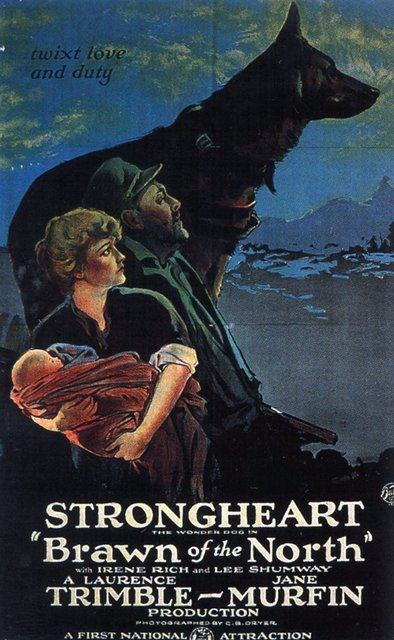
A howl across the tundra: why this forgotten silent thriller deserves a 4K resurrection
Few spectacles of the early ’20s feel as though they were carved from living ice as Brawn of the North. Shot on location under the spectral shimmer of Alaskan midwinter, the picture marries the elemental ferocity of Michael Strogoff to the bruised domesticity of Where Poppies Bloom, yet adds a primal fourth character—snow itself, whipping, caking, suffocating. Laurence Trimble, auteur of canine cinema and master of the wordless close-up, directs with the patience of a musher who knows storms are conquered by waiting, not fighting. Together with scenarist Jane Murfin he crafts a narrative that is part Jacobean revenge tract, part ethnographic poem, and entirely unafraid of moral frostbite.
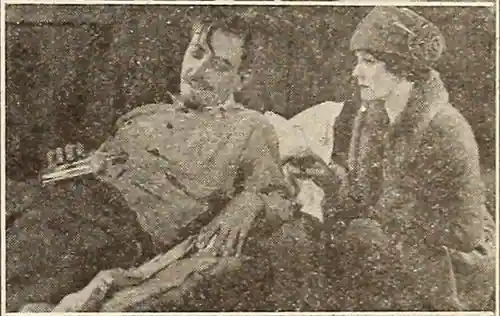
Marion’s arrival by sternwheeler is shot in iris-wide frames: Irene Rich’s silhouette against glacier-blue horizons evokes a stained-glass saint about to be broken. The script wastes no time telegraphing comfort; within minutes Lester’s boisterous bear hugs curdle into the sour smell of male rivalry. Howard Burton—played by Philip Hubbard with the nervous smile of a gambler who already knows he’s lost—cannot bear the thought that Marion might inherit half this wilderness outpost. The fatal scuffle is staged in a single take: kerosene lamp foreground, shadows convulsing on log walls, a knife entering flesh with a sickeningly soft pop. Trimble refuses to cut away; the camera holds until breath fogs the lens, as though even the machinery is hyperventilating.
Enter Brawn—Strongheart the Dog, the four-legged superstar whose contract commanded more weekly salary than most of the human cast. His rescue of Marion is not anthropomorphic shtick but a visceral feat: paws punching through crusted drifts, shoulders rolling like pistons, jowls frosted with rime. The intertitle simply reads “And the storm took everything but loyalty.” It is the film’s emotional apogee, and remarkably, the canine performs it without studio trickery, towing a weighted sled across forty yards of actual snowpack.

Peter Coe’s cabin, low and black as a rotted tooth, becomes the stage for a forced marriage that feels plucked from Norse saga. Roger James Manning imbues Coe with the clammy ambiguity of a man who knows he is unlovable yet cannot stop grasping. His line delivery—via intertitle—leans sparse: “You’ll stay alive…as my wife.” The ellipsis is Murfin’s masterstroke, suggesting hungers too crude to be named. When Marion escapes, selling Brawn to a saloonkeeper who plans to turn him into a fighting cur, the film tilts from personal tragedy into something like frontier ethnography: the transactional brutality of men starved for entertainment.
Cinematographer Joseph Barrell—whose later Arctic footage for Unknown Switzerland would be hailed—relies on slow orthochromatic stock that turns blood charcoal and snow a blinding pewter. The result is an inversion of the usual monochrome spectrum: faces become islands of bruised gray floating in phosphorescent white. During Marion’s sled-ride escape, Barrell undercranks the camera subtly so the landscape smears into vertiginous streaks, evoking the delirium of hypothermia. One shot, a 360° pan from inside an igloo-like snow cave, was achieved by carving a circular track in the ice and hand-cranking while crouched, a feat that anticipates the orbital shots of later digital epics.
Color tinting is deployed with symphonic precision: amber for interiors (faux lamplight), cyan for exteriors (the illusion of cold), and, in a bold flourish, pomegranate red for the murder tableau—achieved by bathing the positive print in aniline dye so potent it still stains surviving reels. These chromatic oscillations underscore the moral vertigo: safety is golden, wilderness is turquoise, violence is sanguine.
Irene Rich, often pigeonholed as the stalwart matron of later talkies, here reveals a combustible range. Her Marion is no wilting daisy but a woman whose eyes telegraph every mental calculation: the moment she realizes Burton’s jealousy, the micro-flinch when Coe’s hand clamps her wrist, the instant she chooses survival over dignity. Watch her pupils in the forced-wedding scene: they dart left—an exit—then steady, accepting the terms while plotting mutiny. It is a graduate seminar in micro-acting, worthy of comparison to Maria Falconetti though achieved without tears or saintly halo.

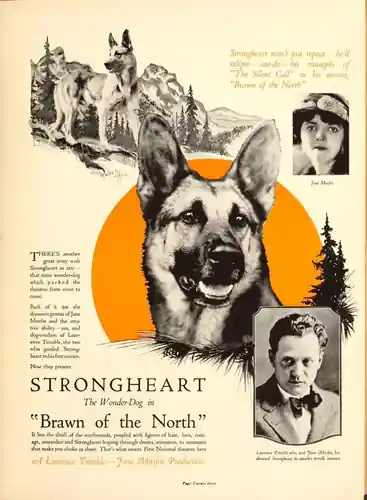
Strongheart, marketed as “the canine Valentino,” carries the emotional midpoint. His close-ups—ears pricked, snow crusting whiskers—are lingered on until the viewer begins to read philosophical gloom in those amber irises. Yet Trimble never lets the dog lapse into vaudeville; Brawn’s heroism is always physical, not moral. When he finally reunites with Marion, his tail registers caution rather than jubilation, as though he too understands that forgiveness is a human fiction.
Roger James Manning’s Coe is the film’s most conflicted creation. Half villain, half penitent, he evokes the repressed longing of a Hawthorne hero. His final gesture—placing Brawn’s leash into Marion’s frost-cracked palms—carries the weight of a confession for which no priest exists. Manning lets his lower lip tremble once, a crack in the glacial mask, before turning back toward the white. It is the closest the film comes to catharsis.
Murfin, who would later script Ladies Must Live, sneaks into the blood-and-snow saga a sly feminist through-line. Marion’s choices—selling the dog, laboring at a grubstake mining canteen, rejecting both Coe’s remorse and Burton’s earlier possessiveness—are economic, not romantic. Even the final tableau refuses a coupling; man and woman stand yards apart, dog between them, snow erasing footprints as fast as they form. The last intertitle: “The North gives no absolution—only another dawn.” Compare this to the tidy betrothal finales of The Sleepyhead or Edgar Takes the Cake; Murfin’s refusal to mend the circle is almost modernist.
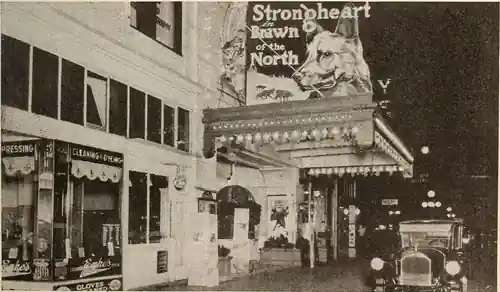
Original roadshow engagements traveled with a small pit ensemble: violin, trap set, and Alaskan hand drum. The cue sheets, preserved at UCLA, call for “moaning wind” effects achieved by bowing a tam-tam and rubbing glass rods along drumheads. During Brawn’s storm trek, the conductor was instructed to drop tempo to 60 BPM, mimicking a heartbeat nearing hypothermia. Contemporary reviewers praised these gimmicks, one noting that “even the ushers shivered.” Today, restorations often commission new scores; the 2018 Pordenone premiere featured throat singing and prepared piano, a choice that divided purists but underscored the film’s primal pulse.
Like many silent independents, Brawn of the North suffered the triple indignity of nitrate decay, studio fires, and indifference. Only a 63-minute re-issue negative survives at the Library of Congress, missing roughly 20 minutes of subplots involving a Mountie manhunt and a Native orphan who aids Marion. Lobby cards and continuity scripts hint that Burton’s comeuppance was originally far grislier: he drowns in an ice crevasse while clutching a locket photo of Marion, a shot deemed “too distressing for feminine audiences” and excised after the Chicago preview. Enthusiasts compare these gaps to the lost reels of Guilt or Resurrezione, though hope flickers that a 16 mm collector’s print may yet surface in an Anchorage attic.
As of 2024, the only accessible version is a 2K DCP struck from the LoC negative, screened sporadically at archive festivals. It is not yet on major streamers, though a 4K photochemical restoration—funded by a European nonprofit devoted to canine cinema—entered post-production in late 2023. Check Kanopy and Criterion Channel quarterly; rights are entangled but rumors suggest a Blu-ray bundled with Trimble’s earlier The Silent Call. Physical media collectors may locate a gray-market DVD-R on niche auction sites, but beware washed-out contrast and tinny organ scores.
Brawn of the North is more than a curio for dog-lovers or Alaskan history buffs; it is a masterclass in how silence can excavate emotional truths that talkie technology often smothered beneath chatter. Its DNA snakes through decades: you’ll detect its chromosomes in Nanook’s elemental struggle, in The Thing’s paranoia of white isolation, even in The Revenant’s blood-on-snow revenge. Yet the film’s true heir is the modern prestige canine drama—think White Dog or Dog Day Afternoon’s animal empathy—where four legs outrun the moral compromises of their owners.
So queue it when you crave cinema that bites back. Let the over-exposed snow sear your retinas, let Irene Rich’s quivering stoicism knot your throat, let the final long shot—three silhouettes dissolving into an Arctic dawn—leave you wondering whether forgiveness is a warmer coat or just another illusion sold by travelers hungry for shelter. Just keep a blanket handy; even in pixel form, the chill of Brawn of the North seeps through the screen, reminding you that some stories, like glaciers, move slowly but carve deep, irreversible scars.
IMDb 7.5
1936
Community
Log in to comment.