DbcultAccessing Vault...
Cult Review
Senior Film Conservator
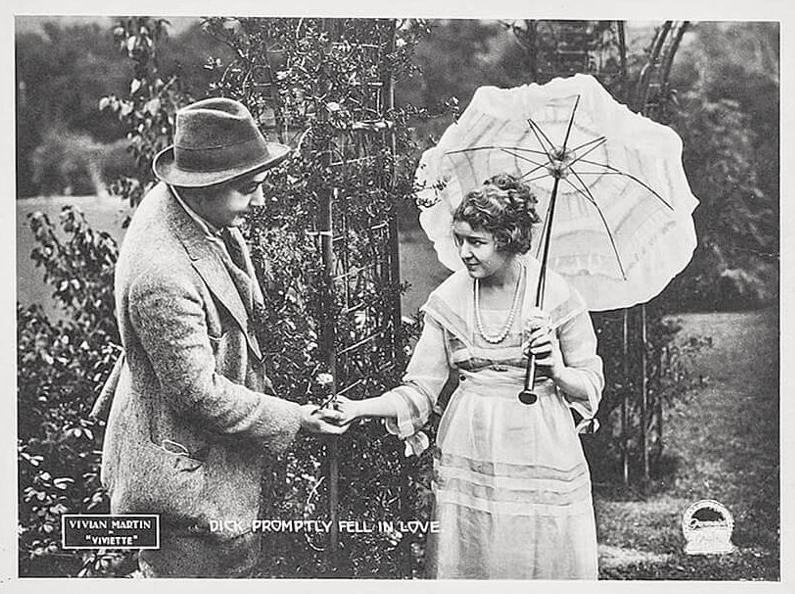
Stepping back into the flickering glow of early 20th-century cinema, one encounters Viviette, a film that, despite its age, resonates with a timeless exploration of human folly, desire, and the intricate dance between love and ambition. Directed by the prolific Julia Crawford Ivers and penned by Ivers alongside William J. Locke, this silent drama from 1918 emerges not merely as a historical artifact but as a surprisingly nuanced character study, particularly through its titular heroine. It’s a narrative tapestry woven with threads of youthful impulsiveness, societal expectation, and the often-catastrophic consequences of miscommunication.
At its heart, Viviette unfurls the story of its namesake, played with captivating vivacity by Vivian Martin. Viviette is no demure wallflower; she is an adopted daughter imbued with a spirited nature, a coquettish charm, and an intellect that belies her seemingly frivolous exterior. Upon her return to Mrs. Ware’s country estate after completing her education, she is a vibrant force, a butterfly amidst a collection of more conventional moths. Her presence immediately ignites the passions of young Dick Ware, portrayed by Eugene Pallette, a man as impetuous and unbridled in his affections as Viviette is in her spirit. Their connection is undeniable, a magnetic pull between two kindred, fiery souls. Yet, Viviette, with a sagacity that transcends her years, perceives in Dick a fundamental lack of drive, an absence of the ambition she secretly yearns for in a partner. This internal conflict forces her to mask her genuine attraction, a decision that sets in motion a chain of events both tragic and inevitable.
The arrival of Austin Ware, Dick’s older brother, introduces a fascinating dynamic. Donald Blakemore embodies Austin as the quintessential antithesis to Dick: sober, successful, and grounded in his London law practice. He represents the very ambition and stability that Viviette, consciously or unconsciously, seeks. Their burgeoning friendship, initially a pragmatic alliance to secure Dick a position in Vancouver – a new frontier promising opportunity – soon becomes fraught with unintended romantic tension. It's a testament to the script's subtlety that Austin, despite his affection for Kathryn Holroyd, finds himself embroiled in this emotional maelstrom, utterly unaware of the storm brewing around him. The film cleverly uses Austin's genuine desire to help his brother as a catalyst for the central misunderstanding, demonstrating how noble intentions can be tragically misinterpreted.
The dramatic fulcrum arrives with Dick’s misinterpretation of Austin and Viviette’s relationship. Blinded by jealousy and a deeply ingrained sense of rivalry, he perceives their professional collaboration as a romantic entanglement. This classic melodramatic trope, the fatal misunderstanding, is handled with a compelling intensity. When Viviette, perhaps in a moment of playful irony or a desperate attempt to diffuse the escalating tension, jokingly suggests a duel between the brothers for her affections, Dick's impetuous nature takes over. He takes her jest with deadly seriousness, leading to a confrontation that nearly claims Austin’s life. This pivotal scene is a masterclass in silent film drama, relying on powerful visual storytelling and the actors' emotive performances to convey the gravity of the moment. The duel itself is not just a physical struggle but a symbolic clash between unbridled passion and pragmatic reason, between a love that consumes and a love that seeks to build.
Vivian Martin’s portrayal of Viviette is undoubtedly the anchor of the film. She imbues the character with a complex blend of youthful exuberance, strategic intelligence, and a nascent, almost reluctant, maturity. Viviette’s decision to offer herself to Dick as his wife, to accompany him to Vancouver, is not born of romantic bliss but of a stark realization of the situation's gravity. It’s an act of sacrifice, a pragmatic response to a crisis she inadvertently created. This isn't a fairy-tale ending; it's a sobering acceptance of consequence, a testament to her character’s depth. Martin conveys this shift from playful coquette to resigned pragmatist with remarkable clarity, using subtle gestures and expressive eyes that speak volumes without a single spoken word. Her performance elevates the film beyond mere melodrama, grounding it in a believable, if tragic, human choice.
Eugene Pallette, as Dick Ware, provides a powerful counterpoint. His performance is one of raw, untamed emotion. Dick is a character driven by instinct, by an all-consuming love that borders on obsession. Pallette captures this intensity, making Dick's jealousy and subsequent violence feel both shocking and, within the context of his character, tragically inevitable. Harrison Ford, a name that might surprise modern audiences but refers to the prolific silent film actor, likely plays a smaller, yet impactful, role, adding to the ensemble's strength. Kate Toncray as Mrs. Ware and Clara Whipple also contribute to the film’s rich tapestry of characters, providing the societal backdrop against which these personal dramas unfold.
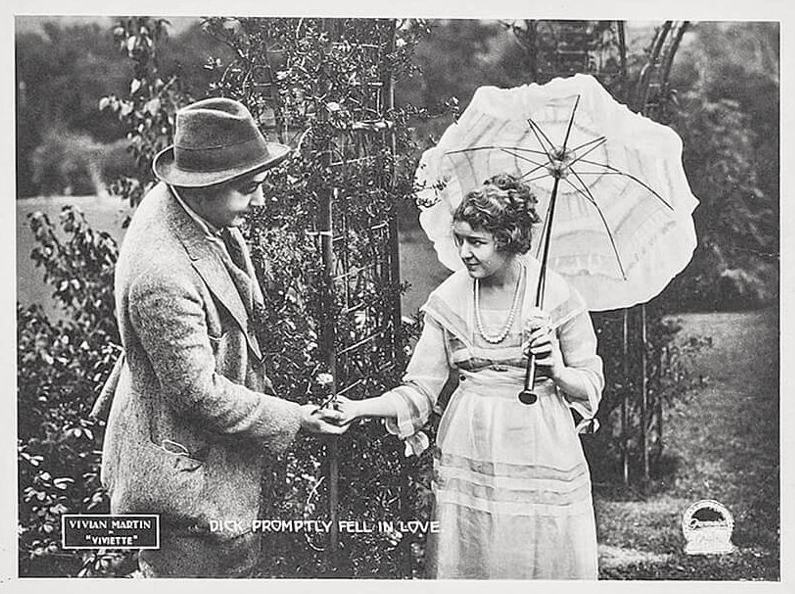
Julia Crawford Ivers’ direction is commendable for its ability to maintain narrative clarity and emotional intensity within the constraints of silent cinema. The pacing is deliberate, allowing the audience to absorb the nuances of character motivation and the escalating tension. Ivers, a pioneering female director and writer, demonstrates a keen understanding of visual storytelling, utilizing close-ups and dramatic staging to amplify key emotional beats. The film’s aesthetic, while simple by today's standards, effectively transports the viewer to a specific time and place, evoking the societal norms and expectations that shape the characters' decisions.
Thematically, Viviette is remarkably rich. It probes the eternal conflict between passion and prudence, exploring how impulsive desires can collide with rational thought, often with devastating results. The film also delves into the societal pressures placed upon individuals – men to be ambitious and successful, women to make advantageous marriages. Viviette’s internal struggle between her attraction to Dick and her desire for a partner with ambition is a poignant reflection of these pressures. Her ultimate decision, a blend of duty, guilt, and perhaps a pragmatic acceptance of her fate, speaks volumes about the limited choices often available to women of her era.
Comparing Viviette to other silent dramas of the period reveals its strengths. While not as overtly grand in scale as a historical epic, its intimate focus on character psychology and moral dilemma places it alongside films that explore the darker recesses of human nature. One might draw parallels to the intense psychological and moral struggles found in films like Dzieje grzechu (The Story of Sin), where characters grapple with profound ethical choices and societal judgment. The dramatic consequences of personal choices and the weight of fate, themes also prevalent in The Bells, resonate strongly within Viviette’s narrative. The film, much like these contemporaries, understands that true drama often arises from the internal conflicts of its protagonists and the misunderstandings that fester between them, rather than from external spectacle.
In an era often dismissed for its perceived cinematic naiveté, Viviette stands as a powerful counter-argument. It demonstrates that early filmmakers were capable of crafting complex narratives populated by multi-dimensional characters, exploring universal themes with skill and sensitivity. The film's enduring appeal lies in its ability to transcend its historical context and speak to contemporary audiences about the timeless struggles of the heart and mind. It reminds us that the human condition, with its glorious triumphs and tragic failures, has always been the most fertile ground for storytelling.
To watch Viviette today is to embark on a journey back in time, not just to witness the nascent stages of cinematic art, but to engage with a compelling human drama. It's a reminder of the power of silent film to communicate profound emotions and intricate plots through gesture, expression, and the careful construction of visual narratives. The film is a testament to the talent of its cast and crew, particularly Vivian Martin and Julia Crawford Ivers, who together created a character and a story that linger long after the final fade-out. For enthusiasts of classic cinema and those interested in the evolution of storytelling, Viviette is more than just a historical curiosity; it is a vibrant, emotionally resonant piece of cinematic history that continues to captivate and provoke thought.
The tragic romanticism woven throughout the narrative, culminating in Viviette's fateful decision, echoes the intricate moral landscapes explored in other period dramas. It's a film that doesn't shy away from the darker side of human impulse, showcasing how easily love can morph into possessiveness, and how a playful remark can unleash devastating consequences. The quiet power of Viviette's sacrifice, devoid of grand pronouncements, speaks volumes about the societal constraints and personal responsibilities that often dictated the lives of women in that era. Her journey to Vancouver, not as a blissful bride but as a woman accepting her lot, leaves a lingering sense of melancholic realism that elevates the film beyond simple melodrama into something far more profound.
Ultimately, Viviette serves as a compelling argument for the artistic integrity and emotional depth of early cinema. It’s a film that invites re-evaluation, encouraging us to look beyond the absence of sound and embrace the rich, expressive language of the silent screen. Its characters, particularly the eponymous Viviette, remain etched in memory as complex individuals navigating a world of rigid expectations and turbulent emotions. A true hidden gem, this film deserves its place in the pantheon of significant silent era productions, offering a window into a past that still resonates with our present concerns about love, choice, and consequence.
IMDb —
1927
Community
Log in to comment.