DbcultAccessing Vault...
Cult Review
Senior Film Conservator
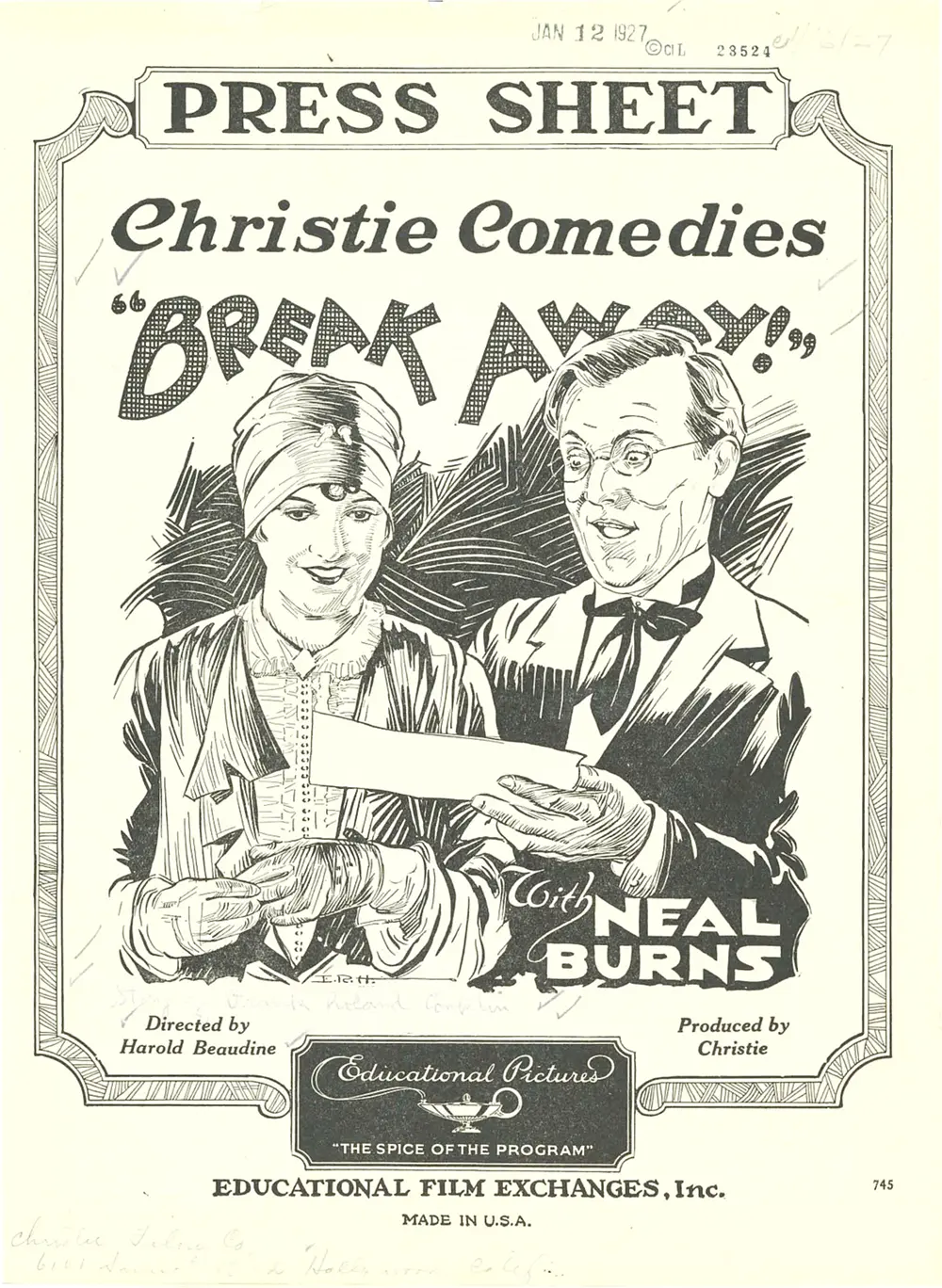
Is the century-old silent comedy ‘Break Away’ worth watching today? Short answer: yes, but with significant caveats. This film is a delightful, if dated, romp for aficionados of early cinema and slapstick enthusiasts, but it will likely test the patience of those accustomed to modern narrative pacing and sophisticated humor.
It’s a fascinating relic, a snapshot of comedic craftsmanship from an era long past, offering genuine laughs for the right audience. It works. But it’s flawed.
Let’s cut straight to it. For those wondering if ‘Break Away’ holds up, here’s the breakdown:
This film works because: Its sheer, unadulterated chaotic energy is infectious. The central conceit of a house literally falling apart around its inhabitants is a masterclass in escalating farce, executed with remarkable precision for its time.
This film fails because: Its humor, while foundational to screen comedy, can feel simplistic and repetitive to a modern audience. The narrative often sacrifices character depth for gag velocity, making some emotional beats feel unearned.
You should watch it if: You appreciate the foundational elements of screen comedy, have a keen interest in silent film history, or simply enjoy a good, old-fashioned slapstick romp without demanding contemporary sensibilities.
For anyone with a passing interest in the origins of cinematic comedy, ‘Break Away’ isn't just worth watching; it's a valuable, if not essential, piece of the puzzle. It exemplifies the kinetic, physical humor that defined the silent era, pushing a single, absurd premise to its logical, and often hilarious, extreme. You won't find deep character studies or intricate plots here, but you will find a relentless commitment to a gag.
However, for the casual viewer expecting the narrative sophistication or nuanced performances of modern cinema, this 1922 short will likely feel dated. Its pacing is rapid-fire, but the comedic beats are broad, relying on visual gags and exaggerated reactions that might not translate universally across a century. It's a film that asks for a specific kind of engagement, one steeped in historical appreciation.
Frank Roland Conklin’s script for ‘Break Away’ is less a narrative and more a carefully constructed comedic machine, designed to wind up and then explode in a symphony of staged chaos. The premise is deceptively simple: a theatrical impresario, Neal (played by Neal Burns), needs a house to impress his prospective father-in-law, only to discover his only available 'home' is a collection of stage flats. This isn't just a plot device; it's a philosophical statement on the nature of illusion, albeit one delivered with pie-in-the-face glee.
What begins as a desperate ruse quickly spirals into a logistical nightmare, as the very components of Neal’s ersatz domestic bliss are periodically repossessed for actual theatre performances. The film reinterprets the 'house' not as a static setting, but as a dynamic, sentient character, constantly shifting and betraying its inhabitants. It’s a brilliant conceptual gag that anticipates later, more elaborate set-piece comedies, like Buster Keaton’s architectural stunts in ‘The Biggest Show on Earth’, though with far less precision and more frantic energy.
The tension isn't just about Neal keeping up appearances; it's about the very fabric of his reality literally unraveling. Natalie’s father, a character of singular focus on his omelette, becomes the unwitting fulcrum of this collapse, his culinary quest inadvertently exposing the flimsy foundations of Neal’s grand deception. This isn't just a father-in-law to impress; he’s an agent of comedic destruction, guided by the purest of intentions.
The resolution, where the entire farce is recognized for its theatrical potential, feels both convenient and perfectly in line with the film’s self-aware absurdity. It’s a meta-commentary on the nature of performance, where even the most disastrous real-life events can be fodder for entertainment. Conklin’s writing, while simple, is extraordinarily effective in setting up this escalating, physical comedy.
The cast of ‘Break Away’, led by Neal Burns himself, embodies the robust, expressive acting style demanded by silent cinema. Their performances are less about subtle nuance and more about clear, broad strokes that convey emotion and intent without dialogue. Neal Burns, as the harried protagonist, is a master of the double-take and the frantic scramble. His wide-eyed panic and desperate attempts to maintain control are the engine of the film’s humor.
Natalie Joyce, as the sweetheart Natalie, primarily serves as the romantic anchor, her reactions often mirroring the audience’s own bewilderment and amusement at Neal’s predicament. She’s charming, if a little underutilized in the grand scheme of the escalating chaos. It's a testament to her screen presence that she manages to hold her own amidst the frenetic energy.
Perhaps the standout, however, is the unnamed actor playing Natalie’s father. His unwavering commitment to his omelette, even as the walls literally crumble around him, is a stroke of comedic genius. He is the immovable object against Neal’s irresistible force of deception. The scene where he 'fakes a fight with the cook' (a non-existent one, naturally) to gain control of the kitchen is a prime example of the film’s clever use of implied action and exaggerated performance. It’s a surprisingly strong performance, demonstrating that even in rudimentary narratives, a well-defined character, however one-note, can elevate the material.
The ensemble, including Jack Duffy, Jimmie Adams, William Irving, and Gale Henry, all contribute to the film’s bustling atmosphere. Their reactions, whether as skeptical financial backers or bewildered onlookers, are crucial in grounding the escalating absurdity. This isn't just about one man's struggle; it's about how an entire world reacts to his spectacular failure to maintain an illusion.
The direction in ‘Break Away’ is a masterclass in kinetic comedy. The film moves at a breakneck pace, barely allowing the audience to catch their breath before the next piece of the house is whisked away, or another frantic attempt at concealment is made. There's a relentless forward momentum, driven by the escalating stakes and the ticking clock of Natalie’s father’s increasingly suspicious presence.
The staging of the collapsing house is particularly impressive for a film of this era. The constant removal and reintroduction of set pieces, often with characters still inside, requires precise timing and coordination. One particularly memorable sequence involves Neal and Natalie physically maneuvering her father from one 'intact' section of the house to another, a brilliant visual metaphor for trying to contain an uncontrollable situation. It feels like a precursor to the elaborate physical comedy seen in films like ‘The Third Alarm’, where the environment itself becomes a character.
While the pacing is generally excellent, maintaining a high level of energy, there are moments where the repetitive nature of the 'house disappearing' gag could test modern sensibilities. However, within the context of early silent shorts, this kind of sustained, single-premise humor was a common and often effective strategy. The director understands the visual language of slapstick, allowing the physical comedy to speak for itself without over-explaining the predicament.
The cinematography of ‘Break Away’, while technically straightforward, is entirely functional to the comedic goals. The camera is largely static, allowing the action to unfold within the frame, emphasizing the physical comedy and the elaborate set changes. There are no fancy camera movements or experimental angles; the focus is on clearly capturing the performers and the disintegrating environment. This directness serves the slapstick well, ensuring every pratfall and frantic dash is visible.
The true star of the technical aspects, however, is the production design – or rather, the deliberate lack thereof. The 'scenic' house is a character in itself, a flimsy, mutable entity that embodies Neal’s desperation. The visual contrast between the initial appearance of a respectable home and its gradual, piece-by-piece deconstruction is inherently comedic. The sight of carpenters brazenly removing walls while characters are still mid-conversation is a stroke of genius, highlighting the inherent theatricality of the entire premise.
The artifice is never hidden; it's the point. The film revels in its constructed nature, making the audience complicit in the joke. This choice, to expose the theatrical roots of the 'house,' makes ‘Break Away’ feel surprisingly modern in its self-awareness. It’s a less polished, more chaotic version of the meticulous stagecraft seen in later silent films, but its impact is undeniable. The visual gag of a shrinking, shifting domicile is unforgettable.
What does ‘Break Away’ tell us about the enduring power of slapstick? It confirms that physical comedy, when executed with commitment and clear intent, transcends language and time. The universal humor of someone desperately trying to maintain control in an uncontrollable situation remains potent. The film’s reliance on visual gags means it translates effortlessly across cultures, a significant advantage for silent cinema.
Yet, it also highlights the limitations. Modern audiences, accustomed to more sophisticated comedic structures and character-driven humor, might find the relentless focus on a single gag tiresome. The lack of emotional depth for characters like Natalie, who often feels more like a prop than a person, can make it harder to fully invest. This isn't a critique of the film itself, but rather an observation on how comedic tastes have evolved. Films like ‘Hoot Mon!’ also relied heavily on physical gags, but ‘Break Away’ pushes the environmental chaos even further.
I would argue that while its charm is undeniable, ‘Break Away’ serves more as an academic curiosity for the casual viewer than a laugh-out-loud experience. For those who study the evolution of comedy, however, it's a foundational text, demonstrating how early filmmakers explored the potential of the medium to create purely visual humor. It’s a raw, unadulterated example of what silent comedy could achieve with a simple premise and a lot of stagecraft.
To summarize the experience of watching ‘Break Away’:
‘Break Away’ is a fascinating, if imperfect, relic of early Hollywood. It's a testament to the ingenuity of silent filmmakers working with limited resources but boundless imagination. While it won't resonate with everyone, its chaotic energy and pioneering spirit make it a worthwhile watch for those who appreciate the foundations upon which all modern comedy is built. It’s a film that demands you suspend your expectations of narrative sophistication and simply revel in the delightful mayhem. Go in with an open mind, and you might just find yourself charmed by its century-old, collapsing brilliance. It’s not a masterpiece, but it’s an important piece of the puzzle.
IMDb —
1927
Community
Log in to comment.