DbcultAccessing Vault...
Cult Review
Senior Film Conservator
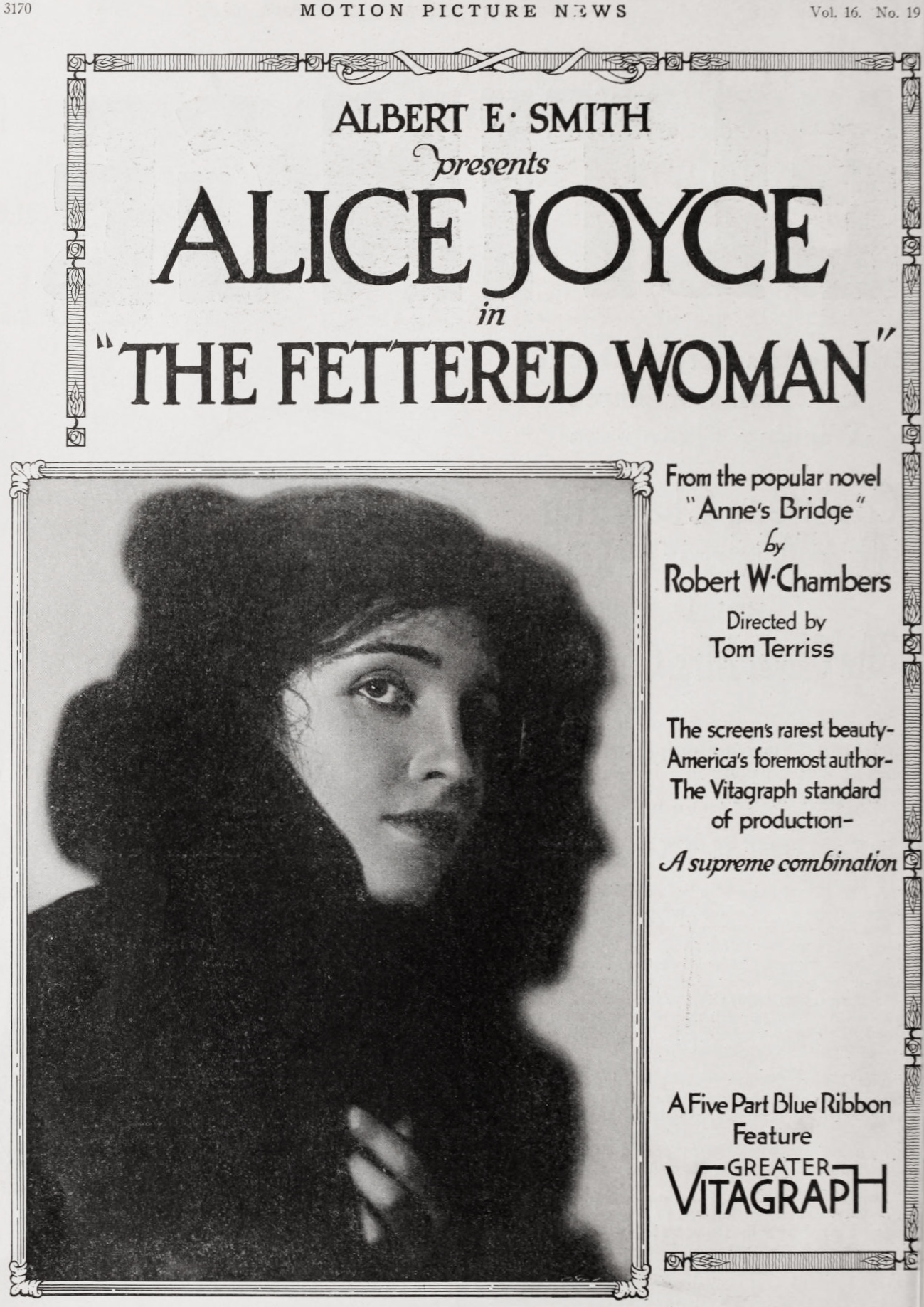
In the pantheon of silent cinema, few figures command the screen with the ethereal gravitas of Alice Joyce. In The Fettered Woman (1917), directed by Tom Terriss and penned by the prolific Robert W. Chambers, we find a narrative that transcends the melodramatic tropes of its era to offer a searing critique of social fragility and the capricious nature of justice. This is not merely a story of a woman in peril; it is a cinematic exploration of the 'boom and bust' psychology that defined early 20th-century American expansionism, personified through the tragic legacy of the Allende family.
The film opens with a haunting visual metaphor: the deserted hamlet of Anne's Bridge. This isn't just a backdrop; it is a character in its own right, representing the desiccated dreams of Angelina’s father. Much like the societal pressures explored in Infidelity, the weight of reputation and the crushing impact of financial insolvency drive the patriarch to suicide. The cinematography captures the desolation of this 'ghost town' with a starkness that anticipates the Dust Bowl aesthetics of later decades. Angelina, portrayed by Joyce with a delicate mix of vulnerability and steel, is the inheritor of this void.
Her journey to New York is framed not as an escape, but as a descent. The film brilliantly contrasts the wide, empty spaces of Anne's Bridge with the claustrophobic, predatory interiors of Manhattan. Here, the narrative takes a turn toward the noir-esque. The introduction of Bink and Wolver provides a masterclass in silent-era villainy—one driven by lust, the other by avarice. The restaurant scene, where the tension boils over into a fatal shooting, is a technical marvel of 1917 filmmaking, utilizing lighting and blocking to isolate Angelina in a sea of suspicion.
The middle act of The Fettered Woman delves into the harrowing reality of the American penal system for 'delinquent girls.' This segment echoes the thematic grimness found in Hearts in Exile, where the protagonist is similarly punished for the sins of others. Angelina’s three-year sentence is handled with a restraint that makes the passage of time feel visceral. We see the 'fettering' of her spirit, a process that Alice Joyce conveys through increasingly weary micro-expressions rather than grand theatrical gestures.
This period of incarceration serves as a narrative pivot. It transforms Angelina from a victim of circumstance into a woman of profound interiority. When she finally returns to the ruins of Anne's Bridge, she is no longer the naive girl who left. She is a pariah, a status that the film explores with a nuanced understanding of small-town gossip and the 'scarlet letter' she is forced to wear. This thematic exploration of the wronged woman seeking justice is a staple of the era, seen also in the classic adaptation of The Heart of Midlothian, yet here it feels more modern, more grounded in the harsh realities of real estate and urban corruption.
The entry of James Deane (Webster Campbell) into the narrative provides the necessary catalyst for the third-act resolution. However, the romance is not a simple 'knight in shining armor' trope. It is built on a foundation of mutual isolation. Deane is a boarder in a house of ghosts, and his gradual realization of Angelina’s innocence is handled with a detective-like precision. The film’s pacing accelerates as Deane uncovers the conspiracy between Bink and Wolver, a plot point that mirrors the intricate deceptions found in Der Fund im Neubau - 2. Teil: Bekenntnisse eines Mörders.
The climax is a satisfying dismantling of the lies that bound Angelina. The legal exoneration is coupled with a romantic union, but the film leaves a lingering sense of the cost of such a victory. The 'fettered' woman is free, yet the three years stolen from her and the death of her father remain unchangeable facts. This melancholy undercurrent is what elevates the film above standard melodrama. It acknowledges that while the law may eventually find the truth, it cannot restore what was lost during its blindness.
When comparing The Fettered Woman to its contemporaries, such as The Governor's Daughters or the more whimsical A Florida Enchantment, one is struck by its tonal consistency. It lacks the frantic energy of The Infant at Snakeville, opting instead for a somber, rhythmic progression. The Vitagraph Company of America, which produced the film, was known for a certain 'prestige' quality, and this production is no exception. The set design of the New York restaurant and the decaying Allende estate provide a visual shorthand for the film's class-based tensions.
Furthermore, the film’s screenplay by Garfield Thompson, based on Robert W. Chambers’ work, showcases the era's fascination with the 'New Woman'—even if that woman is initially victimized. Angelina’s resilience in the face of systemic failure reflects a growing awareness in 1917 of the need for legal reform and women's rights, themes that were also percolating in international cinema like Hendes ungdomsforelskelse.
From a technical perspective, the film utilizes tinting to great effect—blue for the night scenes in the desolate hamlet and amber for the deceptive warmth of the New York nightlife. While we don't have the grand pageantry of The Kineto Coronation Series: Royal Progress Through London, there is a regal quality to the way the camera treats Alice Joyce. She is often framed in medium close-ups that allow her expressive eyes to communicate the depth of her 'fettering.'
The supporting cast, including Templar Saxe as the villainous Bink, provides a sturdy framework for Joyce’s performance. The chemistry between Joyce and Webster Campbell is palpable, lending a sense of genuine stakes to the final act. Unlike the more theatrical performances in La Salome or the adventurous spirit of The Mate of the Sally Ann, the acting here is remarkably restrained, pointing toward the naturalism that would eventually dominate the medium.
In conclusion, The Fettered Woman is a vital piece of cinematic history that deserves more than a mere footnote. It captures a specific moment in American history—a transition between the Victorian moralities of the past and the cynical, industrial future. It deals with themes of urban corruption, the failure of the American dream, and the indomitable nature of the female spirit with a sophistication that belies its age. For fans of Runaway Romany or the dramatic intensity of The Final Curtain, this film offers a compelling, emotionally resonant experience.
Alice Joyce remains the luminous heart of the production, proving why she was one of the most beloved stars of her time. Her Angelina is a testament to the power of underplayed emotion. Whether she is standing amidst the ruins of her father's failed 'boom' town or facing the cold bars of a reformatory cell, she carries the film with a dignity that is nothing short of heroic. The Fettered Woman is a haunting, beautiful, and ultimately triumphant work that reminds us that even the most tightly bound chains can be broken by the persistence of truth and the warmth of human connection.
Review by the Art Critic Collective, 2024. For more explorations into the silent era and the evolution of the female protagonist, check out our analysis of Indiscreet Corinne and The Envoy Extraordinary.
IMDb —
1926
Community
Log in to comment.