DbcultAccessing Vault...
Cult Review
Senior Film Conservator
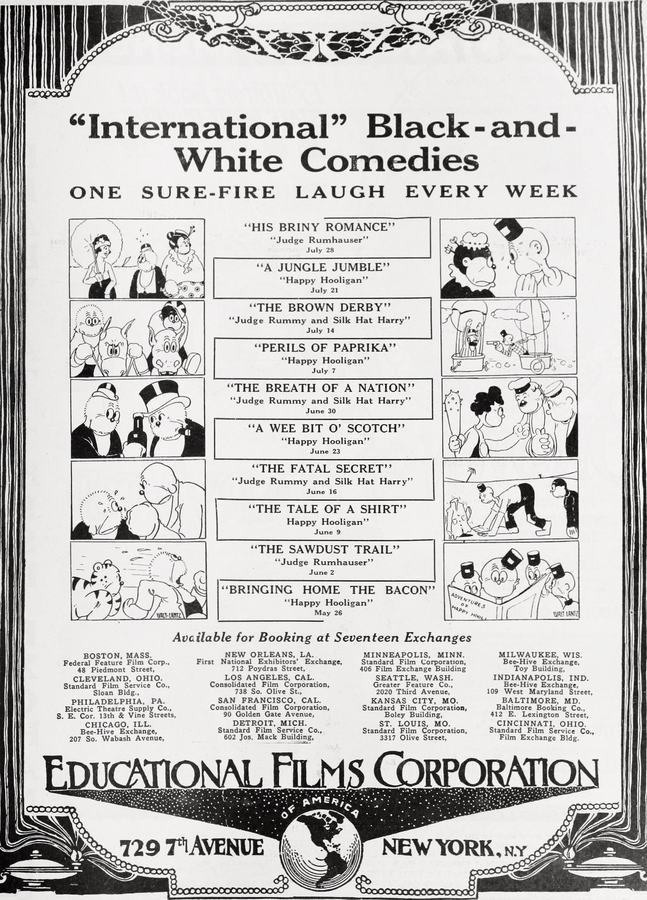
Ah, the silent era! A period often romanticized, sometimes misunderstood, and frequently overlooked in the cacophony of modern cinematic discourse. Yet, within its sepia-toned archives lie treasures that, when unearthed, continue to astonish with their audacious storytelling and groundbreaking technical ambition. One such gem, long shrouded in the mists of time, is Gregory La Cava's "Jungle Jumble" (1918). A film that, despite its somewhat whimsical title, delivers a narrative of profound human struggle, breathtaking peril, and an emotional resonance that transcends its nearly century-old celluloid. Penned by the inventive minds of Louis De Lorme and Frederick Opper, this picture isn't merely an adventure; it's a profound meditation on obsession, courage, and the untamed spirit of exploration.
From its opening frames, "Jungle Jumble" seizes the viewer with an almost visceral urgency. We are introduced to Dr. Alistair Finch, a botanist whose brilliance is matched only by his reckless zeal. His quest for the mythical "Blazing Orchid" is not merely scientific; it is an almost spiritual pilgrimage, an endeavor that pulls him away from the comforts of Edwardian London and into the suffocating embrace of the Amazon. De Lorme and Opper craft Finch not as a one-dimensional hero, but as a man teetering on the precipice of genius and madness, his ambition a double-edged sword. His disappearance, therefore, doesn't feel like a plot contrivance but an inevitable consequence of his character, a man consumed by the call of the unknown.
The true heart of the film, however, beats in the formidable chest of Lady Eleanor Vance. In an era where female protagonists were often relegated to damsel-in-distress roles, Eleanor emerges as a beacon of strength and agency. Her refusal to accept Finch's presumed fate is not a desperate plea, but a calculated, defiant act of will. Her decision to lead a rescue expedition, braving the condescending sneers of society and the very real dangers of the jungle, establishes her as one of the silent screen's most compelling figures. One might draw parallels to the spirited heroine in Her Triumph, or the determined protagonist in The Ventures of Marguerite, but Eleanor possesses a unique blend of aristocratic poise and raw, primal grit. Her journey becomes a powerful commentary on gender roles and societal expectations, a theme remarkably progressive for its time.
The ensemble cast, under La Cava's astute direction, delivers performances that, even without spoken dialogue, convey a rich tapestry of human emotion. The grizzled guide, whose cynicism slowly gives way to grudging respect for Eleanor, is a masterclass in nuanced non-verbal acting. But it is Dr. Silas Croft, the rival botanist, who truly embodies the film's darker undercurrents. Croft is not merely an antagonist; he is the embodiment of avarice and intellectual jealousy, a chilling counterpoint to Finch's pure, albeit misguided, scientific passion. His insidious machinations are subtly telegraphed through his furtive glances and predatory posture, creating a palpable sense of unease that permeates the entire expedition.
La Cava's directorial hand is evident in every frame, transforming what could have been a simple adventure serial into a cinematic experience of surprising depth. The pacing is masterful, alternating between moments of serene, almost poetic, jungle vistas and heart-stopping sequences of intense action. The treacherous river rapids, for instance, are depicted with a kinetic energy that must have been revolutionary for 1918, a testament to the ingenuity of early filmmakers. One can almost feel the spray, the churning water, the sheer power of nature unleashed. This raw depiction of the natural world brings to mind the grand, sweeping vistas and the sense of untamed wilderness seen in films like The Range Boss, though "Jungle Jumble" injects an additional layer of existential dread.
The cinematography, though limited by the technology of the era, is breathtakingly ambitious. The use of natural light, the stark contrasts between shadow and sun-drenched canopy, and the close-ups that capture the raw terror or determined resolve on the actors' faces, all contribute to an immersive experience. The film's visual language communicates volumes, allowing the audience to understand the characters' inner turmoil and external struggles without the need for intertitles at every turn. The visual storytelling here is as compelling as any dramatic narrative of its time, perhaps even surpassing the more straightforward documentary style of films like World's Heavyweight Championship Between Tommy Burns and Jack Johnson in its artistic ambition.
The narrative's climax, set amidst ancient, crumbling ruins, is a symphony of tension and revelation. Finch, discovered alive but ravaged by illness and captivity, represents the fragile victory of human endurance against overwhelming odds. The confrontation between Eleanor and Croft is not merely a physical struggle but a clash of ideologies: selfless love against corrosive greed. The enigmatic indigenous tribe, while presented through the lens of early 20th-century ethnocentricity (a critical aspect to acknowledge when viewing historical cinema), serves as a powerful, almost mystical, force of nature, guardians of the jungle's secrets. Their portrayal, though potentially problematic by today's standards, reflects the prevailing attitudes and exoticism often employed in adventure narratives of the period, reminiscent of the dramatic cultural encounters depicted in works like Ahasver, 1. Teil, albeit in a dramatically different context.
What truly elevates "Jungle Jumble" beyond a mere escapist adventure is its thematic richness. It explores the delicate balance between man and nature, the corrupting influence of unchecked ambition, and the enduring power of human connection. The "Blazing Orchid" itself transcends its botanical identity to become a potent symbol: a MacGuffin that drives the plot, but also a representation of ultimate knowledge, ultimate power, and the ultimate price one is willing to pay for it. This symbolism imbues the film with a resonance that lingers long after the final fade to black, much like the profound allegories found in The Life and Passion of Jesus Christ, albeit on a secular, adventurous plane.
The film's legacy, though perhaps not as widely celebrated as some of its contemporaries, is undeniable. It showcases the burgeoning sophistication of cinematic language in the silent era, demonstrating how complex narratives and deep characterizations could be conveyed without a single spoken word. It's a testament to the ingenuity of filmmakers like La Cava, De Lorme, and Opper, who were not merely telling stories but inventing the very grammar of a new art form. The audacious set pieces and the sheer scale of the production, even for its time, speak volumes about the ambition that fueled early Hollywood. Comparing its raw, visceral action to the pugilistic intensity of The Fighting Brothers, one sees a shared commitment to capturing dynamic movement and escalating stakes, but "Jungle Jumble" applies this to a grander, more perilous natural stage.
In an age of rapid technological advancement in cinema, it is easy to forget the foundational brilliance that laid the groundwork for everything we see today. "Jungle Jumble" serves as a powerful reminder of this foundational artistry. It’s a film that asks profound questions about what it means to be human in the face of the wild, about the sacrifices made for love and knowledge, and about the insidious nature of greed. It’s a testament to the fact that even without synchronized sound, a film can scream with terror, whisper with love, and roar with adventure. Its influence, subtle yet pervasive, can be traced through countless subsequent adventure films, from the pulpy serials of the 1930s to the blockbusters of today. It established archetypes and narrative beats that continue to resonate, proving that a compelling story, told with conviction and visual flair, is truly timeless.
The restoration efforts, which have thankfully brought this film back into the public consciousness, allow a new generation to appreciate its pioneering spirit. Viewing "Jungle Jumble" today is not merely an exercise in historical appreciation; it is an exhilarating journey into a past where cinema was still discovering its voice, yet speaking with undeniable power. It challenges contemporary viewers to engage with narrative in a different way, to interpret the subtle cues, the exaggerated gestures, and the evocative visual compositions that were the lingua franca of the silent screen. This engagement is a rewarding experience, revealing layers of meaning and craftsmanship that might initially be missed by eyes accustomed to modern cinematic conventions. It stands as a vibrant counterpoint to simpler melodramas like David Harum, showcasing a more complex narrative ambition.
The interplay between the human characters and their unforgiving environment is particularly striking. The jungle itself is not merely a backdrop; it is a character, an omnipresent force that tests, threatens, and ultimately transforms everyone who enters its domain. The way La Cava frames the towering trees, the dense undergrowth, and the swirling mists evokes a sense of both terrifying beauty and inescapable danger. This personification of nature elevates the film beyond a simple chase narrative, imbuing it with a primal, almost mythological quality. One is reminded of the profound sense of place in films like The Eagle's Wings, where the landscape is integral to the characters' fate, but "Jungle Jumble" pushes this concept to its most extreme, making the environment an active, often malevolent, participant in the drama.
Ultimately, "Jungle Jumble" is more than just a historical curiosity; it is a vibrant, pulse-pounding adventure that holds up remarkably well. It is a testament to the enduring power of well-crafted storytelling, compelling characters, and innovative filmmaking, even in the nascent years of the medium. For aficionados of early cinema, or indeed anyone with an appreciation for adventurous narratives and the sheer artistry of visual storytelling, this film is an essential viewing experience. It reminds us that the quest for discovery, whether of a mythical orchid or the limits of human endurance, is a timeless tale that continues to captivate across generations. It's a film that, much like the intrepid spirit it portrays, refuses to be forgotten, carving its own indelible mark in the annals of cinematic history. Its narrative complexity and character depth certainly stand out when compared to more straightforward mystery tales such as The Mystery of a Hansom Cab, or even the lighthearted escapades of Fan Fan or Lili, showcasing a bold stride towards more ambitious dramatic structures in early cinema. The film's ambitious scale and the physical challenges faced by its characters echo the spirit of grand spectacle, even if presented with the raw, unrefined charm characteristic of films from the era, contrasting with the urban dramas of The Pride of New York or the wartime narratives of A Sammy in Siberia, by taking the audience to an entirely different, wilder frontier.
IMDb —
1918
Community
Log in to comment.