DbcultAccessing Vault...
Cult Review
Senior Film Conservator
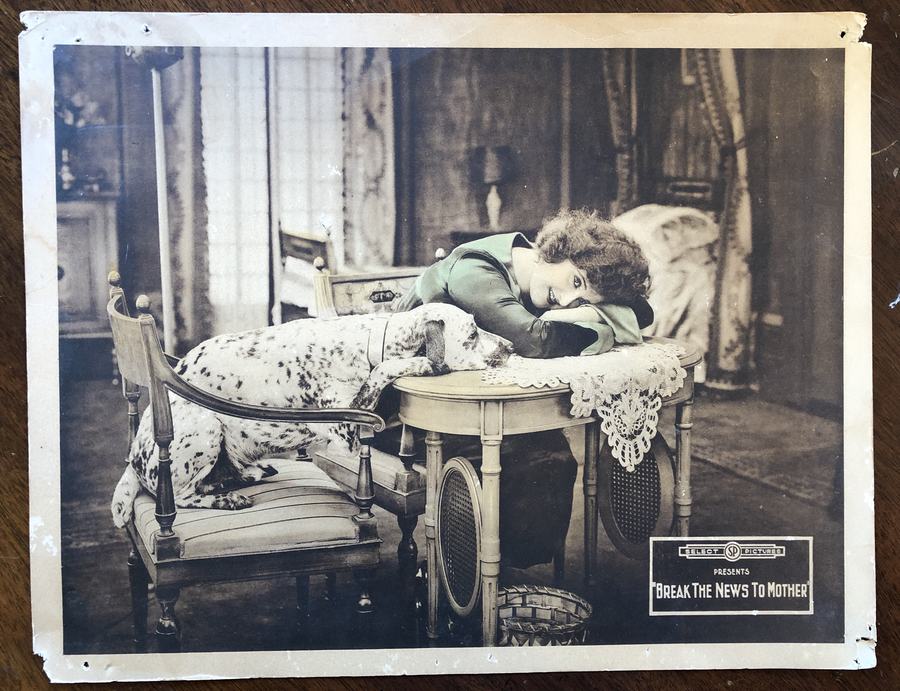
Step into the hushed, flickering world of early 20th-century cinema, and you'll often find narratives brimming with heightened emotions, grand gestures, and moral dilemmas that resonate with timeless human struggles. Such is the case with 'Break the News to Mother,' a poignant silent film from 1919 that, despite its age, still manages to tug at the heartstrings and provoke thought on themes of love, sacrifice, and the often-cruel hand of fate. In an era when the world was still reeling from the Great War, and the silver screen served as both escape and mirror, this film arrived as a powerful melodrama, encapsulating the anxieties and aspirations of a nation in flux.
This cinematic endeavor, a product of a dynamic period in film history, presents a narrative that, while perhaps conventional by today's standards, offered profound emotional catharsis to its contemporary audiences. It’s a testament to the enduring power of storytelling that even without spoken dialogue, the intricate web of human relationships and the dramatic arcs woven within its plot could captivate and move viewers. The film’s strength lies not just in its dramatic twists, but in its exploration of fundamental human bonds and the resilience of the spirit in the face of adversity. It's a reminder that the essence of compelling drama transcends technological advancements, relying instead on the universal language of emotion.
At its core, 'Break the News to Mother' is a story steeped in the melodrama characteristic of its time, yet it manages to transcend mere histrionics through its earnest portrayal of its characters' plights. Our protagonist, Dave Bray, brought to life with earnest intensity by Raymond Bloomer, is a paragon of filial devotion. His world revolves around his beloved mother, portrayed with a heartbreaking tenderness by Gertrude Berkeley, an actress who masterfully conveys the depths of a mother's love and sorrow through her expressive eyes and gestures. This profound bond is the emotional anchor of the film, setting the stage for the dramatic upheaval that follows. Dave's burgeoning romance with Ruth Godwin, played by the luminous Pearl Shepard, adds a layer of youthful optimism and romantic idealism, which, tragically, becomes the catalyst for the ensuing turmoil.
The serpent in this Edenic garden is Warren Flint, Dave's superintendent, whose sinister jealousy is embodied with chilling conviction by William Bailey. Flint’s character is a masterclass in silent film villainy, his every glare and subtle sneer conveying a deep-seated malice born of unrequited desire and professional envy. His machinations are further complicated by the presence of Edna Holmes, his rejected lover, portrayed by Alice Gerard. It is Edna's desperate act, a moment of tragic impulse, that ignites the central conflict of the film. Overhearing Flint's cruel boast to Dave about marrying Ruth, Edna, in a fit of rage and despair, shoots Flint during a struggle involving Dave. In a cruel twist of fate, Flint's own revolver discharges simultaneously, creating a chaotic tableau of mistaken identity and perceived guilt.
The immediate aftermath of this fateful incident plunges Dave into a nightmare. Believing himself to be Flint's killer, and utterly overwhelmed by the horror of the situation, he makes the fateful decision to flee. This act of self-preservation, however misguided, sets in motion a chain of events that will test the limits of love, loyalty, and justice. His friends, burdened by the terrible secret, are left with the agonizing task of 'breaking the news' to his unsuspecting mother, a scene undoubtedly crafted to wring every drop of emotion from the audience. Gertrude Berkeley's portrayal of the heartbroken mother, grappling with the perceived loss of her son and the ignominy of his supposed crime, is a masterclass in silent film acting, conveying profound grief without a single spoken word. Her silent screams and tear-streaked face would have resonated deeply with audiences familiar with loss and sorrow.
Meanwhile, Flint, miraculously surviving the shooting, perpetuates the cruel deception. Despite knowing full well that Edna was the one who fired the fatal shot, he maliciously accuses Dave, cementing the protagonist's status as a fugitive. This act of calculated villainy underscores the film's exploration of moral corruption and the ease with which truth can be twisted for personal gain. The injustice is palpable, and the audience is left to stew in the frustration of seeing the innocent suffer while the guilty manipulate the narrative. This narrative technique, common in melodramas, effectively builds suspense and fosters a strong emotional connection between the audience and the wronged hero.
A year passes, a period that sees lives irrevocably altered. Ruth, in a desperate attempt to bring closure and perhaps secure Dave's safe return, agrees to marry Flint, but only on the explicit condition that he drops the charges against Dave should he ever reappear. This act of self-sacrifice on Ruth's part highlights her unwavering loyalty and the depth of her love for Dave, even as it places her in a morally compromising position. Pearl Shepard's performance here would have conveyed a quiet strength, a woman making an agonizing choice for the man she loves. This subplot adds another layer of tension, leaving the audience to wonder if Ruth's sacrifice will be in vain, or if it will ultimately pave the way for truth and justice.
Yet, fate, in its often-unpredictable manner, has other plans. Dave, having found purpose and valor on the battlefields of Europe, emerges as a war hero. This narrative choice, capitalizing on the widespread public sentiment following World War I, transforms Dave from a hunted man into a symbol of national pride. While recovering from pneumonia, a chance encounter with a doctor from his hometown reveals the astonishing truth: Flint is alive. This moment of revelation, delivered not through a dramatic confrontation but through a quiet conversation, serves as a powerful turning point, injecting a glimmer of hope into the otherwise bleak narrative. The war, a crucible for so many, becomes Dave's path to an unexpected vindication.
The truth, once set free, cannot be contained. Edna Holmes, burdened by her secret and witnessing the impending injustice, finally breaks her silence. Her confession to Ruth, a moment of profound emotional catharsis, shatters Flint’s carefully constructed web of lies and exposes his villainy for all to see. This scene, likely a highly charged confrontation, would have allowed Alice Gerard to deliver a powerful performance, conveying the weight of her guilt and the relief of finally unburdening her conscience. The wedding is, of course, canceled, and the path is cleared for Dave's rightful return. This dramatic reversal of fortune is a classic trope, but effectively deployed here to maximize emotional impact.
The film culminates in a triumphant return. With the armistice declared, symbolizing the end of a global conflict and the beginning of a new era, Dave returns home. He is no longer a pariah, but a celebrated war hero, his reputation restored, his honor intact. His homecoming is a joyous affair, a reunion with his steadfast mother, whose unwavering love has endured through the darkest of times, and with Ruth, whose loyalty never faltered. The village, once quick to condemn, now embraces him, recognizing his sacrifice and celebrating his heroism. It’s a powerful, feel-good ending, providing the emotional resolution that audiences of the era craved, affirming the triumph of good over evil, and the enduring power of love and community.
The cast, including supporting players like Chester Barnett, Forrest Robinson, Louis Stern, and Joseph W. Smiley, would have contributed to the rich tapestry of the community, each portraying their roles with the expressive physicality and nuanced pantomime characteristic of silent film acting. Their collective performances would have created a believable world, enhancing the emotional depth of the central narrative. The success of silent films often hinged on the ability of its ensemble to convey meaning and emotion without dialogue, relying on gestures, facial expressions, and the strategic use of intertitles.
From a technical perspective, while specific directorial or cinematographic credits are not readily available for detailed analysis, one can infer certain stylistic choices common to films of this period. The use of intertitles would have been crucial, not just for dialogue but for conveying plot exposition, character thoughts, and even emotional states. Cinematography would have likely employed a mix of medium shots for character interaction, wider shots to establish setting, and close-ups to emphasize key emotional beats – a technique that was becoming increasingly sophisticated in the late 1910s. The lighting, while perhaps not as complex as later Hollywood productions, would have been utilized to create mood, with stark contrasts often employed to highlight dramatic tension or characters' moral standing. The narrative structure, with its clear delineation of hero and villain, its dramatic reversals, and its ultimate triumph of justice, is a hallmark of the period, designed to elicit strong emotional responses from the audience.
Comparing 'Break the News to Mother' to other films of its time helps to contextualize its significance. It shares thematic similarities with contemporary war dramas like The Unbeliever, which also explored the human cost and heroism of World War I, though 'Break the News to Mother' places the war more as a backdrop for personal redemption rather than its central focus. The moral complexities and questions of conscience echo films such as Fires of Conscience, where characters grapple with difficult choices and their consequences. The romantic entanglements and societal pressures are reminiscent of dramas like Love and the Woman, which delved into the intricacies of relationships and social expectations. The theme of mistaken identity, a classic dramatic device, also finds parallels in films like Borrowed Plumage, highlighting a common narrative thread in early cinema. Even in its depiction of suffering and eventual relief, albeit in a vastly different context, one might draw a thematic, if not direct, line to films like Remorse, a Story of the Red Plague, which also explored human endurance through adversity. These comparisons underscore the film's place within a broader cinematic landscape, reflecting shared cultural concerns and narrative conventions.
The cultural impact of 'Break the News to Mother' cannot be overstated for its era. It tapped into a collective yearning for justice, for the triumph of the innocent, and for the restoration of order after a period of immense global upheaval. The image of the returning war hero, vindicated and celebrated, would have resonated powerfully with audiences who had sent their own sons, brothers, and husbands to war, many of whom never returned. The film offered a comforting fantasy of resolution and homecoming, a balm for the anxieties of a post-war world. It affirmed traditional values of family, loyalty, and community honor, all of which were undergoing significant re-evaluation in the rapidly changing societal landscape of the early 20th century. The enduring appeal of such narratives speaks volumes about the human need for stories that validate our hopes and fears.
In conclusion, 'Break the News to Mother' stands as a compelling artifact of silent cinema, a powerful melodrama that masterfully weaves together themes of devotion, betrayal, and redemption. Its enduring strength lies in its ability to evoke profound emotion through visual storytelling and the compelling performances of its cast, particularly Gertrude Berkeley as the suffering mother and Raymond Bloomer as the wrongly accused hero. While the narrative structure might feel familiar to modern viewers, its execution within the context of 1919 filmmaking is exemplary. It offers a fascinating glimpse into the moral and emotional landscape of a post-WWI America, where stories of heroism, sacrifice, and the ultimate triumph of justice provided much-needed solace and inspiration. For enthusiasts of early cinema, or anyone interested in the evolution of dramatic storytelling, 'Break the News to Mother' remains a significant and moving piece, a testament to the timeless power of human drama on the silver screen.

IMDb 5.2
1935
Community
Log in to comment.