DbcultAccessing Vault...
Cult Review
Senior Film Conservator
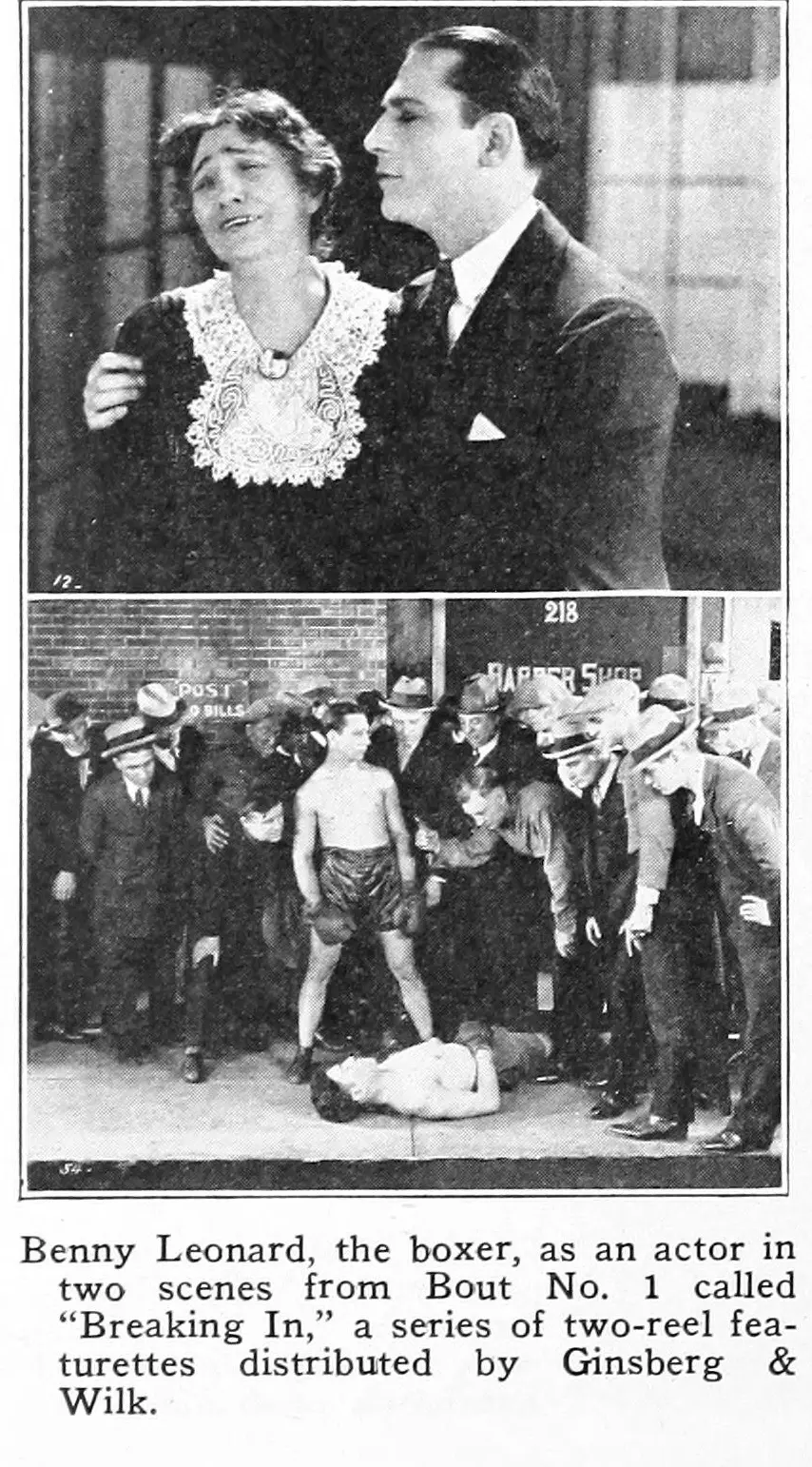
Is 'Breaking In' worth watching today? Short answer: yes, but with significant caveats that demand a specific kind of viewer. This film is for silent film enthusiasts, boxing historians, and those fascinated by early cinematic adaptations of popular literature. It is absolutely NOT for audiences seeking modern narrative pacing, complex character arcs, or high production values.
This film works because of its undeniable historical significance as a document of a boxing legend and an early example of sports cinema. It captures a raw energy, however fleeting, that was likely revolutionary for its time, offering a direct window into the cultural zeitgeist of the 1920s.
This film fails because its narrative is almost non-existent, leaving modern viewers feeling adrift. The two-reel format inherently limits its ability to develop any meaningful dramatic tension or character depth, making it feel more like an extended highlight reel or a moving portrait than a cohesive story.
You should watch it if you appreciate cinema as a historical artifact, are a fan of Benny Leonard's incredible legacy, or have a deep interest in the evolution of the sports film genre. It's a fascinating relic, not a conventional entertainment piece.
The year 1923 was a fascinating crossroads for cinema. The medium was rapidly evolving, yet still deeply rooted in the silent era's visual storytelling and the burgeoning popularity of short-form entertainment. It was within this vibrant, experimental landscape that "Breaking In" made its debut, a two-reel short attempting to bring the thrills of the boxing ring and the charisma of a real-life champion to the silver screen.
This isn't a grand epic, nor does it pretend to be. Instead, it's a brisk, kinetic adaptation of Sam Hellman's popular "Flying Fists" stories from The Saturday Evening Post, designed to introduce audiences to the legendary Flyweight Boxing Champion, Benny Leonard. The ambition here wasn't necessarily deep narrative, but rather the visceral thrill of seeing a sports icon in motion, translated into the new language of film.
To call "Breaking In" a 'film' in the modern sense feels almost anachronistic; it's more of a moving illustration, a living tableau of a bygone era's hero worship. Its existence speaks volumes about the early film industry's desire to capitalize on popular culture, transforming print heroes into screen idols, even if only for a fleeting few minutes.
Its brevity, however, is both its defining characteristic and its most significant limitation. We are given a snapshot, a raw essence, rather than a fully fleshed-out world. This demands a viewer willing to engage with cinema as a historical artifact, to appreciate the context as much as the content itself.
At the heart of "Breaking In" is Benny Leonard himself, a name that, even today, resonates with boxing enthusiasts. Leonard was not merely a champion; he was a phenomenon, a fighter who transcended the flyweight division to claim multiple world titles across various weights. His career was marked by skill, speed, and a strategic brilliance that earned him the moniker "The Ghetto Wizard."
This film, then, is an early attempt to capture that magic, to bottle the lightning of his in-ring presence for a mass audience. Unlike modern sports biopics that delve into personal struggles and triumphs, "Breaking In" likely focuses on the spectacle. It’s a celebration of physical prowess, a visual testament to the sheer force and agility that made Leonard a legend.
The casting of Leonard as himself is a fascinating choice, blurring the lines between documentary and drama. It’s a precursor to the celebrity cameos and athlete-turned-actors we see today, but in 1923, it carried a unique weight. Audiences weren't just watching an actor portray a boxer; they were watching the boxer, lending an authenticity that no dramatic performance could replicate.
This choice, however, also places significant constraints on the narrative. The film isn't about character development in the traditional sense; it's about showcasing an established icon. Its purpose is to affirm, not to reveal. For fans of Leonard, this would have been a thrilling opportunity to see their hero immortalized on the big screen, a testament to his enduring popularity.
Given the film's premise and the era, the directing of "Breaking In" would have been primarily concerned with action and clarity. The camera, likely static for much of the non-action, would undoubtedly have sprung to life during the boxing sequences. We can imagine rapid-fire cross-cuts between Leonard's lightning-fast jabs and his opponent's grimacing reactions, or perhaps a clever use of shallow focus to draw the eye to the champion's focused gaze before a knockout blow.
The cinematography, while basic by today's standards, would have aimed for impact. Close-ups of Leonard's determined face, or wide shots showcasing the packed, smoky atmosphere of a fight arena, would have been crucial for immersing the audience. The lack of sound meant that visual cues, such as the exaggerated flailing of an opponent or the sharp snap of a punch, had to carry all the dramatic weight.
One can infer that the director (whose name is not explicitly provided in the context, but would have been crucial) understood the power of visual rhythm. The swift editing of the fight scenes, punctuated by intertitles, would have been designed to mimic the rapid ebb and flow of a boxing match. The film’s success hinged on its ability to convey speed and power without the aid of sound effects or commentary.
The use of natural light, or early artificial lighting techniques, would also shape the film's aesthetic, likely lending a raw, almost documentary feel to the proceedings. This unpolished look, far from being a flaw, often adds to the charm and historical value of these early cinematic artifacts, grounding them in the reality of their production.
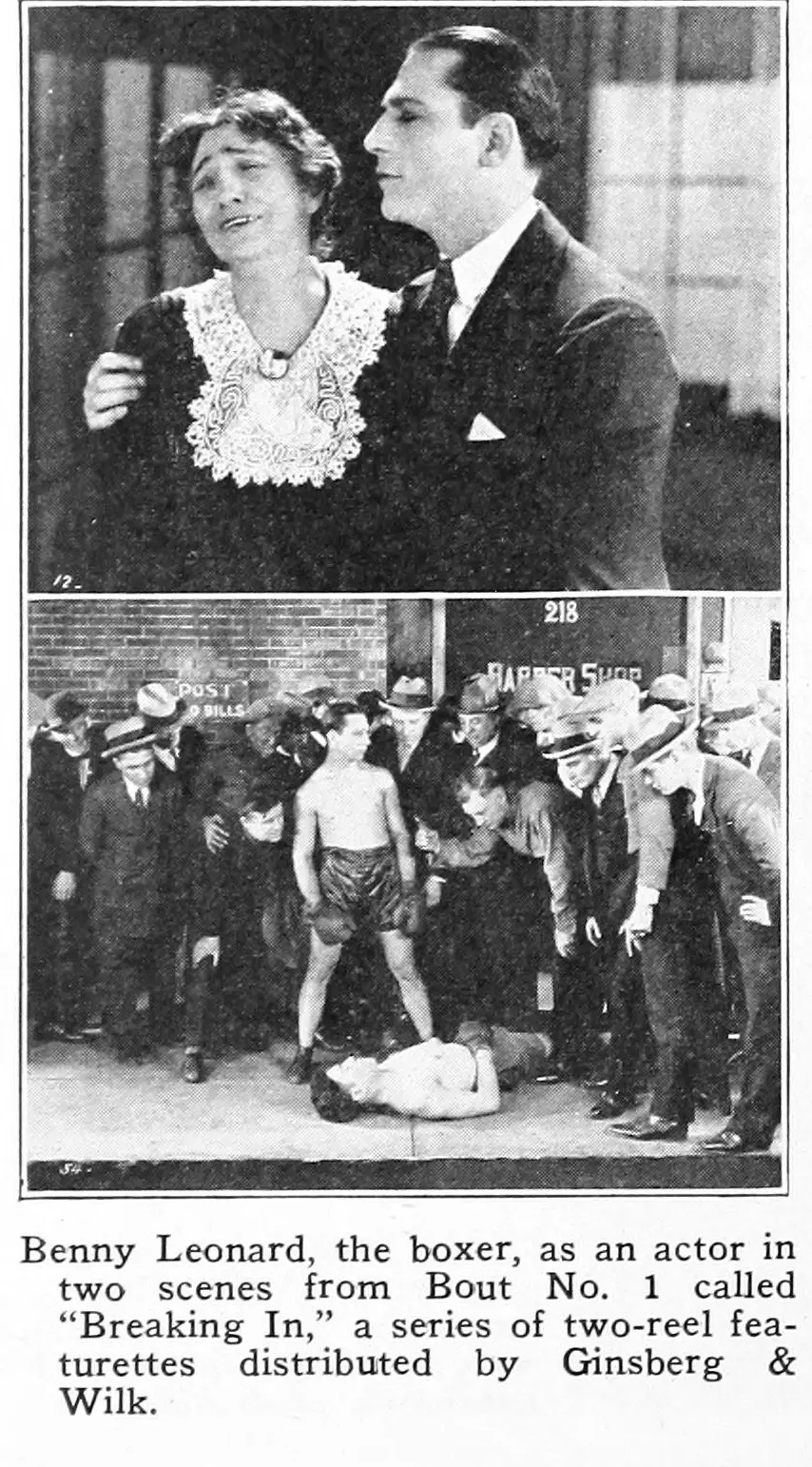
The two-reel format dictates an inherently brisk pace for "Breaking In." There's no time for lengthy exposition or meandering subplots. The film must get to the point, establish its premise, deliver its action, and conclude, all within a compressed timeframe. This makes for a viewing experience that is, by modern standards, incredibly efficient, almost jarringly so.
The tone would likely be one of celebration and excitement. This is hero worship, pure and simple. Any dramatic tension would stem directly from the boxing match itself – the underdog struggle, the unexpected blow, the build-up to the decisive moment. There’s a palpable sense of urgency baked into its very structure, a relentless drive towards the next punch, the next round, the next victory.
However, this relentless pace also means that emotional depth is sacrificed. We don’t linger on character motivations or the consequences of the fight beyond the immediate outcome. It's a film designed for immediate gratification, to thrill and entertain without demanding deep introspection. It’s a cinematic sugar rush, potent in its brevity but lacking in sustained nourishment.
The narrative, drawn from the "Flying Fists" stories, would likely follow a straightforward trajectory: the challenge, the fight, the triumph. Any implied character development for Leonard would be assumed knowledge for the audience, drawn from his real-life fame and the popularity of the source material. The film itself acts as a visual exclamation point to an already established legend.
In a silent short centered on a real-life athlete, the concept of "acting" takes on a different meaning. Benny Leonard, a boxer first and an actor second, would have been tasked primarily with embodying his own legendary physicality. His 'performance' would be less about emotional nuance and more about authentic movement, powerful stances, and the sheer kinetic energy that made him a champion.
The true star here is Leonard's almost documentary-like physical presence, a precursor to reality television, showcasing his actual skills. Any dramatic expressions would be broad, clear, and easily readable from a distance, adhering to the conventions of silent film acting where gestures and facial expressions had to convey everything.
The supporting cast, including Billy Mitchell, Frank Evans, Tammany Young, and others, would likely have employed the more theatrical, gestural acting style typical of the era. Their expressions and body language would need to convey emotion without words: a manager's anxiety through frantic hand-wringing, a love interest's concern through a hand pressed to the heart. It’s a language of overt signals, not subtle undertones.
Diana Allen and Gladys Feldman, as female leads, would likely embody archetypal roles, perhaps the supportive girlfriend or the worried mother, their performances designed to elicit immediate empathy or concern. Their reactions would serve as emotional anchors, contrasting with the raw aggression of the ring. It's a fascinating study in the performance demands of early cinema, where clarity trumped subtlety.
Absolutely, if your interest lies in cinematic history, the evolution of sports film, or the enduring legend of Benny Leonard. It offers a rare window into early 20th-century popular entertainment. However, if you're expecting a compelling narrative or sophisticated filmmaking by contemporary standards, you will likely find it lacking. This is a historical document first, a piece of entertainment second.
For those who appreciate the unique charm of silent films, "Breaking In" provides a quick, engaging look at how sports heroes were portrayed in the nascent days of cinema. It's a valuable piece for understanding the cultural impact of figures like Leonard and the early commercial strategies of film studios. It works. But it’s flawed.
It's a film that requires patience and an appreciation for context. Without understanding its place in history, its brevity and lack of narrative depth might feel disappointing. But viewed through the lens of a historical document, a relic of a bygone era, it shines as a testament to a champion and the medium that sought to capture his glory.
This film will appeal to academic viewers, cinephiles with a penchant for the obscure, and anyone with a deep-seated curiosity about the pioneering days of moving pictures. It will not, however, satisfy those looking for the narrative complexities or character development found in even the most basic contemporary films.
Pros:
Cons:
"Breaking In" is not a film for everyone, nor does it aspire to be. It is a niche experience, a cinematic fragment best appreciated by those with a specific interest in the historical tapestry of film and sport. As the first in a series based on "Flying Fists," it effectively serves its purpose: to establish Benny Leonard as a screen presence, a dynamic force whose real-life exploits translated thrillingly, if briefly, to the nascent medium of film.
While it lacks the narrative sophistication and technical polish of later works, its raw energy and the sheer novelty of seeing a genuine boxing legend in action make it a compelling watch for the right audience. It's a testament to the power of celebrity and the early film industry's ability to capitalize on it, even with minimal storytelling. Think of it as a vital, if unpolished, piece of cinematic archaeology, offering invaluable insight into a forgotten corner of movie history, far more significant for its existence than its intrinsic entertainment value today.
For those who approach it with the right mindset – as a historical document rather than a contemporary blockbuster – "Breaking In" delivers a fascinating, if fleeting, punch. It's a reminder that even the shortest, most rudimentary films can hold immense cultural and historical weight, illuminating a path from the printed page to the silver screen, and cementing the legacy of a true champion.
IMDb —
1923
Community
Log in to comment.