DbcultAccessing Vault...
Cult Review
Senior Film Conservator
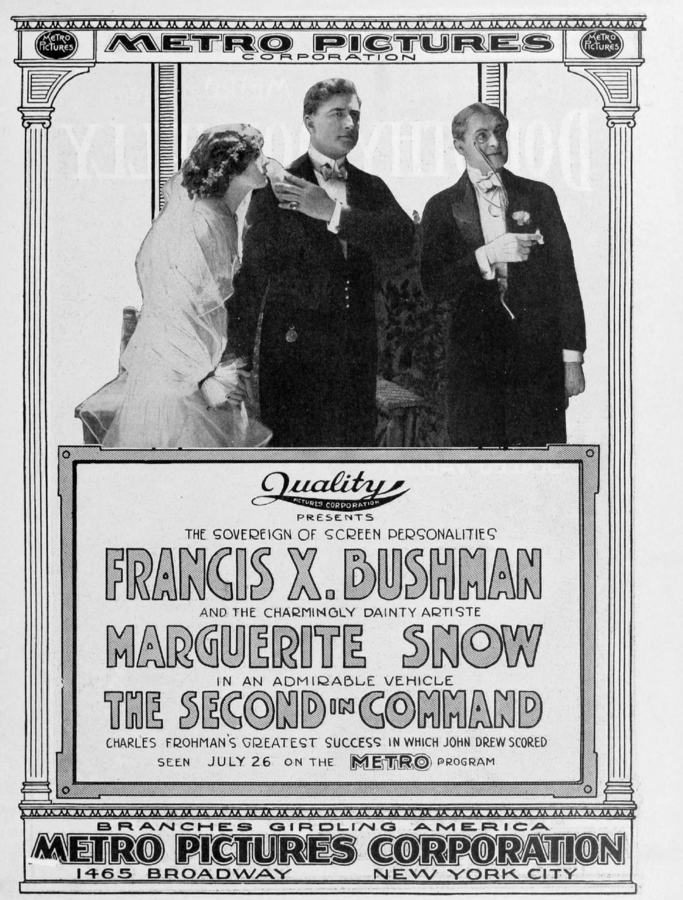
Stepping back into the hallowed halls of early cinema, one often finds narratives that, despite their antiquated presentation, echo with a timeless power. Robert Marshall and Eve Unsell's 'The Second in Command' is precisely such a creation, a silent film whose dramatic tension and emotional depth transcend the passage of a century. It's a testament to the enduring allure of human struggle against the backdrop of war and the intricate dance of duty versus desire. This isn't just a historical artifact; it's a vibrant, pulsating piece of storytelling that, even without spoken dialogue, communicates volumes about the human condition.
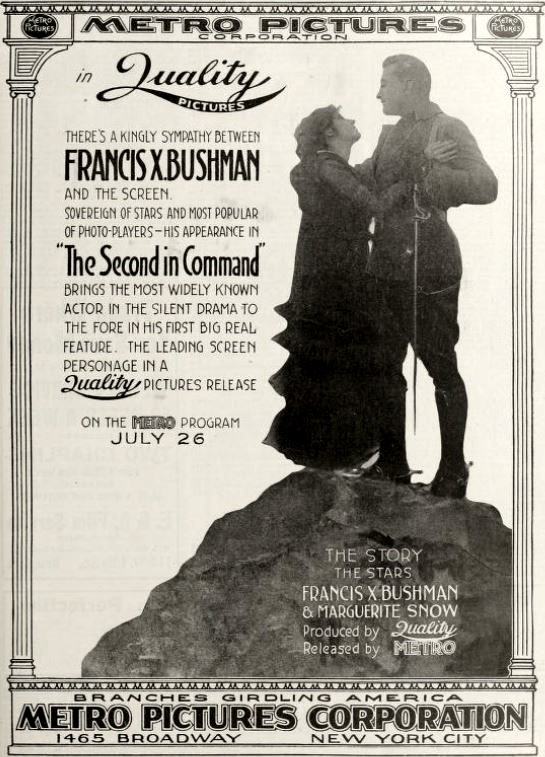
At its heart, 'The Second in Command' is a meticulously crafted study of leadership under duress. We are introduced to Captain Miles Corbin, portrayed with characteristic earnestness and burgeoning charisma by Francis X. Bushman. Corbin is an officer brimming with potential, a man whose ambition is tempered by a profound sense of duty, yet whose progressive tactical thinking often clashes with the entrenched conservatism of his superior, Colonel Alistair Vance. William Clifford embodies Vance with a gravitas that speaks to years of service, but also hints at a rigidity that could prove fatal in a rapidly evolving crisis.
The arrival of Eleanor Hastings, played with captivating grace by Evelyn Greeley, injects a potent romantic element into this already volatile mix. Eleanor is not merely a passive object of affection; she is an intelligent, observant woman whose presence acts as a catalyst, sharpening the unspoken rivalry between Corbin and Vance. Her discerning gaze forces both men to confront not only their professional roles but also their personal aspirations and moral compasses. The film cleverly uses this romantic triangle not as a superficial diversion but as an integral lens through which to examine the characters' true natures and their capacity for self-sacrifice or self-interest.
The narrative truly ignites with the onset of a local uprising, masterfully orchestrated to plunge the remote outpost into a state of desperate siege. It is here that Vance's established methods prove inadequate, his cautious decisions bordering on indecision, threatening to unravel the defense. The tension is palpable as Corbin, a keen observer, watches the situation deteriorate, torn between the strictures of military hierarchy and the urgent imperative to protect the lives entrusted to their command. This internal conflict is exquisitely rendered through Bushman's nuanced expressions and body language, a testament to the power of silent acting to convey profound psychological struggle. The weight of command, the burden of potential insubordination, and the specter of catastrophic failure all converge upon Corbin, creating a truly gripping dilemma.
The critical juncture arrives when Vance is grievously wounded, an event that forces Corbin to step into the void of leadership. This transition is not seamless; it is fraught with the echoes of Vance's previous, more conservative orders. Corbin's decision to defy these directives and implement a daring, unconventional counter-attack is the film's defining moment. It is a bold stroke of storytelling, showcasing a protagonist who, when faced with an existential threat, chooses courage over convention. This sequence, undoubtedly a highlight of the film, demands not only a suspension of disbelief but an active engagement with the moral and strategic choices being made. It's a narrative beat that resonates deeply, recalling the difficult decisions faced by characters in films like Brigadier Gerard, where individual bravery often clashes with the broader demands of military strategy.
The ensemble cast of 'The Second in Command' delivers performances that are both era-appropriate and surprisingly subtle. Francis X. Bushman, a titan of early cinema, carries the film with an impressive range. His transformation from an eager subordinate to a decisive, battle-hardened leader is compelling. He manages to convey inner turmoil and resolute determination with a masterful command of facial expressions and gesture, a skill that defined the great silent film actors. Evelyn Greeley, as Eleanor Hastings, is far more than a mere love interest; she imbues her character with intelligence and agency, her reactions to the unfolding drama providing a crucial emotional anchor for the audience. Her gaze often reflects the audience's own anxieties and hopes, making her a relatable and engaging figure.
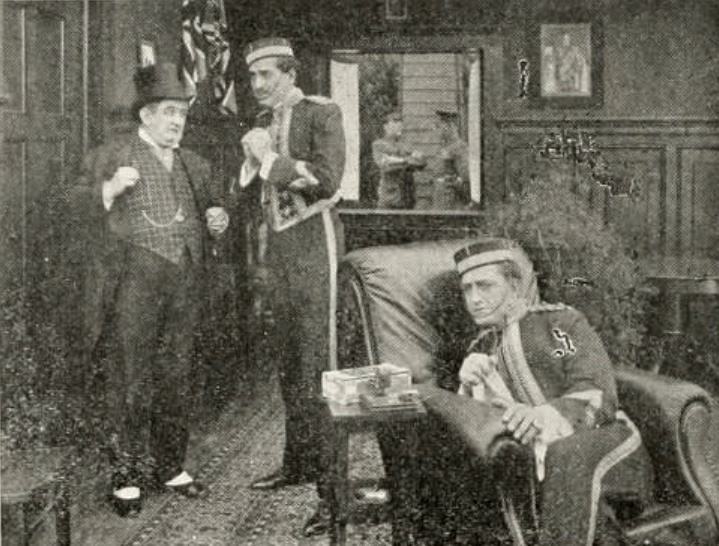
William Clifford's portrayal of Colonel Vance is equally commendable. He navigates the difficult arc of a respected leader whose flaws are exposed under pressure, eventually leading to a humbling but ultimately honorable resolution. His initial resentment of Corbin's insubordination, followed by his grudging admiration and eventual public acknowledgment, is handled with a delicate touch, avoiding caricature. The supporting cast, including Helen Dunbar, Marcia Moore, Paul Byron, Lester Cuneo, and Marguerite Snow, collectively contribute to the rich tapestry of the outpost's community, each face telling a small story within the larger drama, enhancing the film's immersive quality. Their reactions, their fear, their hope, all serve to magnify the stakes of the conflict.
The directorial hand, though not explicitly credited in the provided details, orchestrates a visual symphony characteristic of the era's best silent films. The use of intertitles is judicious, providing necessary exposition without overwhelming the visual narrative. The cinematography, while perhaps lacking the sophisticated camera movements of later eras, effectively captures the desolation of the frontier outpost and the claustrophobia of the siege. Close-ups are employed strategically to highlight emotional beats, drawing the audience into the characters' inner worlds. The action sequences, particularly the climactic counter-attack, are staged with a clear sense of urgency and spatial awareness, allowing the audience to follow the ebb and flow of battle without confusion. This is a far cry from some of the more static presentations of the era, displaying a nascent understanding of dynamic visual storytelling.
The film's pacing is another strong point, building tension incrementally through character interactions and escalating external threats. The shift from a character-driven drama to a full-blown action spectacle is handled seamlessly, preventing any tonal whiplash. The visual motifs, such as the stark contrast between the military uniforms and the natural, untamed landscape, or the symbolism inherent in the outpost's besieged walls, add layers of meaning to the narrative. One might draw parallels to the early narrative ambition seen in films like The Story of the Kelly Gang, which also used its setting to enhance the dramatic stakes, albeit in a different context. The filmmakers here understand that environment is not just backdrop, but an active participant in the story.
'The Second in Command' delves into a rich tapestry of themes that remain profoundly relevant. The most prominent is, of course, the nature of true leadership. Is it adherence to protocol, or the flexibility to adapt and innovate in the face of unforeseen challenges? The film unequivocally champions the latter, presenting Corbin as a modern hero whose courage stems not just from bravery in battle but from the moral fortitude to challenge a flawed system. This theme resonates with contemporary discussions about leadership in all fields, suggesting that true authority is earned through competence and decisive action, not merely bestowed by rank.
Another powerful theme is the tension between loyalty and duty. Corbin is loyal to Vance, but his higher duty is to his men and the mission. The film explores the ethical quandaries that arise when these two loyalties come into conflict, a struggle that feels as potent today as it did a century ago. This moral tightrope walk can be seen reflected in other films of complex character choice, such as The Cheat, where characters face dire consequences for their difficult decisions. The film doesn't offer easy answers but rather a compelling exploration of the human capacity for difficult choices.
The romantic subplot, far from being a mere embellishment, serves to humanize the stakes. Eleanor's choice between the established, if somewhat rigid, Vance and the daring, untested Corbin symbolizes a broader societal shift – a preference for dynamic, forward-thinking individuals over those bound by tradition. Her ultimate declaration of love for Corbin is not just a personal victory for him but a symbolic endorsement of his brand of leadership. This interplay of personal triumph and professional validation elevates the romantic element beyond a simple love story, imbuing it with greater thematic weight. It's a love that is earned through trials, much like the enduring affection depicted in Love Everlasting, where commitment is forged in adversity.
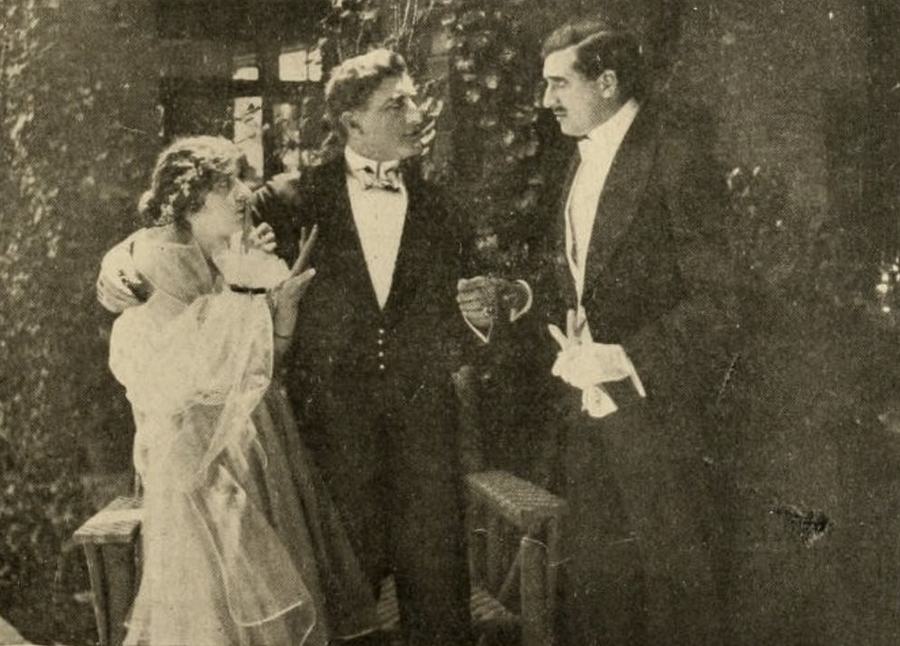
Released in 1915, 'The Second in Command' arrived during a pivotal period for both cinema and global history. The burgeoning art form of film was rapidly evolving, moving beyond simple actualités and vaudeville sketches towards more complex, feature-length narratives. This film exemplifies that growth, showcasing sophisticated character development and plot construction. Moreover, its release during the early years of World War I undoubtedly lent it an additional layer of resonance. Themes of military duty, heroism, and the sacrifices made on the front lines would have struck a particularly poignant chord with contemporary audiences, making its fictional conflict feel remarkably immediate and relevant. This perhaps explains its enduring appeal and critical success at the time.
The legacy of 'The Second in Command' lies not just in its engaging storyline or strong performances, but in its contribution to the maturation of cinematic storytelling. It demonstrated that complex moral dilemmas and nuanced character arcs could be effectively conveyed without spoken dialogue, relying instead on visual cues, compelling performances, and intelligent narrative structure. It stands as a powerful example of how silent films, far from being primitive, were capable of profound artistic expression and deep emotional impact. Its influence, though perhaps subtle, can be traced through subsequent military dramas and romantic epics. It reminds us that fundamental human experiences – love, loyalty, courage, and the quest for self-realization – are truly universal, transcending the technological limitations of any era.
In an era where cinematic spectacle often overshadows substance, revisiting a film like 'The Second in Command' is a refreshing experience. It serves as a potent reminder that compelling storytelling, well-drawn characters, and universal themes are the true hallmarks of lasting art. For enthusiasts of classic cinema, military dramas, or simply powerful human stories, this film is an absolute must-see. It's a journey back to the foundations of filmmaking, revealing that the emotional power of the silver screen was firmly established even in its earliest days. Its nuanced exploration of duty, love, and the making of a leader ensures its place as a significant, if sometimes overlooked, piece of cinematic history. The film doesn't merely tell a story; it invites you to reflect on the very essence of what it means to lead, to love, and to sacrifice.
IMDb —
1920
Community
Log in to comment.