DbcultAccessing Vault...
8.3/10
Senior Film Conservator
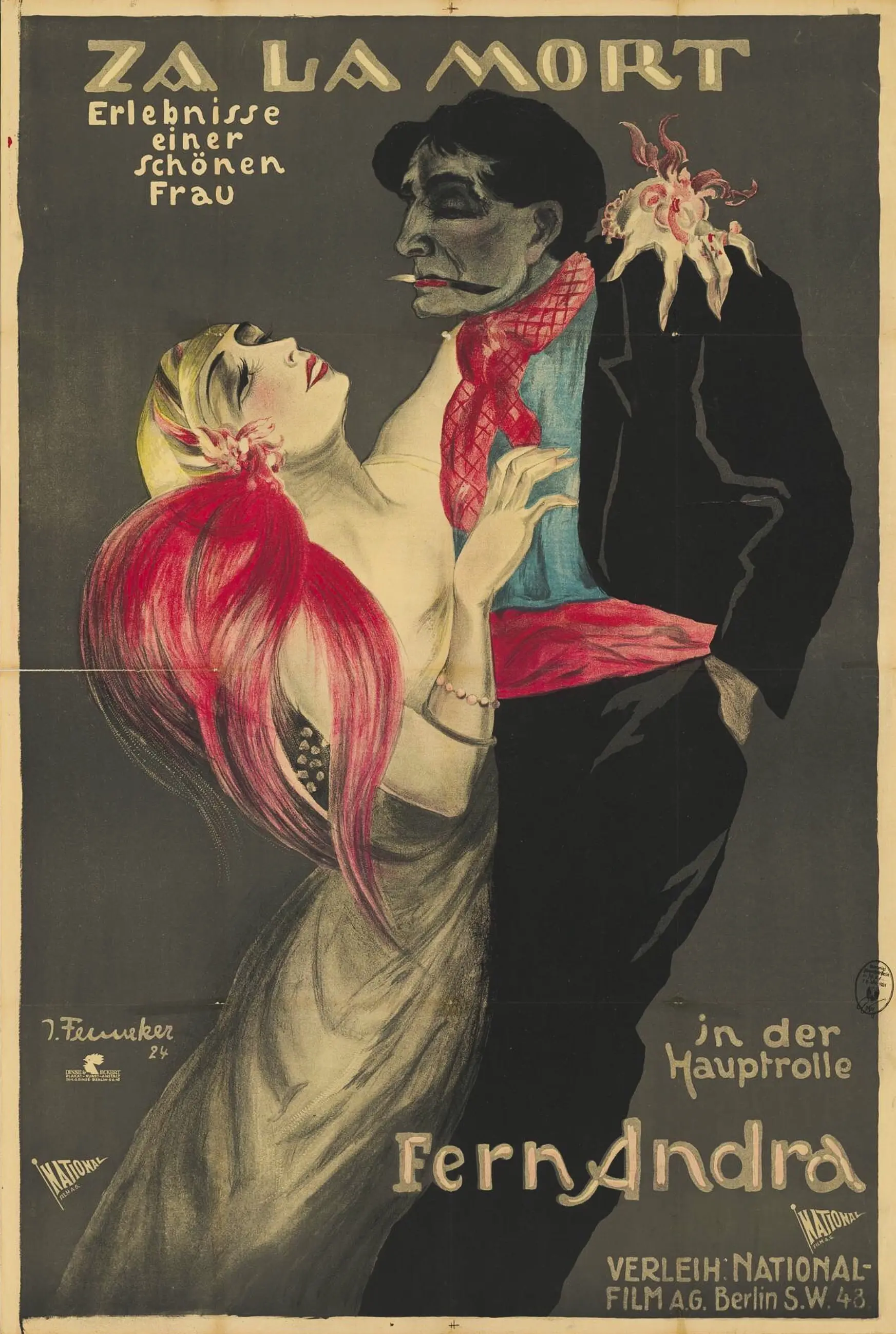
A definitive 8.3/10 rating for a film that redefined the boundaries of cult cinema. Za-la-mort remains a cornerstone of transgressive art.
To speak of Za-la-mort is to invoke the ghost of a cinematic era where the line between the dandy and the cutthroat was as thin as a razor's edge. Released in 1924, this film marks the sixteenth and final chapter of Emilio Ghione’s sprawling epic of the Italian 'Apache.' It is a work of profound atmospheric density, a celluloid fever dream that captures the transition from the romanticized outlaws of the late 19th century to the more cynical, masked villains of the mid-20th. Ghione, serving as both writer and star, imbues the eponymous protagonist with a skeletal, almost vampiric elegance that remains haunting a century later.
Unlike the buoyant optimism found in contemporary American exports like A Yankee Go-Getter, Ghione’s world is one of perpetual night and moral ambiguity. The film does not merely present a crime story; it presents a liturgy of the underworld. The code of honorable conduct enforced by Za-la-Mort and Za-la-Vie is the only stabilizing force in a universe otherwise defined by the caprice of a secluded, masked mastermind. This villain, hidden behind a veil of anonymity, represents a shift in the genre—a move away from the personal vendettas of the past toward the systemic, shadow-dwelling antagonists that would eventually populate the world of noir.
The visual language of Za-la-mort is a masterclass in chiaroscuro. The cinematography leverages the limitations of the era to create a sense of claustrophobia that is both literal and existential. The shadows are not merely absences of light; they are tangible entities that swallow the characters whole. In comparing this to the more open-air, kinetic energy of Bucking Broadway, one sees the stark contrast between the American frontier's promise and the European city's decay. Ghione’s lens is obsessed with the textures of the urban rot—the damp stones, the flickering lamps, and the velvet-lined hideouts of the elite.
The inclusion of Fern Andra and Kally Sambucini provides a fascinating dualistic perspective on femininity within this criminal ecosystem. Sambucini’s Za-la-Vie is the bedrock of loyalty, a character whose stoicism rivals that of the protagonist. In contrast, the 'cunning vamp' introduced in this final installment serves as the catalyst for chaos. This archetypal conflict mirrors the thematic tensions explored in A Flirt There Was, though Ghione elevates the stakes from social comedy to life-and-death melodrama. The vamp here is not just a temptress but a strategist, a woman navigating a male-dominated underworld through sheer intellectual and erotic prowess.
Emilio Ghione’s performance is a marvel of economy. By 1924, he had inhabited the skin of Za-la-Mort for over a decade, and that familiarity manifests as a weary, almost transcendent authority. He does not need the frantic gesticulation common in many silent films; his power resides in his eyes—sunken, piercing, and burdened by the knowledge of a thousand betrayals. This level of gravitas is rarely seen in the more lighthearted fare of the time, such as Jumping Beans or the whimsical Beach Nuts. Ghione treats the underworld with the solemnity of a cathedral, and his movements suggest a man who is already a ghost in his own time.
The presence of Henry Sze as the Chinese associate adds a layer of early 20th-century Orientalism that, while problematic by modern standards, provides a crucial window into the pulp sensibilities of the 1920s. This character acts as a bridge between the local European crime syndicates and a perceived global network of intrigue, much like the internationalist undertones found in Dzhymmi Hihhins. The interaction between these disparate cultural archetypes creates a friction that drives the plot forward, pushing Za-la-Mort out of his comfort zone and into a more complex web of global villainy.
Despite being the sixteenth entry in a series, Za-la-mort avoids the narrative fatigue that often plagues long-running franchises. Ghione’s script is lean, focusing on the tactical maneuvers of the underworld rather than unnecessary exposition. The pacing is deliberate, building tension through silence and stillness before erupting into moments of calculated violence. This rhythmic precision reminds one of The Blue Streak, though the tone here is significantly more somber. There is a sense of finality in every frame, a realization that the era of the gentleman-apache is drawing to a close.
The film’s exploration of the "rules of honorable conduct" serves as its moral spine. In a world where the law is either absent or corrupt, Za-la-Mort’s internal logic provides the only sense of justice. This theme of self-imposed morality is a recurring motif in silent cinema, often seen in works like The Discard or the rugged ethics of The Brute Breaker. However, Ghione imbues this honor code with a specifically European, almost aristocratic flair. Za-la-Mort is not a common thug; he is a sovereign of the shadows, a man who has built an empire on the reliability of his word.
As we analyze Za-la-mort within the broader context of 1920s cinema, its influence becomes undeniable. While American films like Why Smith Left Home were perfecting the domestic comedy, and Join the Circus was exploring the spectacle of the big top, Ghione was busy deconstructing the myth of the criminal hero. This film is a precursor to the French poetic realism of the 1930s and the American noir of the 1940s. It understands that the city is a character in itself—a predatory entity that shapes the souls of those who inhabit it.
The technical execution, considering the year 1924, is remarkably sophisticated. The use of depth of field to keep the masked villain looming in the background while Za-la-Mort dominates the foreground creates a visual tension that mirrors the psychological stakes. This is not the simplistic staging of Boots or the theatrical formality of Iwami Jûtarô. Ghione utilizes the camera as an active participant in the investigation, sweeping through the underworld with a gaze that is both judgmental and empathetic.
The climax of the film, involving the unmasking of the central antagonist, is handled with a restraint that modern filmmakers would do well to study. There is no grandiloquent monologue, no over-the-top explosion. Instead, there is the quiet, devastating realization of the banality of evil. The masked character is not a monster, but a man—a revelation that hits harder than any supernatural twist could. This grounded approach to the thriller genre links Za-la-mort to the psychological depth of Les frères corses, where the complexity of the human spirit takes precedence over the simplicity of the plot.
To watch Za-la-mort today is to witness the end of a lineage. It is the final gasp of a specific type of cinematic romanticism that could only exist before the totalizing dominance of the Hollywood sound era. The film’s preoccupation with honor, its stygian visual palette, and its stoic performances create an experience that is as intellectually stimulating as it is viscerally engaging. It stands in stark contrast to the escapism of Up in the Air, offering instead a somber meditation on the cost of living by one’s own rules in a world that is increasingly governed by faceless forces.
Emilio Ghione may not be as household a name as Chaplin or Keaton, but in the annals of crime cinema, his Za-la-Mort is a titan. This 1924 swan song ensures that the character’s legacy is preserved not just as a series of adventures, but as a cohesive philosophical statement on the nature of the underworld. It is a film that demands to be seen, not just by historians, but by anyone who appreciates the power of shadow and the enduring allure of the noble outlaw. In the end, Za-la-Mort does not just defeat his enemies; he transcends the very medium that birthed him, leaving an indelible mark on the history of the moving image.
IMDb 7.1
1929
Community
Log in to comment.