DbcultAccessing Vault...
Cult Review
Senior Film Conservator
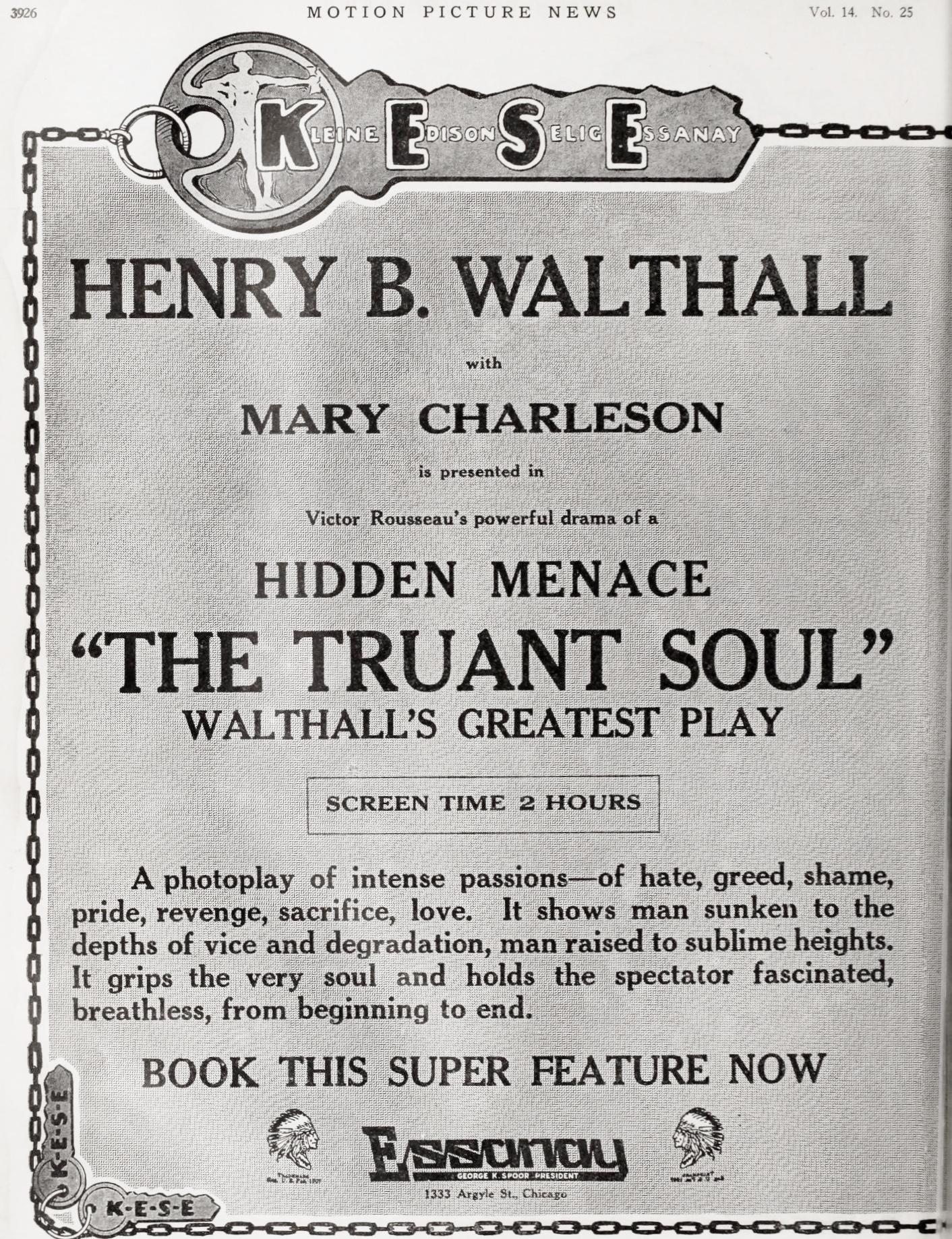
Stepping back into the nascent years of cinema, one occasionally unearths a gem that, despite its age and the inherent limitations of the silent era, still resonates with a profound emotionality. Such is the case with 'The Truant Soul', a 1916 production that, even a century later, offers a compelling, if somewhat melodramatic, exploration of guilt, secrets, and the corrosive power of an unaddressed past. Far from being a mere relic, this film, penned by Charles J. McGuirk and Victor Rousseau, stands as a testament to the early capabilities of cinematic storytelling to delve into the intricate psychological landscapes of its characters. It's a journey into the heart of a man consumed by dread, his life a precarious dance on the precipice of exposure, and his relationships strained by the specter of a family secret.
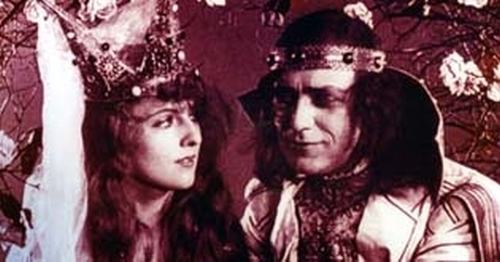
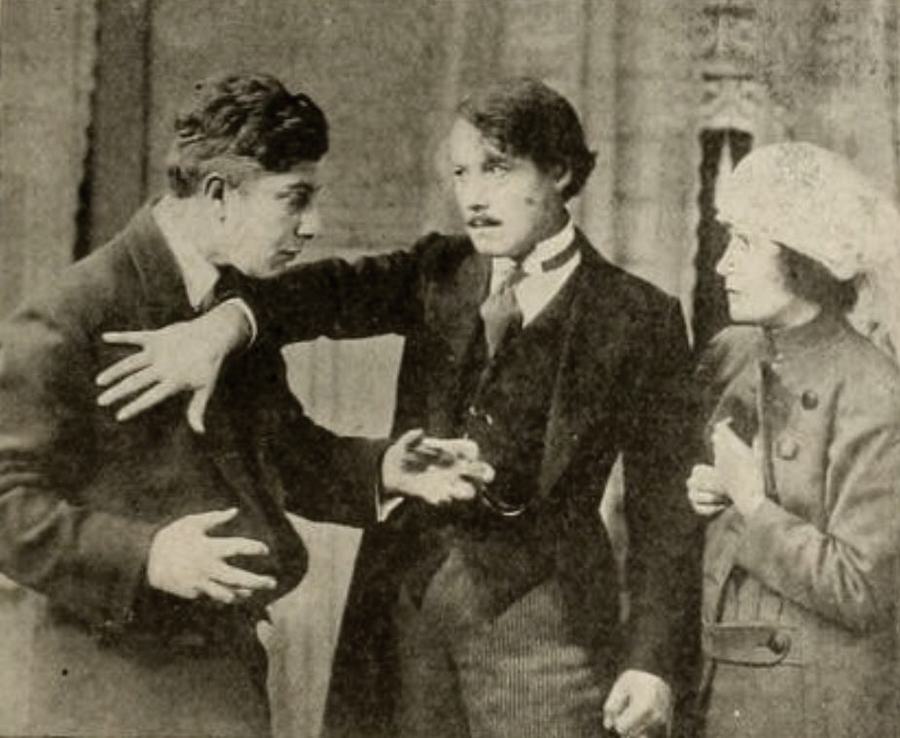
At the narrative's core is Dr. John Lancaster, portrayed with a palpable intensity by Ullrich Haupt. Haupt's performance is a masterclass in silent film acting, relying heavily on exaggerated facial expressions and body language to convey the immense psychological burden his character carries. Dr. Lancaster isn't merely a man with a secret; he is a man *defined* by his secret. The dread of its exposure has metastasized within him, tainting every interaction, every decision, and every quiet moment. This isn't a simple plot device; it's the very fabric of his being, slowly unraveling under the pressure. His 'irrational ways' are not arbitrary acts of villainy but rather desperate, often self-destructive, manifestations of his internal war. We witness his descent, not into madness, but into a state of perpetual anxiety, where even the most benign circumstances become fraught with perceived peril. The genius of Haupt's portrayal, and indeed the film's writing, lies in its ability to make us understand, if not always sympathize with, the suffocating grip of his fear. It's a performance that draws parallels to the intense psychological dramas of later eras, demonstrating that silent cinema was far from simplistic in its emotional scope.
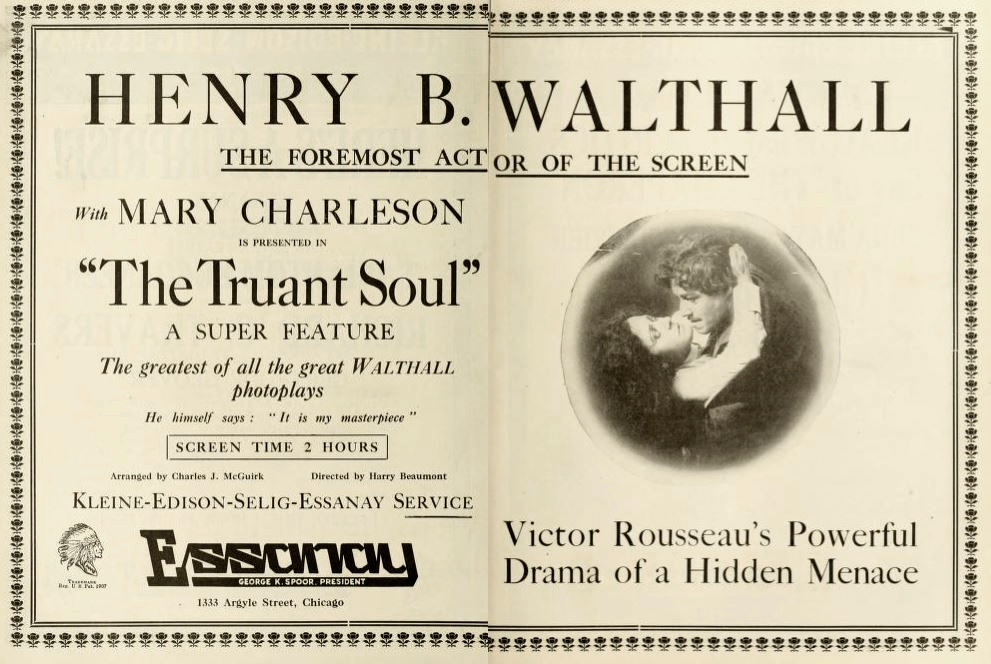
No psychological torment exists in a vacuum, and Dr. Lancaster's internal struggle casts a long, chilling shadow over his fiancée, Joan Wentworth, brought to life with delicate pathos by Mary Charleson. Joan is the innocent caught in the crossfire of John's haunted past. Her love for him is unwavering, yet she is constantly bewildered and hurt by his inexplicable shifts in mood, his sudden withdrawals, and his often cruel behavior. Charleson excels at conveying Joan's growing confusion and heartbreak, her expressive eyes mirroring the audience's own questions about John's mysterious conduct. The film effectively uses Joan's perspective to amplify the tragedy of John's situation; his secret doesn't just threaten him, but also the potential for happiness with the woman he loves. This dynamic creates a powerful emotional core, reminding us that hidden truths often inflict collateral damage on those closest to us. It's a classic melodramatic trope, yet executed here with a nuanced understanding of human relationships, making Joan a figure of genuine sympathy rather than a mere plot device.
While Haupt and Charleson carry the emotional weight, the supporting cast provides essential texture to the narrative. Patrick Calhoun, Henry B. Walthall, Anna Mae Walthall, and Mary Parkyn each contribute to the unfolding drama, whether as unwitting catalysts, concerned observers, or perhaps even figures connected to the very secret that plagues John. In silent films, every character, no matter how minor, often served a vital function in either advancing the plot through action or deepening the emotional stakes through reaction. Their collective presence helps to build the world around Dr. Lancaster, making his isolation and paranoia feel all the more profound. Henry B. Walthall, a prominent star of the era, particularly known for his role in Griffith's The Birth of a Nation, brings a certain gravitas to his role, even if it's not as central as Haupt's. The interplay between these characters creates a complex web of relationships, each thread potentially leading closer to or further from the truth, maintaining a constant state of suspense.
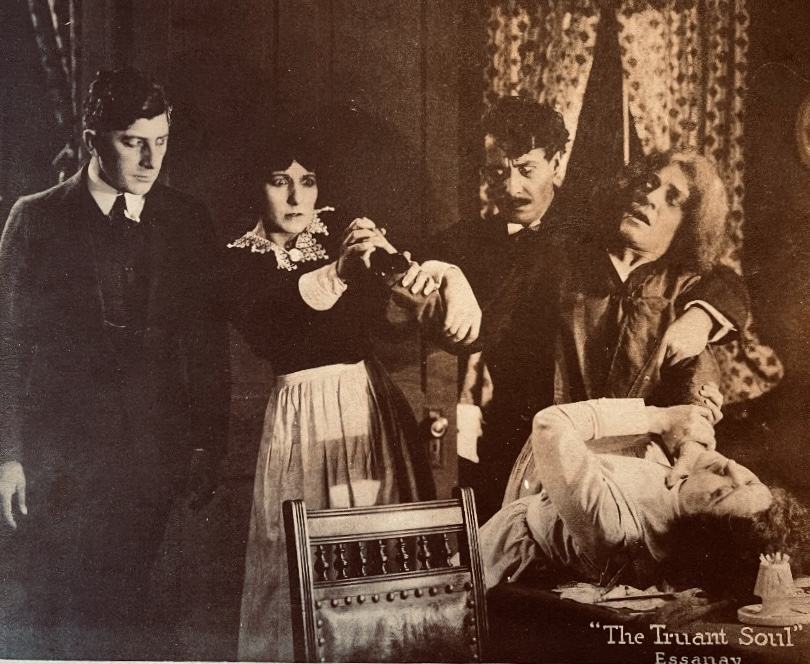
The success of 'The Truant Soul' is fundamentally rooted in the narrative craftsmanship of Charles J. McGuirk and Victor Rousseau. Their screenplay masterfully constructs a slow-burn psychological thriller, where the true horror isn't a monstrous creature but the monster within. They understand that the power of a secret lies not just in its content, but in the *fear* of its revelation. The plot unfolds with a deliberate pace, allowing the audience to witness John's escalating torment without immediately revealing its source. This narrative strategy keeps viewers engaged, constantly questioning the nature of the secret and the extent of its impact. The writers skillfully employ intertitles not just for dialogue but also to convey John's internal monologues, his fragmented thoughts, and the growing despair that consumes him. This narrative choice elevates the film beyond simple melodrama, imbuing it with a depth of character exploration that was quite sophisticated for its time. The tension isn't merely about 'will the secret be exposed?' but 'what will become of John if it is, or even if it isn't?' The narrative structure, while perhaps not as intricate as modern cinema, effectively builds to a climax that feels both earned and inevitable, characteristic of strong dramatic writing of the era.
While specific directorial credits for early films can sometimes be ambiguous, the visual storytelling in 'The Truant Soul' speaks volumes about the creative forces behind the camera. The film effectively uses the visual language of silent cinema to externalize John's internal struggle. One can imagine (or, if a restored print exists, observe) the use of stark lighting to create shadows that mirror his inner darkness, or close-ups that emphasize his anguished expressions. The staging of scenes, particularly those involving John and Joan, often highlights the emotional distance growing between them, even when physically close. The camera becomes an active participant in revealing John's paranoia, perhaps lingering on a doorway he suspects someone is behind, or a letter he fears contains incriminating evidence. This attention to visual detail, coupled with the actors' expressive performances, ensures that the audience is constantly aware of the psychological stakes. The film's aesthetic, typical of its period, might seem quaint by today's standards, but within its own context, it demonstrates an impressive command of cinematic grammar to convey complex emotional states without a single spoken word. It’s a powerful reminder of how early filmmakers experimented with and mastered visual narrative long before sound complicated the medium.
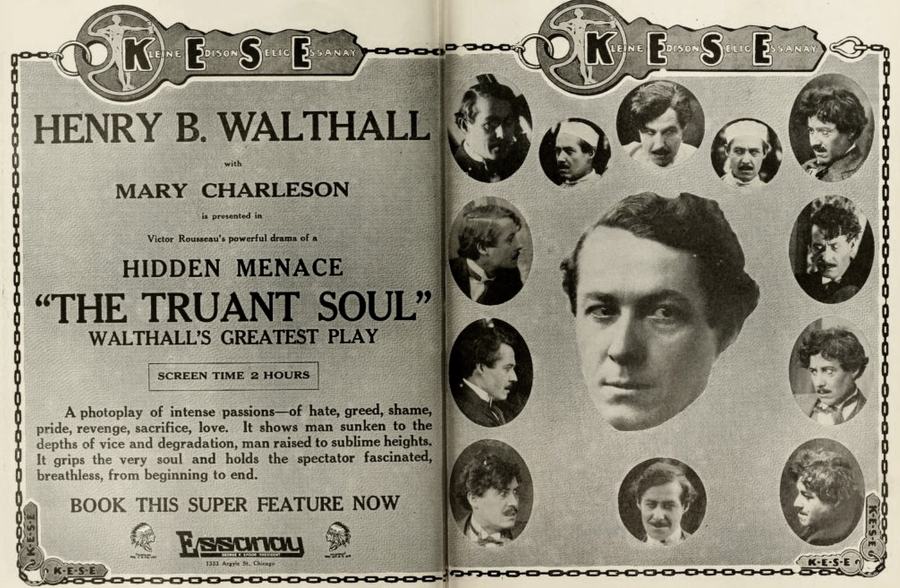
The enduring appeal of 'The Truant Soul' lies in its universal themes. The burden of a secret, the crushing weight of guilt, and the destructive power of the past are timeless human experiences. Dr. Lancaster's predicament is not unique; it's an archetype. We see echoes of his internal conflict in countless narratives, from classical literature to contemporary cinema. The film's exploration of how a past transgression, even one not directly committed by the protagonist but inherited, can dictate one's present and future, is particularly potent. This theme resonates strongly with films like The Final Judgment, which often explored the moral reckoning and consequences of actions, albeit perhaps with a more overt sense of divine or karmic retribution. However, 'The Truant Soul' feels more intimately psychological, focusing on the *internal* judgment rather than an external one.
The irrationality born of guilt and fear is another compelling thread. John's actions, though seemingly erratic, stem from a logical, albeit distorted, attempt to protect himself. This descent into self-sabotage under psychological pressure can be compared to the tragic trajectory of characters like Macbeth, who, driven by ambition and subsequent guilt, commit increasingly desperate acts, as powerfully depicted in countless adaptations of Macbeth. While the scale and nature of the 'secret' differ, the psychological mechanism – the way guilt corrodes the mind and leads to destructive behavior – is strikingly similar. Furthermore, the film touches upon the societal pressures of the era, where family honor and reputation were paramount, making the exposure of a 'family secret' a far more catastrophic event than it might be perceived today. This context adds another layer of dread to John's already fractured psyche. The film asks us to consider the true cost of silence, not just for the individual but for their entire world. It's a reminder that some burdens are too heavy to bear alone, and the truth, no matter how painful, often offers the only path to genuine peace.
To fully appreciate 'The Truant Soul', it's crucial to place it within its historical context. The year 1916 was a period of rapid innovation in cinema, moving beyond simple actualities and vaudeville-style shorts into more complex narrative features. Films were beginning to explore deeper character motivations and more intricate plot structures. While perhaps not as grand in scale as epics like The Spoilers (1914) or The Birth of a Nation (1915), 'The Truant Soul' distinguished itself by its focus on interiority. It belongs to a lineage of melodramas and psychological dramas that sought to understand the human condition, even without spoken dialogue. It's a precursor to the more overt psychological thrillers that would emerge in later decades, laying foundational groundwork for how cinema could depict internal states. The film's ability to maintain suspense and evoke deep empathy through purely visual means, supported by the evocative intertitles, showcases the sophisticated storytelling techniques that were being developed during this fertile period. It stands as a compelling example of how early filmmakers were not just documenting, but truly *creating* a new art form capable of profound emotional and intellectual engagement.
In an era dominated by spectacle and grand gestures, 'The Truant Soul' offers a more intimate, yet equally powerful, experience. It reminds us that the most gripping dramas often unfold within the confines of the human mind. The film's exploration of guilt, fear, and the search for redemption, even if imperfectly resolved, continues to resonate. For modern audiences, it serves as a fascinating window into the emotional and narrative sophistication of early cinema, demonstrating that silent films were capable of tackling complex psychological themes with remarkable depth. It's a film that deserves to be rediscovered, not just as a historical artifact, but as a compelling piece of storytelling that speaks to timeless human struggles. So, if you're ever in the mood for a journey into the tormented psyche of a man battling his past, give 'The Truant Soul' a watch. You might just find a piece of cinematic history that still has something vital to say about the human condition.

IMDb 6.2
1929
Community
Log in to comment.