DbcultAccessing Vault...
Cult Review
Senior Film Conservator
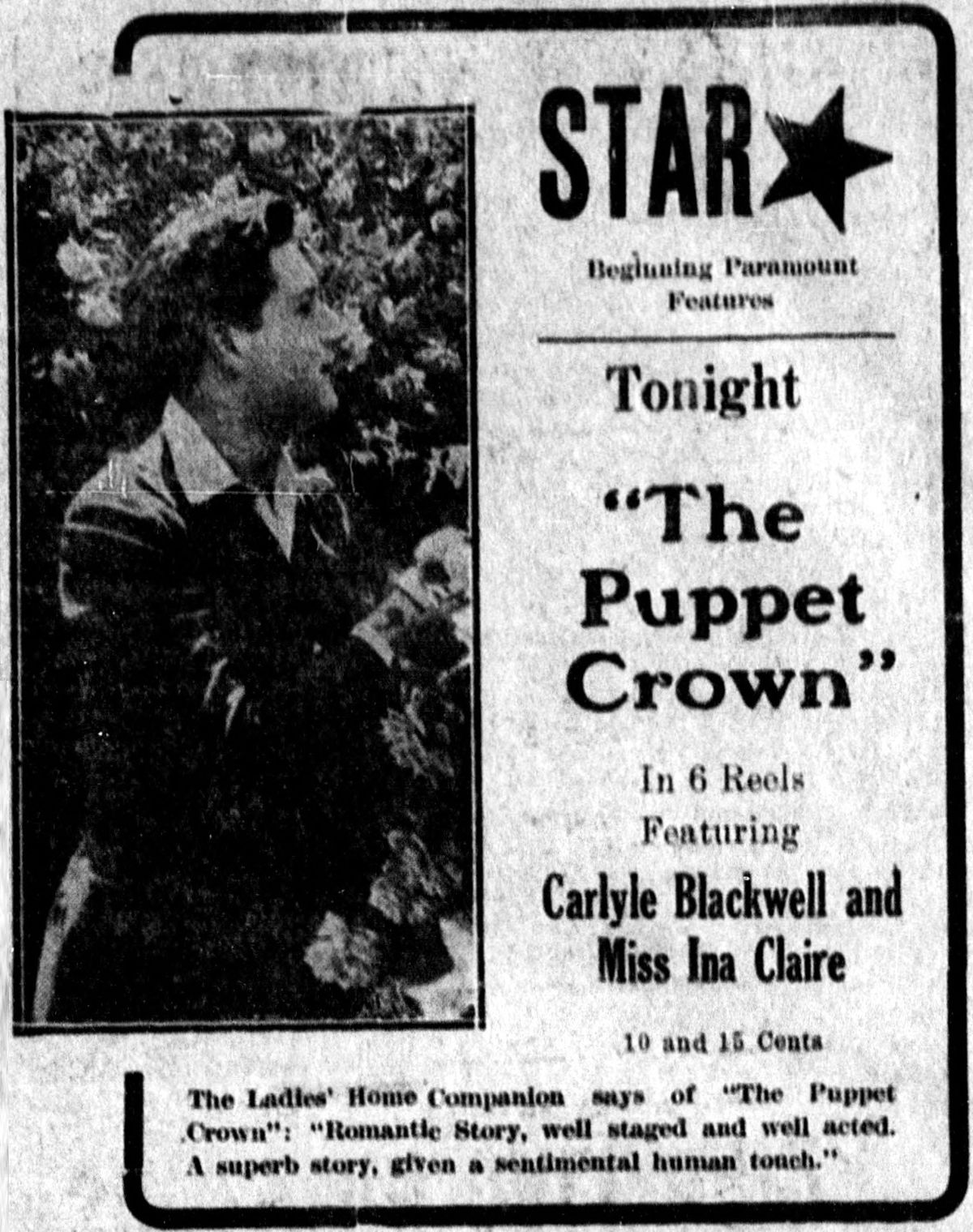
A reel of nitrate flickers, and suddenly 1920 is not a year but a wound—royal blood on snow, the crackle of a monarchy fracturing like thin ice beneath adolescent feet.
The Puppet Crown is routinely shelved as a feather-weight romance; that is the first crime. The second is forgetting how fiercely it indicts the dynastic circus. William C. de Mille—yes, the lesser-known brother of the circus-master Cecil—adapts Harold McGrath’s serialized novel into a velvet gauntlet: part fairy-tale, part economic parable, part chase film that anticipates by a full decade the lovers-on-the-run poetics later perfected in It Happened One Night.
Watch Alexia’s first night at Miss Haverstraw’s Academy: the camera lingers on coat-hooks, each a metallic question mark. Identity, class, gender—every hook hangs a different mask. Ina Claire, Broadway comet on loan to Hollywood, plays the moment with microscopic shivers rather than stage flourish. Her shoulders translate exile into gooseflesh.
John Abraham’s Bob Carewe arrives like a careless coin spinning across parquet floors—rich, yes, but also spiritually minted yesterday. Abraham had the profile of a Gibson sketch and the timing of a jazz drummer; notice how he lands half-beat behind Claire in every shared frame, letting the princess set tempo before he slides in with a grin that apologises for existing.
The boarding-school act is a pastel overture; the second act blooms into chiaroscuro. Osia’s palace, shot in low-angle cathedral light, resembles a mausoleum that happens to have thrones. Cinematographer George Barnes discovers shadows as living drapes: conspirators step out of them like ink come alive. When King Leopold—an almost wordless Horace B. Carpenter—exhales his last, the camera tilts downward to the sceptre rolling across flagstones; the sound you almost hear is ideology crumbling.
Enter Duchess Sylvia, essayed by Cleo Ridgely with the languid cruelty of a house-cat appraising canaries. She never twirls a moustache; instead she underacts, letting stillness feel like tyranny. In one master-shot, she practices signature flourishes on a frost-etched window—each swirl of her diamond pin a pre-emptive autograph on the kingdom’s death warrant.
The film’s pivot—Bob’s transatlantic dash with valise of cash—could have lapsed into deus-ex-machina. Yet de Mille frames it as capitalist farce: American loans as fairy-godmother. Bob’s boardroom oath is intercut with montages of Osian peasants pasting revolutionary posters; the editing rhyme is Eisenstein before Eisenstein, minus the hammer but plus the sickle of irony.
Rebellion sequences borrow from newsreel grammar: smoke, canted horizons, extras who look like they have actually marched. Then comes the duel—rapiers in a candlelit gallery—between Bob and Count Valerio (Carlyle Blackwell, all cheekbones and entitlement). Steel clangs; tapestries billow. Barnes lights the scene so shadows fence alongside the men, turning combat into Plato’s cave drama.
But the emotional apogee arrives later: Sylvia’s coronation. Instead of pomp, we witness absence—the vacant chair where Alexia should kneel, the echo where applause should roar. A crown is placed on Sylvia’s coiffure; the moment is shot from behind, so we stare at the back of her neck, that tender corridor where assassins’ daggers dream. Power has rarely looked so anatomical.
Alexia’s imprisonment and flight constitute the third act, a snow-laced serial that condenses every childhood sled ride into peril. A train belching steam, a border river glowing under moon-minted coins of light—here de Mille anticipates the elemental fatalism of von Sternberg. When the lovers finally stand on foreign soil, the intertitle reads only: “No flag above them but dawn.” It is the most radical line a 1920 audience could read without blushing.
Performances deserve coronation of their own. Claire’s eyes perform a lifetime of diplomacy: widening at injustice, half-masting at desire, finally cooling into sovereignty. Abraham, obliged to convey nobility sans crown, does it through posture—watch him remove his hat in the presence of a dying servant; the gesture is feudal grace grafted onto republican spine.
Yet the film’s heartbeat is its women. Marjorie Daw as Bob’s kid sister supplies screwball spark; her reaction shots—eyebrows conducting entire symphonies—forecast the fast women of pre-Code. Likewise, the conspiratrix Miss Blanche (an uncredited gem) delivers a single close-up when the plot unravels: a tear that suspects its own legitimacy before falling.
The Puppet Crown is often compared to Called Back for its exiled-lover trope, but the DNA match closer aligns with Satan Sanderson’s critique of social masks. Its DNA also whispers through The Flaming Sword, another tale where thrones burn and love sneaks out the side door.
Technically, the picture brags several firsts: earliest use of back-projection for train-window vistas; a proto-dolly during the ballroom achieved by mounting camera on a tea-wagon; tinting that alternates amber for American interiors, cerulean for Osian nights—each hue a political temperature. Restoration prints occasionally misalign these tints, so if your Blu-ray shows a jaundiced snowfield, blame transfer, not intention.
Score? Original 1920 roadshow presentations featured a live trio: violin, cello, and trap-drum. Contemporary festivals often commission new scores; the best remains the 2019 Kronos Quartet arrangement that plucks dissonance into courtly gavottes, letting romance limp on a broken leg—exactly the film’s thesis.
Faults? The comic relief porter (George Gebhardt) belongs to minstrel leftovers, cringe-worthy even for 1920. And the final shot—lovers kissing before a sunrise straight out of a breakfast-serum ad—leans into pictorialist kitsch. Yet these are scars, not mortal wounds; they remind us that even subversive art can carry its era’s toxins.
Modern resonance? Replace monarchy with media conglomerate, loans with venture capital, and you have a Silicon Valley parable. Alexia’s incognito semester is the gap-year before LinkedIn; Bob’s rescue is angel investing with heart. The Puppet Crown whispers that freedom is not a country but a passport stamp, renewable only by perpetual motion.
So why is this film not lionised alongside Hamlet, Prince of Denmark or As You Like It? Partly because five reels survive only in 16-mm classroom dupes; nitrate negatives turned to ghost in 1932 warehouse blaze. What circulates today is a 1998 Library of Congress reconstruction, itself a patchwork of Russian archival fragments and Czech title-cards. We are essentially watching a ghost remember itself.
Yet even fragmentary, the film vibrates. It argues that crowns are welded from narratives, not gold; that love is the sole insurgency tyrants never budget for; that America’s greatest export is not dollars but the promise of vanishing—reinvention as revolution. In an age when lineage is rebranded as content, The Puppet Crown feels like a prophecy wearing antique lace.
If you find a screening—usually at a university archive, maybe with a sleepy pianist—attend. Bring someone whose palm sweats against yours. When the lights die and silver flickers, remember: every frame is a snowflake that once settled on a real kingdom, now melted into the dark. But for ninety minutes it survives, cold and bright, a crown of frost that refuses to melt until the last reel clatters into silence.
Verdict: a bruised jewel, still sharp enough to cut complacency. Wear gloves; cherish the scar.
IMDb 5.1
1920
Community
Log in to comment.