DbcultAccessing Vault...
Cult Review
Senior Film Conservator
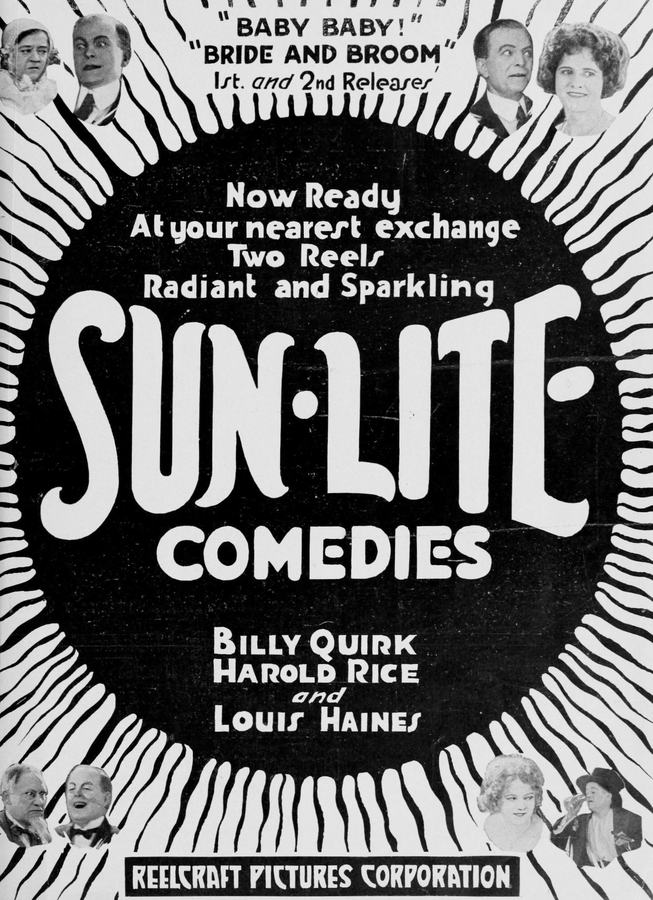
Step into the glittering chaos of Bride and Broom, a silent film that masterfully marries the farcical with the profound. At its core lies Harold, a man whose life is upended by a bequest that demands matrimony within a rigid timeframe. The film’s brilliance unfolds in its ability to transform this contrived premise into a rich tapestry of human folly and yearning. With a palette of sophisticated slapstick and delicate pathos, it captures the essence of a man torn between societal expectation and personal truth.
What begins as a farcical romp quickly escalates into a philosophical inquiry about the nature of love. Harold’s journey is not merely one of accumulating potential spouses but of confronting his own vulnerabilities. The film’s writers, though uncredited, craft a narrative that feels refreshingly modern in its exploration of identity and choice. Each of the six women represents a facet of Harold’s psyche, their pursuits mirroring his internal conflicts.
Jobyna Ralston, as the shop girl, delivers a performance that is both grounded and ethereal. Her subtle gestures—a raised eyebrow, a lingering glance—convey a depth of emotion that transcends the silent medium. Harold Rice, portraying the beleaguered groom, navigates the extremes of despair and hope with commendable nuance. His physical comedy is both precise and evocative, a testament to the era’s reliance on visual storytelling to convey complex narratives.
Billy Quirk and Ollie Mack provide comic relief that never veers into caricature. Their characters, though secondary, are imbued with enough dimensionality to avoid becoming mere punchlines. The ensemble’s chemistry is palpable, each actor contributing to the film’s overall rhythm. This is not merely a collection of performances but a cohesive orchestration of talent.
Beyond its comedic veneer, Bride and Broom interrogates the institution of marriage with a sharp yet affectionate gaze. The film juxtaposes the transactional nature of Harold’s predicament with the genuine connections he forges. The looming deadline becomes a metaphor for the societal pressures that dictate our life choices. One cannot help but draw parallels with Almost Married, where similar themes of marital obligation are explored with comparable depth.
What elevates this film is its refusal to offer easy resolutions. Harold’s final choice is not a triumph but a revelation—a realization that love, in its truest form, cannot be engineered. The film’s climax, where he returns to his shop girl amidst the chaos, is a masterstroke of emotional truth. It is a resonant reminder that authenticity often triumphs over convenience.
The film’s director employs a visual lexicon that is both inventive and restrained. The use of shadows and light to denote Harold’s emotional state is masterful. A particularly striking sequence is the church scene, where the six women converge in a visual cacophony of hats, dresses, and conflicting emotions. The editing here is tight, with cuts that maintain the frenetic pace without sacrificing clarity.
For a silent film, the musical score is integral to its narrative flow. The interplay between the melancholic strings and lively brass sections mirrors Harold’s internal fluctuations. This auditory layering enhances the film’s emotional depth, transforming it from a mere comedy into a multisensory experience.
Decades after its release, Bride and Broom continues to resonate, influencing later works such as Destiny's Toy and Putting One Over, which similarly explore the caprices of fate and human decision-making. Its legacy is also evident in modern romantic comedies that grapple with similar dilemmas of choice and consequence.
Yet, it is not just the plot that endures. The film’s technical ingenuity and emotional honesty have cemented its place in the canon of early cinema. For scholars and enthusiasts alike, it remains a vital artifact of the silent era, a testament to the medium’s capacity to convey both laughter and heartfelt truth.
Bride and Broom is more than a relic of cinematic history; it is a vibrant dialogue with the present. Its exploration of love, duty, and the human condition remains as pertinent today as it was in its time. The film’s enduring charm lies in its ability to make us laugh while simultaneously prompting introspection.
For those seeking a richly textured experience, this film is an essential viewing. Whether you are a silent film connoisseur or a casual moviegoer, Bride and Broom offers a journey through the labyrinth of the human heart, proving that even in the absence of sound, cinema can speak volumes.
IMDb 6.9
1932
Community
Log in to comment.