DbcultAccessing Vault...
6.3/10
Senior Film Conservator
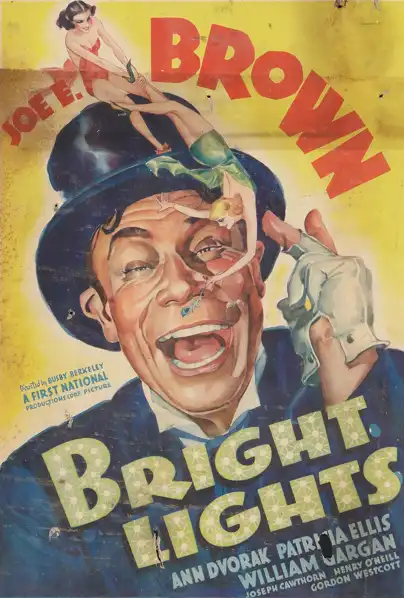
A definitive 6.3/10 rating for a film that redefined the boundaries of cult cinema. Bright Lights remains a cornerstone of transgressive art.
Bright Lights (1935) is probably not for everyone today. If you’re really into old-school Hollywood musicals, especially those early talkies with a backstage story, you might find some little bits of charm here. But if you need fast pacing and modern sensibilities, well, you’ll likely find it a bit of a slow roll.
The story follows Joe and Fay Wilson, played by Joe E. Brown and Ann Dvorak. They’re a pretty happy vaudeville duo, doing their song and dance thing, and just generally being sweet.
Then a reporter finds out one of their chorus girls, Martha Merrill’s character, is actually a rich heiress. She’s slumming it, I guess. Why she’s doing vaudeville isn’t really explored, but it sets up the whole plot.
Naturally, the manager sees a big opportunity. He decides Joe should ditch Fay and perform on Broadway with the heiress instead. Classic show biz stuff, right? 🎭
Joe E. Brown is always a treat to watch. His wide, goofy smile just makes you root for the guy. He plays Joe with this earnest, almost bewildered charm, especially when things start getting complicated.
Ann Dvorak as Fay is pretty solid too. She’s not just the worried wife on the sidelines. She has a real spark, and you feel her quiet hurt when Joe is pulled away. It's not a big dramatic breakdown, more like a slow, building ache.
The heiress character is a bit... something. Her "eccentricity" mainly comes across as being a little ditzy and very used to getting her own way. She just decides she likes Joe, and suddenly it's a huge problem. It feels a bit too easy, honestly.
Some of the musical numbers are okay, some less so. There’s a dance routine early on where the timing seems slightly off in a few spots. Like someone missed a cue, but they just kinda kept going. It's kind of endearing, if you like that early film vibe.
The whole "marriage in jeopardy" thing never really feels super serious. You don’t ever truly believe Joe would actually leave Fay. It’s more of a drawn-out misunderstanding than a genuine threat.
One scene has Joe and the heiress rehearsing a song, and the camera just lingers on them for ages. They do the same few steps, a bit of singing. You almost feel the director thinking, "Right, that's enough footage, surely?"
The dialogue can be snappy sometimes, but other parts drag. There's a long bit about ticket sales and contracts for the new show. It just goes on. You start to wonder if they were just trying to fill time.
I really liked the quick shots backstage. Little glimpses of stagehands moving props, people fussing with costumes. Those moments felt real and gave a nice flavor of what vaudeville was like.
Joe E. Brown’s signature yell makes an appearance. Always makes me chuckle. It's like his own special effect. You know it’s coming, and it still lands.
The sound quality dips here and there, which is common for films from this era. Sometimes a line is clear, other times it’s muffled. You notice these small things, watching an old movie.
It kind of reminded me of another old one, Oh, Daddy!, with its light, almost screwball energy. But Bright Lights isn't quite as wild or surprising.
The ending, as you'd expect, ties everything up neatly. Everyone's happy, all problems resolved. No big shocks, which is perfectly fine for this kind of picture.
So, Bright Lights isn't going to redefine cinema. It’s a pleasant enough way to spend an hour and a bit, especially if you’re looking for some simple, old-school charm and a straightforward story. Don't expect fireworks, just some mild chuckles and a glimpse into 1930s show business. ✨
IMDb 5.8
1936
Community
Log in to comment.