DbcultAccessing Vault...
Cult Review
Senior Film Conservator
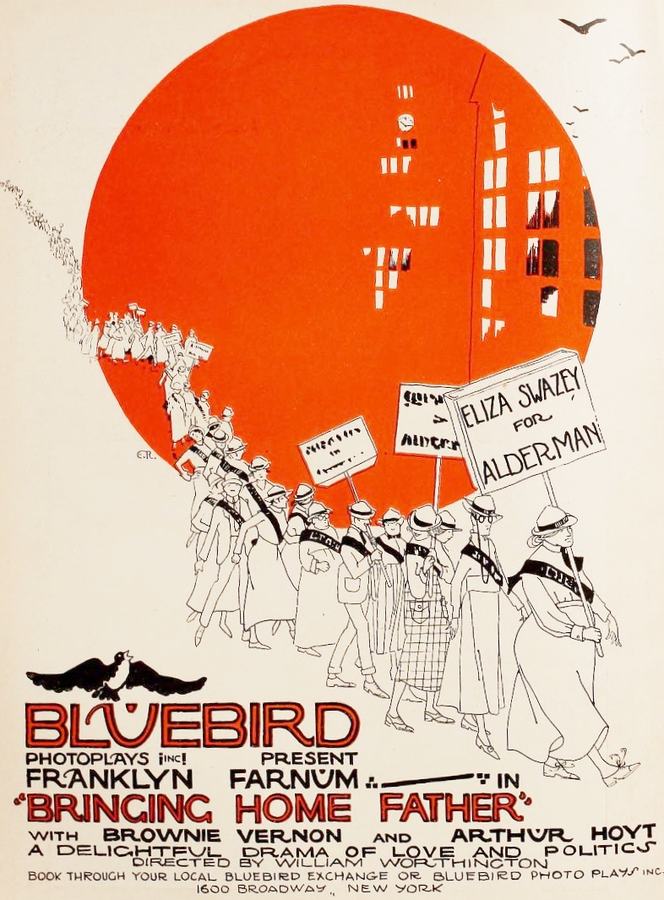
The year 1917 stands as a watershed moment in the evolution of American cinema, a period where the burgeoning language of film began to articulate the complexities of a nation teetering between Victorian morality and the looming shadows of modernity. Within this crucible, Bringing Home Father emerges not merely as a comedic diversion, but as a biting critique of the period’s socio-political hypocrisies. Directed with a deft hand and written by the legendary Bess Meredyth, the film navigates the treacherous waters of the temperance movement with a level of cynicism that feels startlingly contemporary.
To understand the structural integrity of this narrative, one must acknowledge the pen of Bess Meredyth. Long before the industry became codified by rigid genre boundaries, Meredyth was experimenting with the subversion of domestic tropes. In Bringing Home Father, she eschews the sentimentalism often found in contemporary works like Little Women, opting instead for a narrative engine fueled by irony and the inherent fallibility of the human spirit. The screenplay doesn’t just mock the drunkard; it mocks the reformer with equal, if not greater, fervor.
The character of Peter Drake, portrayed with a charmingly kinetic energy by Franklyn Farnum, serves as our moral compass—or rather, our lack thereof. Drake is the quintessential everyman of the silent era, a figure whose motivations are purely romantic yet whose actions are consistently dictated by the gravitational pull of chaos. Unlike the stoic heroes found in The Call of the North, Drake is a creature of circumstance, a man who finds that the path of least resistance often leads through the bottom of a bottle.
The casting of Florence Mayon as the incipient politician Mrs. Swazey provides the film with its ideological anchor. Mayon plays the role with a terrifyingly focused zeal, embodying the 'New Woman' of the 1910s but stripping away the romanticized veneer often seen in films like A Girl of the Timber Claims. Here, the suffragette is not a victim of circumstance but a wielder of power, often at the expense of her own household’s stability. This creates a fascinating tension; while the film supports the notion of female agency, it remains deeply suspicious of the moral authoritarianism that often accompanied the Prohibitionist platform.
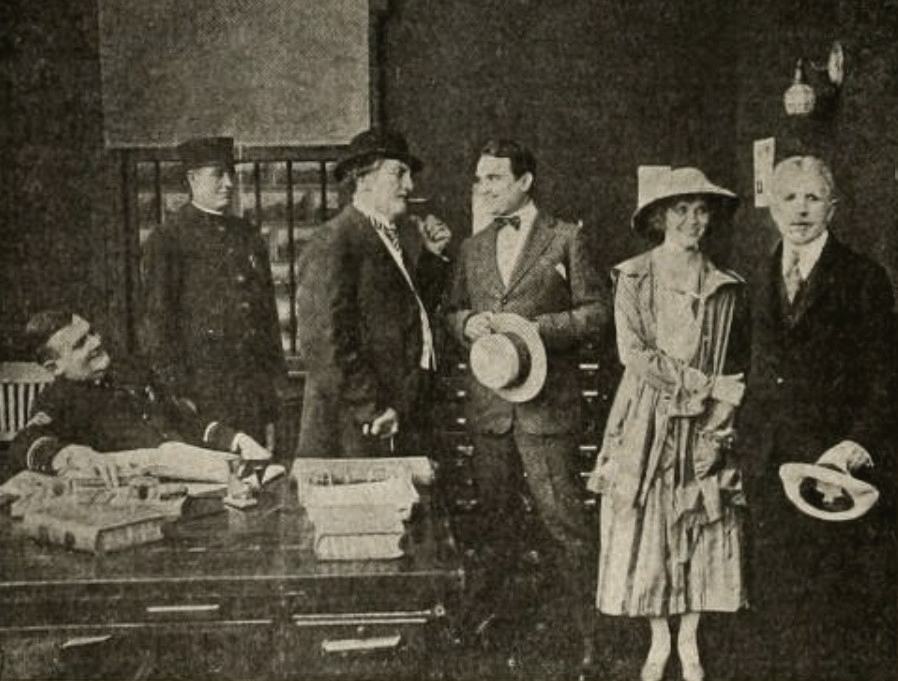
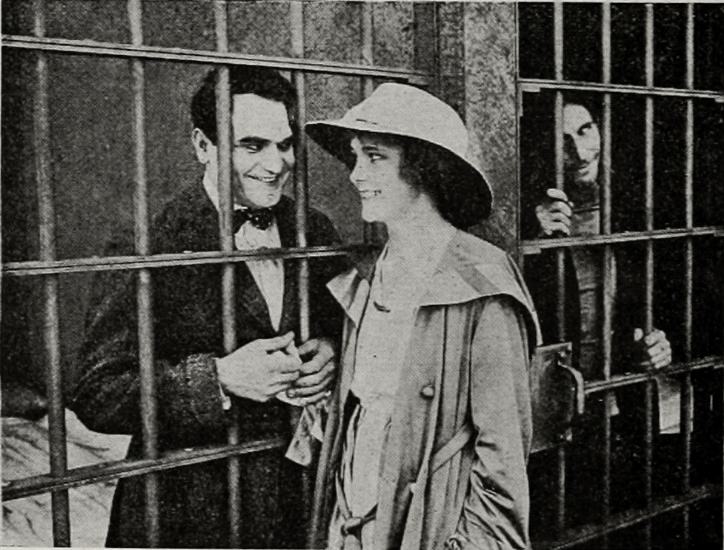
Contrast this with Dick La Reno’s portrayal of Pa Swazey. La Reno avoids the caricature of the 'village drunk' seen in lesser productions like Sins of the Parents. Instead, he imbues the character with a tragicomic dignity. His chemistry with Farnum is the film’s true heartbeat. When the two find themselves incarcerated, the scene isn't played for pathos but for a sense of shared liberation from the suffocating expectations of the Swazey matriarch. It is a masculine rebellion through shared vice, a recurring theme that Meredyth explores with surgical precision.
Visually, the film utilizes the limited technical palette of its time to maximize the comedic impact of its set pieces. The cinematography, while functional, excels in its use of depth and blocking during the campaign rally scenes. The framing of Mrs. Swazey against the backdrop of her Prohibition banners, only to have her facade crumble as the spiked drink takes effect, is a masterclass in visual irony. This use of space to emphasize social standing and its eventual collapse is far more sophisticated than the theatrical staging found in The Flying Circus.
"The brilliance of 'Bringing Home Father' lies in its refusal to offer a clean moral victory. It suggests that in the arena of politics and love, the only winning move is a strategic retreat into absurdity."
The pacing of the film, particularly in the second act, mirrors the escalating intoxication of its protagonists. There is a rhythmic quality to the editing that heightens the slapstick without sacrificing the narrative's satirical edge. While contemporary dramas like The Mill on the Floss relied on heavy intertitles to convey emotional weight, Bringing Home Father lets the physicality of its actors do the heavy lifting. Arthur Hoyt, as the political rival Mike Clancey, provides a slick, oily counterpoint to the earnest bumbling of the Swazey men, representing the cynical machinery of the electoral process.
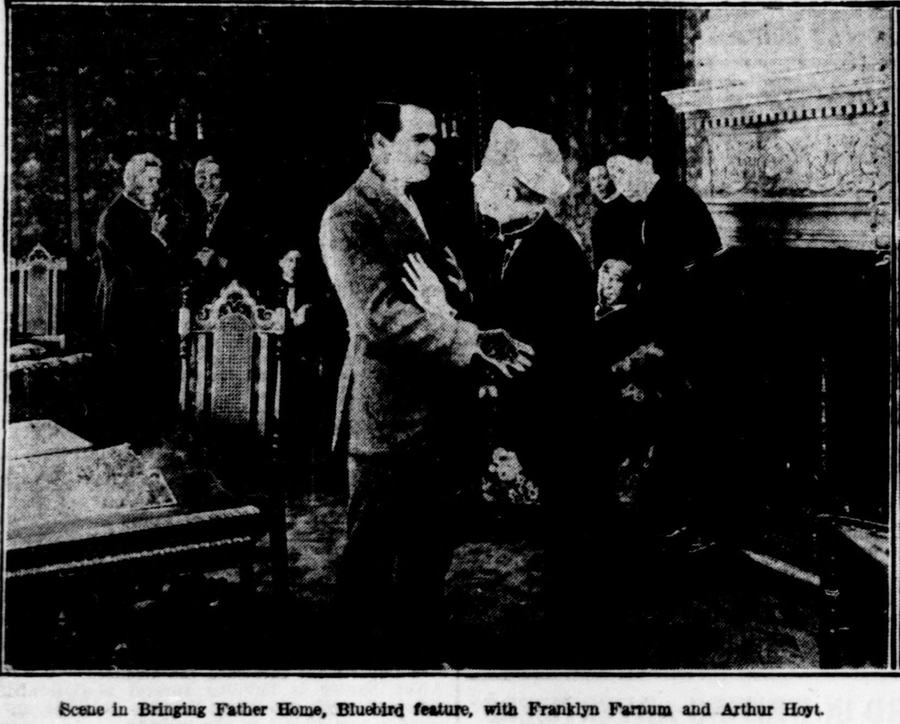
What distinguishes this film from other comedies of the era, such as Fürst Seppl, is its willingness to engage with the darker undercurrents of American life. The plot point involving the spiking of Mrs. Swazey’s drink—a move that would be considered highly problematic by modern standards—is presented here as the ultimate equalizer. It strips her of her self-righteousness, forcing her to inhabit the very state she seeks to criminalize. This is not just a gag; it is a profound commentary on the performative nature of political purity.
In comparing this to The Dupe, one sees a clear divergence in how silent cinema handled the concept of betrayal. In the latter, betrayal is a source of melodrama and ruin; in Bringing Home Father, betrayal is a tool of liberation. Peter Drake’s decision to ruin Mrs. Swazey’s reputation is framed as a necessary evil to preserve his own future with Jackie. It is a utilitarian approach to romance that reflects the pragmatism of a generation facing the uncertainties of a world at war.
The production design of the Swazey household serves as a microcosm of the era’s domestic tension. The clutter of campaign literature juxtaposed with the hidden bottles of the patriarch creates a visual duality that reinforces the film's themes of public versus private selves. This level of detail is often absent in more rural-focused films like Die Landstraße or the adventure-laden The Pool of Flame. Universal’s production values here are evident, providing a crispness to the image that allows the subtle facial expressions of Agnes Vernon (Jackie) to shine through even in wide shots.
Vernon herself is an underrated presence in this film. While the script focuses heavily on the antics of the men and the mother, Jackie’s quiet complicity in Peter’s final scheme adds a layer of complexity to her character. She is not the passive prize to be won, as seen in The Lonesome Chap, but an active participant in the subversion of her mother’s authority. Her elopement is an act of defiance, a rejection of both her father’s lethargy and her mother’s rigidity.
Looking back from a century’s distance, Bringing Home Father feels like a precursor to the sophisticated screwball comedies of the 1930s. It shares a DNA with the works of Preston Sturges, particularly in its belief that the institutions of society—be they political, marital, or legal—are inherently absurd. The resolution, which sees the protagonists fleeing the scene of their crime rather than facing the consequences, is a refreshing departure from the moralizing conclusions of films like The Question or Through Turbulent Waters.
The film also touches upon class dynamics in a way that is less heavy-handed than A Little Brother of the Rich. Mike Clancey’s role as the political boss highlights the transactional nature of power, suggesting that reform is often just another commodity in the marketplace of influence. When Clancey demands Mrs. Swazey’s withdrawal, he isn’t doing it for the good of the town; he’s doing it to consolidate his own control. This cynical worldview is what gives the film its lasting resonance.
In the final tally, Bringing Home Father is a triumph of silent era storytelling. It manages to balance slapstick with satire, and romance with a cold-eyed look at social movements. Franklyn Farnum’s performance is a highlight of his career, showcasing a range of physical comedy that is both athletic and nuanced. The writing of Bess Meredyth remains the star, however, providing a blueprint for how to tackle controversial subjects with wit and irreverence.
While some might find the film’s treatment of alcohol and suffrage dated, to do so is to miss the point. The film is a snapshot of a moment in time when the old rules were breaking down and the new ones hadn't yet been codified. It is a celebration of the messy, drunken, and ultimately human reality that exists beneath the surface of every political movement. For those interested in the history of film as a mirror to society, this is essential viewing, standing tall alongside other 1917 landmarks like The Great Diamond Robbery in its ability to entertain while simultaneously provoking thought.
Ultimately, the film leaves us with a hauntingly funny image: a champion of temperance, defeated by the very spirit she fought against, while the young lovers race toward a future built on the ruins of her reputation. It is a quintessential American story—one of ambition, failure, and the inevitable triumph of the individual over the collective moral crusade. Bringing Home Father is a caustic, brilliant, and utterly necessary piece of cinematic history.
IMDb —
1923
Community
Log in to comment.