DbcultAccessing Vault...
6.1/10
Senior Film Conservator
A definitive 6.1/10 rating for a film that redefined the boundaries of cult cinema. Ko-Ko Back Tracks remains a cornerstone of transgressive art.
Is Ko-Ko Back Tracks worth watching today? Short answer: absolutely, especially if you appreciate the foundational artistry of animation and early cinematic experimentation. This film is an essential viewing for animation historians, experimental film enthusiasts, and anyone curious about the roots of visual storytelling, but it might not resonate with those seeking complex narratives or modern pacing.
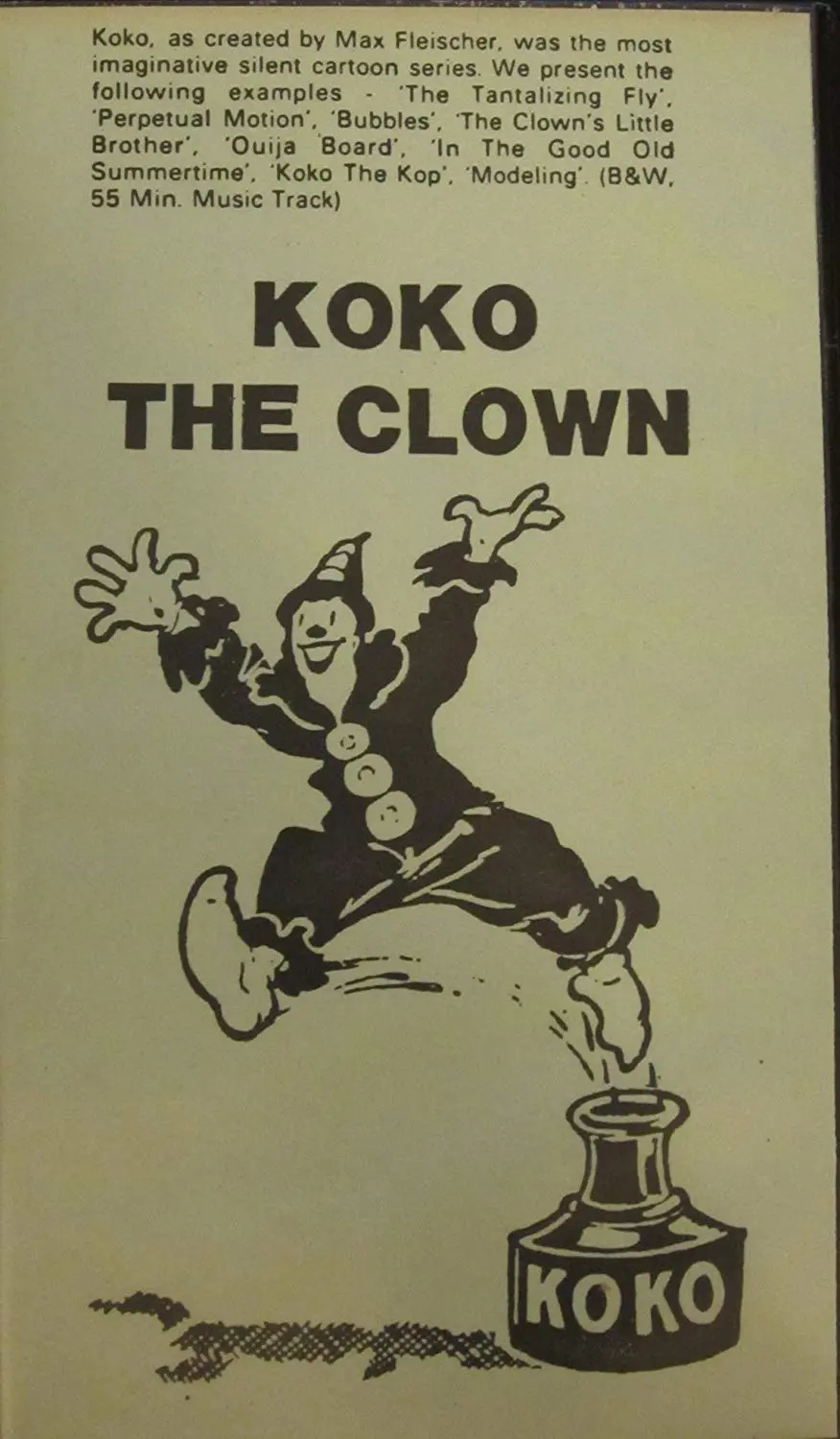
Max Fleischer’s 1923 short is more than just a cartoon; it's a historical artifact, a testament to a period when the very language of cinema was being invented. It's a film that demands a certain context, a willingness to engage with its era, but rewards that engagement with pure, unadulterated visual ingenuity.
This film works because... it’s a pure, unadulterated display of Max Fleischer’s groundbreaking animation techniques and his studio's audacious creativity in bending reality.
This film fails because... its episodic nature and lack of a deep emotional arc prevent it from transcending its novelty into truly resonant storytelling for a contemporary audience.
You should watch it if... you want to witness the birth of visual innovation, understand the historical context of cartooning, or simply enjoy a delightful, surreal romp through a world turned upside down.
From its opening frames, Ko-Ko Back Tracks establishes itself as a work deeply invested in the playful subversion of reality. The premise is disarmingly simple: Ko-Ko the Clown and his canine companion Fitz discover their animated world is moving in reverse. This isn't just a quirky gag; it's the central conceit, meticulously applied to every visual element. Objects don't just move backward; their entire lifecycle is inverted, creating a delightful, almost philosophical meditation on cause and effect.
Fleischer’s distinctive 'rubber hose' animation style, characterized by its fluid, often elastic movements, lends itself perfectly to this temporal distortion. Characters stretch and squish, defying physics even in a forward-moving world, making their backward antics feel less jarring and more like an extension of their inherent cartoon logic. The animation here isn't about photorealism; it's about pure, unadulterated expression and the boundless possibilities of the drawn image.
Consider the subtle yet profound visual cues when Ko-Ko first notices the reversal. A simple action, like a dropped hat flying back onto his head, immediately sets the surreal tone. It’s a moment designed to elicit a chuckle, but also to signal that the rules of engagement have fundamentally changed. This early scene is a masterclass in visual storytelling, establishing the core conflict and the film's unique aesthetic without a single line of dialogue.
The plot, while lean, is surprisingly effective in its conceptual strength. Ko-Ko and Fitz, observing their world rewind, decide to intervene. Their solution? To literally step out of their drawn reality and into the 'real world' – a bold meta-narrative stroke that predates many similar experiments in cinema. This transition from animation to live-action is not just a visual trick; it’s a narrative leap that underscores Fleischer’s willingness to push boundaries.
The sequence where Ko-Ko and Fitz emerge from their ink-and-paint realm onto a live-action cityscape is nothing short of revolutionary for its time. It's a moment of pure cinematic magic, bridging two distinct forms of visual media with seamless, if primitive, ingenuity. This blend of techniques would become a hallmark of Fleischer's studio, later perfected in works like the Popeye and Superman cartoons.
Their subsequent infiltration of a massive clock, an undeniable symbol of time itself, and their physical manipulation of its hands, is a potent visual metaphor. It’s a simple act, yet it carries immense power, demonstrating the characters' agency within this absurd universe. The ensuing chaos in the city, where everything from traffic to human movement unfolds in reverse, is a testament to Fleischer’s meticulous planning and his team’s ability to execute complex visual effects long before digital tools existed.
Max Fleischer, as a director, was a relentless innovator. His understanding of visual gags and his fearlessness in breaking the fourth wall were unparalleled in early animation. Ko-Ko Back Tracks is a prime example of his pioneering spirit, demonstrating a playful disregard for conventional narrative structures in favor of pure, unadulterated conceptual exploration. He wasn't just telling a story; he was experimenting with the very fabric of storytelling.
While films like The Call of the Game were pushing dramatic narratives and Sex explored societal themes in live-action, Fleischer was busy redefining visual comedy and cinematic possibility. His work stands apart, not just for its technical prowess, but for its sheer audacity.
The manipulation of the clock hands, for instance, is not merely a plot device; it's a symbolic act of creation and destruction, a whimsical deconstruction of time itself. Fleischer frames this moment with a sense of mischievous glee, inviting the audience to revel in the absurdity. This isn't just about showing things move backward; it's about illustrating the sheer joy of controlling that movement, of being the master of a reversed universe.
In animation, 'cinematography' takes on a different meaning, encompassing the animator's choice of framing, perspective, and visual flow. In Ko-Ko Back Tracks, this is particularly evident in how the 'camera' captures the backward motion. The animators meticulously plan each scene to maximize the impact of the reversal, ensuring clarity amidst the chaos.
The sequence of the city running in reverse is a marvel of early visual effects. Cars on the street move backward, smoke billows into chimneys, and pedestrians walk in reverse. This isn't just a simple film reversal; it's a carefully crafted series of animated and live-action elements that are individually manipulated to create the illusion of a world unwinding. The precision required for such a sequence, especially given the technological limitations of the era, is astounding. It speaks volumes about the technical skill and artistic vision present in the Fleischer studio.
The pacing of Ko-Ko Back Tracks is brisk, a rapid-fire succession of gags and visual delights that never overstays its welcome. The film embraces its experimental nature, foregoing lengthy exposition for immediate, impactful visual storytelling. The tone is light, playful, and utterly surreal, inviting the audience to suspend disbelief and simply revel in the absurdity of it all.
The frenetic energy of Ko-Ko and Fitz as they first grapple with, and then mischievously embrace, their reversed reality is infectious. Their exaggerated reactions, communicated entirely through their animated movements, are a testament to the power of silent comedy. It’s a dance of chaos, a ballet of backward motion that is both humorous and strangely captivating.
While 'acting' in the traditional sense is limited in a silent, early animation, the character animation of Ko-Ko and Fitz is remarkably expressive. Every twitch, every exaggerated gesture, every wide-eyed stare conveys personality and emotion. Max Fleischer himself, or his close collaborators, imbued these characters with a distinct charm that transcends the lack of dialogue.
Ko-Ko's reactions to the backward world – his initial confusion, followed by surprise, and eventually mischievous delight as he gains control – are communicated entirely through his animated movements. This reliance on physical comedy and exaggerated expression is a hallmark of early cartoons, and Ko-Ko Back Tracks delivers it with aplomb. It's a masterclass in how to convey complex reactions through simple, yet effective, animated gestures.
Yes, it's a foundational piece of animation history. It showcases groundbreaking visual effects for its era. It’s a masterclass in conceptual storytelling. Its historical significance outweighs its short runtime. For anyone interested in the evolution of cinema or the origins of visual innovation, Ko-Ko Back Tracks is an absolute must-see.
Ko-Ko Back Tracks isn't just a curiosity; it's a vital piece of animation history that demonstrates the boundless creativity of Max Fleischer and his studio. It paved the way for future experiments in blending live-action and animation, influencing countless artists and filmmakers.
One could argue that Ko-Ko Back Tracks is more significant as a historical document of innovation than as a purely entertaining narrative film, and that's perfectly fine. Its value lies not just in its humor, but in its audacious reimagining of what film could be. It challenged the very notion of cinematic reality at a time when cinema itself was still finding its footing.
The film inadvertently predicts the modern 'rewind' culture of digital media, where we can instantly reverse and replay moments, offering a meta-commentary on media consumption long before it existed. This foresight, perhaps unintentional, adds another layer of intriguing depth to its legacy.
Its influence can be seen in later works that play with time and reality, from experimental shorts to mainstream blockbusters. It stands as a testament to the power of a simple, yet brilliantly executed, idea.
Ko-Ko Back Tracks is more than just a piece of nostalgia; it’s a vibrant snapshot of early cinematic innovation. It works. But it’s flawed. Its brilliance lies in its sheer conceptual daring and the technical wizardry of its era, not in its narrative depth. While many dismiss early animation as mere children's entertainment, Ko-Ko Back Tracks proves it was a fertile ground for avant-garde ideas that challenged the very fabric of cinematic reality.
It’s a film that demands to be seen through a historical lens, an appreciation for the foundational efforts that built the medium we know today. If you approach it with that understanding, you'll find a delightful, surprisingly thought-provoking piece of art that continues to resonate with its playful deconstruction of time and reality. It's a short, sharp burst of genius that reminds us where it all began, and how far we’ve come.
IMDb 6.4
1913
Community
Log in to comment.