DbcultAccessing Vault...
Cult Review
Senior Film Conservator
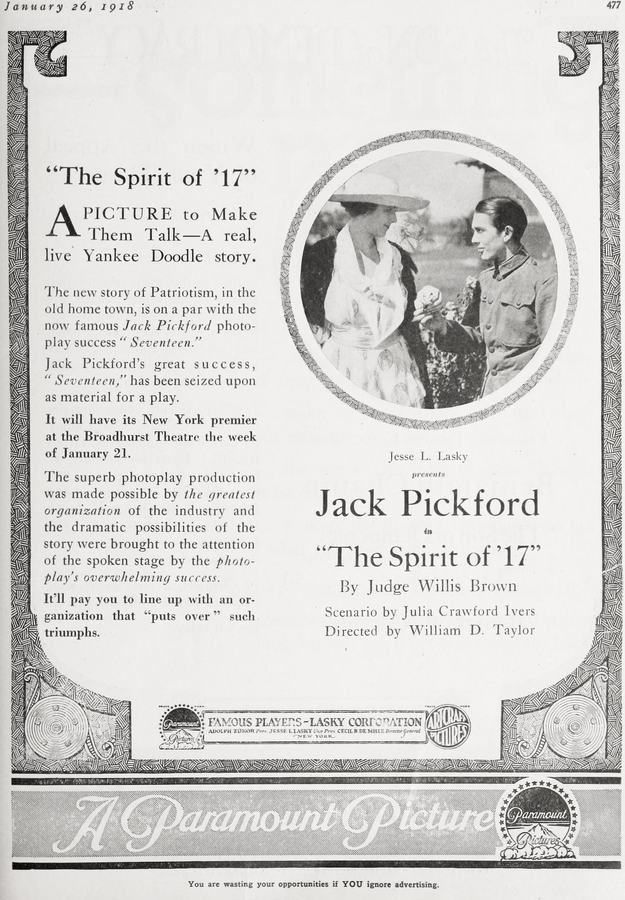
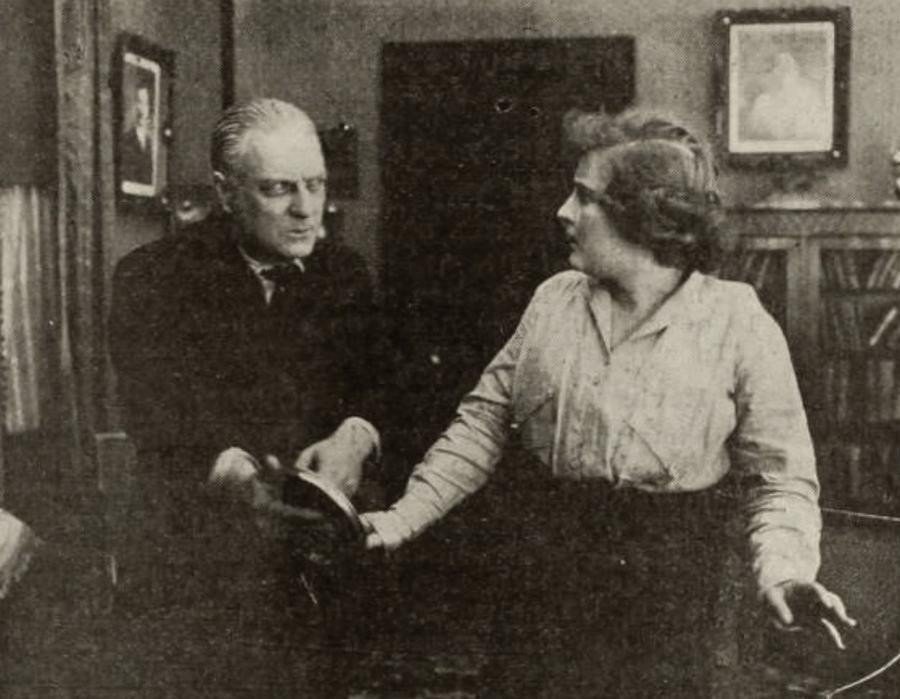
Stepping back into the cinematic landscape of 1917, one encounters a fascinating artifact of its time: a silent film brimming with the fervent patriotism and burgeoning anxieties of a nation newly embroiled in the Great War. The Spirit of '17, a production that captures the very essence of its tumultuous year, offers more than a mere narrative; it provides a window into the collective psyche of an America mobilizing for global conflict. This isn't just a story of heroism; it's a cultural snapshot, a testament to the power of cinema as a mirror and a motivator. It invites us to consider how nascent filmmaking techniques conveyed complex emotions and urgent messages to an audience hungry for both escapism and affirmation.
At its heart, the film is an exploration of youthful idealism, personified by the charismatic Jack Pickford as Davy Glidden. Pickford, brother to the iconic Mary Pickford, often carved out a niche playing earnest, often impetuous young men. Here, he embodies a character on the cusp of manhood, brimming with an almost naive zeal for noble deeds. Davy isn't merely the son of the adjutant general overseeing a quaint, venerable soldiers' home; he is a receptacle for the echoes of past glories, particularly those recounted by the esteemed Captain Jerico Norton. Norton, an aged veteran of the Civil War, fills Davy's imagination with tales of valor and sacrifice, unknowingly priming the boy for a destiny that will demand his own brand of courage. This intergenerational transfer of patriotic fervor is a particularly poignant element, highlighting the film's effort to connect contemporary conflict with a storied past, inviting audiences to see themselves as inheritors of a grand tradition.
The arrival of Flora Edward, portrayed with a certain aloof charm by Katherine MacDonald, introduces the crucial romantic catalyst for Davy's burgeoning ambitions. MacDonald, a prominent figure in early cinema known for her striking beauty, plays Flora as initially impervious to Davy's youthful overtures. This initial disinterest serves a vital narrative function: it elevates Davy's desire for heroism beyond mere patriotism, imbuing it with a deeply personal stake. He yearns to prove himself not just to his country, but to the object of his affection, weaving together the threads of personal desire and national duty into a compelling tapestry of motivation. This dynamic, a common trope in silent cinema, is handled with a simplicity that belies its effectiveness, providing a clear emotional anchor for the audience.
The plot, penned by Judge Willis Brown and Julia Crawford Ivers, quickly escalates from romantic yearning to international intrigue. The setting near the vital Top Copper mine is no mere backdrop; it's a strategic linchpin, emphasizing the economic and industrial aspects of wartime preparedness. The intrusion of German spies, Carl Bender and Frank Schmale, plotting to cripple American industry through a strike and subsequent dynamiting, injects a palpable sense of urgency and danger. This narrative device, while perhaps melodramatic by modern standards, resonated deeply with audiences of the time, who were constantly fed news of wartime threats and saboteur activities. The film capitalizes on these contemporary fears, transforming abstract anxieties into a tangible, cinematic menace. The depiction of espionage in films like this, or even earlier thrillers such as Den farlige Haand, often relied on clear-cut villains and overt gestures to convey villainy, a style that perfectly suited the communicative limitations of silent film.
Davy's fortuitous eavesdropping on the spies' nefarious plans marks the turning point, transforming him from an idealistic dreamer into a reluctant but determined agent of national security. His immediate instinct to enlist Captain Norton is a stroke of narrative genius, reinforcing the film's core theme of intergenerational collaboration. The sight of the aged veterans, once relegated to the quiet dignity of their retirement home, now galvanized to serve their country once more, is profoundly moving. It speaks to a timeless desire for purpose and validates the contributions of those often deemed past their prime. This narrative choice elevates the film beyond a simple boy-saves-girl story, imbuing it with a deeper, more resonant message about collective responsibility and the enduring spirit of service. It's a sentiment echoed in other films of the era that sought to inspire unity and resolve, like the unyielding spirit found in tales such as Bar Kochba, the Hero of a Nation, though in a vastly different historical context.
The execution of the climax, where the 'aged warriors' surround the Germans, is undoubtedly framed for maximum dramatic impact within the silent film paradigm. While devoid of spoken dialogue, the visual storytelling would have relied heavily on expressive acting, dynamic staging, and rapid intercutting to convey the tension and eventual triumph. Davy's final act of saving Flora and her father from the impending explosion is the culmination of his journey, a decisive moment where his youthful ambition converges with genuine heroism. This scene not only secures Flora's affection but also solidifies Davy's transformation into a true patriot and a worthy suitor. The immediate gratification of his dual ambitions — saving the day and winning the girl — provides the satisfying resolution typical of films designed to uplift and entertain wartime audiences. This kind of direct, impactful heroism often characterized leading roles in adventure films like The Challenge, where protagonists faced clear antagonists and achieved decisive victories.
The visual language of The Spirit of '17, though uncredited in directorial terms, would have been crucial to its success. Silent films demanded a particular artistry in conveying emotion and plot through gesture, facial expression, and carefully composed shots. One can imagine the close-ups on Pickford's earnest face, MacDonald's expressions of alarm or admiration, and the determined visages of the old soldiers. The use of natural light, the sparse but effective sets, and the overall rhythm of the editing would have orchestrated the audience's emotional journey. While we lack direct insight into the specifics of its visual execution today, the narrative structure itself suggests a keen understanding of how to build suspense and deliver a powerful punch without the benefit of sound. This reliance on visual cues for emotional resonance can be seen in other contemporary works like The Moth and the Flame, which also needed to communicate complex relationships through purely visual means.
Comparing The Spirit of '17 to other films of its era helps contextualize its place in cinematic history. While not as overtly propagandistic as some later war films, it certainly tapped into the prevailing national mood. Its blend of romantic aspiration and patriotic duty was a potent combination, mirroring the sentiments found in titles like Yankee Pluck, which similarly championed American resolve. The character of Flora, though somewhat passive as a damsel in distress, is typical of many female roles in early cinema, where women often served as the emotional stakes or moral compass for the male protagonist. This contrasts with more independent female portrayals that would emerge later, or even earlier ones that challenged conventions, as seen in complex characterizations in films like The Scarlet Sin or the societal pressures explored in Maternity.
The film's exploration of generational heroism is particularly noteworthy. It suggests that while the specific conflicts may change, the underlying spirit of courage and commitment to country remains constant. The old soldiers, though physically diminished by time, possess a wisdom and an unwavering loyalty that proves just as crucial as Davy's youthful vigor. This message of unity across age divides would have resonated strongly in a society grappling with the demands of a modern war. It's a subtle but powerful affirmation that every generation has a role to play, a contribution to make, a spirit to uphold. This theme of collective effort, rather than individual exceptionalism, gives the film an enduring quality, even if its narrative mechanics are rooted in a bygone era. One might draw a parallel to the collective spirit in films like The Heart of Texas Ryan, where community and shared values drive the narrative.
Lexical diversity in silent film often came from the intertitles, which served not only to convey dialogue but also to provide exposition, emotional commentary, and stylistic flourishes. While the content of these intertitles is not available for review here, one can infer that they would have been crafted to enhance the dramatic impact and maintain the film's patriotic tone. The choice of language in the script itself would have aimed for clarity and evocative power, ensuring that the audience understood the stakes and sympathized with the characters without spoken words. The writers, Judge Willis Brown and Julia Crawford Ivers, were tasked with constructing a narrative that was both engaging and easily digestible for a wide audience, a challenge that required a keen understanding of visual storytelling and audience psychology.
Ultimately, The Spirit of '17 stands as more than just an early silent film; it is a historical document, a piece of entertainment, and a cultural touchstone from a pivotal moment in American history. It showcases the evolving craft of filmmaking during a period of rapid innovation and demonstrates how cinema could be harnessed to reflect, shape, and inspire national sentiment. For contemporary viewers, it offers a fascinating glimpse into the origins of narrative film, the acting styles of its pioneers, and the themes that captivated audiences a century ago. It reminds us that while technology and storytelling conventions evolve, the human desires for heroism, love, and belonging remain timeless. Its legacy lies not just in its plot, but in its ability to transport us back to a time when the flickering images on a screen could stir the soul of a nation, embodying a spirit that, even today, retains a certain resonance.
The film's simplicity is, in many ways, its strength. It doesn't attempt complex psychological depth but rather focuses on clear motivations and straightforward heroism. This directness would have been highly effective for audiences of the time, providing a clear moral compass and an unambiguous message of national unity against an external threat. In an era before sophisticated special effects or nuanced character arcs became commonplace, the power of a film like The Spirit of '17 lay in its ability to tap into universal emotions and rally support for a cause deemed righteous. It’s a compelling example of how early cinema, even with its limitations, could deliver a profoundly impactful experience. This unvarnished approach to storytelling is also evident in other films of the period, such as All for a Husband or Mary's Lamb, which prioritized clear narrative progression and emotional clarity.
The performances, particularly from Jack Pickford, are critical to the film's success. Pickford's youthful energy is infectious, making Davy's transformation from a starry-eyed boy to a decisive hero believable and engaging. Katherine MacDonald, while perhaps given a less active role, provides the necessary emotional stakes, her beauty and initial reserve creating a compelling object of affection. The ensemble of old soldiers, led by the venerable Captain Norton, adds gravitas and a sense of historical continuity to the proceedings. Their collective reawakening to duty is a powerful visual metaphor for the nation's own call to arms. This kind of ensemble work, where supporting characters contribute significantly to the overall thematic resonance, is a hallmark of well-crafted silent narratives, much like the intricate character dynamics that might have been explored in films such as El signo de la tribu, albeit with a different cultural lens.
Finally, The Spirit of '17 serves as a valuable reminder of the silent film era's capacity for genuine excitement and emotional resonance. It is a testament to the ingenuity of early filmmakers who, with limited technology, managed to craft compelling stories that captivated audiences and reflected the spirit of their times. While it may lack the intricate plotting or psychological depth of later cinematic achievements, its directness, its earnest patriotism, and its celebration of communal heroism offer a unique and important perspective on a bygone era. It's a film that, even today, can evoke a sense of its original purpose: to inspire, to entertain, and to remind a nation of its enduring spirit. The enduring appeal of clear-cut heroism and moral clarity, as exemplified in this film, continued to be a driving force in many popular movies, including those that focused on adventure and discovery like The Scarlet Crystal or even more direct action-oriented narratives. The blend of romance, patriotism, and thrilling action made it a potent piece of popular entertainment, ensuring its place as a significant contribution to the early American cinematic canon.
IMDb 5.8
1928
Community
Log in to comment.