DbcultAccessing Vault...
Cult Review
Senior Film Conservator
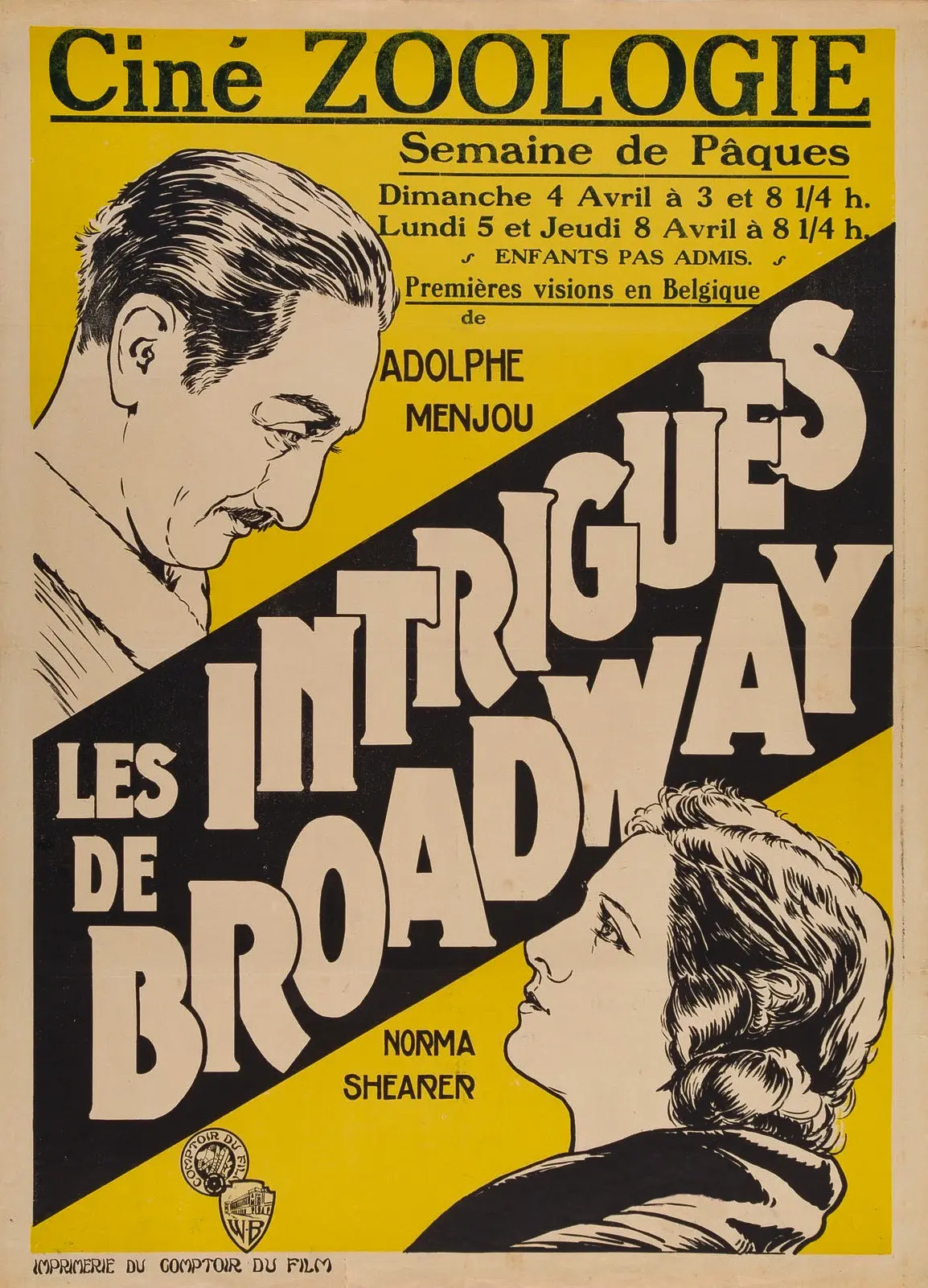
In the annals of 1920s cinema, few works capture the transition from the exuberant artifice of the Jazz Age to the sobering realities of the human condition as effectively as the 1924 silent masterpiece, Broadway After Dark. It is a film that operates on two distinct frequencies: the high-octane vibrance of Manhattan’s nightlife and the hushed, desperate whispers of a boarding house sanctuary.
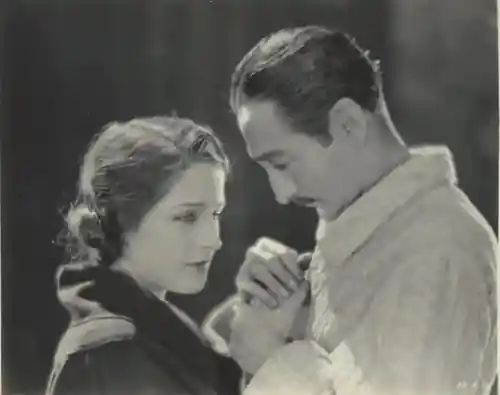
Adolphe Menjou, an actor whose very name became synonymous with a certain brand of continental sophistication, delivers a performance here that is both expectedly suave and unexpectedly vulnerable. As Ralph, the man-about-town, Menjou utilizes his signature mustache and impeccable tailoring not as mere props, but as a facade that he eventually finds suffocating. The opening sequences of the film are a masterclass in visual storytelling, depicting the hollow rituals of the social elite. When Ralph finds himself repelled by the coquettish maneuvers of a Broadway star, it isn't just a rejection of a woman, but a rejection of a performance. This thematic pivot reminds one of the social hierarchies explored in The Career of Katherine Bush, though Menjou’s character seeks to descend the social ladder rather than climb it.
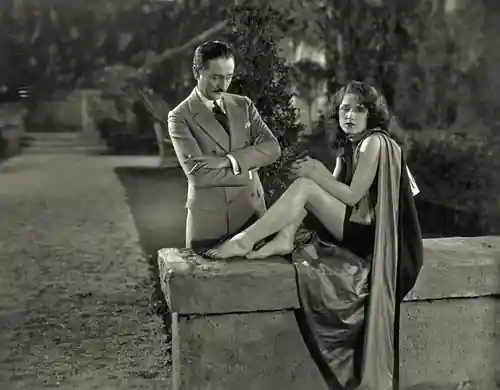
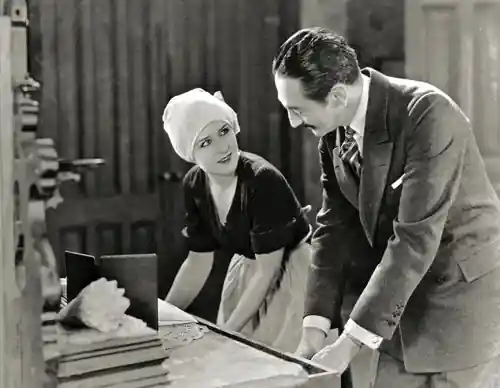
Ralph’s decision to relocate to a boarding house for theatrical folk is the catalyst for the film’s moral awakening. This setting serves as a liminal space where the glamour of the stage meets the grit of the street. Unlike the more pastoral or rugged settings found in contemporary works like The Alaskan, the boarding house in Broadway After Dark is a pressure cooker of ambition and failure. It is here that Ralph sheds his cynicism, or perhaps more accurately, redirects it toward a society that refuses to grant second chances.
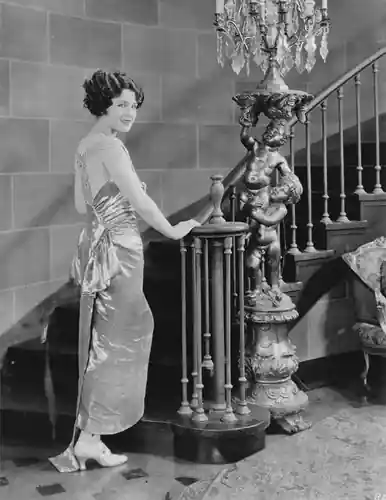
Enter Norma Shearer. Long before she was crowned the 'Queen of the MGM Lot,' Shearer was honing her craft in roles that required a delicate balance of fragility and fortitude. As Rose, the working girl with a 'past,' Shearer provides the film’s emotional center. The revelation of her prior jail sentence is handled with a gravity that feels surprisingly modern. In an era where the 'fallen woman' trope was often used for prurient melodrama, as seen in some facets of Her First Kiss, Broadway After Dark approaches Rose’s history with a sociological lens. She is not a victim of her own morality, but of an unforgiving economic system.
"A cinematic bridge between the theatricality of the past and the realism of the future."
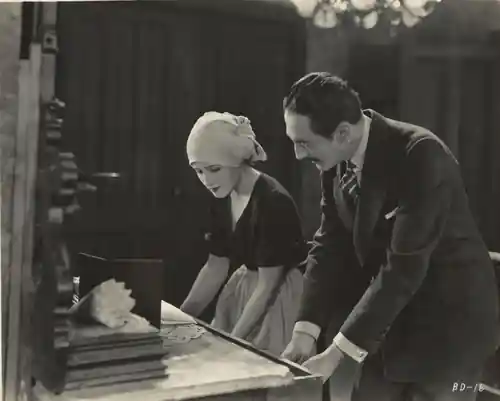
Rose’s dismissal from her job due to her criminal record sets the stage for Ralph’s intervention. This is where the film’s lexical diversity in visual language shines. The directors use shadows and tight framing to illustrate Rose’s entrapment, a stark contrast to the wide, expansive shots of the Broadway theaters. The chemistry between Menjou and Shearer is built on a foundation of mutual recognition—two souls who have seen through the illusions of their respective worlds. Their relationship is less about a traditional romance and more about a shared pact of survival in a city that eats its young.
The supporting cast, featuring veterans like Edgar Norton and Willard Louis, populates the boarding house with a vividness that rivals the protagonists. Each resident is a synecdoche for the theatrical world—the aging tragedian, the hopeful ingenue, the cynical stagehand. The film’s writer, Owen Davis, brings his extensive theatrical experience to bear, ensuring that these characters feel lived-in rather than caricatured. The boarding house functions similarly to the community dynamics in The Little Fool, where communal living forces an honesty that the public sphere forbids.
One cannot ignore the technical prowess of the production. The set design of the boarding house is cluttered with the ephemera of the stage—old posters, discarded costumes, and makeup mirrors—which serves as a constant reminder of the characters' proximity to a dream that remains just out of reach. This visual clutter contrasts with the minimalist, cold elegance of Ralph’s former life. It is a sensory transition that mirrors Ralph’s internal shift from the aesthetic to the empathetic.
Broadway After Dark is remarkably progressive for 1924 in its treatment of the justice system and rehabilitation. By positioning a man of Ralph’s status as Rose’s champion, the film challenges the audience’s own prejudices. It suggests that the true 'villains' are not those who have served time, but those who use their social capital to gatekeep morality. This thematic thread is a more urban, sophisticated version of the justice-seeking narratives found in The Bargain or the rugged moralism of Devil McCare.
The film avoids the saccharine pitfalls of many contemporary silent dramas. There is a persistent undercurrent of melancholy—the 'After Dark' of the title refers not just to the time of day, but to the shadows that linger in the lives of the marginalized. Even as Ralph helps Rose, there is no easy resolution. The film acknowledges that while one man can help one woman, the systemic bias against the 'ex-con' remains a formidable adversary. This realism elevates the film above the standard fare of 1924, such as the more lighthearted In Bad.
The screenplay by Owen Davis and Douglas Z. Doty is a marvel of economy and depth. In a medium without spoken dialogue, the intertitles must do heavy lifting, and here they are used sparingly but with great impact. The dialogue isn't just functional; it’s evocative. When Ralph speaks of the 'hollowness' of his life, the words resonate because they have been earned through the preceding visual evidence. The writers manage to weave a complex tapestry of subplots involving the other boarders without ever losing the central thread of Ralph and Rose’s connection. This narrative density is reminiscent of A Gentleman from Mississippi, where personal integrity is pitted against a corrupt or indifferent system.
Furthermore, the film’s pacing is impeccable. It allows for moments of quiet reflection—Rose staring out the window at the city lights, Ralph observing the camaraderie of the boarders—that build a sense of atmosphere that modern cinema often rushes past. These moments of stillness are where the film’s true power lies. They invite the viewer to inhabit the space and feel the weight of the characters' choices.
The cinematography in Broadway After Dark utilizes the burgeoning techniques of the mid-20s to create a world of high contrast. The use of low-key lighting in the boarding house scenes creates a chiaroscuro effect that highlights the emotional turmoil of the characters. This is a stark departure from the flat, even lighting typical of earlier silents. It brings a sense of depth and dimensionality to the screen that anticipates the noir aesthetics of the following decades. The camera work during the Broadway sequences, conversely, is fluid and dynamic, capturing the frenetic energy of the city. This juxtaposition of styles reinforces the film’s central theme of the two New Yorks: the one that is seen, and the one that is lived.
When comparing this to the visual style of The Halfbreed, one sees a similar interest in using the environment to reflect the protagonist's social alienation. However, Broadway After Dark trades the wilderness for a concrete jungle, finding beauty in the most unlikely of places—a crowded dining table, a dimly lit hallway, a shared smile in a rain-slicked alley.
Broadway After Dark is more than a mere artifact of the silent era; it is a vibrant, breathing work of art that remains startlingly relevant. It speaks to the universal desire to find meaning in a world that often values appearance over substance. It showcases Adolphe Menjou at the height of his powers and offers a glimpse into the burgeoning stardom of Norma Shearer. Most importantly, it treats its subjects with a level of dignity and complexity that is too often absent in early cinema.
For those who seek a film that combines the glamour of the theater with the heart of a social drama, this is an essential watch. It stands alongside the best of its time, offering a nuanced look at the human spirit’s ability to find light even when the neon fades. It is a testament to the power of silent film to convey deep emotional truths without a single spoken word, proving that sometimes, the most profound stories are told in the quiet moments after the curtain falls and the lights go down on Broadway.
IMDb 5.9
1936
Community
Log in to comment.