DbcultAccessing Vault...
6.5/10
Senior Film Conservator
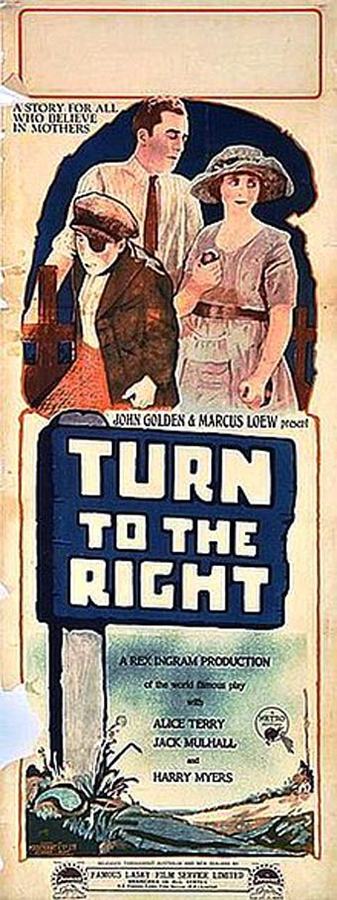
A definitive 6.5/10 rating for a film that redefined the boundaries of cult cinema. Turn to the Right remains a cornerstone of transgressive art.
There is a moment—wordless, of course—when the camera lingers on the peach trees in winter silhouette, their black lace against a sherbet sky, and you realise Turn to the Right is not merely another bucolic melodrama but a stained-glass window on the American soul circa 1922. The trees, like the characters, stand accused: of bearing too much sweetness, of tempting debt, of refusing to thrive inside the picket fences drawn by men who mistake ownership for stewardship.
Joe Bascom’s exile begins with a slammed white gate—an image so succinct it could be a haiku on class. Ray Ripley plays him with the coltish kineticism of a boy who has grown up clutching the short end of providence; his shoulders twitch as if permanently braced for the next cosmic cuff. When the deacon—Edward Connelly in a performance of glacial self-satisfaction—delivers his interdict, the title card reads: "You may not speak to my daughter again." The curtness feels biblical, and the film never quite exonerates the village for treating it as such.
Contrast this with the city sequences, all vertiginous angles and smoke that swallows lapels. The unjust accusation arrives like a slapstick thunderbolt: a missing pocket-watch, a furtive son, a patriarch who would rather see the foundling rot than blemish the family crest. Harry Myers, usually a comic second-banana, finds a twitchy pathos in Lester Morgan; his smirk is a hairline fracture in the porcelain of inherited entitlement. The trial is dispensed with in a flurry of title cards so terse they feel like telegrams from a cruel god: "Guilty. Five years."
Prison, oddly, becomes the film’s most cosmopolitan corridor. George Cooper’s Mugsy and Lon Poff’s Gilly enter as vaudevillian grotesques—one squat, one spindle-thin—yet the arc of their conversion sidesteps mawkishness. Credit June Mathis’s scenario polish: she lets the peach-jam letter from Joe’s mother arrive like Proust’s madeleine, a waft of summertime that collapses years of asphalt and iron bars. The reformation is not preached; it is tasted.
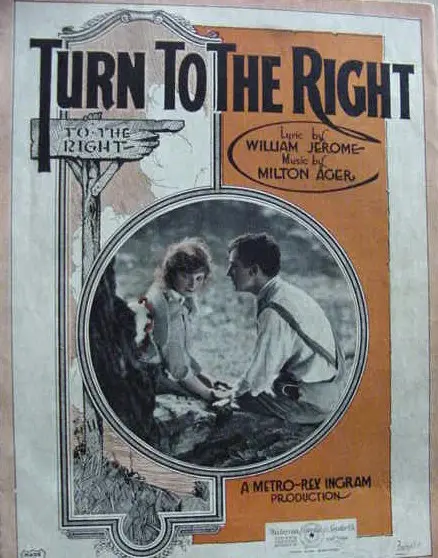
Back east, Alice Terry’s Elsie haunts the margins. The actress, luminous beneath a Quaker bonnet, suggests reservoirs of rebellion in the way she fingers a hymnal or hesitates half a beat before shaking Lester’s proffered hand. Her fidelity to Joe is less sentimental than existential: she recognises in him the only gaze that sees her as more than decorative livestock in a dowry auction. Their reunion, scored only by the wind in the orchard, is a master-class in withheld melodrama—no lunges into each other’s arms, just a parallel walk that slowly converges like two rail lines receding toward hope.
And then there is the jam—amber, slow-lava, bottled summer. Mrs. Bascom (a magisterial Lydia Knott) wields her ladle like Prospero’s staff, conjuring a commodity so pure it exposes every other transaction in the film as profane. The deacon’s plan to industrialise this sacrament is the true blasphemy; the film’s climactic table-turning hinges on promissory notes soaked in sticky sweetness, a literal inversion of the money-changers in the temple.
Director Winchell Smith, better known for Broadway farces, brings a theatrical clockwork to the set-pieces: the public reading of the ledger, the orchard auction where faces jostle like gargoyles, the midnight confrontation lit by a single lantern that throws ten-foot shadows across the barn. His camera is largely static, yet the blocking within the frame vibrates with tension; characters ascend ladders, duck under clotheslines, pop through trapdoors as if the entire village were a stage trap.
Comparative glances: if you admired the rural Gothic of Through a Glass Window or the proto-feminist defiance flickering through The Husband Hunter, you’ll find Turn to the Right occupies a liminal zone—less grim than the former, less urbane than the latter, yet synthesising their preoccupations with property and bodily autonomy. The peach orchard here is kin to the contested landscapes in Das wandernde Licht, though Smith replaces Teutonic fatalism with a peculiarly American faith in second acts.

Technically, the 35mm print survives in a 1970s MoMA restoration, tinged with cyan fringes and the occasional nitrate boil. Yet these scars feel apposite: the film itself is about blemished surfaces and the nectar beneath. The intertitles—some penned by a youthful Mary O’Hara—deserve anthologising: they crackle with flapper-era verve ("He traded his birthright for a mess of horseflesh") while never forsaking the moral arithmetic of Victorian parable.
Musical cueing for home viewing: try pairing with a low-key Americana playlist—something finger-picked, no drums. The film’s rhythms are stately; let them breathe. Avoid orchestral swells that would over-sweeten what is, at heart, a parable about learning to taste sweetness without gorging on it.
Performance calculus: Ripley’s everyman is the axle around which flashier turns spin. Notice how he underplays the climactic reveal—no fist-pumps, just a slow exhalation that telegraphs liberation more eloquently than any title card. Conversely, Eric Mayne as the senior Morgan delivers a late-film collapse worthy of King Lear on a racetrack, eyes rheumy with the dawning cost of filial hubris.
Thematic coda: the title itself, a traffic command, becomes polyphonic. Turn right and you exit Eden; turn right again and perhaps you circle back, chastened, ready to tend the garden rather than fence it. The film trusts the viewer to hear that echo, never italicising it—a restraint that feels almost avant-garde in an era addicted to moral underlining.
Verdict: Ninety-eight years later, Turn to the Right still secretes a fragrance of urgent relevance—an antidote to algorithmic cynicism, a reminder that redemption can taste of peaches and still carry the tang of near-bankruptcy. Seek it out, let its silence speak, and you may find yourself, quite literally, turning right toward a sweeter, sterner light.
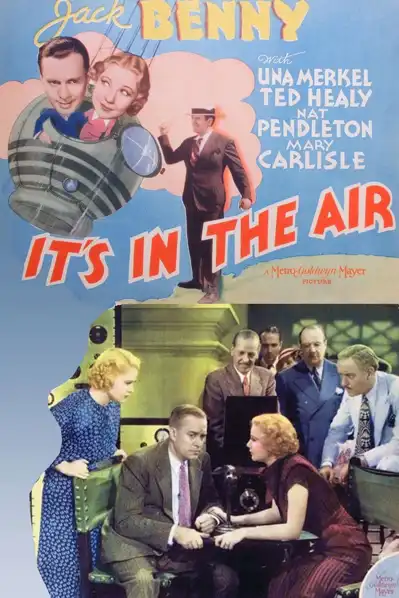
IMDb 5.7
1935
Community
Log in to comment.