DbcultAccessing Vault...
Cult Review
Senior Film Conservator
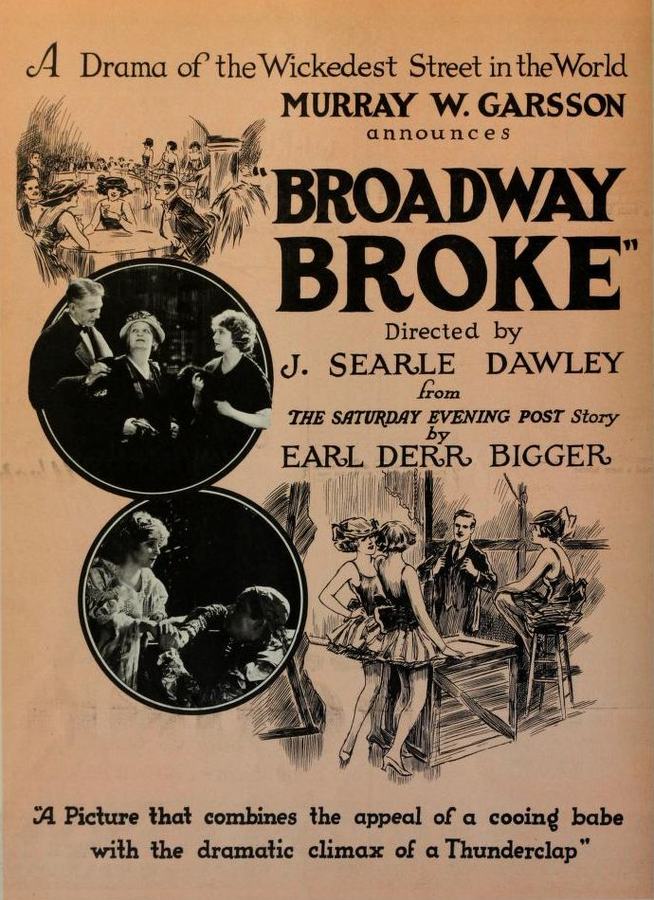
Stepping back into the flickering glow of early cinema, one encounters "Broadway Broke", a film whose very title whispers of bygone eras and the perennial struggles of artistic life. This cinematic artifact, a product of a nascent industry, presents a narrative that, despite its age, resonates with surprising contemporary relevance. It’s a tale not merely of financial hardship but of identity, reinvention, and the relentless human spirit in the face of adversity. The film’s premise, centered on a retired Broadway actress, Nellie Wayne, and her performing canine, Chum, immediately establishes a world where former glory clashes with present necessity, a poignant dichotomy that drives the entire emotional arc.
Nellie Wayne, portrayed with an understated grace by Gladys Leslie, is no ordinary protagonist. She embodies the archetype of the faded star, a woman whose past triumphs on the grand stages of Broadway now feel like distant echoes. The roar of the crowd has been replaced by the quiet desperation of a household sustained by the most unlikely of breadwinners: her small dog, Chum. Chum, a vaudeville veteran in his own right, is the family's sole means of support, a detail that speaks volumes about Nellie's reduced circumstances and the precarious economic realities of the era. The juxtaposition of a once-celebrated human talent being out-earned by a performing animal is a subtle yet potent commentary on the capricious nature of fame and fortune.
The film deftly navigates the emotional landscape of Nellie's predicament. Her pride, undoubtedly bruised by her current station, is secondary to her fierce determination to provide. This is where her character truly shines, revealing a resilience that transcends mere nostalgia for her past glory. Instead of succumbing to despair, Nellie channels her innate creativity into a new avenue: playwriting. This pivot is not just a pragmatic solution to financial woes; it represents a profound act of self-discovery and an assertion of her enduring artistic spirit. It's a reminder that talent, even when dormant, rarely extinguishes entirely, often finding new conduits for expression when life demands it. The transition from performer to creator is a fascinating one, echoing the real-life transformations many artists undergo, especially in times of personal or professional crisis.
Gladys Leslie's portrayal of Nellie Wayne, though confined to the expressive pantomime of the silent era, must have conveyed the quiet dignity and underlying steel of a woman who refuses to be defined by her misfortunes. The challenge for silent film actors was immense, requiring a mastery of gesture, facial expression, and body language to communicate complex emotions without a single spoken word. Leslie, likely drawing on the theatrical traditions that Nellie herself represents, would have imbued the character with a rich inner life, making her struggles palpable and her aspirations relatable. The audience would have been invited to empathize with her journey, rooting for her not just as a former star, but as a tenacious individual.
The supporting cast, including Dore Davidson, Frederick Burton, and Mary Carr, would have played crucial roles in fleshing out Nellie's world, providing context for her struggles and celebrating her triumphs. The ensemble's dynamic would have been essential in building a believable environment for Nellie's narrative to unfold. The silent film era often relied heavily on strong character actors to communicate relationships and societal structures, and the names listed suggest a cadre of seasoned performers capable of delivering nuanced, if voiceless, performances. The interplay between Nellie and her family, particularly in their reliance on Chum, would have been a central emotional anchor, highlighting the collective weight of their circumstances.
The heart of the film's second act blossoms with the introduction of a Hollywood producer. This figure represents not just a potential buyer for Nellie's scripts but a gateway to an entirely new existence. Hollywood, at this juncture, was rapidly eclipsing Broadway as the epicenter of American entertainment, offering a different kind of stardom, a new form of immortality on celluloid. The producer's interest, extending beyond her written works to a possible revival of her acting career, introduces a compelling layer of dramatic tension. Will Nellie embrace this new medium, or will she cling to the fading memories of her stage glory? This dilemma is the very essence of reinvention, a theme that resonates deeply within the artistic community even today. The offer is a double-edged sword: a chance at a new beginning, but also a demand to adapt, to shed the skin of her old self and embrace the unknown.
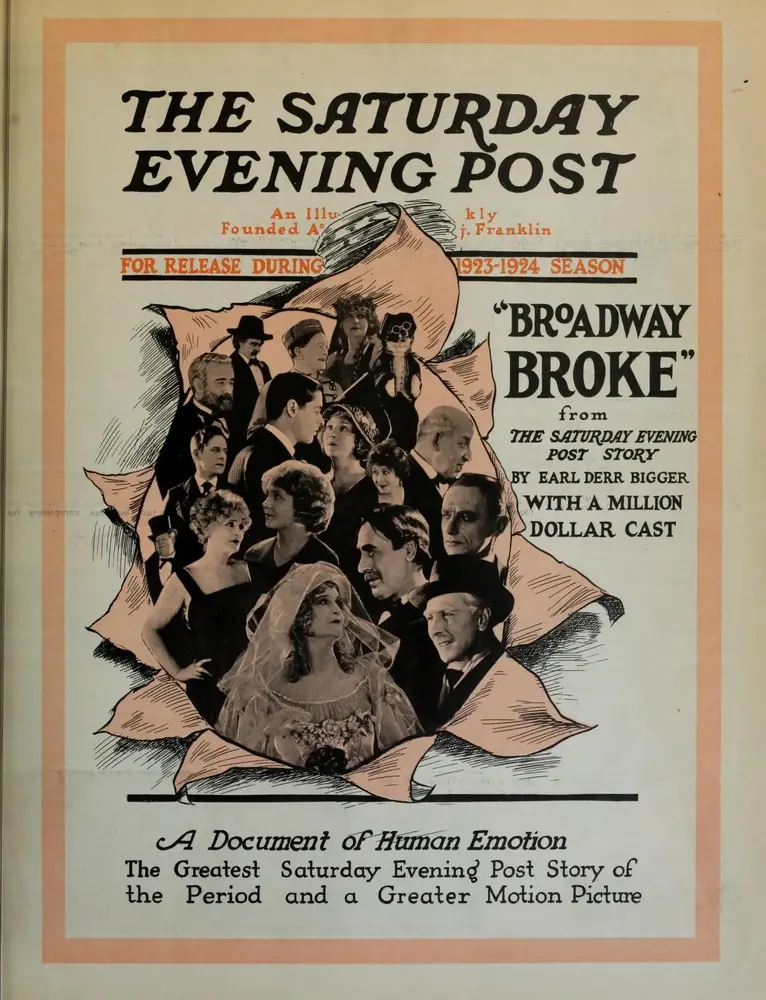
The film's thematic depth extends to its commentary on the evolving entertainment industry. Vaudeville, represented by Chum's performances, was slowly giving way to the cinematic spectacle. "Broadway Broke" captures a moment of transition, where the live, intimate artistry of the stage was being challenged by the broader, more accessible reach of the moving picture. Nellie's journey from Broadway to the potential of Hollywood mirrors this societal shift, making her character a microcosm of a larger cultural phenomenon. This element gives the film a historical weight, documenting a pivotal period in American popular culture. One might even draw parallels to the existential crises faced by performers in Lola Montez, though that film's operatic scale and later era present a different kind of artistic and personal spectacle. Here, the struggle is more grounded, more intimately personal.
The narrative, crafted by Earl Derr Biggers and John Lynch, demonstrates a keen understanding of human ambition and the often-unpredictable twists of fate. Biggers, known for his Charlie Chan mysteries, brings a certain narrative precision, even to this earlier work. The plot isn't merely a linear progression but a series of interconnected challenges and opportunities, each building upon the last to forge Nellie's path. The writers skillfully weave together the domestic struggle with the professional aspirations, creating a story that feels both personal and universally resonant. The idea of unexpected boomerangs of fate, as explored in films like Fate's Boomerang, finds a gentler, more hopeful echo here, where adversity ultimately leads to opportunity.
From a technical perspective, "Broadway Broke" would have showcased the filmmaking techniques prevalent in the early 20th century. While details on its specific cinematography and direction are scarce without a viewing, one can infer certain stylistic choices. The use of intertitles would have been crucial for dialogue and exposition, guiding the audience through the story. The camera work, likely static for many scenes, would have relied on strong compositions to convey mood and character interaction. Lighting, though perhaps less sophisticated than later eras, would have been employed to highlight key performers, particularly Gladys Leslie, ensuring her emotional expressions were clearly visible. The film would have been a testament to the ingenuity of early filmmakers, working within the technological constraints of their time to tell compelling stories.
The role of Chum, the dog, cannot be understated. He is not merely a prop but a character in his own right, a symbol of both Nellie’s past and her present struggle. His vaudeville act represents the very thing keeping the family afloat, a stark reminder of their financial precarity. Yet, he also embodies loyalty and a simple, unadulterated joy in performance. His presence adds a layer of warmth and pathos to the narrative, preventing it from descending into pure melodrama. Animals in silent film often served as crucial emotional touchstones, and Chum’s role would undoubtedly have endeared him to audiences, further solidifying the film’s emotional core. His dependence, and the family's dependence on him, create a unique dynamic that sets this film apart from more conventional narratives of human ambition.
The film also touches upon themes of female agency and self-determination. In an era where women's roles were often circumscribed, Nellie Wayne’s decision to take control of her financial destiny through her writing is a quietly revolutionary act. She doesn't wait for a male savior; she actively creates her own opportunities. The Hollywood producer's interest, while offering a path, doesn't diminish her initial self-reliance but rather validates her creative endeavors. This aspect of her character makes her a compelling figure, a proto-feminist icon perhaps, navigating a patriarchal industry with skill and intelligence. Her story, in this regard, shares a spirit with other tales of women asserting their will, albeit in different contexts, such as those found in Her Lord and Master, where female characters often grapple with societal expectations and personal desires.
The allure of a Hollywood comeback is a potent narrative device. It speaks to the universal desire for a second chance, for recognition, and for the rekindling of a passion that might have seemed extinguished. For Nellie, it's not just about fame; it's about reclaiming a part of herself that was lost. The move from the live, ephemeral art of the stage to the permanent, reproducible medium of film also carries symbolic weight. It signifies a transition from a world of fleeting moments to one of enduring legacy, a shift that must have been both terrifying and exhilarating for artists of the time. The film captures this pivotal moment, offering a glimpse into the hopes and anxieties of a generation on the cusp of a new cultural frontier. The high stakes involved, reminiscent of films like High Stakes, are not just financial but deeply personal, impacting Nellie's very sense of self-worth and purpose.
In revisiting "Broadway Broke," one is struck by its enduring charm and its surprisingly complex portrayal of human ambition and adaptation. It’s a film that, through its simple yet profound narrative, offers a window into the socio-economic pressures of the early 20th century, the shifting landscapes of entertainment, and the indomitable spirit of an individual determined to carve out her own destiny. While it may not possess the grandiosity of some epic silent films, its intimate focus on Nellie Wayne's journey provides a deeply satisfying and thought-provoking experience. It reminds us that even in the quietest corners of cinematic history, powerful stories of resilience and
IMDb —
1924
Community
Log in to comment.