DbcultAccessing Vault...
Cult Review
Senior Film Conservator
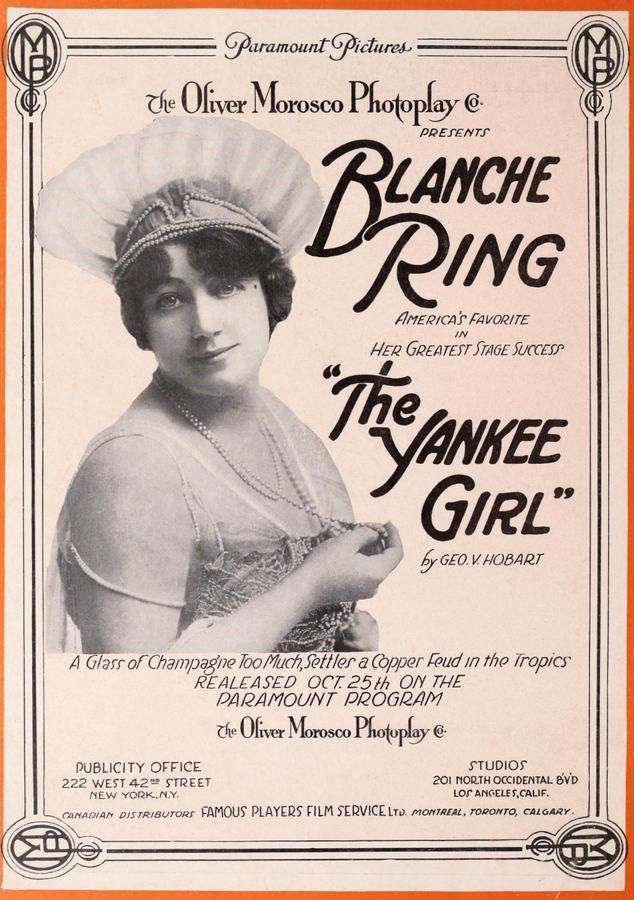
In the annals of silent cinema, few films capture the intersection of feminine agency and American industrial expansionism as vibrantly as the 1915 production of The Yankee Girl. Directed during a period of significant technical transition, the film is not merely a relic of its time but a sophisticated exploration of the 'New Woman' archetype thrust into the gritty world of international resource extraction. Unlike the somber, brooding atmospheres found in contemporary European works like Pesn torzhestvuyushchey lyubvi, this film breathes with a distinctly American vitality, characterized by a relentless forward momentum and a penchant for the theatrical.
At the heart of this cinematic spectacle is Blanche Ring, whose transition from the vaudeville stage to the silver screen brought a unique brand of physical comedy and expressive magnetism. Her portrayal of Jessie Gordon is a masterclass in performative subversion. In an era where female characters were often relegated to the roles of the damsel or the tragic victim—seen in the melancholic depths of Sumerki zhenskoy dushi—Ring’s Jessie is a whirlwind of tactical charm. She doesn't just navigate the patriarchal structures of Latin American politics; she manipulates them with the grace of a seasoned diplomat and the cunning of a card sharp.
The scene where Jessie outwits President Ambroce Castroba is particularly noteworthy. It utilizes the silent medium's reliance on gesture to convey a complex game of social engineering. By feigning intoxication while remaining stone-cold sober, she exploits Castroba’s own vices and preconceptions. This sequence serves as a fascinating precursor to the screwball comedies of the 1930s, proving that the DNA of the 'fast-talking' heroine was present long before the advent of synchronized sound. The lexical diversity of her 'blarney' might be silent, but it is visually deafening.
The narrative engine of The Yankee Girl is the race for a copper concession, a plot point that reflects the real-world industrial hunger of the 1910s. The film portrays the Latin American setting not as a mere backdrop, but as a contested space of economic opportunity and 'grafting' officials. While films like The Spoilers dealt with the rugged individualist struggle for gold in the North, this film examines the more 'civilized' but equally ruthless corporate warfare conducted from the decks of luxury yachts.
The character of James Seavey represents the dark underbelly of this expansion. His willingness to employ bandits, such as the ruthless Morales, highlights the era's anxiety regarding the ethics of capital. The kidnapping of Philip Gordon adds a layer of 'perils-of-Pauline' suspense, yet the film subverts expectations by having Jessie be the one to orchestrate the rescue. This reversal of the traditional rescue trope aligns the film more closely with the adventurous spirit of The Trey o' Hearts, though with a more grounded, mercantile focus.
One of the most intriguing plot developments involves Jack Lawrence, the United States consul played by Forrest Stanley. His 'expert flank movement'—purchasing the Gordon yacht for the U.S. government to circumvent a quarantine—is a fascinating piece of screenwriting. It reflects a very specific early-20th-century view of American sovereign power: the idea that the government could and should be an instrument for private enterprise when 'sinister' foreign elements interfere. This is a stark contrast to the more somber explorations of state power found in Escaped from Siberia.
The climax, featuring 'collar-and-elbow' tactics, provides the visceral satisfaction that audiences of 1915 craved. Seeing the villainous Seavey hurled into the sea is a moment of pure catharsis, a physical manifestation of moral justice prevailing over bureaucratic and criminal corruption. It’s a sequence that rivals the action beats in Le diamant noir, yet it retains a lightheartedness that is the film’s signature.
Visually, the film benefits from the wide-open spaces of the yacht and the palace interiors. The cinematography by the uncredited cameramen of the era manages to capture the scale of the 'Yankee Girl' herself, making the vessel a character in its own right. The pacing, orchestrated by writers Elliott J. Clawson and George V. Hobart, is relentless. There is no 'filler' here; every scene moves the needle on the copper deal or the romantic tension between Jessie and Jack. This efficiency of storytelling is something that many modern blockbusters could stand to emulate.
In comparison to the gritty realism of The Immigrant, The Yankee Girl is an aspirational fantasy. It presents a world where quick-wittedness and a checkbook can solve any geopolitical crisis. While perhaps naive by today's standards, it offers an invaluable glimpse into the optimistic, if imperialistic, psyche of pre-WWI America. The film’s refusal to take itself too seriously—exemplified by the 'champagne' ruse—is its greatest strength, allowing it to avoid the heavy-handed moralizing often found in The Littlest Rebel.
When we look at the broader landscape of 1915 cinema, The Yankee Girl stands out for its tonal balance. It lacks the dark detective procedural feel of A Study in Scarlet or the stark documentary-like grimness of On the Firing Line with the Germans. Instead, it occupies a middle ground of high-adventure romance. It shares some of the episodic energy of Runaway June, but with a more cohesive and high-stakes narrative through-line.
The film also serves as a poignant reminder of the talent of its supporting cast. Herbert Standing and Lydia Yeamans Titus provide a grounding presence that prevents the more fantastical elements of the plot from drifting into absurdity. The chemistry between Ring and Stanley is palpable, even through the flickering frames of a century-old master. Their concluding love scene, described with a wink as 'strictly their business,' is a refreshing moment of intimacy that respects the characters' autonomy.
While it may not possess the philosophical weight of The Steel King's Last Wish or the tragic resonance of O Crime dos Banhados, The Yankee Girl is an essential viewing for any serious cinephile. It is a testament to the power of personality-driven cinema. Blanche Ring’s Jessie Gordon is a character for the ages—a woman who uses the tools of her era to carve out a space of power, all while maintaining a 'breezy' demeanor that belies her razor-sharp intellect. In the race for copper, it is the gold of Ring’s performance that truly shines.
If you enjoyed this deep dive into 1915's maritime intrigue, be sure to check out our analysis of Way Outback or the tension-filled Sealed Orders for more classic cinematic explorations.
IMDb —
1924
Community
Log in to comment.