DbcultAccessing Vault...
5.1/10
Senior Film Conservator
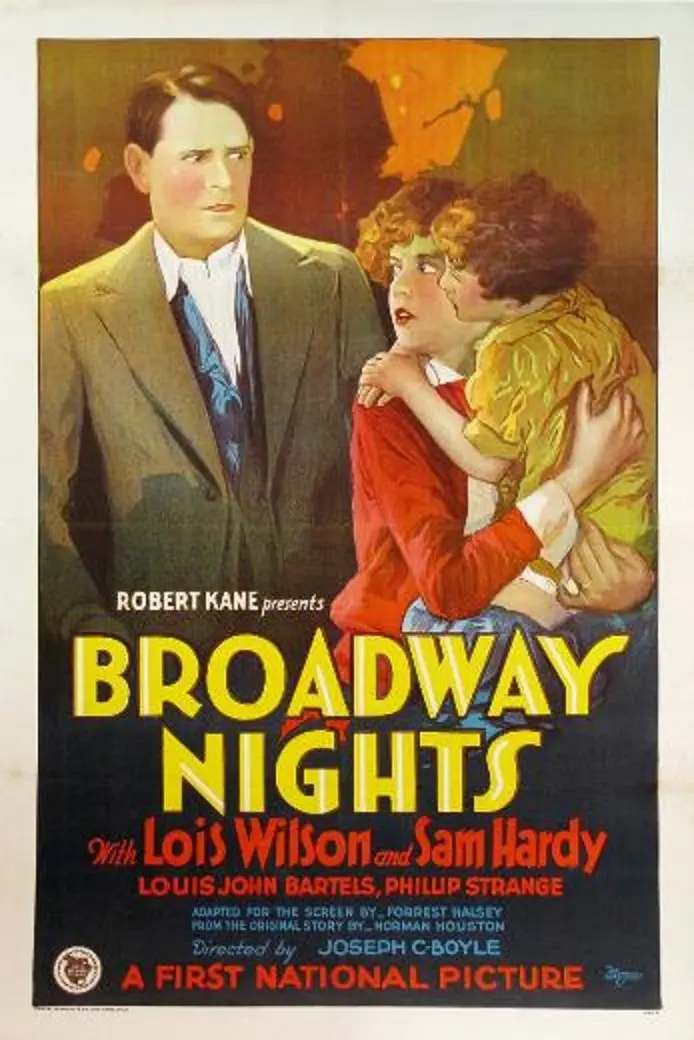
A definitive 5.1/10 rating for a film that redefined the boundaries of cult cinema. Broadway Nights remains a cornerstone of transgressive art.
Short answer: Yes, but only if you are a student of cinematic history or a fan of the 'backstage' melodrama. This film serves as a fascinating, if sometimes heavy-handed, blueprint for the rags-to-riches-to-ruin narratives that would eventually define the 1930s musical genre. It is a film specifically for those who appreciate the evolution of performance styles and the gritty origins of the New York theater scene, but it is certainly not for viewers who require the fast-paced, high-stakes editing of contemporary drama.
This film works because it doesn't shy away from the ugliness of Johnny’s gambling addiction. It fails because the secondary characters often feel like cardboard cutouts designed to move the plot toward a moralizing conclusion. You should watch it if you want to witness the literal birth of a trope—the talented woman held back by the mediocre man—which remains a staple of cinema to this day.
In the world of 1927's Broadway Nights, the stage is a battlefield. De Sacia Mooers delivers a performance as Fannie that is surprisingly grounded for the silent era. While many of her contemporaries were still leaning into the exaggerated gesticulations of the Victorian stage, Mooers finds a quiet dignity in Fannie’s conflict. The moment she receives the Broadway offer is a masterclass in internal conflict. You can see the gears turning: the desire for the lights of Broadway versus the ingrained duty to a husband who is clearly a sinking ship. It is a brutal scene to watch because we, the audience, know she is making the wrong choice for the right reasons.
Johnny, played by Francis 'Bunny' Weldon, is a character we have seen a thousand times since, yet here he feels raw. He isn't a mustache-twirling villain. He is a man of small-time charm who is utterly outmatched by the big-city pressure. His descent into gambling isn't just a plot device; it’s a character study in fragility. When he loses their final savings, the camera lingers on his shaking hands—a specific, visceral detail that elevates the film above the standard melodrama of its time. This level of character-driven ruin reminds me of the thematic weight found in Rock Bottom, where the environment acts as a slow-acting poison on the protagonist's soul.
The direction in Broadway Nights is a fascinating study in transition. There is a clear divide between the 'public' scenes in the music halls and the 'private' scenes in their cramped living quarters. The cinematography in the music hall sequences is energetic, attempting to capture the frantic pulse of a live performance. In contrast, the home scenes are shot with a static, almost claustrophobic intensity. This visual language reinforces the idea that Fannie’s domestic life is a cage, while the stage is her only true escape. It is a much more sophisticated visual strategy than what we see in films like The Spirit of Good, which relies more heavily on intertitles to convey emotional shifts.
The pacing, however, is where the film shows its age. The middle act, which chronicles the couple's downturn, feels like a repetitive cycle of Johnny making a promise and then breaking it at the nearest craps table. While this realism is commendable, it tests the patience of a modern viewer. We see the train wreck coming from miles away, yet the film insists on showing us every single loose bolt on the tracks. It works. But it’s flawed. The repetition serves a thematic purpose, showing the exhausting nature of living with an addict, but it does so at the expense of narrative momentum.
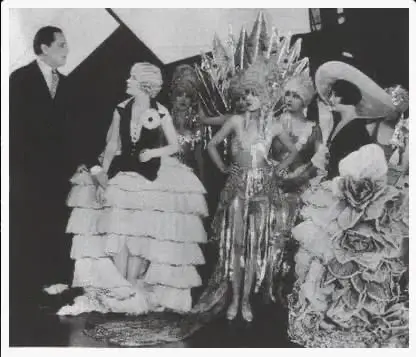
One of the most compelling reasons to revisit Broadway Nights today is the presence of its uncredited chorus girls. Look closely and you will see the early flickers of Barbara Stanwyck and Sylvia Sidney. For a cinephile, this is like finding a rough diamond in a pile of coal. Even in these minor, background roles, there is a distinct energy to Stanwyck. She possesses a naturalism that would soon make her one of the greatest stars of the sound era. Her presence here serves as a meta-commentary on the film’s plot: while Fannie is turning down Broadway, the real-life stars in the background are just beginning their ascent.
This historical context adds a layer of irony to the viewing experience. We are watching a film about a woman who refuses to leave her husband for fame, featuring women who would eventually become icons of independence and career longevity. It makes the film feel like a time capsule of a shifting social landscape. The writers, including Forrest Halsey, who was a veteran of 'women's pictures,' clearly understood the precarious position of women in the industry, even if the film's conclusion feels bound by the conservative morality of the 1920s.
Broadway Nights is a vital watch for anyone interested in the evolution of the 'show business' movie. It provides a gritty, unvarnished look at the transition from vaudeville to Broadway, highlighting the class distinctions and professional hurdles of the era. If you can look past the occasionally sluggish pacing and the moralizing tone, you will find a film that is surprisingly modern in its depiction of addiction and professional sacrifice. It is a window into a lost world of entertainment that feels both alien and hauntingly familiar.
Broadway Nights is a film that demands your patience but rewards your attention. It is not a masterpiece of technical innovation like some of its contemporaries, but it is a masterclass in the 'human' element of silent drama. It captures a specific moment in American culture where the dream of the city began to clash with the traditional values of the home. Fannie is a tragic figure not because she fails, but because she succeeds at being a 'good wife' at the total expense of her own potential.
While it lacks the stylistic flair of Miss Nobody, it compensates with a raw emotional honesty that is rare for the period. It guts the idea of the 'happy ending' and leaves the audience with a lingering sense of melancholy. It is a film that understands that sometimes, the biggest gamble isn't at the dice table—it's in the people we choose to love. Broadway Nights is a somber, essential piece of early cinema that proves the 'A Star is Born' formula was alive and well long before the talkies took over.
"A haunting look at the high cost of loyalty in a city that never stops moving, even when you do."
IMDb —
1916
Community
Log in to comment.