DbcultAccessing Vault...
5.6/10
Senior Film Conservator
A definitive 5.6/10 rating for a film that redefined the boundaries of cult cinema. Broken Barriers remains a cornerstone of transgressive art.
Stepping back into the nascent years of cinema, one occasionally unearths a true gem, a film whose historical significance far outweighs its modern accessibility. Such is the case with 'Broken Barriers,' a 1919 silent film that holds the distinct honor of being the earliest cinematic adaptation of Sholem Aleichem's beloved Tevye stories. Long before the iconic songs of 'Fiddler on the Roof' resonated across stages and screens, this pioneering work, penned by Nat Dorfman and Charles E. Davenport, with the indelible spirit of Sholom Aleichem himself as its fount, brought the dilemmas of Anatevka to life through the nascent magic of moving pictures. For anyone with even a passing interest in the evolution of storytelling, particularly the journey of these particular narratives, 'Broken Barriers' is not merely a curiosity; it is a foundational text.
The film zeroes in with remarkable precision on the narrative of Tevye's third daughter, Chava, and her forbidden romance with Fyedka, a Russian gentile. This particular thread, often overshadowed in broader adaptations, here receives the full, unadulterated focus it deserves. It is a story steeped in the universal themes of tradition versus modernity, familial obligation clashing with individual desire, and the often-painful process of cultural assimilation. As Jan Lisa Huttner so astutely explores in her insightful work, 'Tevye's Daughters: No Laughing Matter,' these stories, particularly Chava's, are anything but lighthearted. They delve into the profound societal and personal ruptures that arise when the deeply ingrained customs of a community are challenged by love that dares to transcend its boundaries.
Billie Wilson, portraying Chava, brings a compelling fragility and quiet defiance to the screen. Her performance, necessarily reliant on exaggerated gestures and expressive facial work typical of the silent era, nevertheless conveys the profound internal conflict of a young woman caught between two worlds. We witness her initial innocent attraction, evolving into a desperate love that she cannot, or will not, deny. The camera lingers on her face, capturing the nuances of her joy, her apprehension, and ultimately, her sorrow. This is not a tale of simple rebellion; it is a profound exploration of identity, of finding oneself in a world that seeks to define you by heritage alone.
The relationship between Chava and Fyedka, played by Giacomo Masuroff, is depicted with a tenderness that, for its time, must have been quite daring. Their connection feels genuine, a bond forged not merely out of youthful infatuation but from a deeper understanding and mutual respect that transcends their disparate backgrounds. This portrayal stands in stark contrast to the societal condemnation they face. The film doesn't shy away from the harsh realities of their choice, showcasing the painful ostracization from Chava's family and community. This aspect of the narrative resonates powerfully, reminding one of the intense social pressures depicted in films like The Blacklist, where individuals often find themselves at odds with ingrained communal expectations, albeit in different contexts.
Alexander Tenenholtz's portrayal of Tevye is, perhaps, the film's most potent emotional core. His Tevye is not merely a caricature; he is a man of deep faith and tradition, grappling with an unimaginable crisis. The anguish on his face as he confronts his daughter's choice, the internal war between his paternal love and his religious convictions, is palpable even through the grainy black and white footage. His soliloquies, delivered through intertitles, are imbued with a philosophical weight that reflects Aleichem's original intent. He questions God, he questions his fate, and he questions the very fabric of his existence, much like the questioning protagonists in other dramas of the era, such as The Country Boy, where rural innocence meets urban complexities, forcing characters to re-evaluate their core beliefs.
The film captures the essence of Tevye's struggle to reconcile his love for his daughter with the immutable laws of his heritage. The scene where he effectively 'sits shiva' for Chava, mourning her as if she were dead, is rendered with heartbreaking solemnity. It’s a powerful testament to the film's ability to convey profound emotional depth without spoken dialogue, relying instead on the actors' physicality and the carefully crafted intertitles. Anna Kay, as Golde, Tevye's wife, provides a grounded, often stern counterpoint to his philosophical musings, embodying the practical and communal pressures that weigh heavily on the family.
'Broken Barriers' offers a fascinating window into the cinematic techniques of the late 1910s. The direction, while perhaps lacking the sophisticated camera movements and editing rhythms of later decades, is effective in its straightforward storytelling. The use of natural light, the detailed set designs that evoke the shtetl life, and the careful framing of shots all contribute to an immersive experience. The film employs a narrative structure that is clear and deliberate, building emotional tension through character interactions and the unfolding of events, rather than relying on rapid-fire cuts or complex visual metaphors.
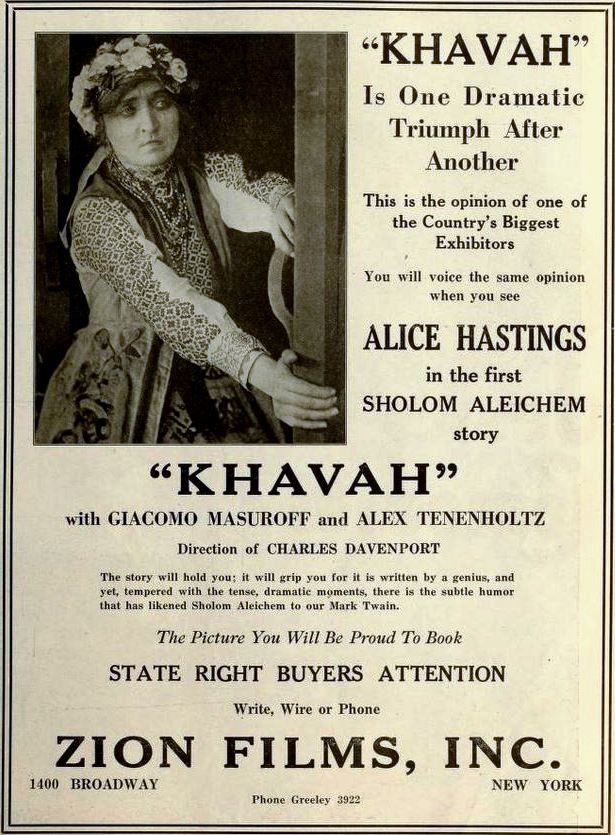
The supporting cast, including Phil Sanford, Alice Hastings, Sonia Radin, and Raymond Friedgen, contribute to the vibrant tapestry of the community, each playing their part in either supporting or condemning Chava's choices. Their collective presence helps to solidify the sense of a close-knit, yet often unforgiving, society. The film's strength lies in its ability to paint a comprehensive picture of a community grappling with the forces of change, mirroring similar social upheavals seen in contemporary films like The Night Workers, which also explored the human element amidst changing industrial landscapes.
At its core, 'Broken Barriers' is a profound meditation on the complexities of assimilation. Chava's decision to marry outside her faith is not merely a romantic entanglement; it is an act that fundamentally alters her identity and her place in the world. The film explores the agonizing process of choosing between one's inherited culture and a newly forged personal path. This theme remains remarkably relevant today, resonating with anyone who has faced the challenge of navigating multiple cultural identities or making choices that deviate from familial expectations. It evokes the struggles of protagonists in films like Little Miss No-Account, who, despite different circumstances, also grapple with finding their place and asserting their individual worth against societal pressures.
The film also subtly touches upon the political climate of the time, the underlying tensions between Jewish communities and the broader Russian society. While not overtly political, the very premise of Chava's marriage to a Russian implicitly highlights the societal divisions and the yearning for acceptance that characterized the era. This undercurrent of societal friction, though less explicit, shares thematic resonance with films like The Caillaux Case, which delved into the public scrutiny and social ramifications of deeply personal choices. The film's title itself, 'Broken Barriers,' is a direct reference to the societal and religious walls that Chava dares to dismantle, albeit with immense personal cost.
For students of film history and aficionados of Sholem Aleichem's work, 'Broken Barriers' serves as an invaluable historical document. It demonstrates how these timeless stories were first translated into a visual medium, laying the groundwork for every subsequent adaptation. One can almost see the embryonic stages of later cinematic and theatrical interpretations, observing how certain emotional beats and narrative arcs were established in this silent precursor. The film's existence underscores the enduring power of Aleichem's characters and themes, which have continued to captivate audiences for over a century.
While it may lack the technical polish and narrative sophistication of modern cinema, its historical importance and emotional honesty are undeniable. It's a testament to the early filmmakers' ambition and their ability to tackle complex, sensitive material. The film, much like a precious artifact, invites us to consider the origins of a cultural phenomenon, to understand the roots from which 'Fiddler on the Roof' eventually blossomed. It reminds us that powerful storytelling transcends technological limitations, relying instead on universal human experiences and the skillful portrayal of character. The raw emotion, the struggle for identity, and the timeless conflict between tradition and change presented in 'Broken Barriers' make it a compelling watch for anyone interested in the foundational pieces of cinematic history and the persistent echoes of human drama.
In conclusion, 'Broken Barriers' is more than just a historical footnote; it is a vital piece of the Tevye narrative's cinematic journey. It's a film that, despite its age and silent format, speaks volumes about love, loss, family, and faith. Its rediscovery and appreciation are crucial for a complete understanding of how these stories have permeated our cultural consciousness. It stands as a powerful, early cinematic echo of the enduring human struggle against the barriers that society, and sometimes even our own hearts, erect.
IMDb —
1918
Community
Log in to comment.