DbcultAccessing Vault...
Cult Review
Senior Film Conservator
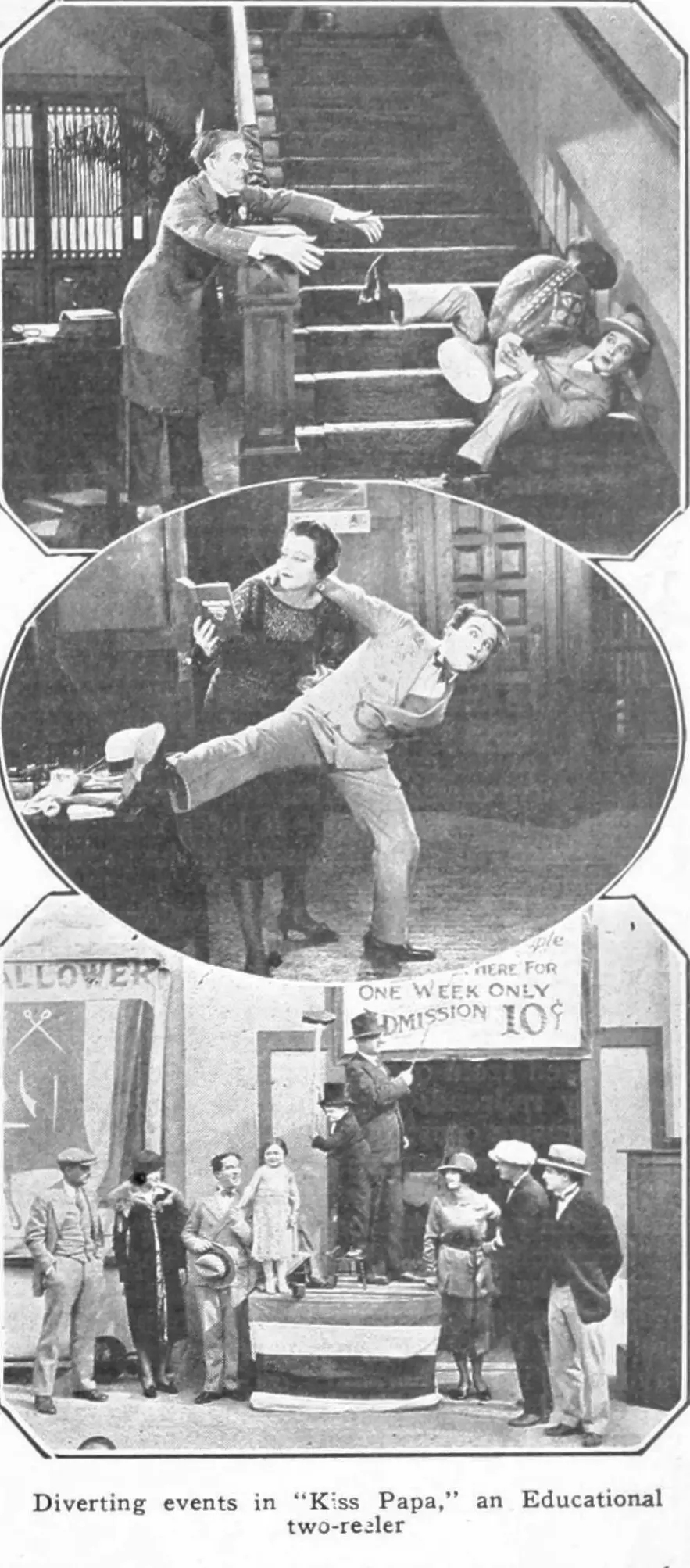
Is 'Kiss Papa' worth watching today? Short answer: yes, but with significant caveats. This 1925 silent farce offers a fascinating glimpse into early comedic filmmaking and the era's social anxieties, making it a compelling watch for cinephiles and historians, but its frantic pacing and dated sensibilities might deter casual viewers.
It's a relic, certainly, but one that showcases an impressive commitment to comedic escalation. For those who appreciate the foundational elements of slapstick, this film is a vibrant, if sometimes exhausting, example of the genre at its most unhinged.
This film works because... it embraces its absurd premise with unwavering commitment, escalating the comedic chaos to genuinely impressive heights for its time.
This film fails because... its reliance on broad physical comedy, while often effective, occasionally feels repetitive and lacks the emotional depth found in more sophisticated silent comedies.
You should watch it if... you appreciate the foundational elements of slapstick, are curious about early Hollywood's approach to marital discord, or seek a lighthearted, if somewhat dated, comedic escape.
At its core, 'Kiss Papa' is a masterclass in farcical misdirection. The narrative hinges on a premise so deliciously absurd it could only exist in the golden age of silent comedy: a substantial inheritance tied directly to the public perception of a couple's marital bliss. Lige (Lige Conley) and Estelle (Estelle Bradley), three years into a marriage that has clearly lost its spark, are on the verge of calling it quits.
However, a timely telegram from a deceased uncle's legal team changes everything. A representative is en route, tasked with verifying their 'happily married' status. This single plot device ignites a comedic powder keg, setting both Lige and Estelle on separate, desperate, and ultimately disastrous paths to deceive.
What makes the premise particularly potent is the parallel nature of their deceptions. Lige, unable to locate Estelle, scrambles to find a stand-in. He recruits his neighbor's wife, Nita (Lou Archer), and, in a truly bizarre stroke of genius, a midget from the circus to portray their 'baby.' This isn't just a simple cover-up; it's a full-blown theatrical production of domesticity, designed to fool the most scrutinizing eye.
Meanwhile, Estelle, having also received the fateful telegram, concocts her own elaborate charade. She enlists neighbor Clem (Clem Beauchamp) as her temporary husband and, mirroring Lige's outlandish choice, another circus midget to complete her fabricated family unit. The genius lies in their independent actions, each unaware of the other's identical, yet distinct, fabrication. This setup guarantees an explosive collision of realities, promising chaos of the highest order.
The success of a silent farce like 'Kiss Papa' rests almost entirely on the shoulders of its performers, and here, the cast delivers with admirable energy. Lige Conley, as the titular Lige, embodies the frantic desperation of a man scrambling to save his inheritance. His physical comedy is relentless, his expressions ranging from wide-eyed panic to forced joviality, often within the same scene. Conley's ability to convey mounting anxiety without a single spoken word is a testament to his silent film craft.
Estelle Bradley, as the equally conniving Estelle, provides a strong counterpoint. She's not merely a damsel in distress; she's an active participant in the deception, demonstrating her own brand of resourcefulness and comedic timing. Her interactions with her chosen 'family' are just as exaggerated and absurd as Lige's, setting up a delightful symmetry of pretense.
The supporting cast, including Lou Archer as Nita and Clem Beauchamp as Clem, play their roles as reluctant accomplices with convincing exasperation. Their facial reactions to the escalating absurdity around them often provide some of the film's most understated, yet effective, laughs. Otto Fries, as the unsuspecting attorney, serves as the perfect straight man, his growing bewilderment acting as the audience's anchor in a sea of madness. His slow realization that something is terribly amiss is a masterclass in reactive comedy.
Perhaps the most unconventional, and certainly the most debated, casting choice is the use of midgets to portray the 'babies.' While a product of its time's comedic sensibilities, this element adds a surreal, almost grotesque layer to the domestic charade. It pushes the boundaries of believability, forcing the audience to grapple with the sheer lengths these characters will go to for financial gain. It's a bold, if uncomfortable, choice that undeniably elevates the film's unique brand of chaos, making it stand out from more conventional silent shorts like Cuckoo Love.
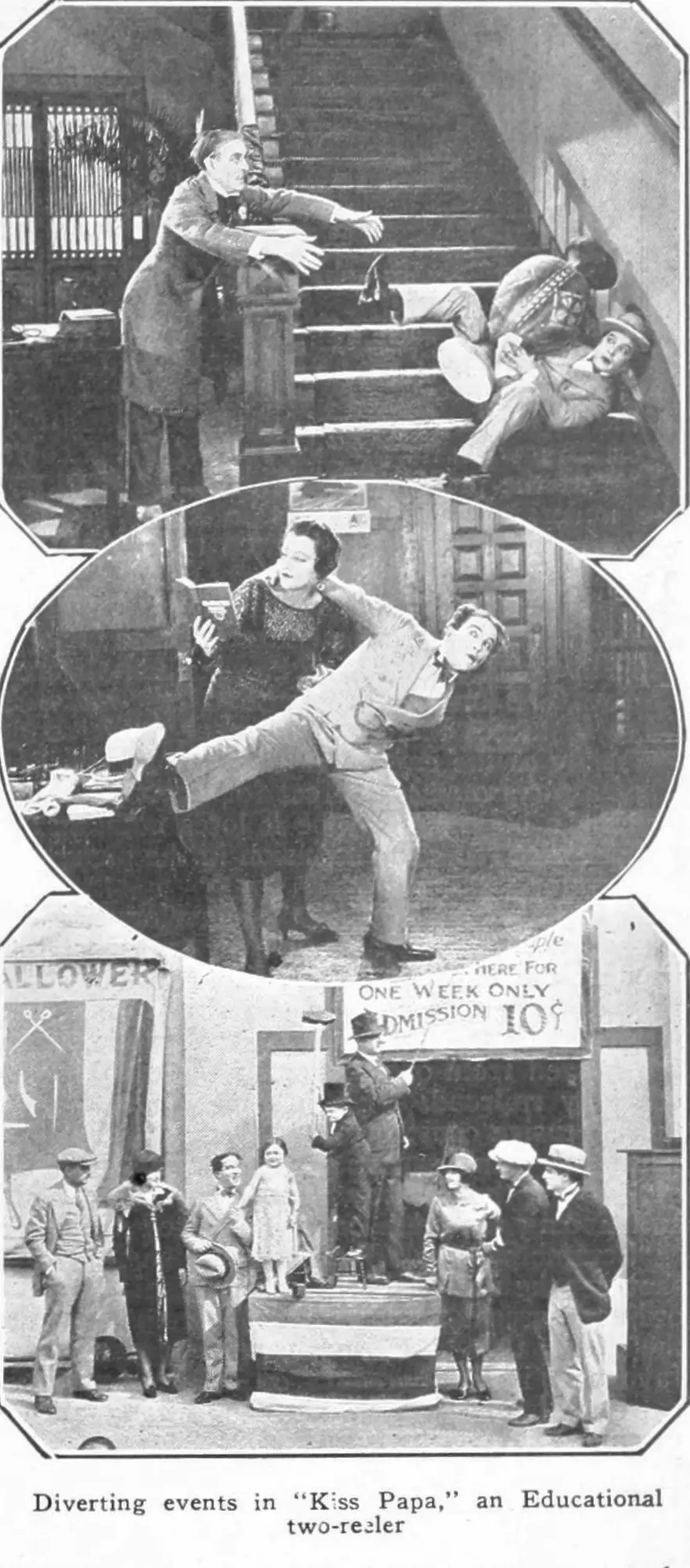
Stephen Roberts' direction of 'Kiss Papa' is a testament to the kinetic energy of silent film. The pacing is relentless, a rapid-fire succession of gags and near-misses that keeps the audience on edge. Roberts understands the mechanics of farce, meticulously building the tension and confusion as the two fabricated realities inch closer to collision. There’s little room for quiet moments; the film is a continuous sprint from one comedic predicament to the next.
The editing is sharp, using quick cuts and parallel narratives to heighten the sense of impending doom and comedic irony. We frequently cut between Lige's frantic attempts to maintain his facade and Estelle's equally desperate efforts, creating a delightful sense of dramatic irony as the audience is privy to both deceptions. This technique is crucial for maintaining the film's breakneck speed and ensuring that the audience is always aware of the dual-layered deceit.
The climax, where all parties converge in a single room, is a masterclass in silent film choreography. Doors slam, characters hide in absurd places, and the attorney's confusion reaches its peak. It’s a beautifully orchestrated sequence of physical comedy, reminiscent of the best Mack Sennett productions, where the sheer momentum of the gags overrides any need for logical coherence. While it may lack the nuanced character development seen in a Chaplin feature, its commitment to pure, unadulterated slapstick is unwavering.
Roberts orchestrates this chaos with precision, ensuring that each new revelation or near-discovery adds another layer of comedic pressure. The film doesn't just present a series of jokes; it builds a comedic structure that supports its escalating absurdity, making the audience laugh not just at individual gags, but at the sheer inevitability of the impending disaster.
The cinematography in 'Kiss Papa' is functional and effective, adhering to the visual language of 1920s silent cinema. The camera work is primarily focused on capturing the physical comedy and the exaggerated expressions of the actors. Wide shots are frequently employed to showcase the intricate choreography of the slapstick, allowing the audience to take in the full scope of the characters' frantic movements and interactions within the confined spaces of the sets.
Close-ups are used sparingly but effectively, often to emphasize a character's shock, bewilderment, or forced cheerfulness, particularly in the attorney's reactions. The lighting is standard for the era, bright and clear, ensuring that every piece of physical comedy is visible and impactful. There's no attempt at overt artistic flair, but rather a commitment to clarity and comedic efficiency.
The tone is overtly lighthearted, a pure farce designed to elicit laughter through escalating absurdity. Despite the underlying themes of marital discord and financial desperation, the film never dips into melodrama or genuine pathos. It maintains a buoyant, almost manic energy throughout, ensuring that the audience is always in on the joke, even as the characters become increasingly entangled in their own lies. The use of intertitles is succinct, driving the plot forward without bogging down the visual momentum. The entire aesthetic serves the single purpose of maximizing comedic impact.
For silent film enthusiasts and scholars, 'Kiss Papa' is absolutely worth watching. It’s a robust example of a well-executed 1920s slapstick comedy, showcasing the era's unique comedic sensibilities and the talents of its performers. It offers valuable insight into how comedic tension was built and resolved without dialogue.
However, for a casual viewer accustomed to modern pacing and humor, it might feel a bit dated. The broad physical comedy and reliance on exaggerated expressions can be an acquired taste. If you're looking for a quick, energetic dive into the silent era's comedic heart, this film delivers. But approach it with an appreciation for its historical context.
While 'Kiss Papa' is primarily a vehicle for slapstick, it's difficult to ignore the subtle, perhaps unintentional, social commentary woven into its farcical fabric. The very premise—that a marriage's value is quantifiable by an inheritance, and its 'happiness' can be entirely fabricated—speaks volumes about societal pressures and the commodification of relationships. It critiques the superficiality of appearances, suggesting that the public perception of domestic bliss can be bought and sold, much like a commodity.
My unconventional observation here is on the choice of midgets as 'babies.' While undeniably a gag intended for laughs, it pushes the boundaries of comedic taste and even ethics, particularly when viewed through a modern lens. This bizarre element, more than any other, underscores the desperate lengths Lige and Estelle are willing to go. It transforms the farce from mere silliness into something slightly unsettling, a dark mirror reflecting a willingness to exploit for financial gain. It’s a deeply strange choice that elevates the film beyond simple slapstick, making it stick in the memory long after the laughter fades.
It’s a debatable point, certainly, but I believe the film, perhaps unwittingly, critiques a society where the external validation of a marriage is paramount, even if the internal reality is crumbling. It’s a cynical take on romance, masked by relentless humor. This underlying current of social critique gives the film more weight than its surface-level gags might suggest, distinguishing it from simpler romps like The Speed Spook.
‘Kiss Papa’ is a fascinating, if flawed, relic from the silent era. It works. But it’s flawed. This isn't a film that will resonate with everyone, but for those with an appreciation for the foundational elements of slapstick and a curiosity for early Hollywood's comedic ingenuity, it offers a wild, often hilarious ride. It’s a testament to the power of pure physical comedy and an audacious premise, even if some of its choices feel jarring by modern standards.
Ultimately, it's a valuable piece of cinematic history that, despite its age, still manages to provoke thought and laughter. It demands a particular kind of engagement, but rewards it with a unique brand of chaotic charm. Don't expect a masterpiece of nuance, but do expect a spirited, unhinged farce that, for better or worse, holds its own among the silent greats.
IMDb 5.7
1929
Community
Log in to comment.