Is 'Bröllopet i Bränna' a forgotten gem worth unearthing today? Short answer: absolutely, but with significant caveats that demand a particular kind of viewer. This early Swedish drama, while undoubtedly a product of its time, offers a fascinating window into social dynamics and filmmaking sensibilities of the era. It's a film for those who appreciate cinematic archaeology and the subtle art of storytelling through early silent film conventions, but it will undoubtedly test the patience of viewers accustomed to modern pacing and narrative complexity.
This isn't a film for casual Sunday afternoon viewing if you’re seeking high-octane drama or intricate character arcs defined by contemporary standards. Instead, 'Bröllopet i Bränna' is best suited for film historians, silent film aficionados, and anyone curious about the foundational elements of Swedish cinema. It is decidedly NOT for those who expect immediate gratification, slick production values, or a plot that unfolds with rapid-fire twists.
A Glimpse into Rural Scandinavian Life
The premise of 'Bröllopet i Bränna' is deceptively simple: a mother, Ingrid, determinedly pushing her farmer son, Emanuel, towards a marriage with his cousin, Maja Sofia. Yet, within this seemingly straightforward setup lies a rich vein of social commentary. This isn't just a story about a wedding; it's a narrative steeped in the traditions, expectations, and often rigid structures of rural life in early 20th-century Scandinavia. The film, even with its modest plot, becomes a cultural artifact, reflecting a time when familial alliances and land consolidation were paramount.
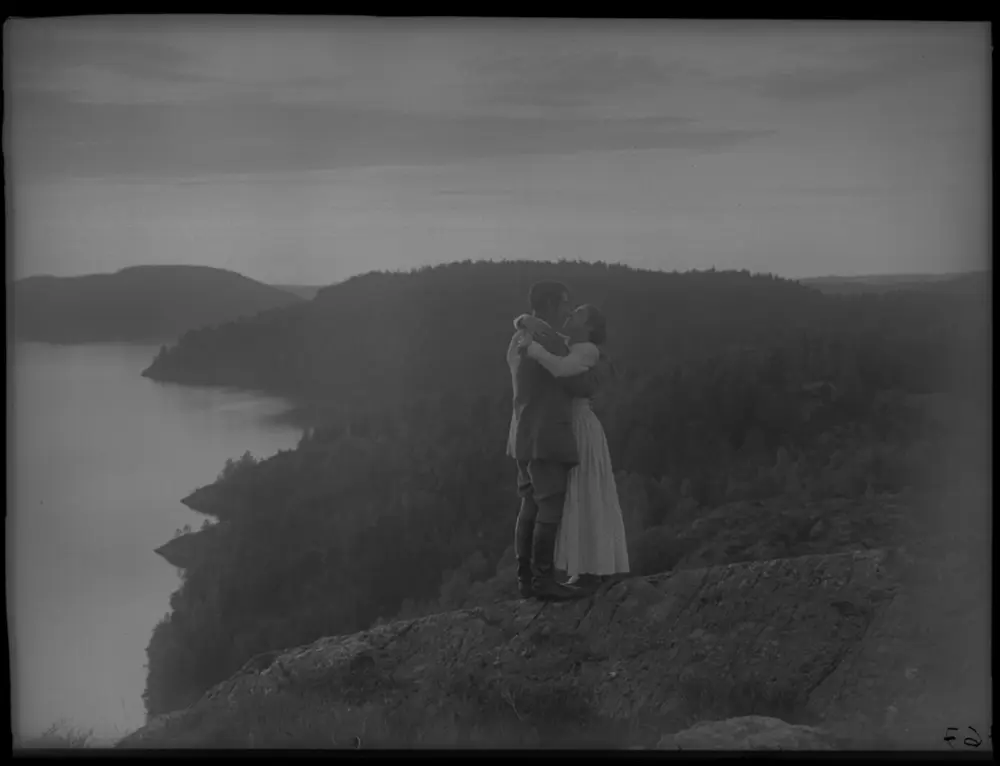
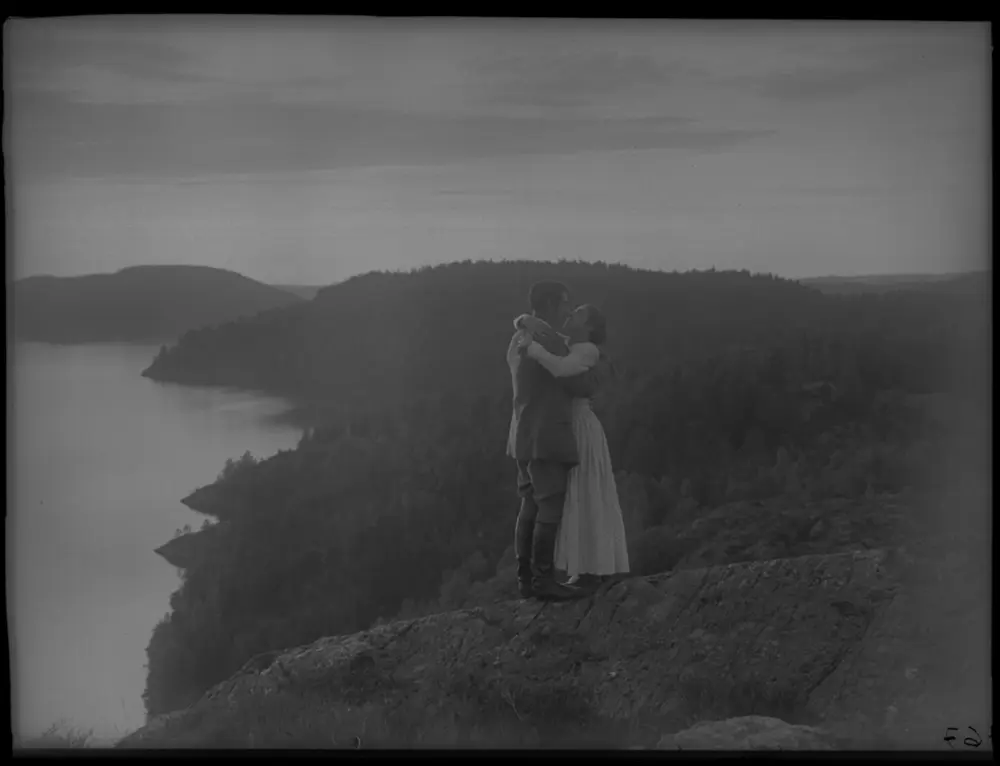
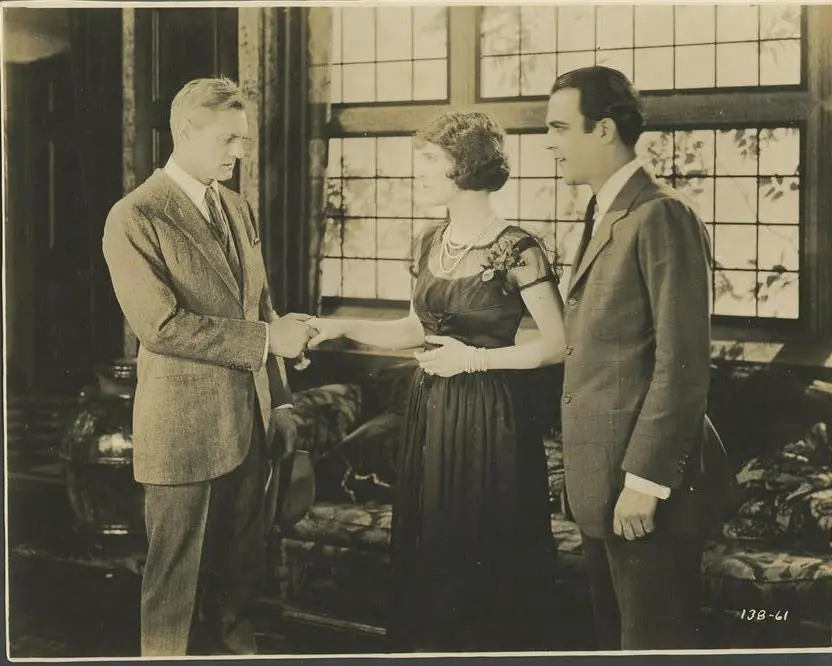
Scene from Bröllopet i Bränna
Cinematic perspective: Exploring the visual vocabulary of Bröllopet i Bränna (1926) through its definitive frames.
The brilliance here, if one is willing to look for it, lies in the unspoken. The pressure exerted by Ingrid on Emanuel speaks volumes about the matriarchal power structures that could exist within farming communities. It's a subtle, yet potent, portrayal of how personal desires might be subsumed by collective, often economic, family goals. This makes the film surprisingly relevant in its subtext, even if its surface narrative feels quaint.
Why This Film Works, and Where It Falters
This film works because: It provides an invaluable historical document of early Swedish cinema, showcasing foundational acting styles and narrative approaches to universal themes of family and duty.
This film fails because: Its pacing is undeniably slow by modern standards, and the minimalistic plot may struggle to engage viewers unfamiliar with the nuances of silent film storytelling.
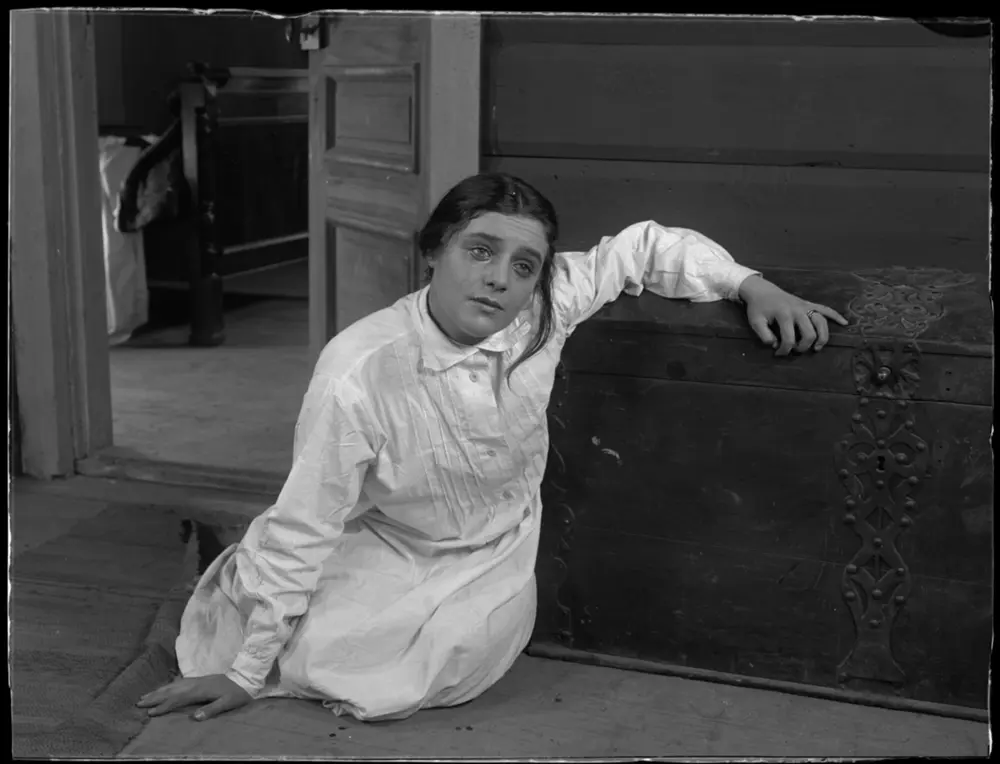
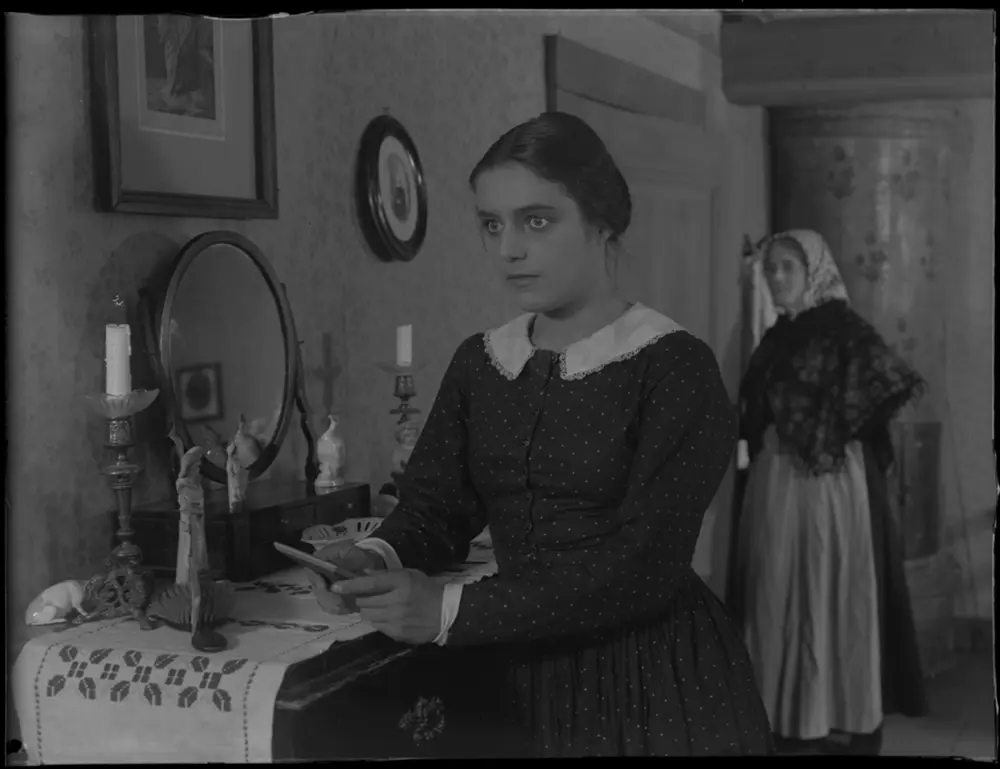
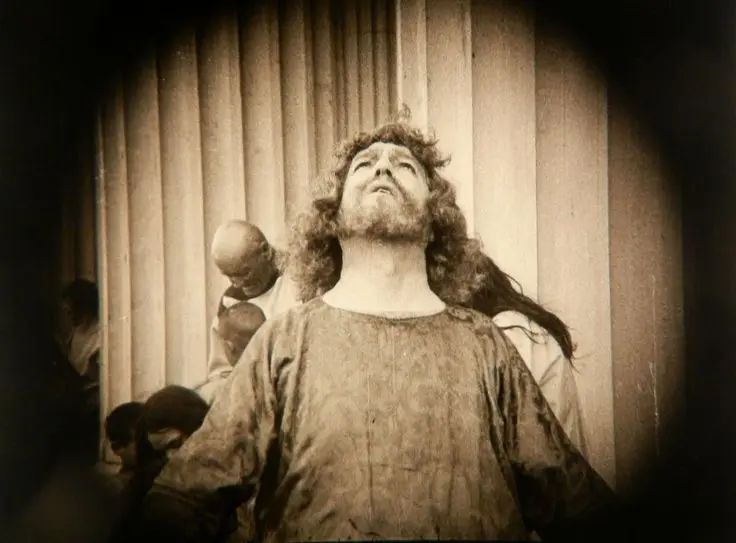
Scene from Bröllopet i Bränna
Cinematic perspective: Exploring the visual vocabulary of Bröllopet i Bränna (1926) through its definitive frames.
You should watch it if: You have a deep appreciation for silent cinema, are interested in early Scandinavian culture, or wish to trace the lineage of cinematic storytelling.
The Performance Landscape: Silent Era Nuances
The cast of 'Bröllopet i Bränna,' featuring names like Sven Tropp, Georg Blomstedt, and Mona Mårtenson, represents a cross-section of early Swedish acting talent. Sven Tropp, often known for his strong, stoic presence, likely embodies the conflicted Emanuel with a quiet intensity that was characteristic of the period. Silent film acting relied heavily on exaggerated facial expressions and grand gestures to convey emotion, and it’s fascinating to observe how these actors navigated the constraints of the medium to communicate complex internal states.
Georg Blomstedt, a veteran of the stage and screen, would have brought a certain gravitas to his role, likely as a patriarchal figure or a community elder. His presence alone suggests a grounding force within the narrative. The real revelation, however, might be the performances of the female leads, particularly Ester Julin and Emmy Albiin, who would have had to portray the emotional weight of societal expectations without the benefit of dialogue. Their ability to convey Ingrid's resolve or Maja Sofia's potential resignation through physicality and expression is where the film's true acting prowess would lie.
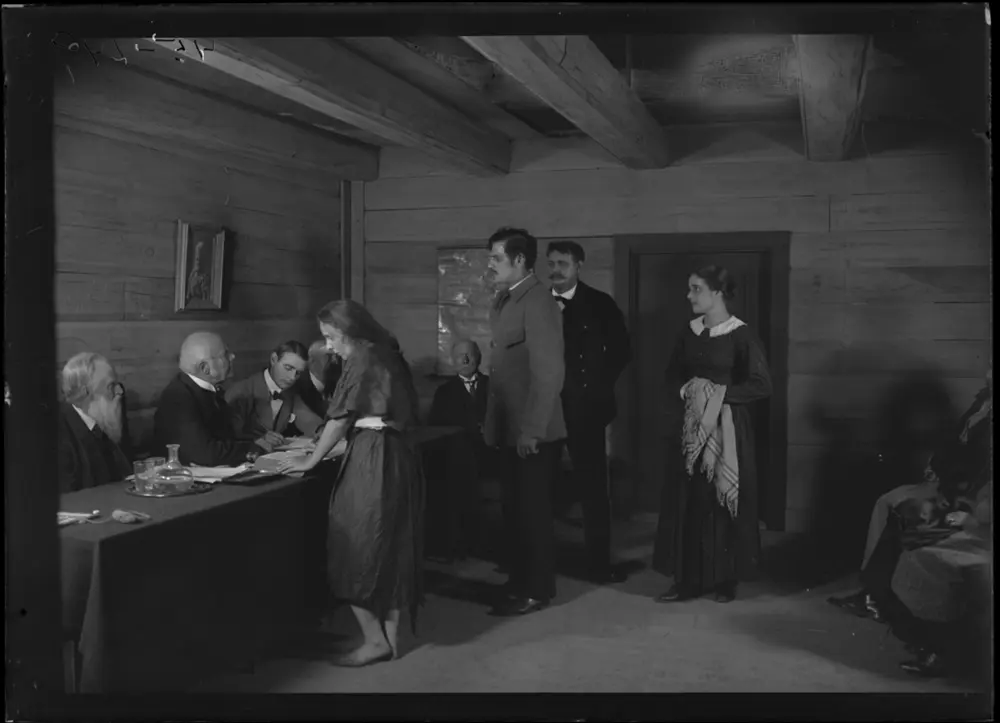
Scene from Bröllopet i Bränna
Cinematic perspective: Exploring the visual vocabulary of Bröllopet i Bränna (1926) through its definitive frames.
Mona Mårtenson, though perhaps in a smaller role given her later prominence, would have infused her character with a youthful energy. It's in these subtle interactions, the lingering glances, and the carefully choreographed movements that the emotional core of the film would have been built. While we often laud modern method acting, the precision required for silent film performance is an art form in itself, demanding a unique blend of theatricality and genuine emotional resonance.
Directorial Vision and Cinematographic Constraints
Directing an early silent film like 'Bröllopet i Bränna' (with Lars Tessing and Rosa Carlén credited as writers, and Ester Julin also involved in the writing) was a meticulous craft, far removed from today's dynamic camera work. The focus would have been on clear staging, ensuring that the audience could follow the narrative through visual cues alone. Long takes, static shots, and careful blocking of actors were standard. The camera, in essence, acted as an observer, allowing the drama to unfold within its frame.
Cinematography in this era, while lacking the sophisticated lighting and mobile cameras of later periods, still had its own artistry. The use of natural light, the framing of rural landscapes, and the stark contrasts between light and shadow would have been crucial in establishing the film's tone and atmosphere. Imagine wide shots of the Swedish countryside, emphasizing the isolation and tradition of the farming community, or close-ups that highlight the furrowed brow of Emanuel or the stern gaze of Ingrid.
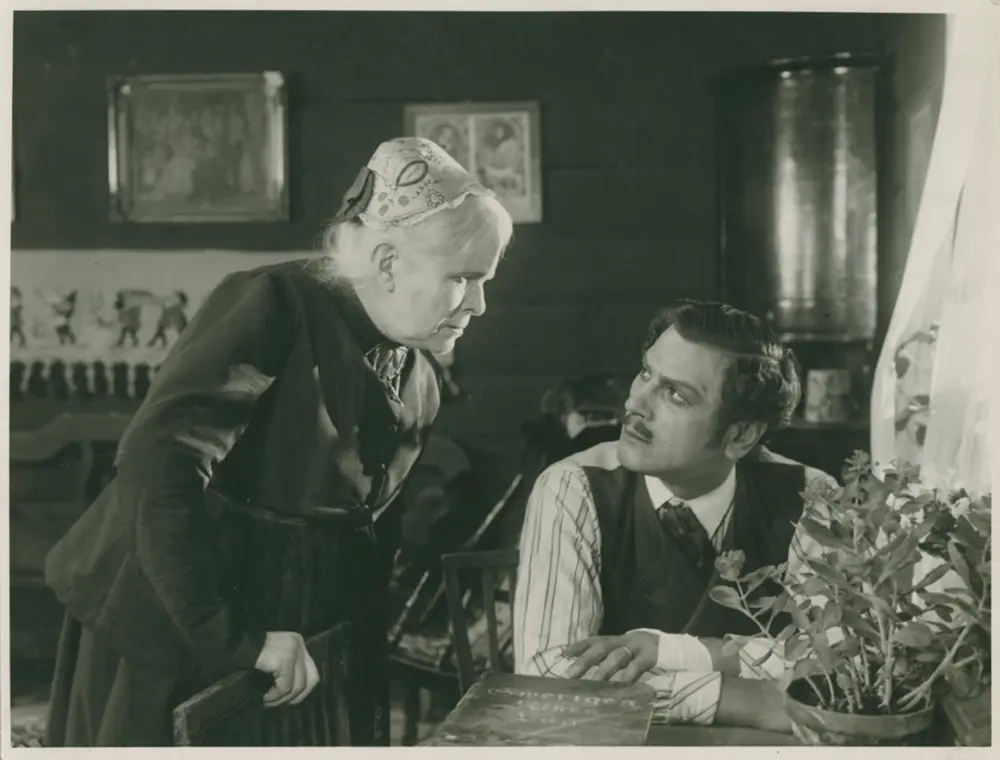
Scene from Bröllopet i Bränna
Cinematic perspective: Exploring the visual vocabulary of Bröllopet i Bränna (1926) through its definitive frames.
These visual elements, though simple, were powerful. They contributed to the film's sense of place and time, grounding the familial drama in a tangible reality. A comparison could be drawn to films like The Avalanche from a similar period, where the environment often plays as significant a role as the characters themselves. The aesthetic might feel dated, but its effectiveness for its time is undeniable.
Pacing and Tone: A Measured Unfolding
The pacing of 'Bröllopet i Bränna' is undoubtedly deliberate. Silent films, by their very nature, allowed for a slower unfolding of events, relying on intertitles to provide exposition and dialogue. This can be challenging for modern viewers accustomed to rapid cuts and constant narrative progression. However, this measured pace also allows for greater immersion, inviting the audience to linger on expressions, gestures, and the subtle shifts in power dynamics.
The tone would likely vacillate between a quiet dramatic tension, stemming from Ingrid’s insistence, and perhaps moments of pastoral charm depicting rural life. There might be touches of lightheartedness, but the underlying current of forced obligation would lend a certain gravitas. This blend of the bucolic and the emotionally fraught is a hallmark of many early dramas that sought to capture the complexities of human relationships within traditional settings. It’s a slow burn, not a wildfire.
Scene from Bröllopet i Bränna
Cinematic perspective: Exploring the visual vocabulary of Bröllopet i Bränna (1926) through its definitive frames.
One could argue that the film’s perceived slowness is not a flaw, but a feature, demanding a different kind of engagement from its audience. It forces you to slow down, to observe, and to infer. In an age of information overload, this meditative quality can be surprisingly refreshing. It’s an unconventional observation, perhaps, but one that highlights the film’s unique appeal.
Is 'Bröllopet i Bränna' Worth Watching Today?
Yes, 'Bröllopet i Bränna' is absolutely worth watching, but only if you approach it with the right mindset and expectations. It's not a film that will sweep you off your feet with spectacle or break new ground in narrative innovation for a contemporary audience. Its value lies in its historical significance and its ability to transport you to a different cinematic and cultural era.
For students of film, it's a vital piece of the puzzle that is early Swedish cinema. For those who enjoy exploring the roots of storytelling, it offers a compelling, if understated, drama about family, duty, and the human condition. It works. But it’s flawed. It demands patience. It rewards curiosity.
Key Takeaways
Best for: Silent film enthusiasts, cultural historians, and those interested in early Scandinavian cinema.
Not for: Viewers seeking fast-paced plots, modern special effects, or extensive dialogue.
Standout element: Its candid portrayal of matriarchal influence and societal expectations in a rural setting.
Biggest flaw: The extremely deliberate pacing and minimalist narrative may alienate casual viewers.
Pros and Cons
Pros:
Offers significant historical and cultural insight into early 20th-century Sweden.
Showcases the performance styles of notable early Swedish actors like Sven Tropp and Mona Mårtenson.
The underlying themes of duty versus personal desire remain universally resonant.
Provides a unique opportunity to observe the foundational elements of cinematic storytelling.
A quiet, contemplative experience that can be rewarding for patient viewers.
Cons:
The pacing is considerably slower than contemporary films, requiring a high degree of patience.
The plot, as described, is quite simple and might feel underdeveloped to modern audiences.
Silent film conventions (e.g., exaggerated acting, intertitles) may be a barrier for some.
Limited availability and restoration quality might impact the viewing experience.
Lacks the dynamic camera work and sophisticated narrative structures common in later cinema.
Verdict
'Bröllopet i Bränna' is not a film that will resonate with everyone, nor should it be expected to. It is a niche experience, a cinematic artifact that speaks volumes about its era through its quiet drama and traditional narrative. Its strength lies not in its ability to entertain a broad modern audience, but in its capacity to inform and intrigue those with a specific interest in film history and cultural studies. It's a valuable piece of the puzzle of early Swedish cinema, deserving of preservation and study.
While it may lack the immediate punch of a film like Men in the Raw or the dramatic flair of The Sultana, its understated power lies in its reflection of timeless human struggles against societal pressures. It asks us to consider the sacrifices made for family and tradition, a theme as relevant today as it was a century ago. Ultimately, 'Bröllopet i Bränna' is a testament to the enduring power of simple stories, told with the earnestness and unique artistry of the silent era. Seek it out if you dare to slow down and truly observe. You might just find a quiet, unexpected reward.