DbcultAccessing Vault...
7.6/10
Senior Film Conservator
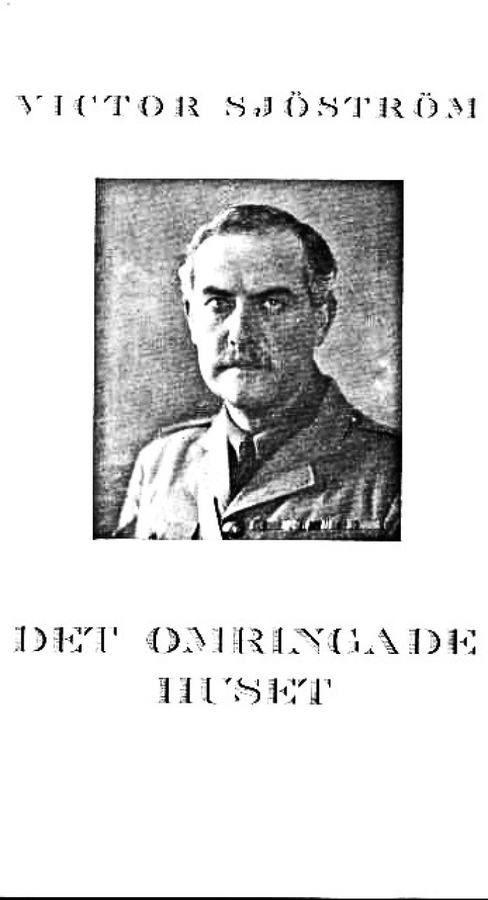
A definitive 7.6/10 rating for a film that redefined the boundaries of cult cinema. The House Surrounded remains a cornerstone of transgressive art.
In the pantheon of early cinema, few figures command as much reverence as Victor Sjöström. With The House Surrounded (Det omringade huset), the Swedish master navigates the perilous waters of international co-production and genre hybridization. Released in 1922, this film represents a fascinating nexus point where the lyrical naturalism of the Swedish Golden Age meets the burgeoning demands of global narrative tropes. While many critics often pivot immediately to his later Hollywood output or the haunting textures of The Phantom Carriage, this particular work demands a more granular examination for its sophisticated handling of space and emotional interiority.
The film opens with a sequence of such pastoral grace that it feels almost subversive given the title’s ominous implications. We are introduced to Lieutenant Jeff Gordon, portrayed with a stoic yet vulnerable gravitas by Gösta Hillberg. His presence in the English hamlet is not merely a plot device but a thematic anchor. Unlike the rugged frontiersmen seen in The Last of the Mohicans, Gordon is a man defined by his societal constraints and his burgeoning affection for Mary. The chemistry between Hillberg and the luminous Meggie Albanesi is palpable, transcending the often-stilted pantomime of the silent era. Their interactions are filmed with a soft, diffusing light that suggests a world unaware of the impending conflagration.
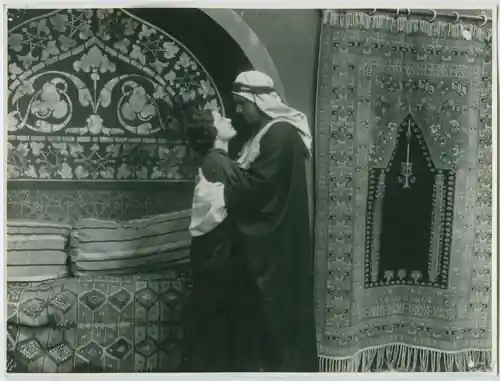
The narrative pivot occurs with a jarring suddenness that mirrors the historical reality of the era. The transition from the verdant English landscape to the scorched dunes of Africa is not merely a change of scenery; it is an ontological shift. Sjöström utilizes the desert not as a mere backdrop for adventure, as one might find in more colonialist fare like France in Arms, but as a psychological pressure cooker. The heat is almost tactile, rendered through high-contrast lighting that bleaches the frame, making the shadows of the soldiers feel like ink stains on a white-hot canvas.
As the regiment moves deeper into the desert, the film’s visual language becomes increasingly fractured. The wide, expansive shots of the dunes are contrasted with the tight, sweat-slicked close-ups of the men. This is where Sjöström’s genius for 'visual psychology' shines. He understands that the true horror of war is not just the kinetic violence, but the agonizing wait—the anticipation of an invisible enemy. In this regard, the film shares a spiritual kinship with Sealed Orders, though it trades that film's naval tension for a terrestrial, dust-choked dread.
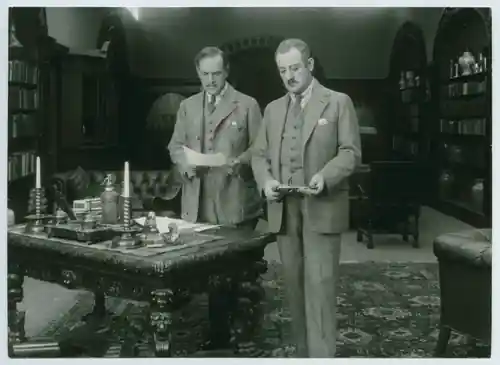
The 'House Surrounded' of the title eventually manifests as a literal structure, a fortified outpost in the desert that becomes the stage for the film’s harrowing climax. Here, the cinematography shifts into a proto-expressionist mode. The architecture of the house—its narrow corridors, its small, glaring windows—creates a sense of entrapment that is both physical and existential. Gordon’s leadership is tested not through grand speeches, but through his silent observations of his crumbling men. Edvin Adolphson and Gösta Gustafson provide stellar support here, their faces becoming maps of exhaustion and burgeoning despair.
Compare this to the more melodramatic stakes of A Soldier's Oath. While that film focuses on the external pressures of duty, Sjöström is more interested in the internal erosion of the self. The house is not just being besieged by enemy forces; it is being besieged by the environment itself. The wind howls in the subtitles, the sand infiltrates every frame, and the distinction between the 'civilized' soldier and the 'primal' survivor begins to blur. It is a masterful use of location to reflect the disintegration of the Victorian moral code Gordon brought with him from England.
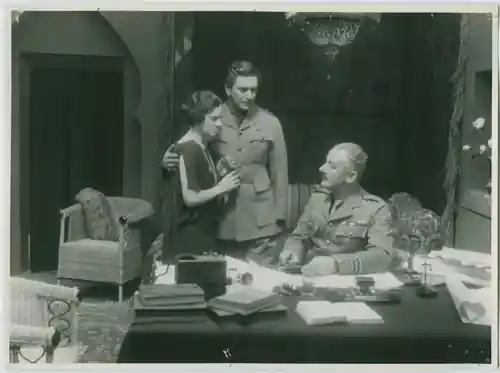
The cast is an ensemble of Swedish titans. Beyond Hillberg, the presence of Victor Sjöström himself in the cast adds a layer of meta-textual authority. His understanding of the frame allows the actors to inhabit the space with a naturalism that was rare for 1922. Meggie Albanesi, as Mary, provides the film’s emotional heartbeat. Her scenes back in England, intercut with the desert carnage, are not mere 'waiting wife' tropes. Instead, they are imbued with a sense of dread that suggests she is experiencing the war through a psychic connection to Gordon. This technique of parallel editing elevates the film beyond the standard war drama, touching on the ethereal qualities found in The Unpainted Woman.
Special mention must be made of the screenplay by Ragnar Hyltén-Cavallius and Pierre Frondaie. Adapting Frondaie’s work required a delicate balance between the French penchant for high drama and the Swedish inclination toward stoicism. The result is a script that feels remarkably modern. The dialogue—represented through intertitles—is sparse and punchy, avoiding the flowery prose that bogged down many contemporary productions like The Power of Decision. Instead, the film trusts the audience to read the subtext in a furrowed brow or a lingering gaze over a parched canteen.
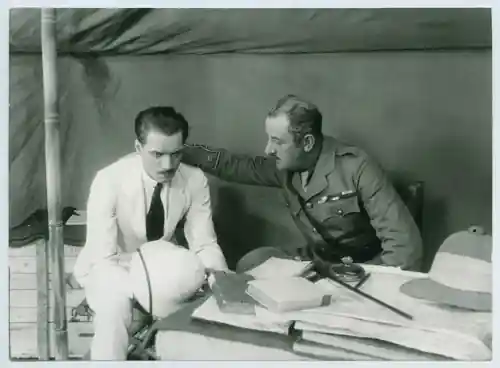
Technically, The House Surrounded is a marvel of its time. The use of tinting and toning to differentiate between the cool English nights and the blistering African days is executed with surgical precision. The sea blue hues used for the nocturnal sequences provide a necessary respite for the viewer’s eyes, while the amber and yellow tones of the desert scenes create an almost claustrophobic warmth. This color palette isn't just aesthetic; it’s narrative. It reinforces the theme of displacement—Gordon is a creature of the blue and green, forced to survive in a world of orange and gold.
The film’s influence can be seen in later desert epics, but its specific brand of 'intimate grandiosity' remains unique. While films like Heliotrope explored the gritty underbelly of crime, Sjöström explores the gritty underbelly of heroism. There is no glory here, only the grim satisfaction of making it to the next sunrise. The final act, which I shall not spoil for the uninitiated, is a testament to the director’s refusal to provide easy catharsis. It is a haunting, lingering conclusion that forces the viewer to reconcile the romantic beginning with the brutal reality of the end.
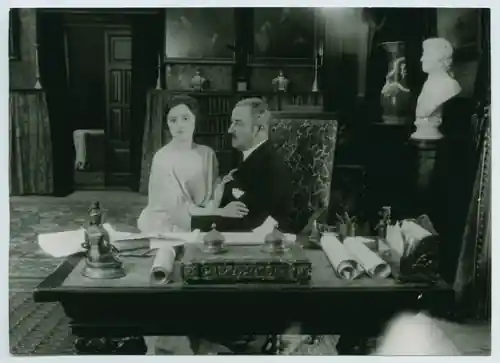
When placed alongside other 1920s offerings, The House Surrounded stands as a pillar of sophisticated storytelling. It lacks the whimsicality of A Florida Enchantment or the didacticism of What 80 Million Women Want. Instead, it occupies a space of somber reflection. It is as much a character study as it is a war film. Even in its quieter moments, such as the scenes involving the supporting cast like Uno Henning and Ivan Hedqvist, there is a sense of meticulous craftsmanship. Every character, no matter how brief their screen time, feels like a fully realized human being with a life outside the margins of the frame.
For the modern cinephile, this film offers a masterclass in pacing. In an age of rapid-fire editing, Sjöström’s willingness to let a shot breathe is refreshing. We see the dust settle; we see the light change over the dunes. This patience is what allows the 'surrounding' of the house to feel so inevitable and so terrifying. It is a reminder that cinema, even in its infancy, was capable of profound complexity. Whether you are coming to this for the historical significance of the Swedish contingent or for a gripping tale of survival, The House Surrounded is an essential piece of the silent era puzzle. It is a film that doesn't just ask to be watched; it asks to be felt, endured, and ultimately, remembered as a harrowing cry from the heart of the desert.
Reviewer's Note: Fans of early 20th-century drama may also find interest in the thematic parallels found in Amalia or the social critiques of The Penny Philanthropist, though Sjöström’s work remains unparalleled in its visual gravitas.
IMDb 5.7
1929
Community
Log in to comment.