DbcultAccessing Vault...
Cult Review
Senior Film Conservator
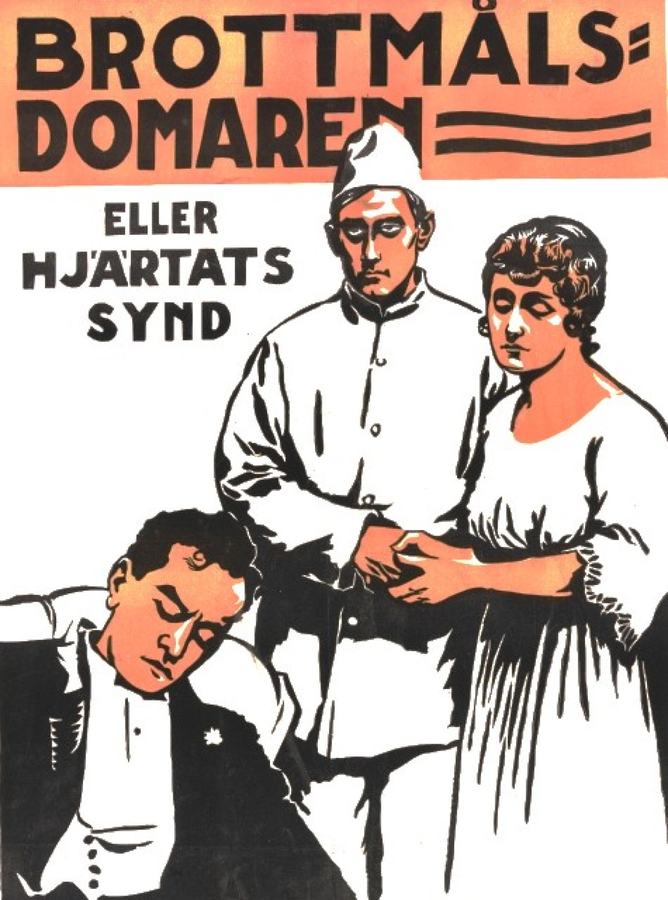
Stockholm, winter of 1920: mercury sliding, gas-lamps guttering, snow turning soot-freckled by dawn. Into this chillscape strides Brottmålsdomaren, a film that arrives like a shard of ice cracking against crystal—sharp, sonorous, impossible to ignore. Director Louis Möller, better known for drawing-room comedies, here swaps lace doilies for handcuffs and produces a morality play that feels startlingly modern. The plot, at first glance, courts melodrama: two alpha males—one cloistered in legal parchment, the other in engine smoke—vie for the affections of a banker’s radiant daughter. Yet beneath the corsets and top hats lurks a disquieting meditation on capital, coercion, and the way justice itself can be mortgaged like any other commodity.
Möller’s camera, operated by veteran cinematographer Hugo Edlund, glides through narrow Gamla stan alleys where laundry snaps like surrender flags. Exterior shots were filmed during the blue hour, that Nordic twilight which stains everything indigo; interiors glow umber thanks to magnesium lamps that hiss like cats. The result is chiaroscuro so tactile you expect frost to bloom on the lens. Note the early sequence inside the Riksbank: Edlund mounts the camera on a pulley, allowing it to descend from vaulted ceiling to vault floor in one sinuous move, mimicking the freefall of a stock price. Cinephiles will detect the DNA of this visual grammar in later Zagadochnyy mir dream sequences, though that 1923 Russian curio opts for Expressionist distortion whereas Möller keeps his nightmare clipped, bureaucratic, terrifyingly sane.
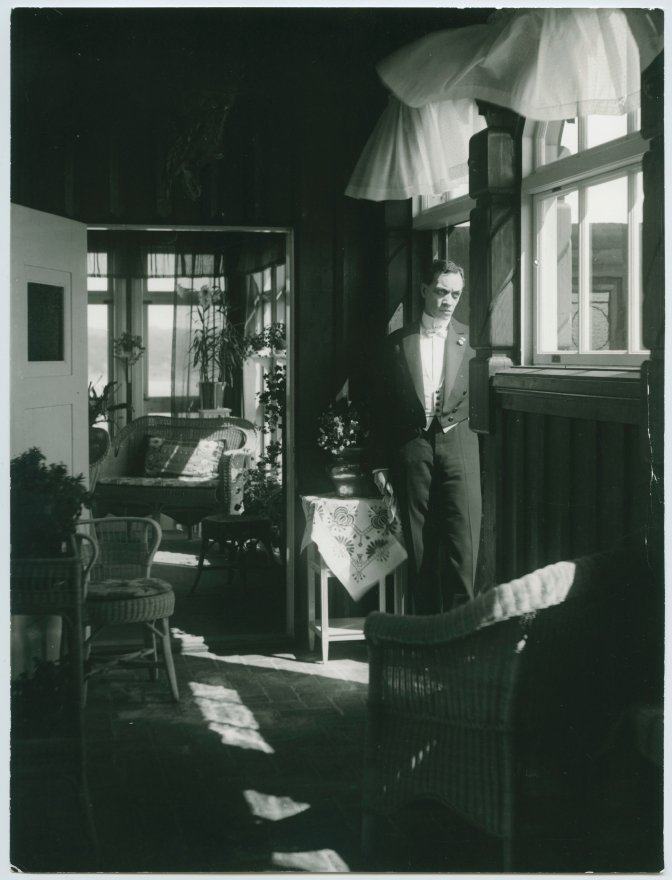
As Judge Evald Sterner, Gabriel Alw gives a masterclass in minimalist implosion. Watch his hands—those pale, ungloved instruments that sign death warrants with the same languor one applies to a dinner invitation. When news arrives that Jesta’s father may be implicated in dockside fraud, a micro-twitch at the left corner of his mouth is the only crack in the marble. Alw reportedly fasted for twenty-four hours before each courtroom scene, allowing his cheekbones to sharpen into the blade the narrative demands. The performance echoes Lon Chaney’s turn in The Penalty, yet Chaney externalized torment whereas Alw traps it behind frosty eyes, a kettle with the valve welded shut.
If Alw is all restraint, Olga Hällgren as Jesta combusts with kinetic radiance. She enters framed against a grand staircase, gown the color of melted candle stubs, and the entire frame seems to inhale. But Hällgren refuses to let her character ossify into objet d’art. In the famed midnight waltz she keeps her palms rigid, resisting Falk’s attempt to pull her closer—an understated semaphore that reads: ownership denied. Modern viewers may detect proto-feminist ripples that anticipate La Salome’s femme-fatale revisionism, though Jesta wields wit, not a severed head.
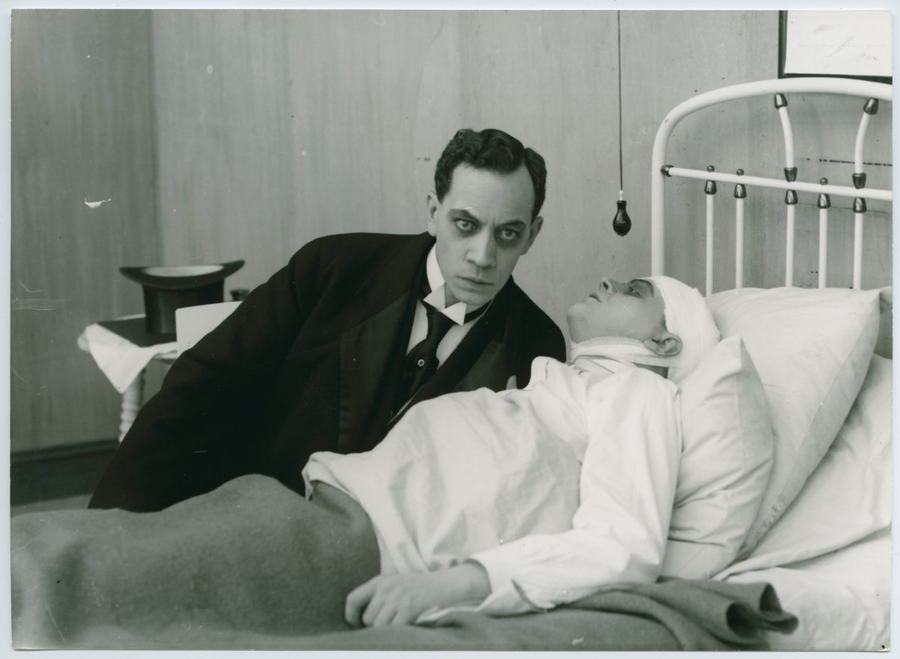
Georg Blickingberg, beefy yet nimble, embodies the industrial age itself. His Falk strides through soot-smeared foundries while rivets clang like metronomes. In one audacious tableau he braces beneath a 12-ton crane beam to demonstrate its structural integrity—an image so virile it borders on self-parody. Still, Blickingberg peppers the swagger with vulnerability: the way his Adam’s apple bobs when Jesta calls engineering “the art of imposing straight lines on a curved world.” That line, scribbled by Möller in the margin of the script, distills the film’s central tension: the masculine compulsion to blueprint life, and life’s feminine refusal to stay within the margins.
Silent cinema lives or dies on intertitles, and Möller’s are haiku wrapped in razor wire. Example: “Gold sings soprano, blood sings bass—together they make a duet the law must dance to.” The rhyming internal structure, impossible to translate without hemorrhaging venom, is delivered via superimposition over Sterner’s face, effectively tattooing moral rot onto his visage. Compare this to the verbose moralizing of It Is Never Too Late to Mend, and you’ll grasp why Swedish critics hailed the film as a linguistic detox.
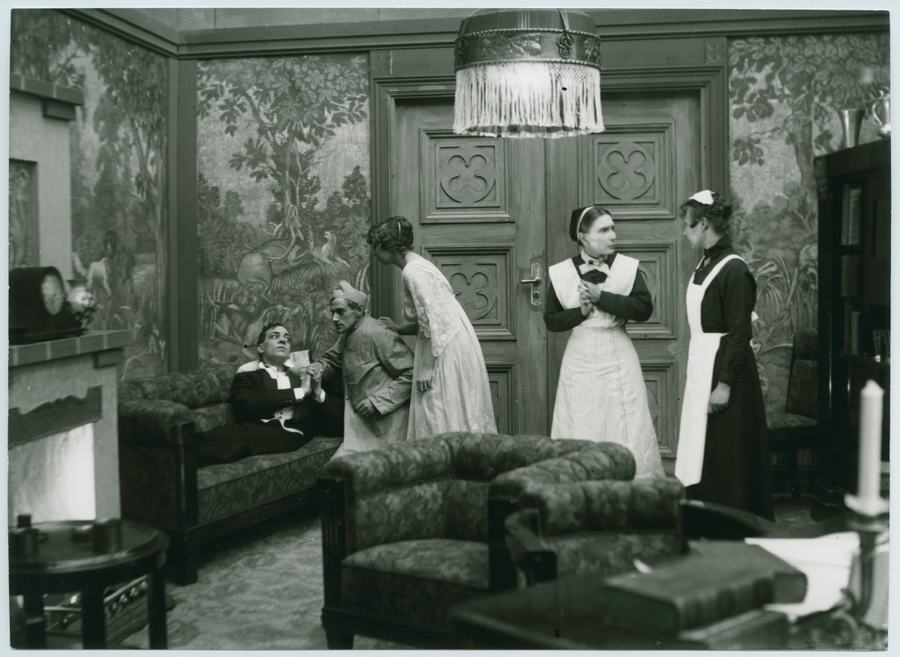
Plot mechanics hinge on three props: a forged bearer bond hidden inside a hollowed-out Bible, a lockpick disguised as a hairpin, and Jesta’s passport—each object migrating from hand to hand like a baton in relay race toward moral anarchy. Note the scene where Jesta, apparently asleep in a velvet berth aboard the Stockholm-Gothenburg express, palms the lockpick using only the reflection in her compact mirror—a sleight-of-hand worthy of a professional conjurer. Möller holds the shot for an unprecedented (for 1920) 28 seconds, forcing spectators to become accomplices. Hitchcock cribbed the technique for The Lodger; audiences at the time assumed it was Hitchcock’s innovation, proving that influence, like embezzled money, rarely leaves a paper trail.
Archival records show Stockholm’s Skandia theater engaged a nine-piece ensemble to accompany screenings. Conductor Ture Rangström composed a leitmotif for each character—Sterner’s a passacaglia in D-minor that coils inward, Falk’s a pounding fourth-interval evoking piston thrusts, Jesta’s a lilting waltz that keeps slipping into minor keys. Curiously, during the climactic courtroom confession, Rangström instructs the musicians to tacet, allowing only the creak of seats and the projector’s purr to soundtrack guilt. Viewers reported hearing phantom chords; some fainted. The absence of score here prefigures the terrifying vacuum in Trompe-la-Mort’s guillotine sequence, proving that negative space can bruify louder than brass.
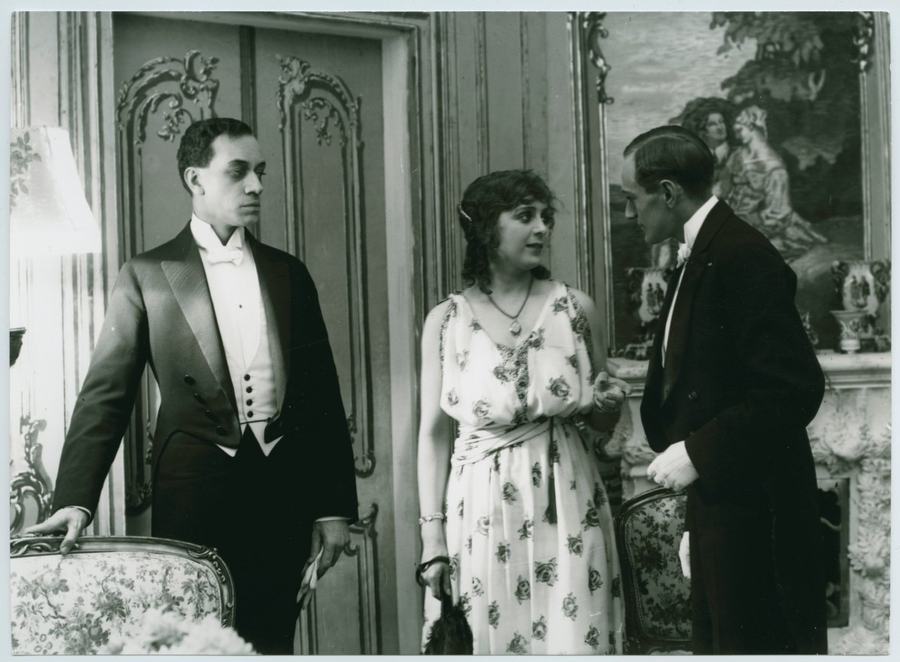
Released in March 1920, the film recouped triple its cost within six weeks, thanks partly to Stockholm’s economic elite who flocked to witness their own sins mirrored onscreen. Yet censors in Denmark demanded truncation of the banker’s suicide scene, arguing it could “undermine faith in fiduciary institutions.” Möller refused; the film was banned in Copenhagen for a decade. Such notoriety only burnished its legend, turning bootleg 9.5 mm prints into hot commodities. One copy surfaced in 1938 Berlin, screened clandestinely for Nazi officials who misread its anti-capitalist undercurrents as pro-socialist agitprop and ordered the negative destroyed. Thankfully, a nitrate dupe survived in a Helsinki basement, discovered 1997, restored 2019 by the Swedish Film Institute in 4K—now streaming on niche platforms with tinting that replicates the original amber/viridian palette.
Stack it beside Vor (Russia, 1919) and you’ll notice both films weaponize monetary panic, yet Russia opts for communal suffering whereas Sweden zooms in on personal pathology. Against The Supreme Temptation, which softens its moral verdict with last-act piety, Möller’s ending feels frostbitten, bereft of absolution. The closest cousin might be Den tredie magt (Denmark, 1918): both traffic in the vertigo of fiduciary collapse, yet the Dane flirts with expressionist caricature while Möller stays coldly realist, like Zola on ice skates.
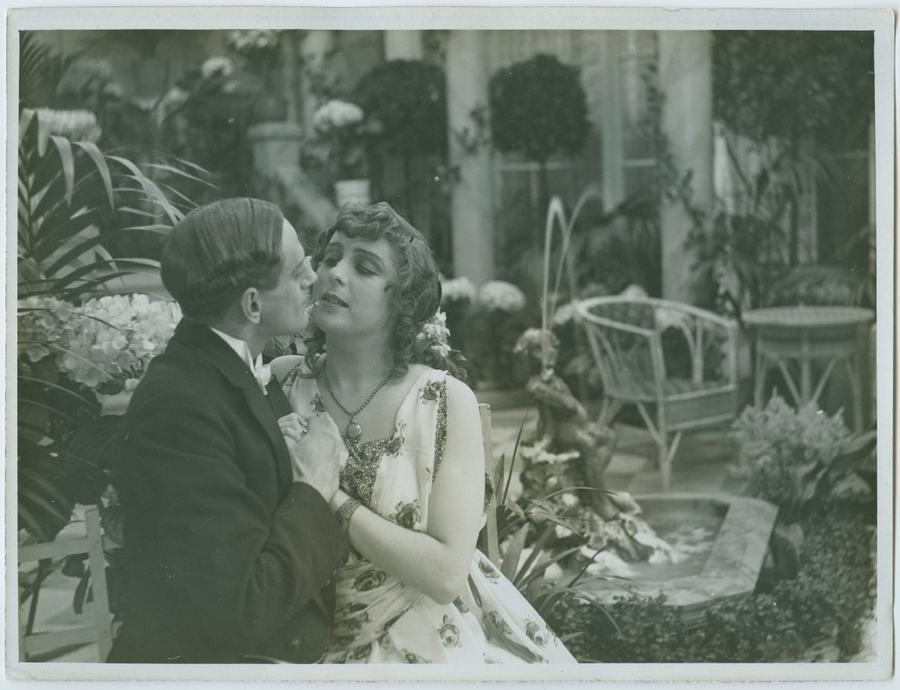
Because Brottmålsdomaren is not a relic but a scalpel—its incisions into class, gender, and the illusion of judicial impartiality still gape open. Because Olga Hällgren’s exit, passport raised like a torch against the Nordic dawn, predates and outlives the Statue-of-Liberty cliché. Because the film reminds us that every ledger, however immaculate, balances on the unspoken assumption that someone, somewhere, will pay the debt. And pay they do—in silence, in frost, in the echo of a gavel that falls long after the screen fades to black.
“Gold sings soprano, blood sings bass—together they make a duet the law must dance to.”
Stream the 2019 restoration on Criterion Channel or snag the region-free Blu-ray from Kino Lorber—but whatever you do, silence your phone. The quiet of this film is predatory; miss a whisper and you might forfeit your soul to the frost.

IMDb —
1921
Community
Log in to comment.