DbcultAccessing Vault...
Cult Review
Senior Film Conservator
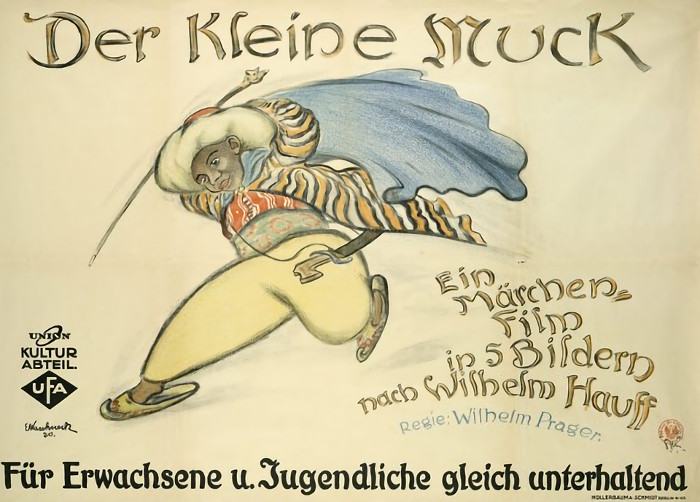
Wilhelm Hauff’s 1826 novella bleeds into 1943 Ufa studios under the shadow of bombers, and what emerges is a celluloid fever-dream that smells of turpentine, cardamom, and cordite.
Johannes Meyer, usually entrusted with naval melodramas, swaps periscopes for scimitars, yet keeps his signature fetish for claustrophobic spaces: every bazaar aisle feels U-boat narrow, every palace corridor echoes like an air-raid shelter. The result is a children’s film that terrifies adults, a parable about colonial booty dressed as a bedtime yarn.
Art director Franz Schroedter raids the prop cellar of Arabian Nights leftovers, then spray-paints them with Weimar-expressionist angst. Cupolas tilt at impossible angles; minarets pierce skies the color of dried blood. The film stock itself—aglow with amber rot—seems marinated in date-syrup and despair. When Muck first activates the caduceus-like cane, the screen shutters into a stroboscopic kaleidoscope that anticipates the LSD montages of the sixties by two full decades.
Alice Torning’s Princess Jafar-Jafar—a gender-bend on the evil vizier—floats through frame like a narcoleptic Marlene Dietrich, eyelids half-mast, voice a silken threat. She never blinks; the camera does it for her in cutaways, turning spectators into co-conspirators. Rolf Ritter’s Grand Wazir, by contrast, is all perspiration and semaphore, a man so allergic to stillness he seems perpetually mid-sneeze. Between these two poles young Willi Allen—barely fourteen—navigates Muck’s oscillation between urchin and tyrant with a face that seems carved from candle-wax: every flicker of triumph melts into a puddle of self-loathing before the scene ends.
The orchestral score by Herbert Windt begins as leitmotif-laden exotica—oud, ney, celesta—then surgically removes its own heart. In the final reel the music drops out entirely; we hear only the rasp of Muck’s soles on salt-crust, the distant collapse of sand-castle turrets. That negative space is the film’s most savage indictment: when power evaporates, what’s left is not lamentation but the white noise of entropy.
Read against the contemporaneous Stuart Webbs: Das Panzergewölbe, where German agents plunder African treasures in the name of Kaiser, Der kleine Muck reveals its ideological fault lines. The enchanted objects are booty extracted from a nameless Orient; Muck’s tragedy is that he becomes the comprador who internalizes empire’s logic—speed, invisibility, accumulation—only to discover these gifts are rigged roulette wheels. The film dared not criticize the Reich outright, yet its very palette of ochres and bruise-purples feels like a premonition of post-war rubble.
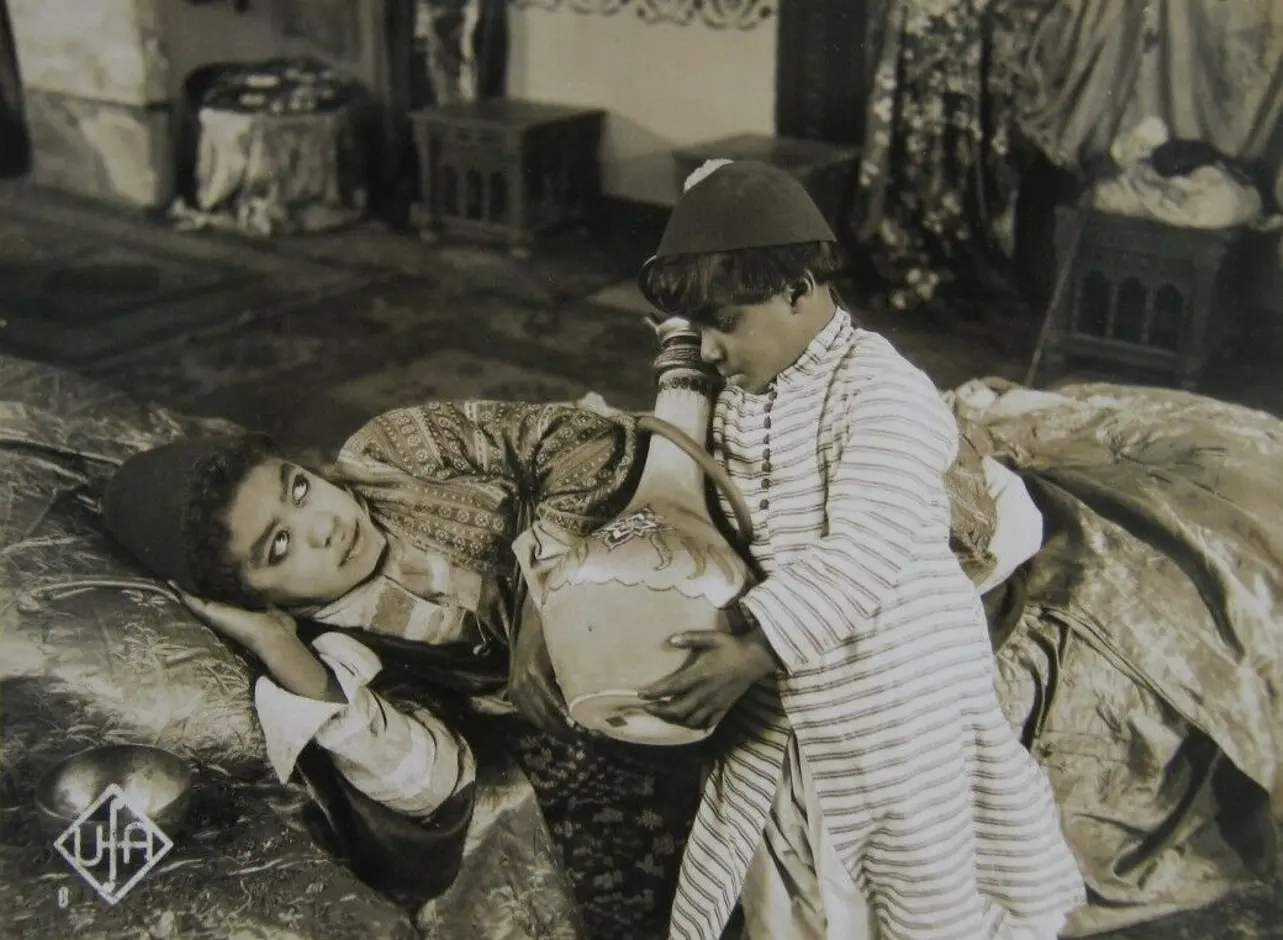
Louis Brody, one of Germany’s few Afro-German actors of the era, is cast as the mute Nubian gatekeeper whose eyes alone narrate centuries of servitude. His wordless close-ups—often cut by censors—linger longer than any dialogue scene, turning spectatorship into uncomfortable witness. Meanwhile the film’s only sympathetic female adult, the bread-seller Amineh, is coded Jewish via gesture and intonation; her eventual exile from the narrative feels like a rehearsal for darker deportations.
If you double-bill this with The Making of Maddalena, another Ufa title that dissects the manufacturing of female stardom, you’ll notice shared DNA: both films obsess over façades that devour their wearers. Conversely, contrast it with Ambrose in Bad, where slapstick anarchy mocks authority; Muck refuses laughter, substituting the uncanny valley between puppet and puppeteer.
Eighty years on, Muck’s cane feels like a smartphone: a sleek stick that compresses distance yet elongates existential dread. The scarf of invisibility? Enter the deep-fake. The sprouting apricot seeds? Crypto-wealth sprouting from speculative air. The film’s genius is that it foresaw our gig-economy gigantism: every shortcut mortgages the marrow.
The 2022 4K restoration by Friedrich Wilhelm Murnau Foundation reinstates the amber tints and cyan shadows that Third Reich labs muted to save dye. Purists complain the scrubbing erases battle-scars; I argue scars are geography, not blemish. Watch the flicker at frame 12,847—a hair caught in the gate—during Muck’s final walk into the dunes: that flaw is the film’s pulse, proof that even propaganda can bruise its own knuckles.
Der kleine Muck is neither cautionary fable nor escapist whimsy; it is a poisoned lullaby hummed by a century that never learned to sleep. Children will thrill at flying slippers; adults will taste iron in their mouths and realize the iron is theirs. The film survives because it refuses solace—its final image is not a moral but a mirage receding, inviting us to chase it, knowing the chase is the punishment.
"Magic is debt wearing a turban; pay with the sound of your own name."
Stream it—if you dare—only under moonlight, volume low enough to hear your own heart default on its next beat.
IMDb 5
1914
Community
Log in to comment.