DbcultAccessing Vault...
Cult Review
Senior Film Conservator
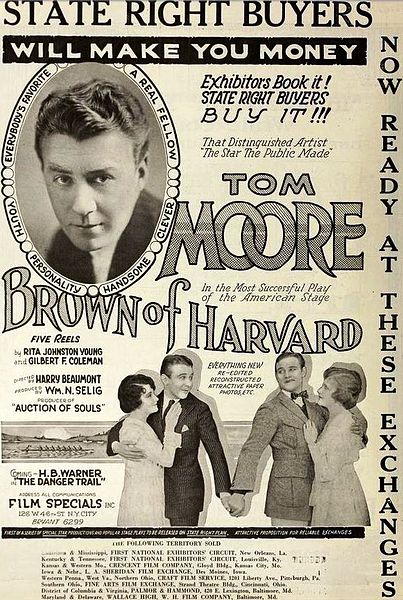
Ah, the silent era! A time when cinematic storytelling relied not on spoken dialogue, but on the potent alchemy of gesture, expression, and evocative intertitles. It was an epoch where narratives, often grand and melodramatic, found their voice in the visual symphony of light and shadow. Among the myriad tales spun during this fascinating period, Brown of Harvard, released in 1918, stands as a quintessential example of the college drama, a genre that, even then, captivated audiences with its potent blend of youthful ambition, spirited competition, and burgeoning romance. Directed by Harry Beaumont, a prolific filmmaker whose career spanned both the silent and early sound eras, this picture delves into the familiar, yet ever-compelling, narrative of an outsider's arrival disrupting an established order, all set against the hallowed backdrop of one of America's most prestigious universities.
Our story commences with the rather flamboyant introduction of Tom Brown, portrayed with an undeniable swagger by Kempton Greene. Brown isn't merely confident; he exudes an almost audacious self-assurance, a brashness that immediately sets him apart from his more staid collegiate peers. His arrival at Harvard isn't a quiet integration but rather a seismic event, an immediate challenge to the existing pecking order. This initial portrayal of Brown is crucial; it establishes him not as a simple protagonist to be passively rooted for, but as a complex figure whose arrogance promises both conflict and, perhaps, eventual redemption. The film, from its very outset, invites us to both admire his spirit and question his judgment, a delicate balance that Greene navigates with the broad, expressive strokes typical of silent film acting.
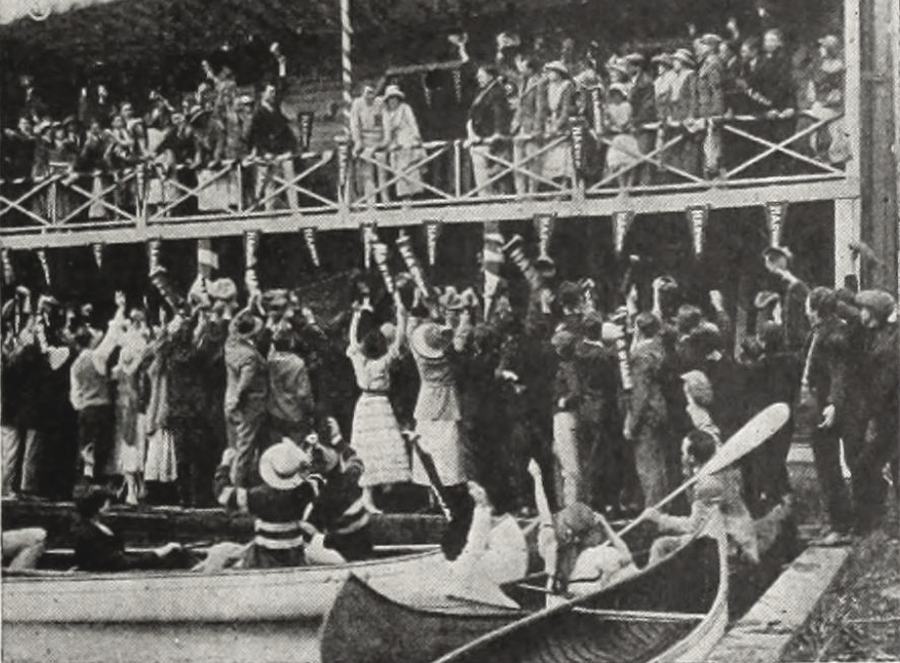
No college drama, particularly one from this era, would be complete without a formidable antagonist, and Brown of Harvard delivers precisely that in Bob McAndrew, brought to life by Robert Ellis. McAndrew embodies the ideal Harvard man: diligent, honorable, and supremely talented in both academics and athletics. He is the antithesis to Brown's impetuous nature, creating a natural and compelling friction between the two. Their rivalry isn't confined to a single arena; it's a multi-faceted contest that plays out across the vibrant tapestry of university life. On the football field, their clashes are visceral, each tackle and sprint imbued with the weight of personal pride and institutional honor. In the rowing crew, their synchronized efforts, or deliberate discord, underscore the delicate balance between individual prowess and collective harmony.
Yet, the stakes are raised considerably with the introduction of Mary Abbott, the luminous daughter of a distinguished professor, played by Lyda Dalzell. Mary is not merely a prize to be won; she represents a beacon of integrity and intellectual curiosity. Both Brown and McAndrew are drawn to her, and their pursuit of her affections adds a poignant, romantic dimension to their already heated rivalry. Dalzell portrays Mary with a quiet grace, her expressions conveying a depth of character that transcends the often-simplistic heroines of the period. Her presence forces both men to confront not only each other but also their own values and motivations. The film cleverly uses this romantic entanglement to humanize Brown, suggesting that beneath his outward bravado lies a yearning for genuine connection and respect. The triangle formed by Tom, Bob, and Mary becomes the emotional core of the narrative, propelling the plot forward with a mixture of tension and tenderness.
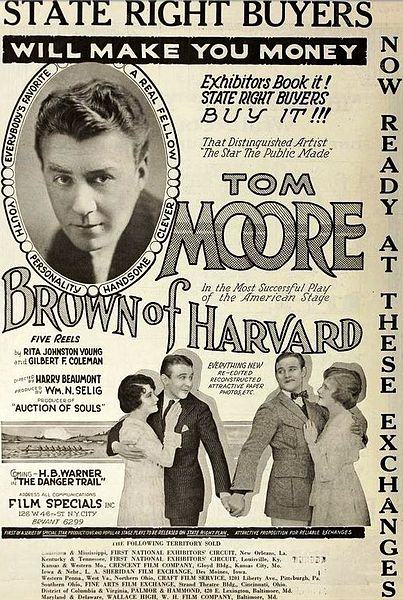
The challenge of silent filmmaking lies in conveying complex emotions and intricate plot points without the aid of dialogue. Brown of Harvard, like many of its contemporaries, masterfully employs a visual lexicon to achieve this. Director Harry Beaumont, along with writers Rida Johnson Young, Gilbert Colman, and Harry Beaumont himself, understood the power of exaggerated gestures, expressive facial contortions, and meticulously crafted intertitles. A raised eyebrow, a clenched fist, a longing gaze – these become the vocabulary of the film. The pacing, too, is critical; scenes often build slowly, allowing the audience to absorb the visual information and anticipate the emotional crescendo. The use of close-ups, though perhaps not as frequent or stylized as in later silent masterpieces, effectively draws attention to the subtle nuances of performance, particularly during moments of internal conflict or romantic yearning.
The cinematography, while perhaps not groundbreaking for its time, serves the narrative with admirable clarity. The campus settings are utilized to evoke a sense of tradition and gravitas, contrasting with the youthful exuberance of the characters. The athletic sequences, particularly the football and rowing scenes, are staged with an energy that manages to convey the thrill of competition, even without the roar of a crowd or the commentator's voice. These moments are crucial, as they not only advance the plot but also symbolize the larger struggles of character development and the pursuit of excellence. The film's ability to maintain engagement through purely visual means is a testament to the skill of its creators and the inherent power of early cinematic language.
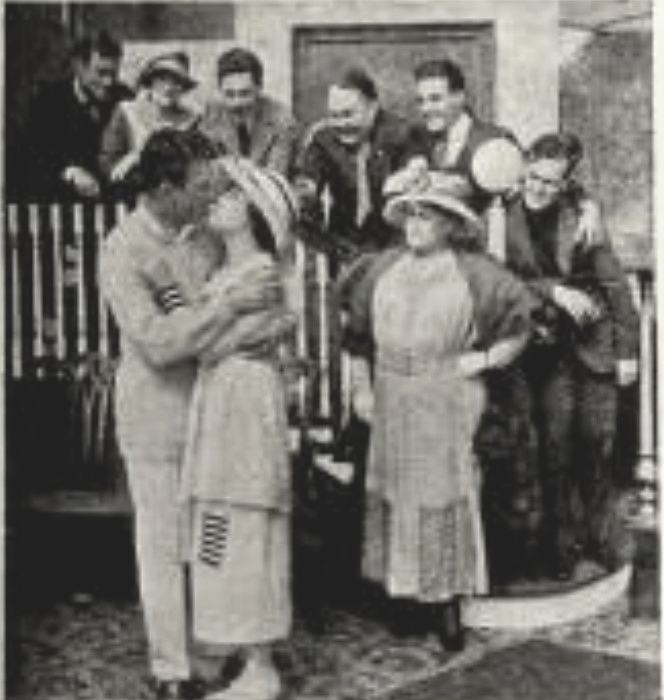
While Kempton Greene, Lyda Dalzell, and Robert Ellis carry the primary narrative weight, the film benefits immensely from a robust supporting cast. Nancy Winston, Alice Gordon, Francis Joyner, Warner Richmond, and Johnnie Walker, among others, contribute to the vibrant tapestry of Harvard life, embodying the various archetypes of collegiate existence. William 'Lone Star' Dietz, a figure notable for his real-life connection to sports as a football coach, likely brought a layer of authenticity to the athletic sequences, even if his on-screen role was secondary. Tom Moore, Sidney Ainsworth, Walter Hiers, Walter McGrail, Hazel Daly, and Arthur Housman round out the ensemble, each adding their distinct flavor to the film's atmosphere. The collective performances, while adhering to the more theatrical style prevalent in silent cinema, ensure that the world of Brown of Harvard feels populated and dynamic, preventing the focus from becoming too narrow on the central trio.
At its heart, Brown of Harvard is a story of personal transformation. Tom Brown's initial arrogance is a facade that must eventually crumble under the weight of experience and the influence of genuine relationships. The rivalry with McAndrew, initially fueled by pride and competitive spirit, gradually evolves into a more profound lesson in sportsmanship and mutual respect. Mary Abbott serves as a moral compass, her discerning nature challenging Brown to rise above his baser impulses and prove himself worthy not just of victory, but of her esteem. This journey from brashness to maturity, from self-centeredness to self-awareness, is a timeless narrative arc that resonates across generations. The film subtly argues that true success in life, much like in collegiate sports, isn't solely about individual triumphs, but about the integrity with which one plays the game and the growth one achieves along the way.
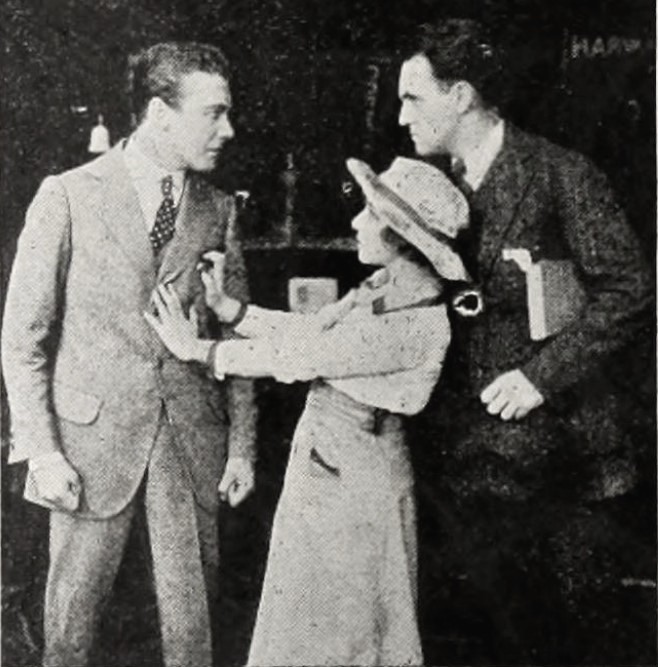
The film also touches upon the broader themes of loyalty and camaraderie, central tenets of the collegiate experience. While the rivalry is intense, the underlying spirit of shared endeavor, particularly in team sports, is ever-present. Brown's eventual integration into the Harvard community, not just as a talented individual but as a valued member, speaks to the power of belonging and the transformative influence of a supportive environment. This narrative emphasis on character development through adversity and integration into a community echoes the moralizing tone often found in early cinema, where films frequently served as lessons in virtue and social conduct.
When considering Brown of Harvard, it's fascinating to place it within the broader context of early 20th-century cinema. While its focus on collegiate life and sports rivalry offers a distinct flavor, the underlying dramatic principles of character conflict and romantic entanglements were pervasive. For instance, films like The Ticket-of-Leave Man (1914), though dealing with crime and redemption, share a similar structural reliance on a protagonist facing moral challenges and societal judgment. The intense emotional stakes, albeit in a different context, can also be found in European dramas such as Il fuoco (la favilla - la vampa - la cenere) (1915), which explores the fiery passions of love and artistic ambition, albeit with a more operatic flair than the American collegiate setting. These comparisons highlight how diverse narratives across different cultural landscapes often drew from a shared pool of dramatic archetypes, adapting them to suit their specific milieus.
The emphasis on personal struggle and the path to rectitude, a cornerstone of Brown of Harvard, finds resonance in other contemporary works. Consider Pennington's Choice (1915), which also grapples with a protagonist's moral crossroads, albeit in a more overtly melodramatic fashion. The journey of self-discovery and the overcoming of one's own flaws are universal themes that transcend genre and geography, making these early cinematic explorations both historically significant and surprisingly relatable. While the specific details of collegiate sports might seem dated, the emotional core of striving for acceptance and proving one's worth remains timeless. Even a film like Patria (1917), though a serial adventure, shares the common thread of a hero facing formidable challenges and striving for a greater good, albeit on a much grander, more overtly patriotic scale.
Revisiting Brown of Harvard today offers more than just a nostalgic trip to the early days of cinema; it provides a valuable window into the cultural preoccupations of the era. The idealization of college life, the emphasis on athletic prowess as a measure of character, and the subtle societal pressures to conform to certain ideals are all palpable. While modern audiences might find the acting conventions a tad exaggerated or the narrative resolutions somewhat simplistic, the film's charm lies in its earnestness and its foundational role in establishing the tropes of the college drama genre. It's a testament to the enduring power of classic storytelling, where universal themes of competition, love, and personal growth are explored through the unique artistic language of the silent screen.
The film’s historical significance also cannot be understated. It showcases the early directorial style of Harry Beaumont, who would go on to direct the first all-talking, all-singing, all-dancing musical, The Broadway Melody (1929). It also captures a moment in time when stories about American higher education were gaining traction in popular culture, reflecting a society grappling with evolving notions of masculinity, intellectualism, and social mobility. For cinephiles and historians alike, Brown of Harvard remains a compelling artifact, a silent whisper from the past that continues to speak volumes about the human condition and the nascent art of cinema. Its contribution to the evolving lexicon of cinematic narrative, particularly within the American context, solidifies its place as more than just a historical curiosity, but as a vibrant piece of foundational storytelling.
In conclusion, Brown of Harvard, with its engaging plot, spirited performances, and earnest exploration of timeless themes, offers a delightful and insightful journey back to the formative years of cinematic art. It’s a film that, despite its age and the silent medium, manages to convey genuine emotion and compelling drama. For anyone interested in the evolution of film genres, particularly the enduring appeal of collegiate narratives, or simply curious about the expressive power of silent cinema, this picture is an essential viewing. It reminds us that long before dialogue graced the silver screen, filmmakers were already mastering the art of telling stories that resonated deeply with the human experience, proving that sometimes, the most profound narratives are those told without a single spoken word.
IMDb 4.7
1917
Community
Log in to comment.