DbcultAccessing Vault...
Cult Review
Senior Film Conservator
Is Rinaldo Rinaldini worth watching today? Short answer: yes, but with significant caveats. This silent-era adventure, a fascinating relic from 1927, serves as an essential historical artifact for cinephiles and those with a deep appreciation for early cinematic storytelling, particularly its theatricality and visual language. However, it's definitively not for viewers accustomed to contemporary narrative pacing or pristine restorations, as its age is a palpable presence.
This film works because it offers a raw, unfiltered look at the birth of the romantic action hero, driven by Hans Albers' undeniable on-screen magnetism. It fails because its narrative meanders, often sacrificing tight plotting for broad strokes of melodrama, which can feel ponderous to modern sensibilities. You should watch it if you are a film historian, a silent film enthusiast, or someone curious about the foundational elements of the adventure genre; avoid it if you seek a fast-paced, high-definition viewing experience or prefer subtlety over overt expression.
Yes, for a very specific audience. Rinaldo Rinaldini is a window into a bygone era of filmmaking. It provides valuable insight into the acting styles, storytelling conventions, and visual aesthetics that defined the silent age. Its charm lies in its earnestness and its pioneering spirit.
However, it demands patience. The narrative unfolds at a deliberate pace, and the expressive acting, while authentic to its time, can sometimes appear exaggerated. Expect a film that requires active engagement and an understanding of its historical context, rather than passive entertainment.
Rinaldo Rinaldini, as a narrative, is less a tightly wound thriller and more a series of romanticized vignettes charting the exploits of its titular hero. The plot, drawn from Christian A. Vulpius's novel, introduces us to a bandit captain who, in true Robin Hood fashion, operates with a moral compass pointed firmly towards justice for the downtrodden. This is not a nuanced character study; it is an archetype, writ large.
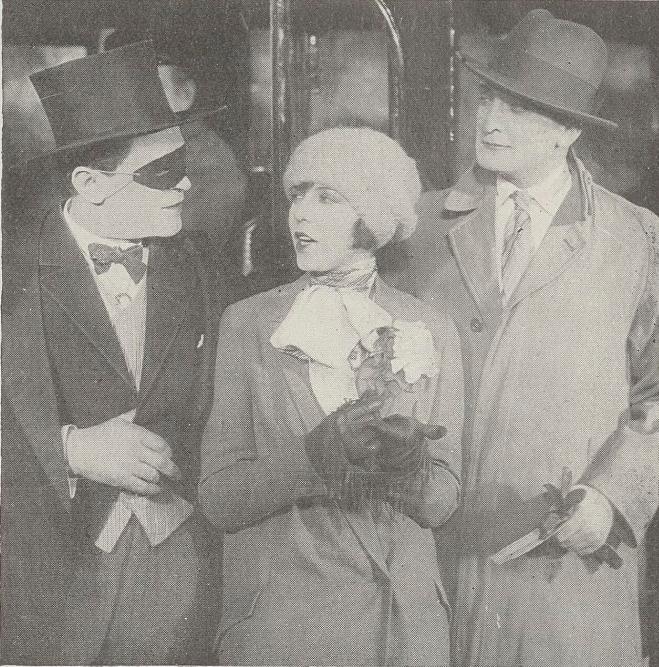
The screenwriters, Paul Rosenhayn, Toni Dathe-Fabri, and Vulpius himself, lean heavily into the melodrama inherent in such a premise. Rinaldini's daring rescues, his clashes with corrupt authorities, and his passionate affairs are presented with an almost operatic grandeur. One particular sequence, involving a dramatic escape from a heavily guarded fortress, highlights the film's reliance on visual spectacle over intricate plotting. The tension isn't built through suspenseful twists, but through the sheer audacity of Rinaldini's actions.
What strikes one immediately is the film's unwavering commitment to its romantic ideal. Every act of banditry is framed as an act of liberation, every stolen kiss a testament to an untamed spirit. It’s a simple, powerful message, albeit one that glosses over the grittier realities of outlaw life. The story rarely deviates from celebrating its hero, which, while entertaining, can make the narrative feel somewhat predictable. The stakes, despite the constant danger, often feel less about Rinaldini's survival and more about the preservation of his legend.
The reliance on established tropes is both a strength and a weakness. For audiences of the era, the "Italian Robin Hood" motif would have been instantly recognizable and comforting. For contemporary viewers, it can sometimes feel like a paint-by-numbers approach to heroism. Yet, there’s an undeniable charm in witnessing these foundational narrative structures in their infancy, before decades of deconstruction and reinterpretation.
"The film doesn't reinvent the wheel. It simply spins it with a certain antiquated charm, reminding us where many of our modern heroic narratives began."
The pacing, a common characteristic of silent films, is deliberate. Scenes are often held for longer, allowing the audience to absorb the visual information and the actors' expressions.
IMDb 5.7
1927
Community
Log in to comment.