DbcultAccessing Vault...
Cult Review
Senior Film Conservator
The flickering shadows of the silver screen, even in its nascent stages, frequently illuminated the most intricate corners of the human psyche. Buchanan's Wife, a compelling drama of its time, plunges headfirst into a maelstrom of manipulation, illicit desire, and the audacious gambles taken in the name of liberation. Adrian Johnson and Justus Miles Forman, the scribes behind this intricate web, present Beatrix, a woman whose very agency has been stolen, a puppet bound by the sinister strings of Herbert Buchanan’s hypnotic influence. Her predicament is not merely a romantic entanglement; it is a profound exploration of free will's erosion, a chilling testament to how easily one's destiny can be hijacked by another's nefarious intent.
Beatrix (Virginia Pearson) is no ordinary protagonist; her heart beats with an undeniable, fierce loyalty for Harry Faring (Victor Sutherland), yet she finds herself inexorably bound to Herbert Buchanan (Marc McDermott) through a cruel, almost supernatural, act of hypnotic coercion. The film immediately establishes a profound sense of injustice, painting Herbert not just as a rival, but as an oppressor wielding an invisible, psychological weapon. The premise of his initial coercion of Beatrix through a hypnotic trance is not merely a plot device; it’s a profound commentary on power dynamics and the subjugation of individual will. In an era when the mysteries of the human mind were still largely unexplored by mainstream science, such a concept would have been particularly unsettling, tapping into primal fears of losing control over one’s own destiny. This deliberate act of psychological manipulation, far more insidious than physical restraint, establishes Herbert as a truly villainous figure, one who seeks to own not just Beatrix’s body, but her very essence.
Herbert Buchanan, portrayed with a sinister gravitas by Marc McDermott, embodies a possessive malevolence that transcends typical villainy. Upon realizing the true, untamed affections Beatrix harbors for Harry, his response is not confrontation, but a calculated, unsettling disappearance. He vanishes into the ether, taking with him Kansas (Ned Finley), a tramp, in a move that feels less like an escape and more like a deliberate act of psychological torture, leaving Beatrix in a purgatorial state of uncertainty. This act of vanishing, rather than confronting, highlights Herbert’s manipulative nature, his desire to control the narrative even in his absence. It’s a ghosting, but one with far more sinister implications than a mere breakup, leaving Beatrix in a limbo of both marital and emotional status.
It is in this crucible of emotional torment that Beatrix makes her most audacious, and ultimately fateful, decision. Driven by a desperate yearning for a life unburdened by Herbert’s spectral presence, she commits an act of shocking deception: falsely identifying a cadaver at the morgue as her missing husband. This pivotal moment, a stark, morally ambiguous choice, propels the narrative into uncharted territory. Her subsequent marriage to Harry is not merely a union of love, but a desperate grasp at normalcy, a fragile edifice built upon a foundation of deceit. This audacious move, reminiscent of the morally fraught decisions explored in films like The Price She Paid or the darker implications of Syndens datter, forces the audience to grapple with the ethics of survival and happiness at any cost. This act of deliberate fabrication, while offering temporary respite, plants the seeds of inevitable future turmoil, a ticking time bomb beneath her newfound domestic tranquility. The film brilliantly uses this central deception as its narrative engine, exploring the corrosive effects of secrets on relationships and the profound anxiety of waiting for the truth to be unearthed.
Just as Beatrix and Harry begin to construct their fragile haven of marital bliss, fate, with its characteristic cruelty, intervenes. Herbert, far from dead, reappears on their doorstep, a spectral figure returned from the abyss, now ravaged by illness and a profound mental deterioration. His reappearance, accompanied by the enigmatic Kansas, is a seismic event, shattering the illusion Beatrix had so meticulously crafted. The film excels here in its portrayal of psychological horror, as Beatrix’s carefully constructed world implodes, forcing her to confront the full, devastating weight of her lie. Virginia Pearson's performance in these moments must have been a masterclass in silent anguish, conveying the visceral terror of a past that refuses to stay buried. The reappearance of Herbert Buchanan is handled with a masterful sense of dramatic irony and suspense. He is not merely a character returning, but a living embodiment of Beatrix’s past sins, a spectral figure that materializes to haunt her present. His physical and mental deterioration — a man diminished by illness and dementia — adds a layer of tragic pathos to his character, transforming him from a pure villain into a more complex, pitiable figure. This transformation complicates Beatrix's feelings, adding guilt to her fear. The film deftly avoids a simplistic good-versus-evil confrontation, instead delving into the messiness of human relationships where victims and perpetrators can both become objects of pity.
Kansas, initially a peripheral figure, transforms into a tangible threat, seizing upon Beatrix’s vulnerability. Her intentions are clear: blackmail. This mercenary turn adds another layer of tension, escalating the stakes beyond mere romantic entanglement into a struggle for reputation and freedom. The narrative doesn't shy away from exploring the opportunistic underbelly of human nature, a theme that echoes in the machinations of characters found in films like The Market of Vain Desire. However, Harry Faring, ever the steadfast counterpoint to Herbert's manipulation, emerges as a figure of quiet strength. His visit to the two tramps, a confrontation born of necessity, inadvertently disrupts Kansas's nefarious plans, showcasing the power of direct, honest engagement against insidious schemes. Ned Finley's portrayal of Kansas, while perhaps brief, is pivotal. Kansas is not just a sidekick but a catalyst, a mirror reflecting the moral greyness of the world Beatrix inhabits. Her initial willingness to aid Herbert in his disappearance, and later her calculated move to blackmail Beatrix, firmly establish her as a character operating on the fringes of morality.
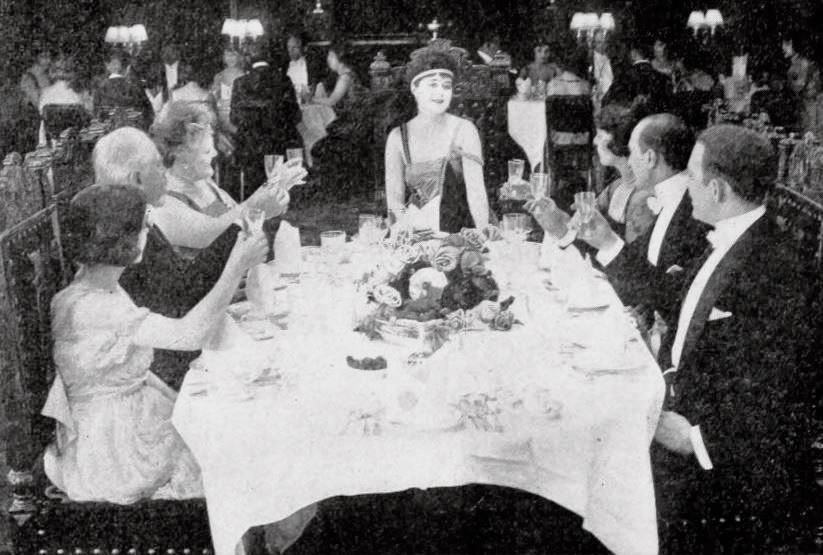
Yet, the film offers a subtle redemption arc for Kansas, however minor. Herbert's dying plea, an anemic but sincere appeal to common decency and the desire for peace for the couple, surprisingly moves Kansas. This moment, where a tramp, driven by self-interest, chooses compassion over profit, injects a ray of unexpected humanity into the narrative. It suggests that even in the most hardened hearts, a flicker of empathy can be ignited, offering a glimmer of hope for redemption in a world riddled with deceit. This nuanced portrayal of secondary characters is a hallmark of strong storytelling, enriching the main narrative with additional layers of ethical consideration.
The film's denouement pivots on a poignant, almost redemptive, moment from Herbert. Stricken with tuberculosis and nearing his end, his dementia offers fleeting glimpses of his former self, culminating in a desperate plea to Kansas: leave Beatrix and Harry in peace. This act, a final, unexpected glimmer of humanity from a character previously defined by control and cruelty, is deeply affecting. It's a powerful narrative choice, suggesting that even the most morally compromised individuals can, in their dying moments, desire the happiness of those they've wronged. Kansas, faced with the stark reality of Herbert's mortality and perhaps a flicker of empathy, reluctantly agrees. Herbert’s death, though tragic, is simultaneously a liberation, a cleansing of the past that allows Beatrix and Harry to finally, genuinely, begin anew, much like the somber yet hopeful conclusions found in films exploring fatal choices, such as En Død i Skønhed.
Virginia Pearson, as Beatrix, must have carried the film's immense emotional weight, navigating the treacherous landscape of love, deceit, and existential dread with a nuanced expressiveness crucial for silent cinema. Her eyes, her gestures, would have conveyed the unspeakable torment of a woman trapped between two lives, two loves, and the crushing burden of a monstrous secret. Marc McDermott’s Herbert, on the other hand, is a study in quiet menace, his power emanating not from overt aggression but from a chilling psychological grip, a control so subtle it feels almost supernatural. Victor Sutherland’s Harry provides the moral compass, a beacon of unwavering devotion, his steadfastness a stark contrast to the chaos swirling around Beatrix. Even Ned Finley’s Kansas, despite limited screen time, makes a memorable impact as the opportunistic, yet ultimately swayed, accomplice. The ensemble cast, under the direction of an uncredited but clearly capable hand, brings a visceral authenticity to this melodramatic saga, elevating it beyond mere sensationalism.
Beyond its immediate plot, Buchanan's Wife delves into profound philosophical questions. What constitutes free will when one is under hypnotic sway? What are the true costs of deception, even when born of desperation? The film explores the intricate dance between fate and choice, suggesting that while external forces can shape our paths, our internal moral compass ultimately dictates our destination. The pervasive theme of a past refusing to die, constantly threatening to unravel the present, resonates with a timeless anxiety. It’s a narrative that, for all its early cinematic trappings, speaks to universal human experiences of regret, longing, and the enduring quest for peace. The film's audacious plot, with its twists and turns, perhaps even prefigures the complex psychological thrillers that would dominate later decades, showcasing a remarkable foresight in its storytelling, akin to the intricate deceptions found in The Great Secret or the moral struggles inherent in The Devil's Daughter.
While specific directorial credits are often sparse for films of this vintage, the execution of Buchanan's Wife demonstrates a sophisticated understanding of visual storytelling. The use of close-ups to capture Beatrix’s emotional turmoil, the deliberate pacing that builds suspense, and the framing of key confrontations all contribute to a compelling viewer experience. The narrative progression, from the initial hypnotic manipulation to the dramatic resurfacing of the 'dead' husband, is meticulously structured, ensuring that each revelation lands with maximum impact. The writers, Adrian Johnson and Justus Miles Forman, deserve commendation for crafting a story that, even a century later, retains its capacity to shock and provoke thought. Their ability to weave together elements of romance, psychological drama, and moral ambiguity into a cohesive and engaging narrative is a testament to their storytelling prowess.
At its core, Buchanan's Wife is a profound exploration of the enduring power of love and forgiveness. Harry Faring, throughout the ordeal, remains Beatrix's anchor, his unwavering devotion a stark contrast to the shifting sands of her moral landscape. His capacity to understand and forgive Beatrix’s desperate deception, once revealed, is what ultimately allows for their path to a 'normal life.' It’s a testament to a love that transcends societal judgments and individual failings, suggesting that true connection can withstand even the most shattering revelations. The film posits that genuine love isn't about perfection but about acceptance, resilience, and the shared commitment to rebuilding amidst the ruins of past mistakes. This message, delivered through the stark, emotive medium of silent film, would have resonated deeply with audiences, offering a poignant reminder of hope and second chances, much like the profound moral choices depicted in Satan's Private Door or the natural consequences explored in The Law of Nature.
Ultimately, Buchanan's Wife stands as a compelling testament to the power of early cinema to explore complex human emotions and moral quandaries. It's a film that challenges its audience to empathize with a protagonist whose choices are deeply flawed yet undeniably human, driven by a primal desire for autonomy and love. The intricate dance of deceit, the specter of a past refusing to recede, and the eventual, hard-won peace make for a narrative that lingers long after the final fade to black. For aficionados of silent cinema and those curious about the roots of psychological drama, this film offers a rich, rewarding, and surprisingly modern viewing experience. It reminds us that the fundamental struggles of the human heart are timeless, transcending the technological limitations of any era, and continuing to captivate us with their raw, unfiltered truth.
IMDb —
1925
Community
Log in to comment.