DbcultAccessing Vault...
Cult Review
Senior Film Conservator
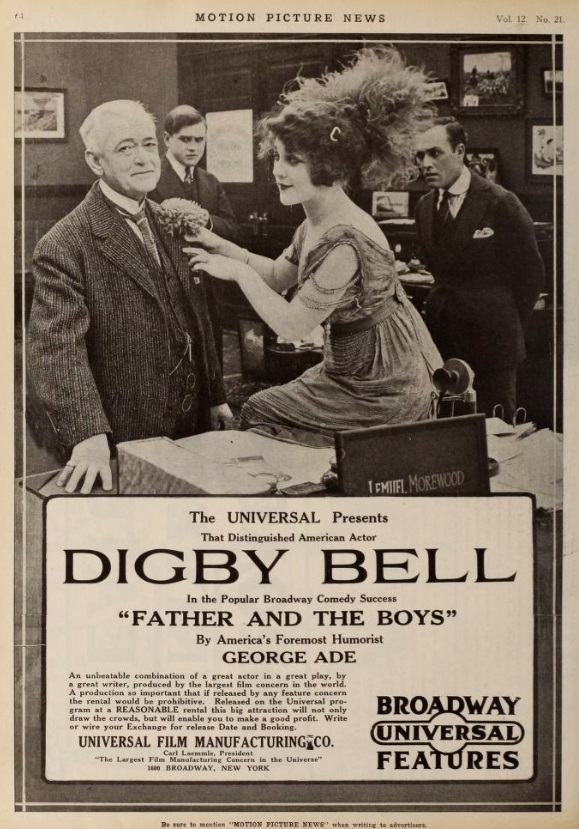
The year 1915 remains a watershed moment in the evolution of visual grammar, yet many of its treasures remain obscured by the dust of archival neglect. Father and the Boys, directed by the visionary Ida May Park and adapted from the George Ade play, stands as a fascinating artifact that challenges the monolithic perception of silent-era melodrama. While contemporary audiences might reflexively associate the name Lon Chaney with the grotesque and the macabre, this early outing showcases a nuanced, comedic versatility that prefigures his later status as a titan of the screen. The film is not merely a domestic farce; it is a trenchant critique of the American class divide and the existential malaise inherent in the pursuit of the 'Almighty Dollar.'
At the heart of this narrative tapestry lies Lemuel Morewood, portrayed with a weary dignity by Digby Bell. Morewood is a man who has conquered the boardroom but lost the hearth. His sons, Billy and Tom, represent two distinct yet equally vapid archetypes of the early 20th-century American youth. Billy is enamored with the parasitic 'smart set,' a group defined by their performative sophistication and lack of substance. Tom, conversely, is a slave to the physical, an amateur athlete whose world begins and ends at the stadium gates. Their collective disregard for their father’s labor is not merely a personal slight; it is a systemic failure of the generational contract. The film handles this with a light touch, but the underlying pathos is palpable.
Unlike the heavy-handed moralizing found in The Broken Promise, Park’s direction allows the humor to emerge organically from the character's frustrations. Morewood’s desire to see his sons married to Frances Berkeley and Emily Donelson is a classic trope of the era, yet the film subverts this by making the sons' resistance a symptom of their overall detachment from their father's reality. This isn't just a romantic comedy; it is a battle for the soul of a family.
The introduction of Bessie Brayton, played with an effervescent charm by Louise Lovely, serves as the narrative’s kinetic engine. Bessie is a 'Western orphan,' a character type that traditionally serves as a repository for 'authentic' American values in contrast to the perceived decadence of the East Coast. Her ownership of a half-interest in the Bluebird mine is the MacGuffin that propels the story from the claustrophobic parlors of New York to the expansive vistas of Nevada. When she taunts Lemuel for being 'old-fashioned,' she isn't just insulting his wardrobe; she is challenging his very identity. This provocation leads to one of the film's most delightful sequences: Morewood’s transformation into a 'plunger' at the gambling table.
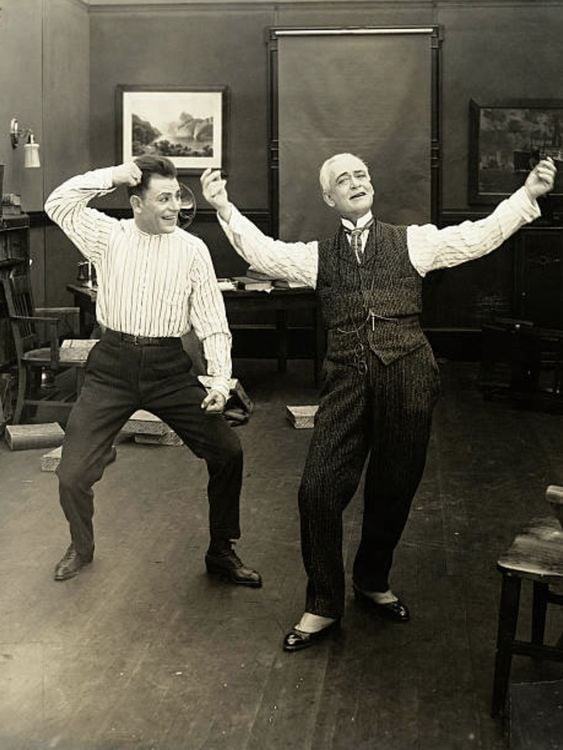
This sequence is a masterclass in silent storytelling. We see the rigid industrialist shed his skin, embracing a riotous profligacy that scandalizes the very people his sons so desperately want to impress. It is a delicious irony—the father must become 'bad' to prove he is still 'alive.' The performance of Lon Chaney as Chuckie Holbrook (though his role here is more supporting than his later lead turns) adds a layer of depth to the supporting cast, showcasing the ensemble's ability to navigate the tonal shifts between comedy and high-stakes drama.
The transition to Nevada marks a shift in the film’s visual palette. The open landscapes provide a stark contrast to the stifling interiors of the first act. It is here that the film’s various subplots—the mine, the swindling Major Didsworth, and the tangled romantic interests—converge. The sons follow their father, convinced he is on a path to matrimonial ruin with Bessie. Their concern, however, is revealed to be as superficial as their prior indifference; they are more worried about the family reputation than their father's happiness. This echoes some of the familial tensions explored in The Hoosier Schoolmaster, though with a decidedly more urban sensibility.
The revelation that Bessie’s mine is actually worth $75,000 and the discovery of her long-lost sweetheart, Carl Higbee, provides a satisfying, if somewhat convenient, resolution to the plot. However, the true climax is not the financial windfall, but the emotional realignment of the Morewood men. The sons end up with the girls their father wanted for them, albeit with a 'partner swap' that highlights the arbitrary nature of social expectations. The film concludes with a restoration of order, but it is an order earned through chaos. Lemuel’s return to the business, now with the support of his sons, signifies a synthesis of the old and the new.
Ida May Park’s direction deserves significant scholarly attention. In an era where female directors were more common than in the mid-century studio system, Park stood out for her ability to balance complex character motivations with commercial appeal. Her framing of the dinner party scene, where Lemuel feels like an alien in his own home, utilizes deep space to emphasize his isolation. This is far more sophisticated than the static staging found in many contemporary productions, such as A Melbourne Mystery.
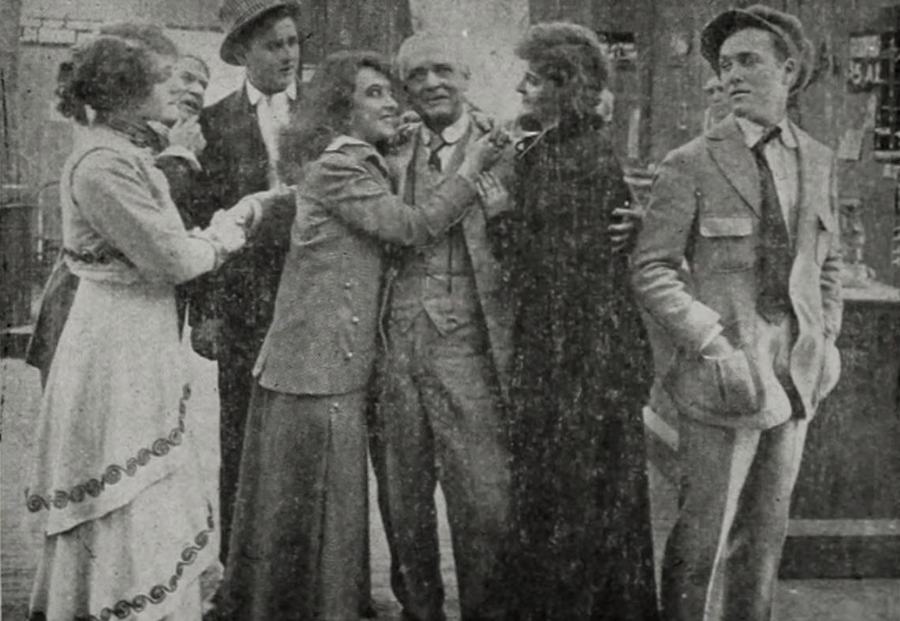
Furthermore, the film’s use of intertitles is remarkably restrained. Park allows the actors' physicality to carry the narrative weight, a technique that would become the hallmark of the silent era's peak. The contrast between the 'smart set's' stiff, affected movements and Bessie's fluid, uninhibited presence is a visual shorthand for the film's central conflict. It reminds one of the psychological depth found in Sapho, yet it maintains a levity that prevents it from descending into pure melodrama.
While Lon Chaney is often celebrated for his transformative makeup in films like The Isle of the Dead, his work in Father and the Boys reveals the foundation of his greatness: his eyes and his timing. Even in a less transformative role, Chaney commands the screen with a magnetic presence. He understands the rhythm of the scene, providing a perfect foil to the more established theatrical style of Digby Bell. Seeing Chaney in this light is essential for any cinephile wishing to understand the full trajectory of his career. He wasn't just a 'monster' actor; he was a consummate professional capable of elevating any material.
Does Father and the Boys hold up for the modern viewer? Absolutely. While the pacing reflects the sensibilities of 1915, the core conflict—the struggle to be seen and valued by one's family—is universal. The film avoids the nihilism of Prestuplenie i nakazanie, opting instead for a hopeful reconciliation that feels earned rather than forced. It is a testament to the power of early cinema to tackle complex social issues through the lens of entertainment.
In the pantheon of silent films, it may not have the avant-garde reputation of Fantômas: The False Magistrate, but it possesses a humanistic warmth that is often missing from more 'important' works. It is a film about the joy of reinvention and the importance of breaking the molds that society—and our children—cast for us. For those seeking a deeper understanding of the silent era's capacity for wit and social commentary, Father and the Boys is an essential viewing experience. It reminds us that even a century ago, the 'generation gap' was a chasm that could only be bridged by a little bit of madness and a whole lot of heart.
Final Verdict: A sparkling example of early American comedy-drama that proves Lon Chaney was a master of his craft long before he became a phantom.
IMDb 6.3
1929
Community
Log in to comment.