DbcultAccessing Vault...
5.6/10
Senior Film Conservator
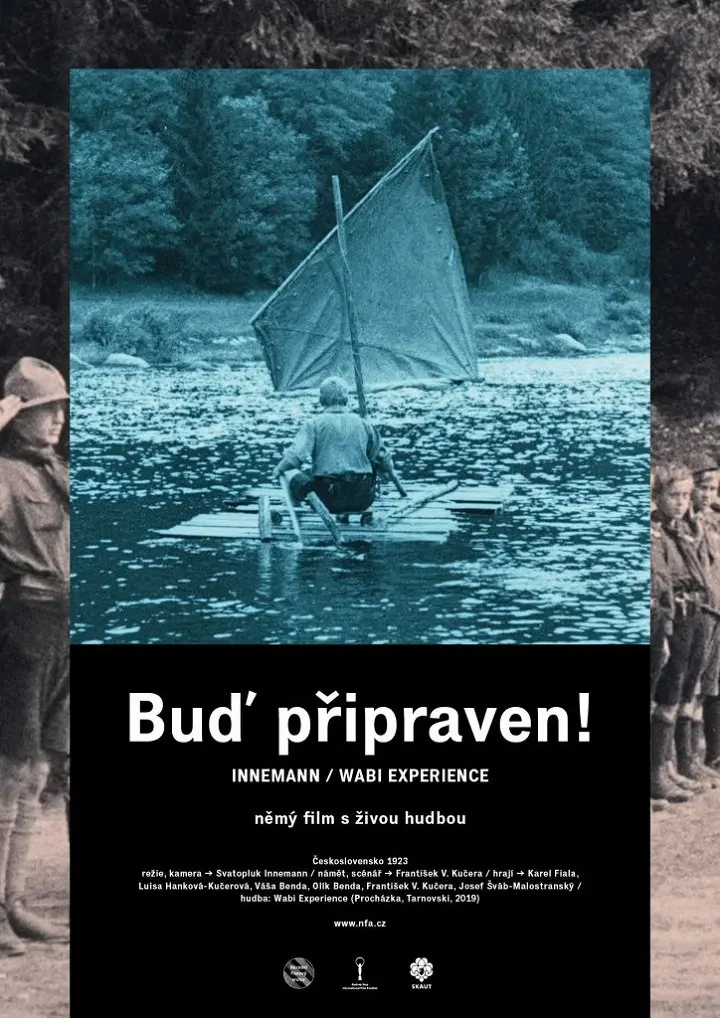
A definitive 5.6/10 rating for a film that redefined the boundaries of cult cinema. Bud pripraven remains a cornerstone of transgressive art.
Stepping back into the nascent days of cinematic storytelling, Frantisek V. Kucera's Bud pripraven (Be Prepared) emerges not merely as a historical artifact, but as a vibrant testament to the enduring power of narrative. This Czech silent film, a spirited chronicle of youthful adventure and burgeoning responsibility, offers a fascinating window into early 20th-century sensibilities, particularly the burgeoning scout movement and its ideals. It's a film that, despite its age, retains a remarkable freshness, a palpable sense of innocence and earnestness that transcends the limitations of its medium.
At its core, Bud pripraven is an ode to the transformative power of nature and the formative experiences of adolescence. The narrative unfolds with a delightful simplicity, following a troop of Prague Boy Scouts as they retreat from the city's hustle to a summer camp nestled in the serene countryside, shadowed by a grand, ancient castle. This setting itself is a character, a silent observer to the boys' escapades, their lessons in woodcraft, and their burgeoning camaraderie. The film meticulously captures the essence of scouting – the meticulous tent pitching, the campfire stories, the exploration of untamed landscapes – portraying an idyllic vision of youth untainted by modern complexities.
Kucera, both as writer and director, masterfully injects a compelling human element into this pastoral tableau. The narrative pivots when the daughter of the estate's owner, portrayed with delicate grace by Luisa Hanková-Kucerová, suffers an injury. This incident serves as a crucial catalyst, shifting the boys from carefree adventurers to compassionate caregivers. Their scout training, initially focused on self-sufficiency and outdoor survival, finds a new, profound application in nurturing another's well-being. This segment of the film is particularly poignant, showcasing the scouts' transition from playful innocence to a more mature understanding of empathy and responsibility. It's a subtle yet powerful commentary on the scout motto itself – 'Be Prepared' – extending its meaning beyond mere practical skills to encompass moral fortitude and civic duty.
The ensemble cast, largely comprised of young actors like Otík Benda and Vása Benda, alongside seasoned performers such as Rudolf Stahl and Josef Sváb-Malostranský, brings an authentic energy to the screen. Their silent performances, relying heavily on expressive gestures and facial nuances, are remarkably effective in conveying a range of emotions, from boisterous joy to quiet concern. The interaction between the scouts and Luisa Hanková-Kucerová's character is particularly well-handled, evolving from initial awkwardness to a genuine bond of care. This dynamic underscores one of the film's central tenets: that true strength lies not just in physical prowess, but in the capacity for kindness and collective support.
Frantisek V. Kucera's direction is characterized by a keen eye for natural beauty and an intuitive understanding of visual storytelling. The cinematography, while perhaps technically rudimentary by today's standards, possesses a raw, unvarnished charm. Wide shots capture the grandeur of the Czech landscape – rolling hills, dense forests, and the imposing castle – immersing the viewer in the scouts' environment. Close-ups are employed sparingly but effectively, highlighting moments of emotional significance, such as a scout's determined gaze or the subtle pain etched on the injured girl's face. The film's pacing is deliberate, allowing scenes to breathe and emotions to resonate, a common trait of silent cinema that here feels particularly organic to the story's unhurried summer setting.
The use of intertitles is judicious, providing necessary exposition without overwhelming the visual narrative. This balance ensures that the film remains accessible and engaging, even for modern audiences accustomed to faster cuts and spoken dialogue. Kucera's ability to convey complex themes and emotional arcs through purely visual means is a testament to his directorial prowess. He understands that silence can amplify meaning, allowing the viewer's imagination to fill in the unspoken, creating a more personal and immersive experience. In this regard, Bud pripraven stands alongside other early cinematic works that masterfully leveraged the unique strengths of the silent era, demonstrating that a compelling story needs no audible voice to be heard.
As summer draws to a close, the film culminates in a spectacular sequence: the scouts' journey home via rafts along exhilarating river rapids. This segment is a triumph of early action filmmaking, showcasing genuine daring and a palpable sense of adventure. The rapids, with their churning waters and precarious rocks, become a final test for the boys, a thrilling metaphor for the challenges life inevitably presents. Their teamwork and resilience, honed during their time at camp and through their care for the injured girl, are put to the ultimate test. The visual spectacle of the rafts navigating the turbulent waters is genuinely impressive, a testament to the filmmakers' ingenuity and courage in an era before advanced special effects.
This climactic return is not merely an exciting set piece; it serves as a powerful symbolic transition. The serene, controlled environment of the camp gives way to the wild, unpredictable forces of nature, mirroring the scouts' own journey from childhood innocence to a more experienced, capable state. The river itself becomes a conduit for their growth, washing away the last vestiges of naivety and affirming their readiness to face the future. It’s a beautifully shot and edited sequence that provides a satisfying emotional and narrative conclusion to their summer odyssey.
While Bud pripraven stands as a unique product of Czech cinema, its themes resonate with broader cinematic trends of the period. One might draw parallels, for instance, with films that explored youthful awakening and the challenges of growing up, albeit with different cultural backdrops. Though not a direct contemporary in terms of genre, the raw energy and earnest portrayal of youth in The Foolish Age comes to mind, a film that similarly captured the spirit of a generation grappling with transition. Both films, in their own ways, are deeply invested in the internal and external journeys of young protagonists, though Bud pripraven anchors its coming-of-age narrative more firmly within the structured framework of the scouting movement.
Another interesting comparison could be made with adventure narratives of the era, such as those that depicted daring feats and struggles against the elements. Films like Sunlight's Last Raid, while perhaps more overtly focused on grand-scale heroics, share Bud pripraven's enthusiasm for showcasing human resilience in the face of natural obstacles. The river rapids sequence, in particular, evokes a similar sense of peril and triumph. However, Bud pripraven distinguishes itself by intertwining these adventure elements with a strong moral and educational message, elevating it beyond mere spectacle. It's a film that actively seeks to inspire and instruct, rather than simply entertain, a characteristic that sets it apart from many of its more purely dramatic or comedic contemporaries.
Furthermore, the film's depiction of communal living and mutual support might find echoes in works like Lao gong zhi ai qing, which, despite its vastly different cultural context and narrative focus on a family unit, also subtly explores the dynamics of collective responsibility and the bonds that tie individuals together. While the Chinese film centers on marital love and domestic life, the underlying theme of shared burdens and concerted effort to overcome adversity is a thread that connects these seemingly disparate works. Bud pripraven, through its focus on the scout troop, celebrates a similar spirit of cooperation, albeit on a broader, more communal scale, emphasizing the strength derived from unity and shared purpose.
The film's exploration of moral dilemmas and the consequences of actions, albeit in a gentle, guiding manner, also brings to mind the underlying ethical fabric often found in early cinema. While not as overtly dramatic as, say, The Evil Eye with its supernatural undertones, Bud pripraven subtly reinforces the importance of integrity and selflessness. It demonstrates how seemingly small acts of kindness and responsibility can have significant impacts, shaping character and fostering a sense of civic duty. This didactic aspect, common in films intended for a broad audience in the early 20th century, is handled with a light touch, never feeling preachy, but rather organically woven into the fabric of the scouts' adventures.
Finally, the film's historical significance within Czech cinema cannot be overstated. It represents an important early example of national filmmaking, capturing a specific cultural movement and landscape. In an era when European cinema was still finding its distinct voice amidst the dominance of Hollywood, films like Bud pripraven were crucial in establishing unique national identities on screen. Unlike more dramatic historical epics such as Sixty Years a Queen, which focused on grand historical figures, Bud pripraven finds its grandeur in the everyday heroism and moral development of ordinary youth, making it a more relatable and perhaps more enduring cultural touchstone for its native audience.
Today, Bud pripraven serves as more than just a historical curiosity. It’s a charming, heartfelt narrative that continues to resonate, particularly for those interested in the history of scouting, early cinema, or simply a timeless story of youth and adventure. The film's message of preparedness, responsibility, and the profound impact of experiences in nature remains as relevant as ever. It reminds us of the value of collective effort, the joy of discovery, and the quiet dignity found in caring for others. The performances, especially by the young cast, are genuinely affecting, imbuing their characters with an authenticity that defies the passage of time.
The film's visual aesthetics, despite their vintage, possess an undeniable allure. The natural landscapes are captured with an almost painterly quality, inviting viewers to lose themselves in the simplicity and beauty of the Czech countryside. Kucera's direction, while perhaps less overtly stylized than some of his contemporaries, is remarkably effective in conveying emotion and narrative progression through purely visual means. The lack of dialogue forces a deeper engagement with the imagery and the subtle cues of the actors, fostering a more introspective viewing experience.
In conclusion, Bud pripraven is a delightful and significant piece of cinematic history. It's a film that speaks to the universal themes of growth, community, and the spirit of adventure, all wrapped in the earnest charm of the silent era. For anyone seeking to explore the rich tapestry of early European cinema, or simply to enjoy a wholesome, inspiring story, Bud pripraven is an essential viewing. It stands as a powerful reminder that even without spoken words, a film can tell a story that echoes across generations, touching hearts and minds with its timeless message. Its rediscovery is a gift, allowing new audiences to appreciate its understated brilliance and enduring cultural relevance.
IMDb 7.3
1928
Community
Log in to comment.