DbcultAccessing Vault...
5.4/10
Senior Film Conservator
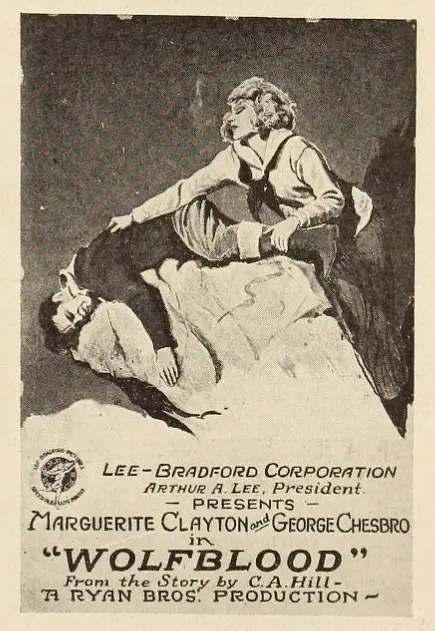
A definitive 5.4/10 rating for a film that redefined the boundaries of cult cinema. Wolfblood remains a cornerstone of transgressive art.
Stepping into the shadowy world of Wolfblood (1925) is akin to unearthing a forgotten relic, a cinematic artifact that, despite its age, still pulsates with a raw, unsettling energy. This isn't your typical creature feature; it's a profound exploration of the human psyche pushed to its absolute breaking point, long before the tropes of lycanthropy became commonplace. What Cliff Hill and Bennett Cohen, the visionary writers, crafted here is a narrative that deftly sidesteps overt supernaturalism in favor of a far more insidious horror: the terror of the mind turning against itself.
The premise itself is a stroke of genius in its simplicity and chilling implication. Our protagonist, Dr. Eugene Horton, portrayed with a compelling blend of intellectualism and burgeoning madness by Roy Watson, finds himself in a desperate situation. Following a brutal assault that leaves him teetering on the precipice of death, a radical, almost unthinkable medical intervention is proposed: a blood transfusion from a wolf. In an era when medical science was still grappling with its nascent understanding of blood types and transfusions, this concept alone would have been enough to send shivers down contemporary spines. It's a testament to the film's enduring power that even today, the ethical and psychological ramifications of such an act resonate deeply.
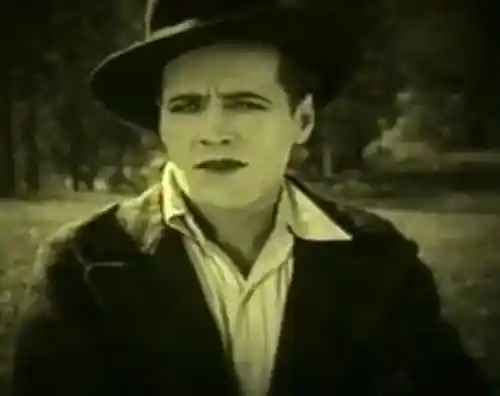
What follows is not a straightforward transformation into a snarling beast, but a much more nuanced and disturbing descent into delusion. Dr. Horton doesn't sprout fur or fangs; instead, his mind, already traumatized by the attack, begins to warp under the crushing weight of the 'wolfblood' flowing through him. The film masterfully exploits the power of suggestion, planting seeds of doubt and fear that blossom into full-blown paranoia. Watson's performance is central to this, his eyes conveying a mounting unease, a flicker of the wild animal he believes he is becoming. It’s a performance that, while silent, speaks volumes about the internal torment of a man battling his own perceived monstrous nature.
The film's strength lies in its ambiguity. Is Dr. Horton truly undergoing a physiological shift, or is he merely succumbing to a profound psychological breakdown, convinced by the extraordinary circumstances of his survival that he has absorbed the essence of a predator? The narrative leans heavily on the latter, making it a pioneering work in psychological horror. It explores the terrifying notion that our greatest fears are often conjured from within, amplified by external events and our own interpretations. This internal conflict is what elevates Wolfblood beyond a mere horror flick and into the realm of profound character study. In this respect, it touches upon similar anxieties about the fragile human mind seen in films like Eyes of Youth, where moral choices profoundly impact one's inner landscape, albeit through a different lens.
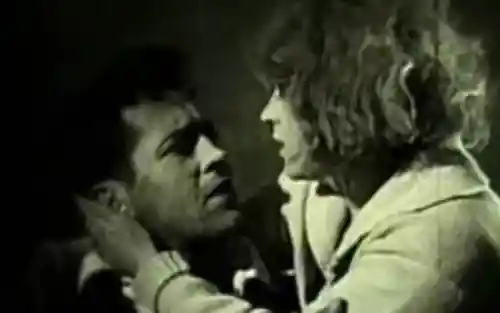
The supporting cast, though perhaps less central to the film's core psychological drama, contributes significantly to the atmosphere. Marguerite Clayton, as the concerned love interest or confidante, provides a grounding presence, her expressions conveying alarm and heartbreak as she witnesses Horton's deterioration. Her role is crucial in highlighting the human cost of his perceived transformation, reflecting the fear and confusion of those around him. Frank Clark, Jack Cosgrave, Ray Hanford, George Chesebro, and Milburn Morante fill out the ensemble, each contributing to the tapestry of a community grappling with the inexplicable, their reactions serving as a mirror to the audience's own unease.
Cinematically, Wolfblood employs the visual language of silent cinema to great effect. The use of shadows, close-ups on Watson's tormented face, and evocative shots of the wilderness all contribute to the film's pervasive sense of dread. The nocturnal wanderings of Dr. Horton, often depicted against stark, moonlit landscapes, visually underscore his perceived primal regression. The absence of dialogue forces a greater reliance on visual storytelling and the expressive power of the actors, a challenge that the cast and crew meet with remarkable skill. The pacing, characteristic of films from this era, allows for a slow burn, building tension incrementally rather than relying on jump scares, a technique that proves far more effective in fostering a deep-seated sense of psychological horror.
One cannot discuss Wolfblood without acknowledging its place within the broader context of early cinema. It emerged at a time when cinema was still experimenting with its narrative capabilities, pushing boundaries and defining genres. While not as widely remembered as some of its more celebrated contemporaries, it stands as an important precursor to later psychological thrillers and horror films that delved into the complexities of human identity and madness. It’s a film that asks profound questions about what it means to be human, and how easily that humanity can be stripped away, either by external forces or internal conviction.
The writers, Cliff Hill and Bennett Cohen, deserve immense credit for crafting a story that is both terrifying and thought-provoking. Their refusal to provide easy answers, instead opting for a more ambiguous and psychologically complex narrative, is what gives Wolfblood its lasting resonance. They understood that the most frightening monsters are often those we create in our own minds. This nuanced approach to horror sets it apart from more straightforward thrillers of its time, such as The West~Bound Limited which focused more on external dangers and action, or even the dramatic moral dilemmas found in The Danger Line, where the threats were more tangible societal pressures.
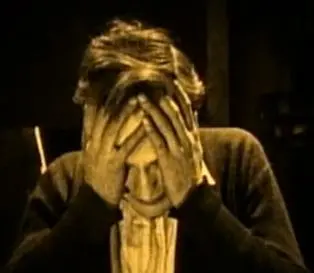
The film’s portrayal of Dr. Horton’s transformation, or rather, his perceived transformation, is a potent metaphor for societal fears surrounding the 'beast within' – the untamed, primal urges that society attempts to suppress. His increasing isolation and withdrawal into the wilderness are not just plot points; they are symbolic of his alienation from the civilized world, a world that cannot comprehend or accept his unique affliction. This theme of societal alienation due to an internal struggle can be subtly observed in other period dramas, even if their subject matter is vastly different, such as the social ostracism faced in Naked Hearts or the personal battles against convention in Real Adventure.
The psychological depth of Wolfblood is truly remarkable for its time. It doesn't rely on cheap scares or grotesque visuals, but rather on the slow, agonizing unraveling of a man's sanity. Roy Watson's performance, particularly in the film's latter half, is a masterclass in silent acting, conveying a spectrum of emotions from confusion and fear to a chilling, almost predatory intensity. The subtle shifts in his posture, the widening of his eyes, the almost imperceptible tensing of his jaw – these are the tools he uses to paint a portrait of a man consumed by his own terrifying self-diagnosis. It’s a performance that stands shoulder-to-shoulder with other compelling portrayals of mental anguish from the era, resonating with the internal turmoil depicted in films like The Third Generation.
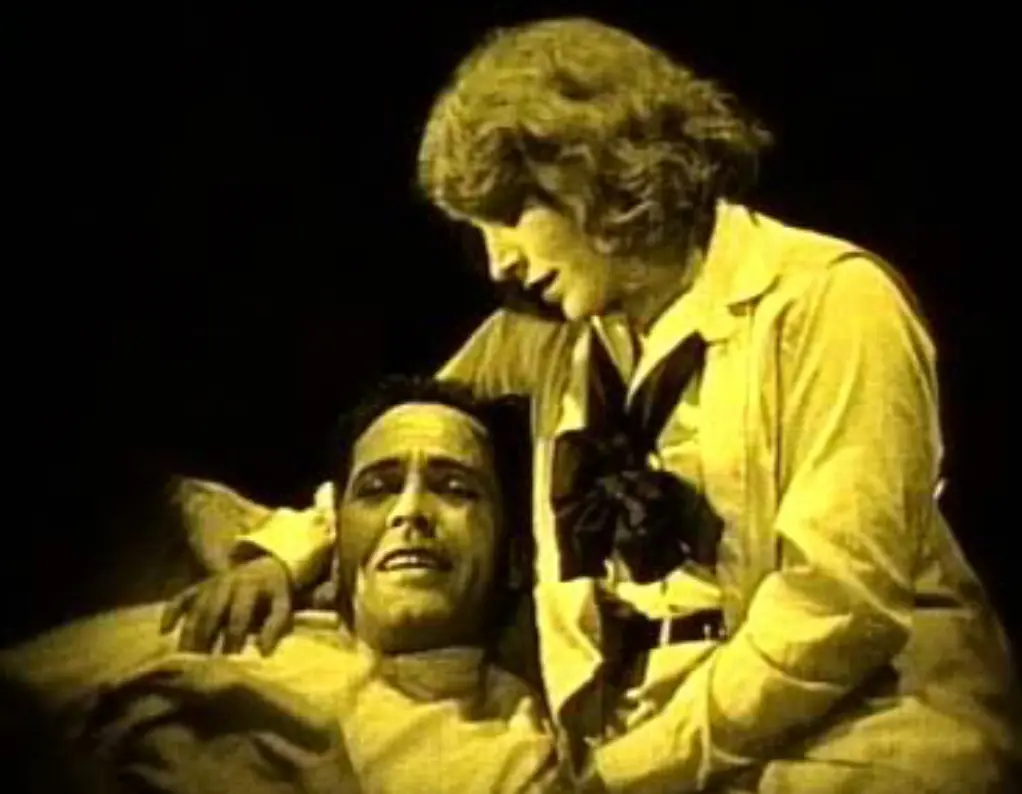
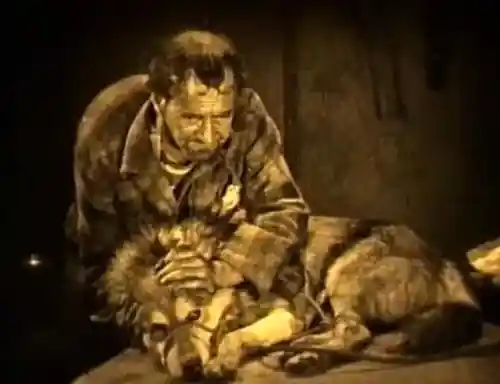
The depiction of the wolf itself, often glimpsed in fleeting, almost spectral shots, adds another layer to the film's thematic richness. The wolf is not just a source of blood; it is a symbol of untamed nature, of instinct unchecked by reason. By transfusing its blood into a human, the film suggests a violation of natural boundaries, a transgression with unforeseen and terrifying consequences. This echoes ancient folklore and myths about shapeshifting and the blurring of human and animal realms, tapping into a collective unconscious fear that has resonated across cultures for millennia. This primal fear is distinct from the more direct moral quandaries in films like Charge It to Me, which deal with human failings rather than existential crises.
The film also subtly critiques the hubris of scientific endeavor, suggesting that while science can push boundaries and save lives, it can also inadvertently unleash unforeseen horrors. The doctor who performs the transfusion, driven by a desire to save a life, perhaps overlooks the profound psychological impact of his unconventional method. This cautionary tale resonates even today, reminding us that advancements in technology and medicine, while often beneficial, can also carry ethical dilemmas and psychological tolls that are not immediately apparent. The exploration of unconventional medical practices and their consequences can be loosely compared to the themes of a 'quack' or 'curer' in A kuruzsló, though the tone and outcome are vastly different.
The ending of Wolfblood, without giving too much away, is both tragic and inevitable, a culmination of Horton’s psychological unraveling. It reinforces the idea that once a belief, however irrational, takes root in the human mind, it can become an inescapable reality for the individual. The film doesn't offer easy resolutions; instead, it leaves the audience with a lingering sense of disquiet, forcing them to ponder the fine line between sanity and madness, and the powerful, often destructive, role that our own perceptions play in shaping our reality. It's a conclusion that aligns with the somber, reflective nature of many silent dramas that sought to explore the deeper, often darker, aspects of the human condition.
In an era of increasingly complex special effects and overt horror, Wolfblood serves as a powerful reminder of the effectiveness of psychological terror. It proves that the most chilling stories are often those that tap into our inherent anxieties about identity, control, and the potential for internal corruption. The film is a testament to the ingenuity of early filmmakers who, with limited resources, managed to craft narratives that were not only entertaining but also profoundly thought-provoking. Its legacy, though perhaps understated, lies in its pioneering exploration of themes that continue to fascinate and terrify audiences today.
For cinephiles and enthusiasts of early horror, Wolfblood is an essential viewing experience. It’s a film that demands careful attention, rewarding the viewer with its subtle nuances and profound psychological insights. It's not just a historical curiosity; it's a living, breathing piece of cinematic art that continues to resonate with its exploration of fear, identity, and the fragile boundary between man and beast. It stands as a unique entry, distinct from the more romantic or adventurous tales of the period like The Seven Swans or The Brand of Lopez, carving its own niche in the realm of existential dread. Its influence, though often uncredited, can be seen in the slow-burn psychological horror that would define later decades of filmmaking, proving that the most terrifying monsters are not always visible, but rather lurk in the darkest corners of the human mind.
The performances, particularly that of Roy Watson, anchor the film’s emotional core. His silent anguish is palpable, drawing the audience into his spiraling nightmare. Marguerite Clayton provides a crucial counterpoint, her concern and attempts to reach him highlighting the tragedy of his isolation. The vision of director George Chesebro, working with the script from Cliff Hill and Bennett Cohen, clearly focused on building an atmosphere of creeping dread rather than relying on overt shocks. This choice makes the film a compelling watch even today, as it taps into universal fears about losing control of one's own mind and body. It's a study in silent cinema's ability to convey complex emotional states and deeply unsettling ideas without uttering a single word, relying instead on the power of visual metaphor and raw human expression. The subtle interplay of light and shadow, typical of the era, is expertly utilized to enhance the mood, creating a sense of foreboding that permeates every frame. This visual storytelling is arguably more effective than dialogue could have been, allowing the audience to project their own fears and interpretations onto Dr. Horton's ambiguous plight. While other films like Little Italy might focus on community and family dynamics, Wolfblood zeroes in on the solitary torment of an individual, making its horror deeply personal and profoundly unsettling.
The film serves as a fascinating historical document, showcasing the nascent stages of psychological horror and the creative ways filmmakers explored complex themes before the advent of sound. It's a reminder that true horror doesn't always come from external threats, but often from the internal battles we wage against our own minds and the primal urges that lie dormant within us all. It's a chilling testament to the power of belief, for good or ill, and how easily our perceptions can become our terrifying reality. The legacy of Wolfblood is not just in its individual narrative, but in its contribution to the evolving language of cinema, demonstrating that the human condition, in all its fragility and potential for darkness, remains the most fertile ground for compelling storytelling.
IMDb —
1916
Community
Log in to comment.