DbcultAccessing Vault...
5/10
Senior Film Conservator
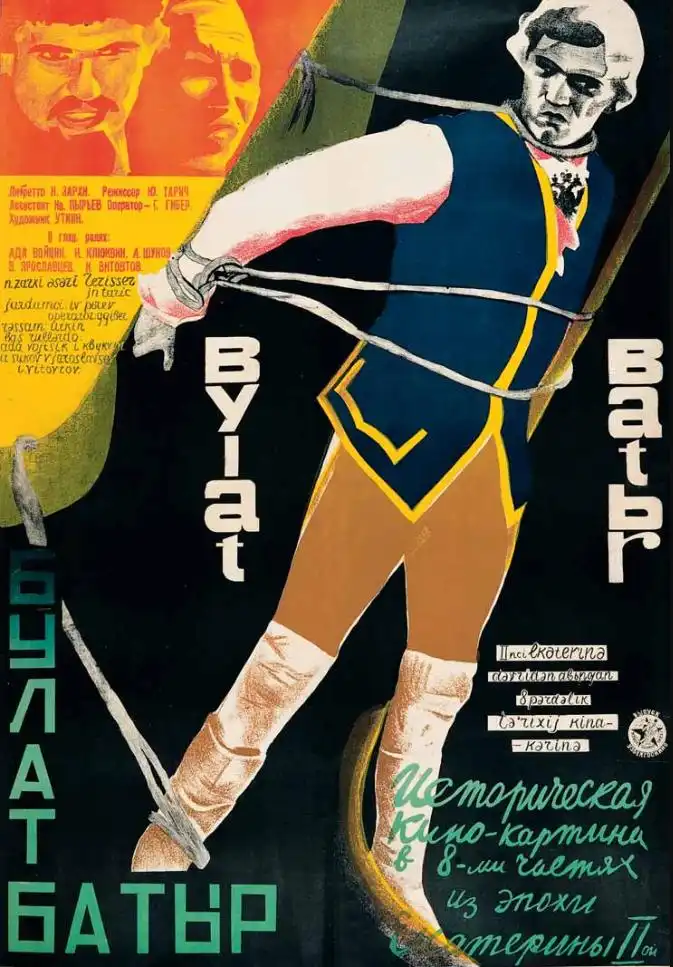
A definitive 5/10 rating for a film that redefined the boundaries of cult cinema. Bulat-Batyr remains a cornerstone of transgressive art.
If you're someone who actively seeks out the corners of film history, especially early Soviet silent cinema, then Bulat-Batyr might just be worth your time. It’s certainly not for casual viewing. Expect a slow burn, broad acting, and a narrative that’s more interested in making a point than in subtle character development. If you need modern pacing or easily digestible storytelling, you’ll probably find this a slog.
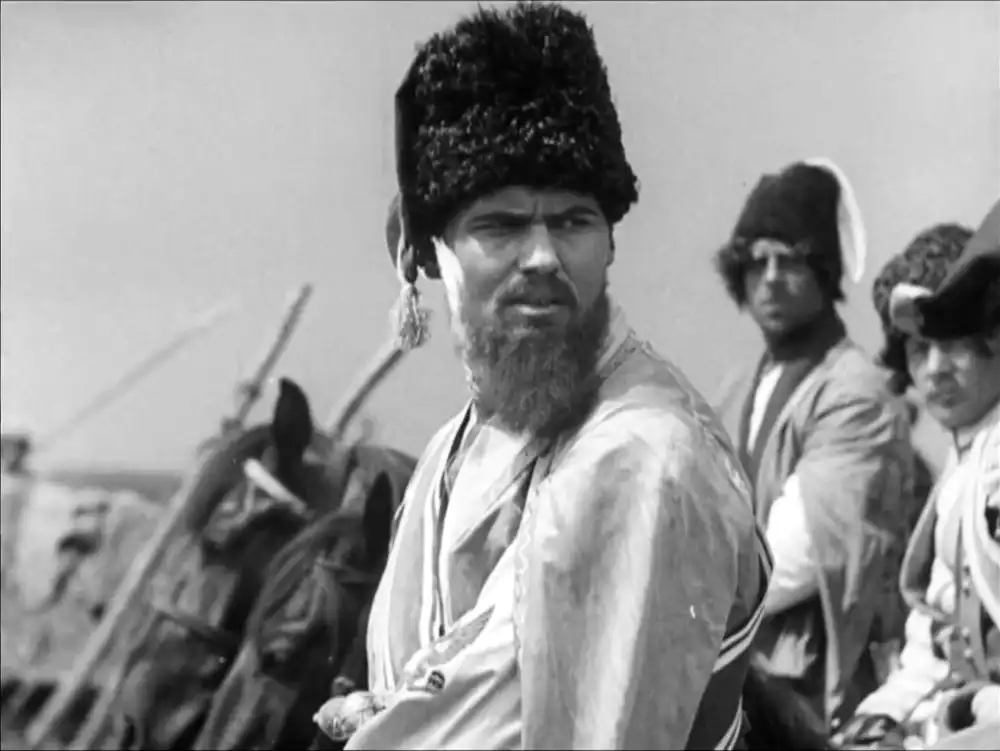
The film opens with a scene of almost idyllic village life. Tatar peasants, dressed in these wonderful, vibrant traditional clothes, are celebrating a harvest festival. There’s a real sense of community, of shared joy. It’s a smart move, because it immediately establishes what’s at stake, what’s about to be lost. The shots of the villagers dancing, the wide smiles, it’s all very earnest. Then the monks and soldiers arrive, and the shift is jarring, exactly as it should be.
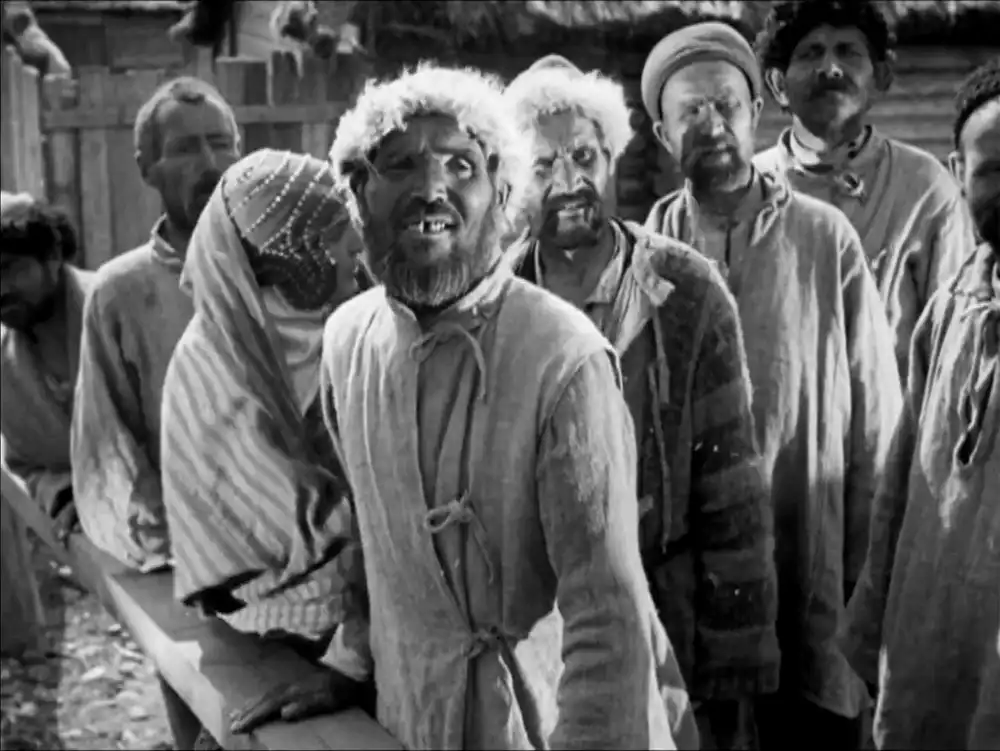
These monks, with their dark robes and stern faces, are immediately presented as the antithesis of everything the village represents. The soldiers too, they’re just menacing. The way they march in, disrupting the celebration, it’s a clear visual cue: these are the bad guys. The film doesn't waste any time with moral ambiguity here. The violence that follows feels brutal, even in silent film terms. Bulat’s wife dying, his son being snatched away – it’s a lot to take in, and the actors really lean into the melodrama of the era. Aleksandr Zhukov as Bulat expresses grief with a kind of operatic despair, arms flung out, face contorted. It’s effective, if a little over the top for modern sensibilities.
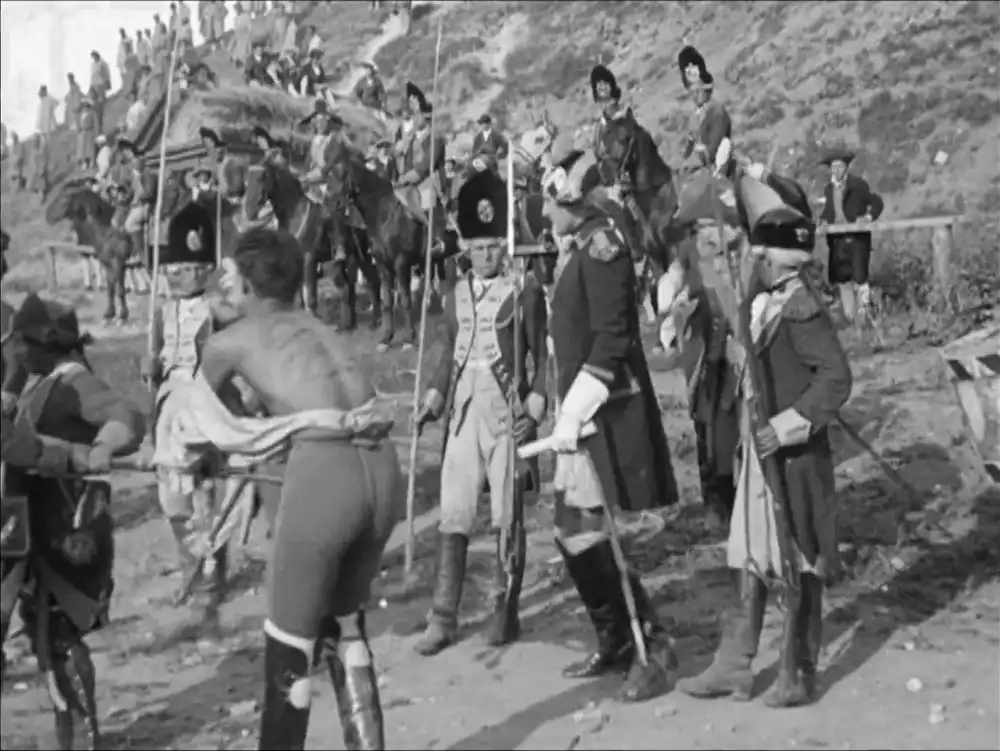
One thing that consistently caught my eye was the costuming. The Tatar outfits feel authentic, rich with texture and detail. Then you have the stark, almost uniform black of the monks. It’s a simple visual contrast, but it works so well in emphasizing the clash of cultures and ideologies. The soldiers’ uniforms, too, look heavy, oppressive. It's a silent film, so these visual shorthand elements are crucial, and they really nail them here.
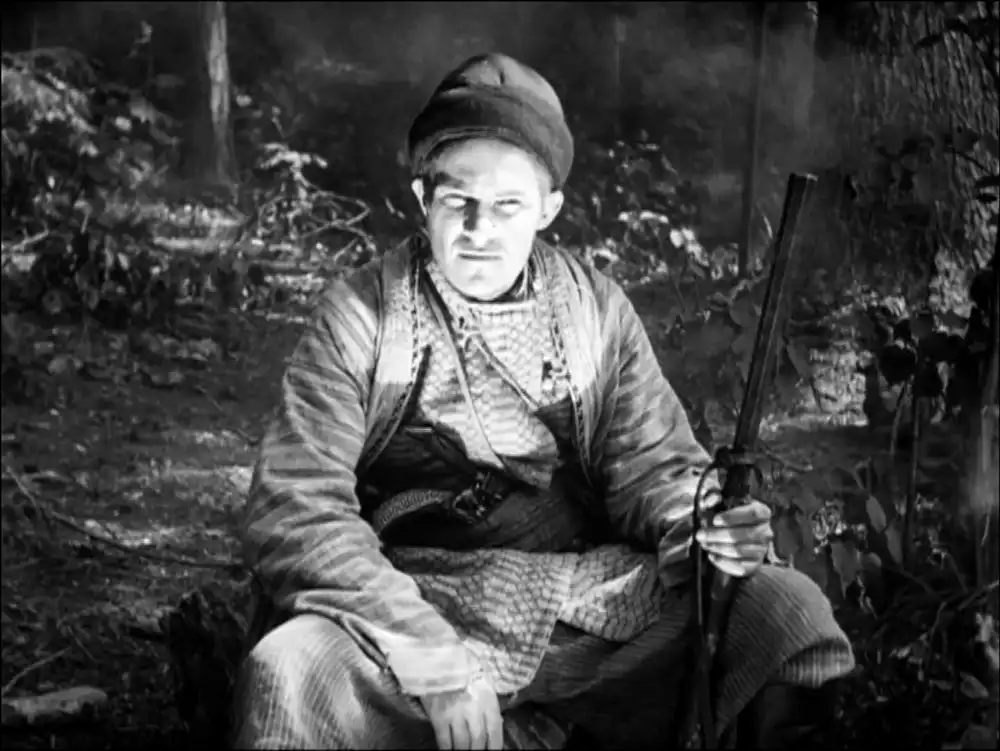
The pacing, though. Oh, the pacing. There are moments, especially in the middle section, where the narrative really drags. Bulat’s initial wanderings after his loss, his attempts to rally resistance, they feel prolonged. You can almost feel the movie trying to convince you that every single step of his journey is weighty, but some scenes go on a beat too long, and the dramatic tension starts to dissipate into just... waiting. There’s a particular scene where Bulat stares off into the distance, contemplating his next move, and the shot just holds. And holds. It becomes less about his internal struggle and more about, well, how long can a human being hold that pose?
However, when the film eventually gets to the bigger action sequences, the clashes between the rebels and the imperial forces, it finds its footing again. These are surprisingly dynamic for the time. The sheer number of extras involved is impressive, and there’s a genuine sense of chaos and struggle. You get dusty battles, horseback charges, and all the silent film tropes you’d expect, but executed with a certain raw energy. It’s not The Target in terms of scale, but it has its moments.
The film doesn't shy away from its anti-imperialist message. It’s practically shouting it through the intertitles. This is early Soviet propaganda, after all. The portrayal of the Russian Orthodox Church and the Tsarist military is entirely villainous, a monolithic force of oppression. The Tatars, by contrast, are noble, freedom-loving, and inherently just. It’s a simplified worldview, but it’s clear and direct. You won't find much nuance here, and that’s part of its historical charm, honestly.
There are a few curious editing choices throughout. Sometimes a reaction shot will cut away before you feel the full impact, and other times it will linger on someone’s face for what feels like an eternity. It gives the film a slightly amateurish, yet oddly charming, quality. It feels less like a polished studio product and more like a passionate, if sometimes clunky, endeavor.
Ada Voytsik, who plays Bulat's wife and then later another character, is quite striking. Her presence adds a much-needed intensity to some of the supporting roles. Her expressions are often more subtle than some of her male counterparts, which stands out. The chemistry between Bulat and his eventual allies feels a bit rushed, but that’s often a byproduct of the compressed storytelling in silent epics.
Ultimately, Bulat-Batyr is a fascinating artifact. It’s a window into early Soviet filmmaking, a glimpse at how historical narratives were shaped for political ends, and a testament to the raw power of visual storytelling even without sound. It’s not perfect, far from it. It’s uneven, occasionally clunky, and its message is delivered with a sledgehammer. But it has a certain earnestness, a vital energy that makes it compelling for those willing to meet it on its own terms. Don't go in expecting a masterpiece, but do expect a unique piece of history.
IMDb —
1936
Community
Log in to comment.