DbcultAccessing Vault...
4.6/10
Senior Film Conservator
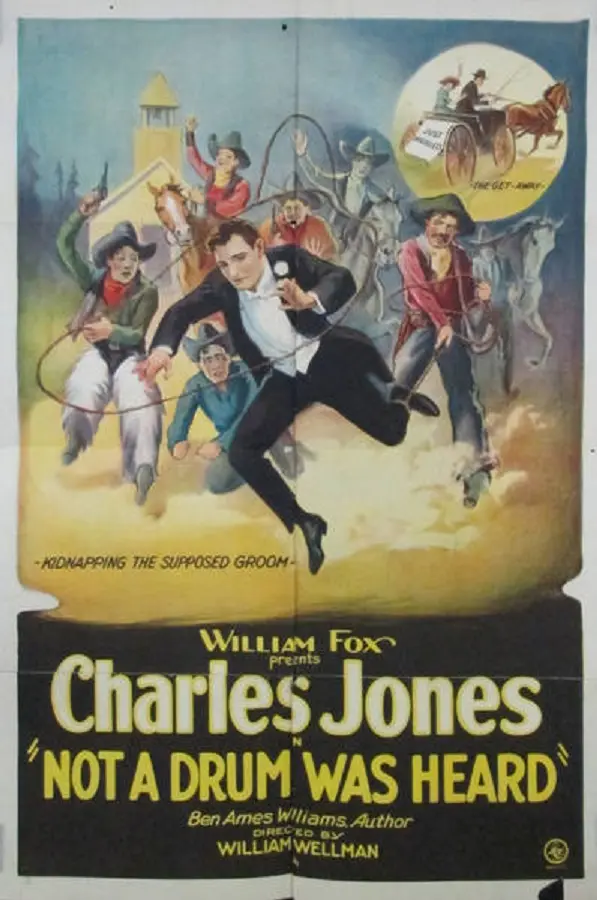
A definitive 4.6/10 rating for a film that redefined the boundaries of cult cinema. Not a Drum Was Heard remains a cornerstone of transgressive art.
In the somber, black-and-white world of 'Not a Drum Was Heard', the boundaries of love, loyalty, and deception are pushed to their limits. This 1935 drama, penned by Doty Hobart and Ben Ames Williams, weaves a complex narrative that probes the depths of human emotion and the consequences of our choices.
The story centers around Jack Mills (Al Fremont), a man whose life is turned upside down when his sweetheart, Jean Ross (Betty Bouton), falls for his friend, Bud Loupel (William Scott). The loss is compounded when Jack finds himself struggling to make ends meet, falling behind on his mortgage payments. Bud, too, is grappling with financial difficulties, which ultimately lead him to embezzle funds from the bank where he works.
The situation takes a dark turn when the bank owner discovers the missing money. In a misguided attempt to shield Bud from repercussions, Jack concocts a plan to rob the bank, intending to frame himself for the crime. This desperate bid to protect his friend and salvage his own reputation sets off a chain of events that spirals out of control.
The on-screen tension builds as Bud's actions become increasingly erratic. In a violent outburst, he shoots the bank owner and is gravely injured himself. The trial that follows is a poignant display of Jack's sacrifice, as he assumes the blame for the crime. However, just as it seems that Jack's plan has worked, Bud's guilt surfaces, and he confesses to the crime before succumbing to his wounds.
The film's climax is a powerful exploration of redemption and the human condition. Jack, having borne the weight of Bud's transgressions, is offered a chance to start anew. He promises to care for Jean and her newborn, embracing a sense of purpose that had previously eluded him. This conclusion, while tinged with sadness, offers a glimmer of hope in the face of adversity.
In terms of cinematic craftsmanship, 'Not a Drum Was Heard' showcases a mastery of narrative pacing and character development. The performances, while not overly complex, add depth to the story, with Al Fremont delivering a particularly noteworthy portrayal of Jack's turmoil.
When compared to other films of its era, 'Not a Drum Was Heard' stands alongside works like 'Love and Doughnuts' and 'The Life of Reilly' as a testament to the power of storytelling in cinema. Its exploration of themes such as love, sacrifice, and redemption echoes through films like 'The Faithful Heart' and 'Golden Rule Kate', demonstrating a keen insight into the human condition.
Ultimately, 'Not a Drum Was Heard' is a film that warrants attention for its thought-provoking narrative and historical significance. It presents a world where the consequences of our actions are starkly illustrated, serving as a reminder of the enduring power of cinema to captivate and inspire.
In conclusion, this 1935 drama is a hidden gem that deserves recognition for its compelling story, strong performances, and historical importance. If you're a fan of classic cinema or simply looking for a film that will leave you pondering the complexities of human nature, then 'Not a Drum Was Heard' is a must-see.
The film's ability to balance drama and pathos makes it a standout in its era, and its themes of love, loyalty, and redemption continue to resonate with audiences today. So, take a step back in time and experience the emotional depth of 'Not a Drum Was Heard' – a true cinematic treasure.

IMDb 5.1
1933
Community
Log in to comment.