DbcultAccessing Vault...
Cult Review
Senior Film Conservator
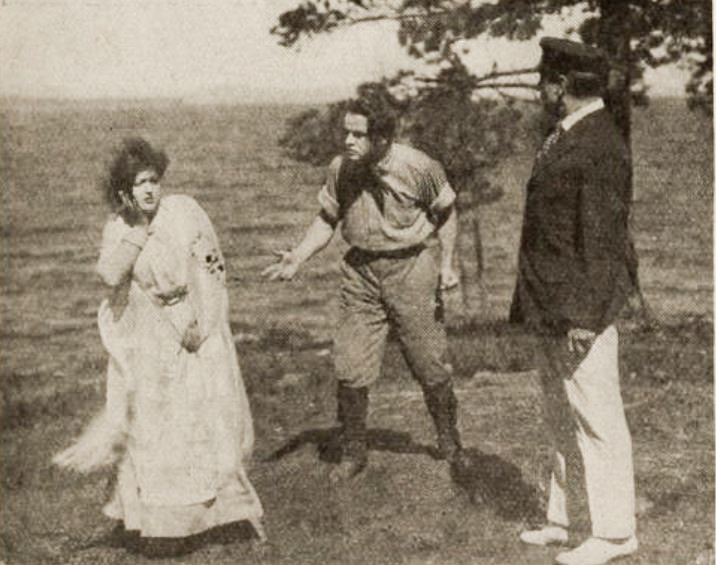
Imagine, if you can, Josephine Baker’s future charisma folded into a nitrate strip already hissing like a lit fuse—that is the unstable miracle of Mistinguett détective. Shot in the autumn of 1917, while shells carve white scars across the Marne sky, the film dares to recast France’s highest-paid entertainer as a sleuth navigating corridors that smell of gas-jet lambency and rat poison. Director André Hugon, a man who could shoot three melodramas before breakfast and still have appetite for absinthe, dispenses with exposition the way a pickpocket drops a wallet: swiftly, wordlessly, into the Seine.
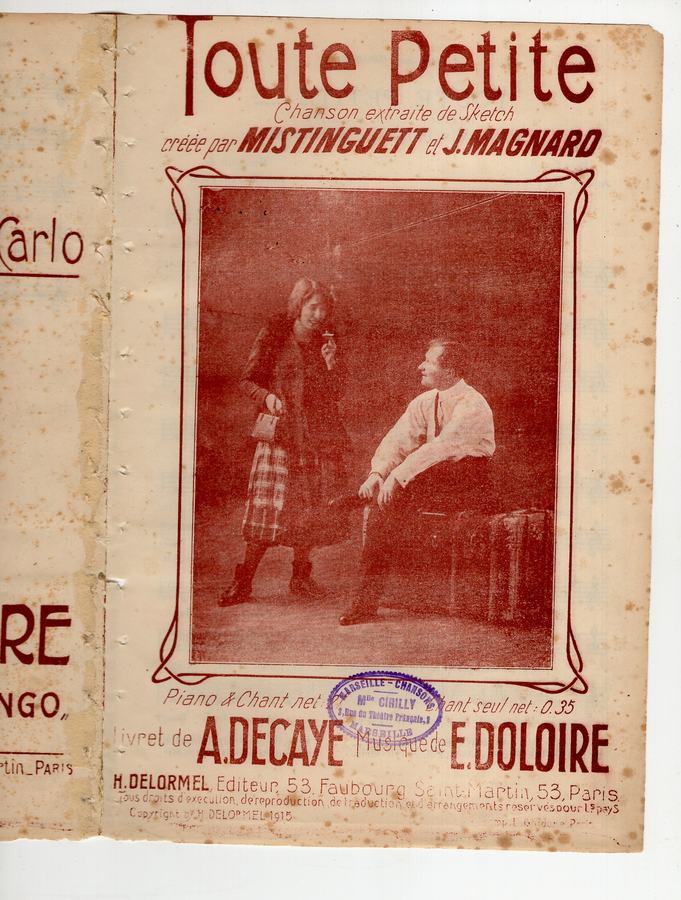
The first image is a close-up of a theatre programme curling in the rain; ink bleeds until the star’s name becomes an abstract wound. Cue title card, hand-tinted bruise-violet: “Tout spectacle est un crime en attente.” Every performance is a crime lying in wait. That single aphorism functions as manifesto, warning, and plot thesis—because the narrative refuses to segregate footlights from crime-scene chalk. The camera glides backstage, past corset laces tightening like tourniquets, until we find Mistinguett—playing herself, yet somehow also playing us—kneeling beside a lifeless dancer whose last breath has fogged a mirror. The mirror now reflects only the star’s feathered headdress, nodding like a carrion crow.
What follows is less whodunit than who-do-you-trust-when-the-world-is-ending. Evidence arrives in fragments: a pawn ticket for a pair of blood-red gloves, a lipstick cylinder emptied to hide a rolled-up telegraph, a phonograph record that screeches static until you slow the hand-crank and hear the Kaiser’s mustache-brush strokes—yes, Hugon anticipates back-masking decades before The Beatles toyed with it. The investigation drags Mistinguett from the mirrored halls of the Folies Bergère to a clandestine cinema beneath the Gare de l’Est where newsreels of trenches stutter across a bedsheet. The montage is so jagged you feel sprocket holes might slash your pupils.
Adrienne Duriez, second-billed but arguably the film’s moral lightning rod, portrays Cécile—an usherette whose brother vanished at Verdun. Duriez has the kind of translucent eyes that register both candle-glow and atrocity. When she shares a cigarette with the star, the smoke coils around them like semaphore; you half-expect the ember to spell out coordinates to the killer. Their rapport is the film’s tender axle: one woman famous enough to silence generals, the other anonymous enough to smuggle letters across checkpoints. Their whispered plan to bait the murderer using a forged love song becomes the stuff of pure suspense, especially because Hugon refuses musical accompaniment during the sting—only the creak of seats and the distant thud of Big Ben’s Parisian stand-in.
Comparative cinephiles will detect DNA strands linking this curio to Das Geheimschloss, the 1914 German chamber-mystery where rooms seem to rearrange themselves between cuts. Both films share a distrust of architecture: doors migrate, staircases double back, windows look onto earlier scenes. Yet while German expressionism externalizes psychology through crooked sets, Hugon keeps décor period-accurate, allowing paranoia to seep into wallpaper that looks innocuous by daylight but carnivorous under carbon arc. In one bravura shot, the camera pans from Mistinguett’s dressing-table to what seems a mere cupboard; minutes later we learn it houses a dumbwaiter descending into an opium den where soldiers trade medals for pipe hits. The reveal is so fluid it feels like a stage trapdoor opening under your feet.
Guita Dauzon, essaying the role of gossip columnist Régine, delivers silent cinema’s most baroque performance this side of Vera, the Medium. Armed with a monocle that doubles as magnifying glass, she flits through soirées like a moth in lamé, scribbling bon mots that later appear as intertitles superimposed over crime-scene photographs. The effect is Brechtian before Brecht bought his first ticket to Berlin: commentary that refuses to stay outside the frame. Watch how her grin curdles when she spots Mistinguett’s hand on Cécile’s shoulder—jealousy encoded in a single iris flicker. Dauzon’s micro-gestures are graduate seminars in how-to-act-without-title-cards.
Jean Magnard’s cinematography deserves its own aria. Shooting on orthochromatic stock that renders reds as bruise-black, he turns blood into pools of ink and lip rouge into voids. During the wax-museum climax, Magnard lights Mistinguett from below with a handheld lantern; the shadows carve her cheekbones until she resembles her own death-mask. Nitrate decomposition—those molten bubbles that feast on shadows—has, paradoxically, enhanced certain scenes: the chemical scars look like shrapnel bursts, as if the film itself were wounded in combat. Restorationists at CNC faced the ethical riddle: scrub the damage and risk sanitizing history, or retain decay and risk distraction. They split the difference, stabilizing frame-lines yet leaving emulsion wounds intact, and the result is an image that breathes mortality.
Now, the unavoidable question: does the mystery resolve satisfactorily? Yes and exasperatingly no—blessedly no. The killer, when unmasked, delivers a monologue that indicts the entire city: “We taught men to march in rhythm; now we feign shock when they kill on the beat.” It is a political statement so acidic it eats through the very genre scaffolding. Compare this with Out of the Darkness, a 1915 American programmer where motive collapses into pop-psychology. Here, the culprits—yes, plural—escape via a labyrinthian exit worthy of The Mystery of the Poison Pool, leaving Mistinguett holding a single white glove that no longer belongs to anyone. The gesture is less cliffhanger than existential shrug: justice itself has been rationed, like sugar and coal.
Yet what lingers is not the plot’s corkscrew but its emotional aftershocks. After the case officially closes, Mistinguett returns to the stage to premiere “Y’a qu’Paris”—a real hit song she belted throughout the war. Hugon overlays the performance with cross-cut memories of the investigation: Cécile’s tear, Régine’s smirk, a soldier’s prosthetic leg abandoned in the rain. The montage is merciless; it forces spectators to confront the price of entertainment funded by a nation hemorrhaging youth. When the final chord lands, the camera holds on Mistinguett’s eyes—two wells reflecting footlights that suddenly look like muzzle flashes. She bows, but the bow is slower, heavier, as if the stage itself has tilted toward the graves at Douaumont.
Viewing the 4K restoration at Lyon’s Institut Lumière last autumn, I sensed a communal shiver ripple through the auditorium when that curtain fell. We were not merely exhuming a star vehicle; we were witnessing a country grapple with the ethics of spectacle during wartime. In that sense, Mistinguett détective belongs to a subterranean canon of self-lacerating entertainments that includes Silks and Satins and God's Crucible. All three films ask: when the world burns, does the show stop, or does it simply sell new lyrics?
Some archival sleuths argue the picture survives only because Hugon smuggled a print to Switzerland under the guise of a Red Cross lecture. Whether apocrypha or not, the tale fits the film’s smuggled-pistol aura. What remains irrefutable is its modernity. Swap nitrate for digital, trench warfare for drone strikes, and the movie’s core inquiry—how to stay humane while performing for a wounded collective—remains scalding. That is why cine-clubs from Brooklyn’s Light Industry to Paris’s Le Champo now book 35 mm prints with live ensembles re-scoring the tale using toy pianos, typewriter clacks, even heartbeat sensors culled from smartwatches. Each reinterpretation proves the film is not a relic but a relay baton.
Criterion, are you listening? A spine number for this phantasm would rectify a century-old omission. Supplemental features could include the 1918 newsreel Mistinguett visite les poilus, audio of her 1932 Olympia performance, and a booklet essay by moi—signed, sealed, delivered. Until that miracle arrives, seekers must rely on festival bootlegs and the occasional YouTube rip uploaded by some saintly degenerate. Hunt it down; the quest is worth every pixelated hiccup.
In the final analysis, Mistinguett détective is both a macabre divertissement and a funeral oration for naïveté. It argues that every spotlight casts two beams: one that glorifies the performer, another that exposes the spectator. To applaud is to become an accessory after the fact. And yet, as the star herself might have told us between puffs of Gauloise smoke, “Better to dance on the trapdoor than to pretend the basement isn’t filling with bones.” Watch the film, listen for the trapdoor’s creak, and decide which side of the curtain you call home.
IMDb 6.7
1936
Community
Log in to comment.