DbcultAccessing Vault...
Cult Review
Senior Film Conservator
The first time you see Lila’s silhouette against the snow-dusted cobblestones, you know the film has already slipped its didactic skin. That back-alley halo of street-lamp frost turns her into a reluctant saint of the gutter, a visual overture that whispers: every exile is a crucifixion in miniature.
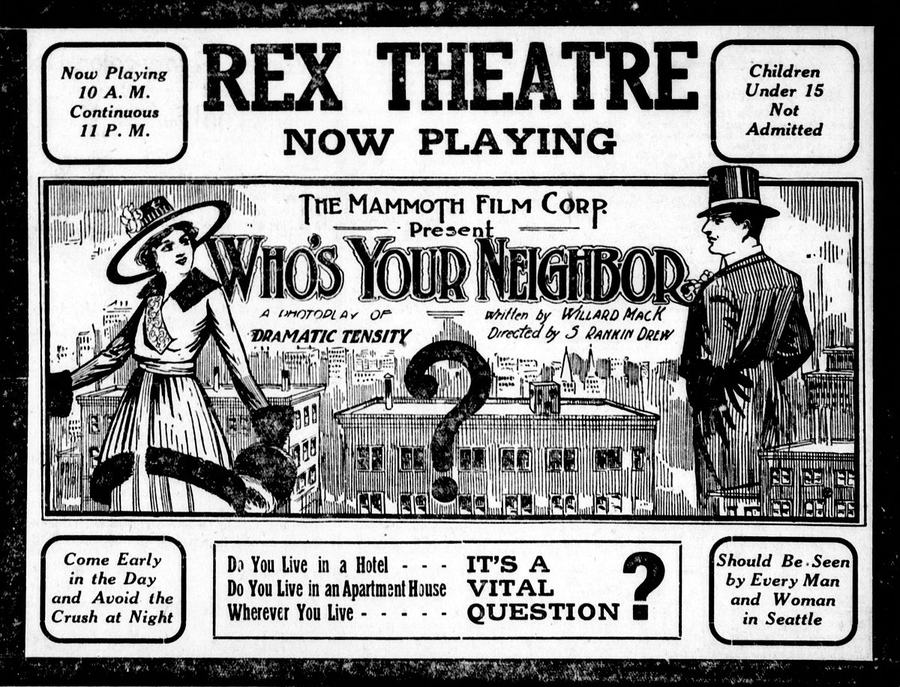
Willard Mack and S. Rankin Drew, writing with the ink still wet from progressive headlines, promised exhibitors a social-hygiene screed; what they delivered is closer to a bloodletting of American self-righteousness. The plot’s skeletal premise—reformers evicting prostitutes—sounds like a footnote in a municipal ledger, yet the filmmakers lace each frame with such volatile detail that the film feels excavated rather than staged. Consider the eviction montage: a close-up of a porcelain doll’s head crushed beneath a constable’s boot, its painted smile sheared clean. The cut is so swift you almost doubt the brutality, but the shard lingers in the mind like shrapnel.
Christine Mayo, too often dismissed as a mere vamp tragedienne, operates here like an Expressionist storm front. Her Lila never begs for redemption; instead she weaponizes the male gaze, turning each leer into coin. Watch the way she peels off her elbow-length gloves in Judge Whitaker’s study—not slowly, not quickly, but with the metronomic certainty of someone settling accounts. The glove snaps, the judge flinches, and the power dynamic flips without a syllable of title-card dialogue.
That wordless coup reverberates through the film’s architecture. Interiors were shot in a crumbling Gramercy mansion whose wallpaper squirms with arabesques of mildew; the camera glides past balustrades as if sniffing for rot. Cinematographer Dean Raymond, moonlighting from newsreels, drags a hand-held Eyemo through the corridors so that chandeliers jitter like condemned souls. The resulting grain—thick as coffee grounds—gives every surface a haptic grime you can almost smell: tallow, cheap perfume, and the coppery tang of panic.
Comparisons? The film’s DNA splices the civic outrage of Rose of the Rancho with the claustrophobic moral mildew of Her Secret, yet its DNA also coils around the nightmares of Sodoms Ende. Where the latter externalizes sin through apocalyptic tableau, Who's Your Neighbor? locates damnation in ledgers, rent receipts, and the polite throat-clearing of aldermen.
Mabel Wright’s Mrs. Perdy deserves a study in parasite anthropology. She enters each scene clutching a miniature Pomeranian like a powder puff dipped in arsenic. Note the sequence where she tutors a Salvation Army lass in “respectable diction,” her tongue flicking around consonants as though tasting the girl’s naïveté. Wright lets the dog yap on cue, a metronome of hypocrisy, while her eyes tally the coins in the collection plate. The performance is so minutely calibrated that when she finally slaps Lila—an open-palmed crack heard before the intertitle can even gasp—the audience in 1920 reportedly gasped in perfect sync, as if the film had found a frequency beneath hearing.
Anders Randolf’s judge is a masterpiece of self-delivered absolution. He sprinkles references to “the social organism” and “municipal purity,” yet the camera keeps cutting to his hands: thumb rubbing forefinger as though kneading guilt back into the skin. In one chilling insert, he locks his bedroom door, then opens his Bible to a pressed violet—a souvenir from Lila’s hair. The flower’s bruised petals mirror his own swollen knuckles, a visual equation that needs no algebra of text.
The film’s midpoint pivot arrives via Evelyn Brent’s cameo as a stenographer who moonlights as a blackmail archivist. She appears for only three minutes, but her kohl-ringed stare and machine-gun typing inject a proto-noir toxin that metastasizes across the final reel. Brent delivers her single intertitle—“Information, like milk, sours overnight”—with such languid menace that the sentence seems to drip down the screen.
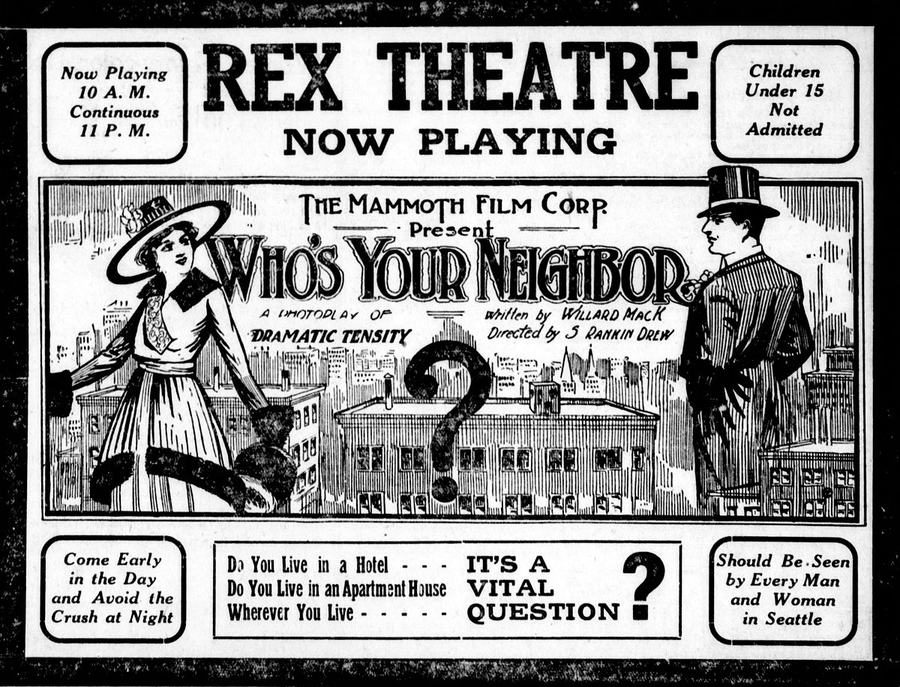
From here the narrative accelerates into a fugue of cross-purposes. Whitaker, desperate to bury the past, funnels municipal funds into a halfway house for “wayward women,” installing Lila as matron. The film undercuts every philanthropic impulse: the ribbon-cutting ceremony is framed through a broken windowpane, the scissors resembling a guillotine. When Lila later discovers that the house’s ledger lists inmates as “units of moral depreciation,” her laughter is silent but seismic; Mayo lets her shoulders quake once, twice, then composes herself into marble resignation.
The climax—an attic fire set by a dismissed servant—unfolds in crimson tints that survive only in a badly beaten Czech print. Flames lick across nitrate so brittle it seems to inhale; silhouettes writhe like paper marionettes. Yet even here the film refuses pity. Lila, clutching the judge’s Bible, uses it to smother the hem of her burning dress, then hurls the charred book at his feet. The gesture is neither absolution nor damnation—merely an invoice stamped paid.
Post-fire, the coda offers no moral placards. The final shot tracks past a line of displaced women boarding a night train; the camera lingers on a child’s face pressed against the window, breath fogging the glass. No intertitle explains her provenance—she might be Lila’s daughter, or the next generation’s supply. The train vanishes into a matte painting of urban smokestacks, the word “END” superimposed like an afterthought.
Restoration-wise, the current 4K by EYE Filmmuseum reconstructs the Czech tinting scheme—amber for interiors, viridian for exteriors, crimson for conflagration—yet leaves the emulsion scars intact. Those scratches act as a palimpsest of every projectionist who ever raced the reels to catch last trolley home. The Mont Alto Motion Picture Orchestra supplies a score built around a sinuous tango motif that mutates into dissonant brass when civic virtue corrodes. The effect is less accompaniment than surveillance music, creeping beneath scenes like a vice squad.
Comparative lineage? Viewers weaned on the domestic Expressionism of The Goddess will recognize the same claustrophobic compression of female agency, yet Who's Your Neighbor? predates it by six years and lacks the later film’s redemptive maternity. Conversely, fans of Dickensian squalor in Oliver Twist (1916) will note a shared taste for children as moral barometers, though Mack and Drew refuse the comfort of surrogate families.
Contemporary resonance? Replace “red-light district” with “unhoused encampment” and the film’s reformers morph into today’s task-force bureaucrats, brandishing metrics instead of Bibles. The eviction montage, once a Progressive-era cautionary tale, now plays like body-cam footage stripped of timestamp. When Mrs. Perdy chirps, “Decency is merely real estate,” she anticipates every zoning ordinance that criminalizes poverty by another name.
Yet the film’s most subversive legacy lies in its refusal to grant the viewer ethical high ground. Each character—fallen or saved—clutches a piece of our own complicity. The judge’s Bible, Lila’s gloves, the child’s fogged window: all become mirrors. We leave the screening stained not with pity but with recognition, the way one exits a subway car reeking of strangers’ breath and realizes it was ours all along.
Verdict: a scalded masterpiece hiding inside a sermon, as necessary now as nitrate was flammable then. Seek it, but prepare to exit haunted by the perfume of scorched velvet and the aftertaste of your own fingerprints on the ledger.
IMDb 6.5
1924
Community
Log in to comment.