DbcultAccessing Vault...
7/10
Senior Film Conservator
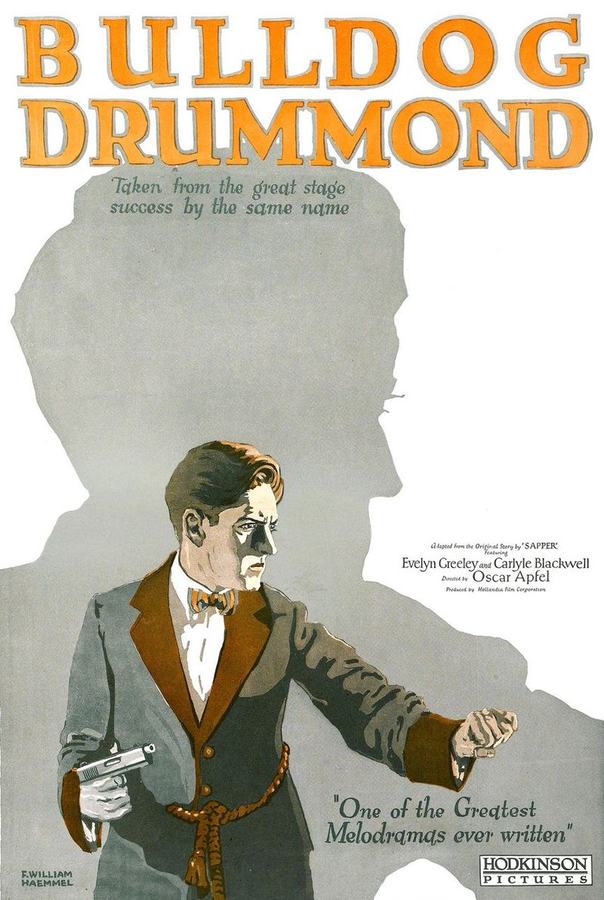
A definitive 7/10 rating for a film that redefined the boundaries of cult cinema. Bulldog Drummond remains a cornerstone of transgressive art.
Somewhere between the last echo of Great War artillery and the first crack of jazz-age champagne, cinema birthed a hero who preferred fisticuffs to feelings and trench-coats to tiaras. Bulldog Drummond, directed by an unheralded cadre of Dutch craftsmen with Anglo ambitions, lands like a blackjack on velvet: swift, bruising, unexpectedly elegant. Forget the monocled matinee idols of the West End; Jan Grader’s Drummond prowls with the coiled menace of a man who has smelled chlorinated trench gas and decided pomposity is deadlier.
The film stock itself seems scorched—tinted emulsion flickering between bruised amber and cadaverous cyan. Interior corridors stretch via Hitchcockian forced perspective: the nursing home’s hall becomes an Expressionist vertebrae of arches skewing toward vanishing points where electric sconces pulse like slow heartbeats. DP Nico De Jong sidesteps the era’s standard flat lighting; instead he carves cheekbones with tungsten sidelights, letting shadows devour half of Carlyle Blackwell’s face while the surviving eye glints with predatory mirth.
Compare this chiaroscuro to the pastoral glow of Hearts of Oak or the pastoral whimsy of Saving the Family Name, and you’ll grasp how radical Bulldog Drummond felt to 1922 audiences weaned on pictorialism. Even the villain’s lair—ostensibly a rest-home solarium—oozes gothic malice: hydrotherapy tubs double as baptismal fonts for stateless treachery, while hydrocephalic gargoyles leer from the rain gutters like Cold War prophets.
With no spoken dialogue, the intertitles—penned by B.E. Doxat-Pratt from Sapper’s pulp DNA—snap like riding crops. “The rose means murder at midnight” reads one card, the text slammed over a smash-cut of a rose petal landing in a puddle of spilled ether; the juxtaposition is so jagged you can almost sniff the anesthetic. Composer Dio Huysmans (credited for “musical scenario”) prescribes a metronomic snare underneath the 35mm print; when the orchestra complies, the effect is proto-Zimmer, a heartbeat before the bullet.
Listen against The Bells (1914) where tinting substitutes for rhythm, or For Freedom where speeches balloon across the screen like gasbag rhetoric. Drummond’s economy of words weaponizes negative space; silence becomes its own dialect.
Jan Grader never smiles with teeth; instead his grin is a scalpel slash under a moustache trimmed to regulation savagery. He underplays the swagger, letting stillness telegraph menace. In the pivotal interrogation scene he flips a silver dollar across his knuckles—an idle flourish that morphs into a threat when the coin suddenly disappears: sleight-of-hand as character beat. Compare that minimalism to William Browning’s kidnapped magnate, all trembling jowls and rheumy eyes, evoking capitalist vulnerability the way Lon Chaney conjured horror sans makeup.
Louis van Dommelen’s chief antagonist, Dr. Verloc (yes, the nod to Conrad is unmistakable), exudes continental exhaustion—his backstory hinted at through a missing cufflink, a monogrammed handkerchief pressed to lips after each cough. He embodies the dying embers of imperial intelligence services, selling secrets for morphine vials. When he finally rasps, “We are all prisoners of someone else’s victory,” the line—though delivered via intertitle—resounds louder than many a talkie monologue.
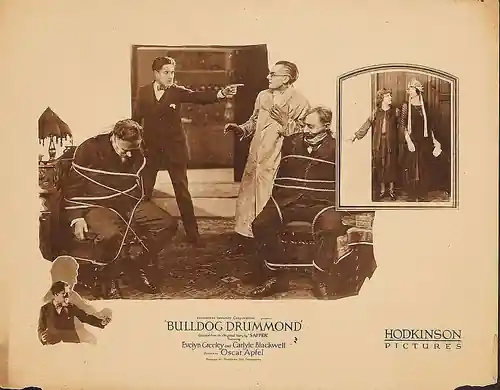
While 1920s cinema rarely cedes agency to women, Bulldog Drummond at least offers complexity. Evelyn Greeley’s Nurse Lillian initially appears the trembling ingénue, yet she double-taps a revolver later with the sangfroid of a sniper. Her romance with Drummond is consummated off-screen—perhaps on a fog-drenched pier—because the film trusts suggestion over slobber. Contrast this with the ornamental heroines of A Roman Scandal or Love and the Law, and you sense a quiet proto-feminist ripple beneath the testosterone.
McNeile’s original pulps were jingoistic; Doxat-Pratt’s adaptation muddies the patriotic bathwater. The villains aren’t just foreign agents—they’re refugees of collapsed empires, scarred veterans trading geopolitical scraps for medical supplies. Drummond’s rescue mission becomes less black-and-white valor, more mercenary penance. When he pockets a bundle of bearer bonds from the magnate’s safe, the film neither condemns nor applauds; it merely registers survival’s price. That ambiguity anticipates noir’s moral fog decades later, aligning Drummond with The Soul of Man’s existential angst more than with square-jawed cavalry charges.
Only fragments survive: a 47-minute archivist’s assemblage from EYE Filmmuseum, spliced with stills and a surviving continuity script. Yet what remains is so viscerally modern it could score a midnight cult slot alongside Balling the Junk. The nursing-home-as-panopticon anticipates our own fears of data-mined surveillance; the commodification of geriatric minds mirrors late-capitalist anxieties about cognitive labor.
Imagine a 4K restoration: the sea-blue syringe fluid gleaming like a macabre sapphire, the yellow flare of a match igniting Drummond’s cigarette against charcoal skies, the orange ember of dynamite fuse racing along a parquet floor. Until then, we squint through scratches and rejoice that any flickers escaped nitrate oblivion.
Is Bulldog Drummond perfect? Hardly. Side characters evaporate, the geography of chase scenes defies physics, and the surviving print’s German intertitles are sometimes translated with the grace of a tax form. Yet its bruised elegance, its willingness to let heroism and opportunism share the same tarnished soul, make it essential viewing for anyone mapping the DNA from Fritz Lang’s spy noirs to le Carré’s circumspect masterpieces.
Stream it if you can hunt down a festival screening. Otherwise haunt archive forums, petition restorers, bribe projectionists—do whatever ethical skulduggery is required. Because in a media landscape bloated with sanitized super-soldiers, Drummond’s scarred knuckles and moral limp feel bracingly, disturbingly alive.
References for further rabbit-holing: compare the institutional paranoia here with Retten sejrer’s court claustrophobia, or the fatalistic romance against the bleak marital prisons of Wuthering Heights. Each thread weaves into the same tapestry: how love, money, and nationhood conspire to devour the individual, and why certain silhouettes—trench-coat collars upturned against the storm—remain timeless.
IMDb —
1917
Community
Log in to comment.