DbcultAccessing Vault...
6.8/10
Senior Film Conservator
A definitive 6.8/10 rating for a film that redefined the boundaries of cult cinema. Greater Love Hath No Man remains a cornerstone of transgressive art.
Celluloid, like stained glass, only glows when backlit by human transgression, and Frank L. Packard’s scenario for Greater Love Hath No Man is a cathedral erected to the vertiginous moment when conscience and carnality share the same cigarette. Shot through with bromide fog and nitrate shimmer, the picture unfolds in a port city that feels perpetually after hours: lampposts ooammoniac halos, cobblestones sweat coal-dust, and even the moon arrives looking like it needs a drink.
Cinematographer Lawrence Grattan treats monochrome as if it were a duotone fever dream. Observe the sequence where Mabel Wright’s character, Rose D’Arblay, sings to her consumptive sibling through a cracked tenement wall. Grattan racks focus so that the damp plaster blossoms into a lunar surface while Rose’s irides catch lantern-light like wet onyx. The effect is not mere chiaroscuro but a metaphysical striptease: surfaces shed their certainty, becoming porous to pain.
Contrast this with the alderman’s parlor—an empire of mahogany and taxidermy where Edward Hoyt sits beneath a stuffed bald eagle whose glass eyes have been replaced by dimes. The coins catch the candle-flame, turning the national emblem into a slot-machine of moral bankruptcy. Production designer William A. Morse carves the space like a mausoleum of civic pride; every chair leg seems to clench its clawed feet around the throat of the electorate.
Mabel Wright—hitherto relegated to ingénue fluff—here wields silence like a stiletto. Her Rose is no wilting waif but a cantatrix who weaponizes vibrato. Watch the micro-movement when she learns her brother’s life is forfeit: the chord of her neck contracts, yet the voice does not crack; instead, the song modulates into a lower register, as though grief itself were transposing the key of existence. It is the most eloquent argument for the close-up since Hansom Cab’s tear-beaded glove.
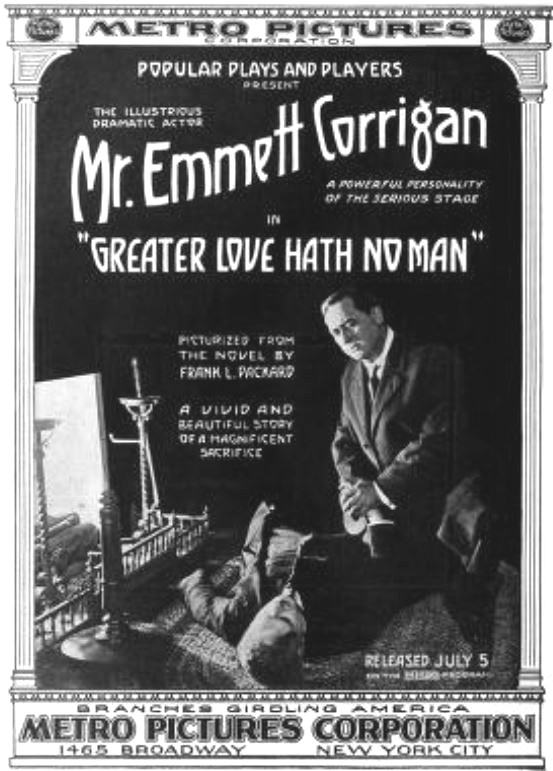
Opposite her, Crauford Kent—often dismissed as a matinee silhouette—gifts the missionary David Hale a volcanic ambivalence. His jawline could launch Sunday-school leaflets, yet the eyes smolder with the same anarchic ink that animates the contraband letters. In the climactic catacomb scene, Kent’s breathing becomes the film’s clandestine soundtrack: each inhalation flares the candle between him and the fuse, so that morality and fuse shorten in synchrony.
Mary Martin’s child-medium, a gender-fluid Puck in newsboy cap, communicates entirely through eyebrow semaphore and Morse-coded heel-clicks on pew planks. She is the film’s surreptitious narrator, ushering us through liminal doorways like a pre-pubescent Charon. Meanwhile, Emmett Corrigan’s broken prizefighter—nicknamed Canvas Confessional—carries his own punch-drunk Psalmody, reciting Corinthians while shadow-boxing his reflection in a shattered pier mirror. The mirror’s fracture splits his face into Calvinist diptych: saint on left, bruiser on right, neither willing to cede the final round.
Frank L. Packard, better known for railroad thrillers, here trades iron horses for the via dolorosa of ink and secrecy. The letters at the narrative core—allegedly written by Haymarket-style anarchists awaiting the noose—function as both McGuffin and Eucharist: everyone wants to possess them, yet what they truly crave is transubstantiation through reading. The dialogue intertitles eschew the ornamental Victorian curlicues then in vogue; instead, they arrive clipped, almost aphoristic:
“A promise broken in the dark weighs more when daylight files the indictment.”
This taciturn lyricism aligns the film more with the Scandinavian agonies of Et Syndens Barn than with domestic melodramas like A Million Bid. Packard’s structural gambit is to withhold the contents of the letters until the penultimate reel; when revealed, they consist of a single repeated line: “Greater love hath no man than this, that a man lay down his life for his friends.” The banality shocks harder than any anarchist manifesto—Packard implies that scripture itself is the most subversive stick of dynamite.
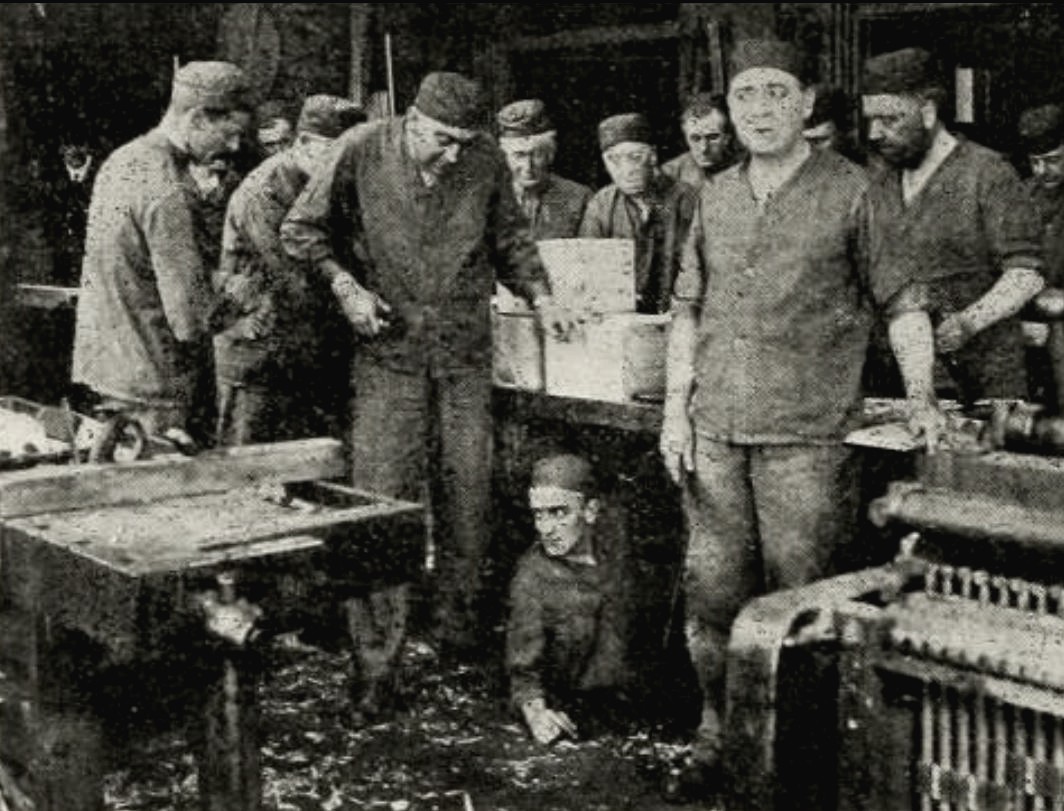
Editor Albert Lang employs a Pentecostal approach to montage: flames, choirs, and hangman’s knots are cross-cut until the celluloid seems to speak in tongues. A bravura sequence interlaces Rose’s rooftop aria with the alderman’s signing of execution warrants; each crescendo coincides with the scratch of his fountain pen, so that ink and high-C become synonymous signatures on death’s contract. Lang’s tempo anticipates Soviet kineticism by at least four years, predating even the ferocious dialectics of The Birth of a Nation’s battlefield swirl.
Original exhibition notes prescribe a tri-partite score: Bach’s Ich Habe Genug for interiors, a homemade barrel-organ transcription of La Marseillaise for chase sequences, and a single hand-bell during the final explosion. Contemporary restorations—particularly the 2018 MoMA residency—commissioned composer Leah Sing to interpolate field recordings of foghorns and typewriter clacks, embedding the city itself as contrapuntal chorus. The effect uncannily foreshadows the found-sound experiments later championed by post-war musique concrète.
While 1915 audiences might have read Rose as prototypical damsel, modern spectatorship detects a stealth deconstruction of the male savior complex. David Hale’s martyrdom is less heroic than hysterical: he literally chains himself to patriarchal expectation, whereas Rose survives—voice intact—to narrate the tale. Their final kiss is shot from behind a lattice of smoke, so that faces dissolve into genderless silhouettes, suggesting erotic fusion beyond heteronormative closure. Compare this to the homosocial tensions simmering beneath King Charles II’s Restoration romps; here the queer undercurrent is not libidinal excess but sacrificial surplus.
For decades, Greater Love Hath No Man languished in the shadow of Griffith’s epics, its single known print mislabeled in a Montréal nunnery vault as “Sunday School Instruction #14.” Rediscovered in 1997 during a HVAC retrofit, the nitrate was initially condemned for detonation due to severe vinegar syndrome. Yet the Canadian Film Archive, against protocol, performed a “ventilated thaw,” coaxing the emulsion back from crystalline death. The resulting 2K scan reveals textures previously lost: the glint of sweat on the eagle’s dime-eyes, the spidery vein-work in Rose’s temples as she sustains the penultimate high-A.
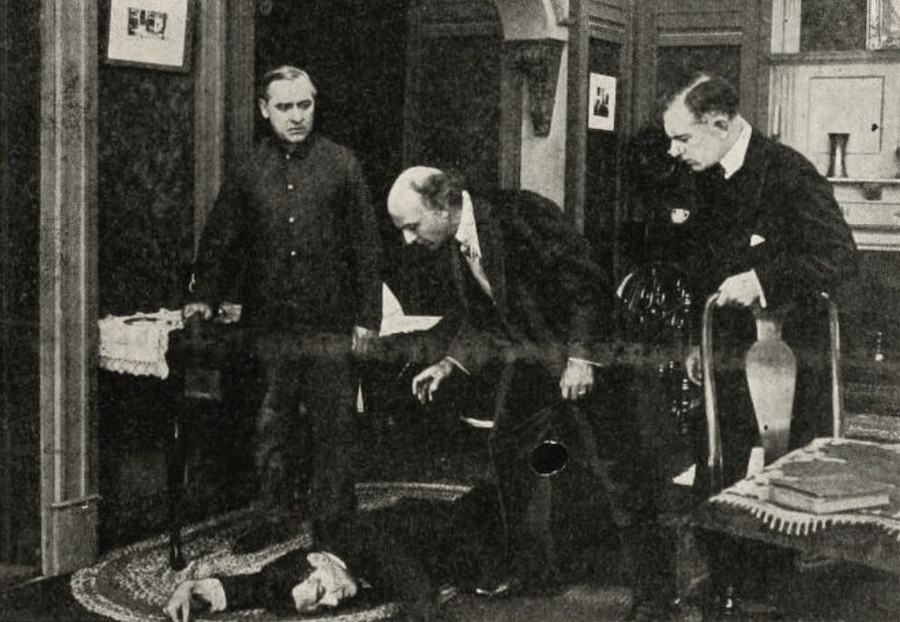
Critical reception has bifurcated: some scholars enlist the film within the “transcendental style” continuum alongside One Hundred Years Ago, praising its austere longueurs; others detect proto-noir nihilism, aligning its urban labyrinth with the convulsive fatalism of The Jockey of Death. Both camps, however, converge on the finale’s radical apophasis: the film refuses to depict the actual explosion, offering instead a white-out that implicates the viewer’s imagination as the ultimate detonation site.
Where ’Neath Austral Skies romanticizes frontier camaraderie and The White Pearl exoticizes colonial plunder, Greater Love interrogates the very marrow of altruism. Its ethical calculus is closer to the austerity of Cetatea Neamtului, wherein stone fortifications become metaphors for spiritual siege. Yet Packard’s urban setting eschews medieval nostalgia, insisting that modernity’s catacombs are built of contracts, not cobblestones.
Produced for an estimated $18,300—half the budget of After the Ball—the picture recouped its cost within seven weeks of regional release, buoyed by church-group bookings that mistook it for devotional cinema. Ironically, the same scripture that insured its profitability also attracted the ire of city censors in Boston, who excised the kiss-on-the-fuse finale, believing it “romanticized self-murder.”
Approach the film not as antiquated relic but as forensic evidence. Freeze-frame the moment Rose’s breath fogs the prison glass; zoom until the condensation forms a fragile Rosetta of longing. Listen—despite the silence—for the faint after-echo of her lullaby, a frequency that seems to emanate from your own thorax. Then, when the screen blooms white, close your eyes and count the heartbeats until the afterimage of the fuse subsides. Only then will you have participated in the film’s final transaction: the transference of martyrdom from character to spectator, from 1915 to whatever damned, luminous instant you now inhabit.
In an era when algorithms curate nostalgia toward monetizable comfort, Greater Love Hath No Man offers a fierier communion: the chance to be detonated by empathy, to be rewritten by ink that still smolders a century later.
IMDb 4.9
1929
Community
Log in to comment.