DbcultAccessing Vault...
Cult Review
Senior Film Conservator
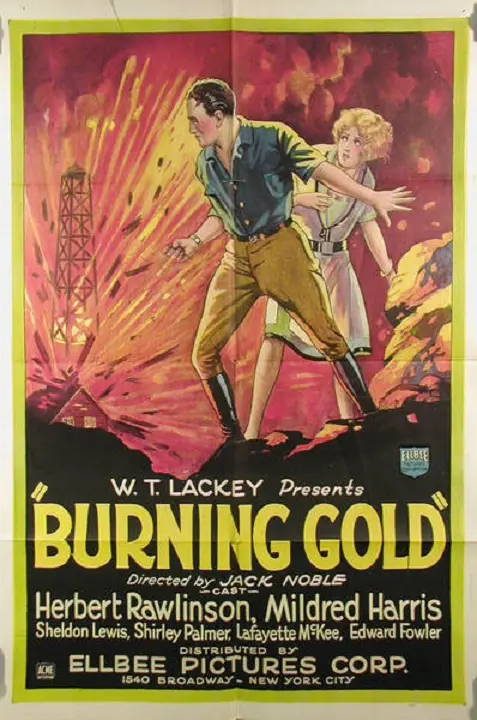
Is this film worth watching today? Short answer: No, unless you are a dedicated film historian or a collector of 1930s industrial dramas. This film is specifically for those who find beauty in the technical evolution of early sound cinema and the 'Poverty Row' aesthetic, but it is certainly not for anyone seeking a fast-paced or modern narrative experience.
Burning Gold (1936) is a relic that vibrates with the anxieties of its time. It’s a film that smells of grease, sweat, and desperation, yet it struggles to escape the gravitational pull of its own low-budget limitations. While it offers a fascinating glimpse into the mid-30s fascination with industrial power, it often feels as stagnant as a dry well.
To understand Burning Gold, one must understand the era of its birth. In 1936, the world was still reeling from economic collapse, and the promise of a 'gusher' was the ultimate lottery ticket. This film works because it captures that specific, feverish hope. It fails because it lacks the narrative complexity to do anything meaningful with that hope. You should watch it if you want to see how early sound-era directors like Stuart Paton handled the transition from visual storytelling to dialogue-heavy melodrama.
"The oil isn't just in the ground; it's in their blood, and it's turning everything black."
Burning Gold is worth watching for viewers interested in the history of independent production in the 1930s. It provides a rare look at the work of Mildred Harris outside of her tabloid-heavy personal life. However, for the average moviegoer, the pacing is far too deliberate and the dialogue is often overwrought. It is a slow-burn drama that occasionally forgets to burn.
Mildred Harris is the soul of this film, though the script often treats her as an afterthought. By 1936, Harris was navigating the twilight of her leading-lady status. In Burning Gold, there is a weariness in her eyes that fits the setting perfectly. Unlike her more polished roles in films like The Teaser, here she feels grounded and tangible.
There is a specific scene in the second act where Harris’s character looks out over the derrick-scarred horizon. The way she adjusts her collar against the simulated wind feels more real than any line of dialogue she is given. It’s a moment of quiet brilliance in a film that otherwise insists on shouting its themes. She brings a dignity to the production that it arguably doesn't deserve.
Director Stuart Paton was a veteran of the silent era, and his discomfort with the talkie format is occasionally evident. The camera movement is restricted, likely due to the bulky sound equipment of the time. However, Paton makes up for this with a stark, almost documentary-like approach to the oil fields. The opening shots of the machinery are rhythmic and hypnotic, reminiscent of the industrial focus found in Vengeance.
The cinematography by an uncredited hand (though likely a journeyman of the era) utilizes high-contrast lighting that turns the oil into a shimmering, ink-like substance. This visual choice elevates the film from a standard B-movie to something bordering on film noir before the genre was even fully defined. The shadows in the derrick sequences are deep, swallowing the actors and emphasizing their insignificance against the industrial machine.
If there is one area where Burning Gold truly falters, it is the pacing. The first thirty minutes are spent establishing family dynamics that could have been summarized in five. We see endless conversations about lease agreements and drilling depths that lack the tension required to keep a modern audience engaged. It lacks the punchy, rapid-fire delivery found in contemporary works like Pals First.
The film tries to compensate for this with a climax involving a derrick fire, but the special effects—while impressive for 1936—feel disconnected from the emotional stakes. We care about the fire because it looks dangerous, not because we are deeply invested in the characters’ financial recovery. It’s a spectacle without a heart.
Sheldon Lewis is fascinating to watch here. Known for his villainous turns in the silent era, he brings a certain theatricality to his role as the family patriarch. His performance is loud. It is broad. But it works. In a film that often feels muted, Lewis provides a necessary spark of energy. He represents the old-world obsession with legacy, a theme that resonates even today.
Contrast his performance with the younger Nils Keith, who plays the role with a more naturalistic, albeit slightly bland, approach. This clash of acting styles mirrors the film's thematic clash between the old ways of doing business and the new. It’s an unconventional observation, but the movie is almost a meta-commentary on the acting profession itself during the 1930s.
Burning Gold is a product of the Depression. Every character is motivated by the fear of being poor again. This desperation is the film's strongest asset. When the characters talk about money, they don't talk about luxury; they talk about survival. This gives the melodrama a weight that prevents it from becoming entirely frivolous. It feels more grounded than the socialite dramas of the same period, such as The Stubbornness of Geraldine.
Pros:
The film features a raw, unvarnished look at the 1930s oil industry. The lighting is superb for a low-budget production. Sheldon Lewis provides a magnetic, if over-the-top, performance that keeps the screen alive during the slower segments.
Cons:
The audio quality is patchy, which is common for 1936 but still distracting. The female characters, including Harris, are largely relegated to the sidelines, serving only to react to the men's decisions. The ending feels rushed and overly moralistic.
Burning Gold is not a lost masterpiece. It is a functional, somewhat clunky industrial drama that succeeds more as a historical document than as a piece of entertainment. It works. But it’s flawed. The film’s insistence on portraying the oil industry as a soul-crushing machine is its most honest attribute, yet it lacks the narrative courage to follow that idea to its darkest conclusion.
If you are looking for a double feature, pair it with The Mutiny of the Bounty for a look at how 1930s cinema handled different types of institutional rot. Ultimately, Burning Gold is a film of shadows—both literal and metaphorical—that provides a brief, flickering light on a forgotten corner of American cinema. It’s a dusty relic that still has a few drops of oil left in the tank.

IMDb —
1931
Community
Log in to comment.