DbcultAccessing Vault...
4.1/10
Senior Film Conservator
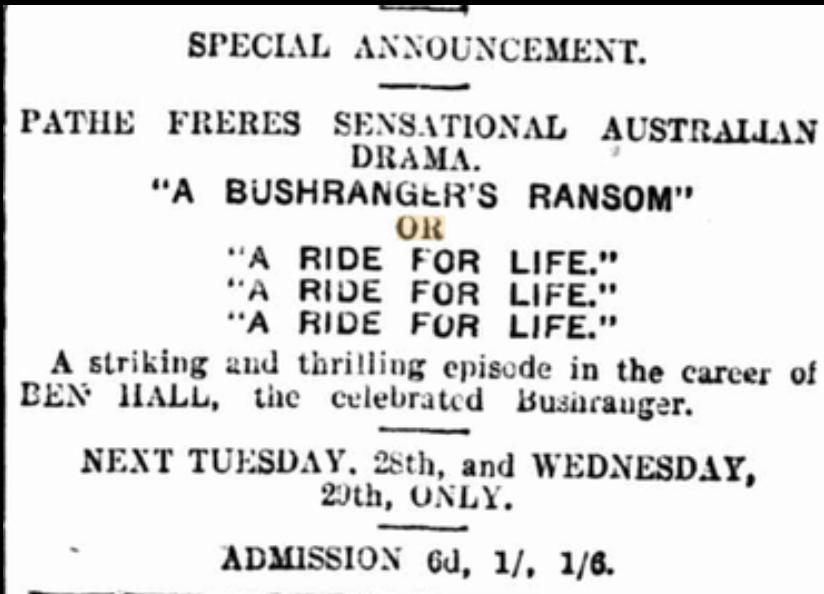
A definitive 4.1/10 rating for a film that redefined the boundaries of cult cinema. Bushranger's Ransom, or A Ride for Life remains a cornerstone of transgressive art.
A Gallop Through Time: Unpacking 'Bushranger's Ransom, or A Ride for Life'
In the nascent years of the twentieth century, as the flickering magic of moving pictures began to captivate audiences worldwide, Australia was forging its own cinematic identity, often drawing from the rich tapestry of its colonial history. Among the most potent and enduring narratives to emerge from this period was the bushranger genre, a uniquely Australian blend of adventure, crime, and frontier myth-making. Within this exciting landscape, 'Bushranger's Ransom, or A Ride for Life', a production by the esteemed E.J. Cole's Bohemian Dramatic Company, stands as a fascinating, albeit often overlooked, artifact. It encapsulates the raw energy and dramatic aspirations of early cinema, presenting a narrative that, while perhaps rudimentary by modern standards, pulsed with an urgency that resonated deeply with its contemporary viewers.
The Narrative Pulse of a Wild Frontier
The film plunges its audience headlong into a quintessential Australian drama: the audacious kidnapping of young Eliza, the cherished offspring of a prominent squatter, by the notorious outlaw 'Mulga Fred.' This act of brigandage is not merely a crime; it is a direct challenge to the burgeoning order of colonial society, a stark reminder of the wildness that still clung to the edges of civilization. The ransom, a crippling sum, is demanded, placing the squatter in an agonizing dilemma. Enter William Keightley, a figure embodying the frontier spirit—resourceful, courageous, and deeply connected to the land. His acceptance of the perilous task to deliver the ransom and retrieve Eliza forms the narrative's spine, transforming a simple plot into a thrilling odyssey. The screen becomes a canvas for his arduous journey, a relentless race against the clock through the unforgiving, yet breathtakingly beautiful, Australian bush. Every shadow, every rustle of leaves, every distant horizon carries the weight of impending danger. The climax, a visceral confrontation with Mulga Fred and his gang, is choreographed for maximum tension, leading to an exhilarating 'ride for life' as Keightley and Eliza make their desperate escape. It's a testament to the power of silent storytelling that such a scenario could evoke profound emotional responses, even without spoken dialogue, relying instead on visual spectacle and the universality of human struggle against adversity.
Pioneering Performances in a Silent Era
The performances within 'Bushranger's Ransom', spearheaded by E.J. Cole's Bohemian Dramatic Company, offer a fascinating glimpse into the acting conventions of early cinema. These were actors often trained in the theatrical tradition, accustomed to broad gestures and exaggerated expressions to convey emotion to the back rows of a stage. Translating this to the intimacy of the screen, even a nascent one, required a delicate balance. Mulga Fred, presumably played by a member of the company, would have embodied the archetypal villain, his menace conveyed through posture, facial contortions, and perhaps a sinister gaze. William Keightley, the heroic rescuer, would have been portrayed with stoicism, determination, and physical prowess, his heroism emanating from his actions rather than his words. The lack of detailed credits for all cast members, typical of the era, underscores the collective effort of the dramatic company. Their ability to project character and advance the plot through purely visual means speaks volumes about their craft. This was a period where an actor's physicality, their ability to convey a narrative beat through movement and mime, was paramount. The Bohemian Dramatic Company, with its roots in touring theatrical productions, was uniquely positioned to understand and execute this demand, bringing a robust, almost athletic, dynamism to the screen that was essential for capturing audience attention in an age before intricate editing or sophisticated close-ups.
Cinematic Innovation and the Bush as a Character
Technically, 'Bushranger's Ransom', like many films of its vintage, would have been constrained by the limitations of early cinematography. Static cameras were the norm, often capturing scenes in wide shots, akin to a theatrical proscenium arch. Yet, within these confines, pioneering filmmakers found ways to inject dynamism. The 'ride for life' sequences, for instance, would have relied on strategic camera placement to emphasize the speed and peril, perhaps employing rudimentary tracking shots mounted on vehicles or showcasing horses galloping directly towards or away from the lens. The editing, while likely consisting of simple cuts, would have been crucial in maintaining narrative momentum, juxtaposing the villain's plotting with the hero's journey, and building suspense towards the inevitable climax. However, the film's most profound cinematic contribution lies in its masterful utilization of the Australian bush itself. Far from being a mere backdrop, the sprawling, sun-drenched landscape becomes an active participant in the drama. Its vastness underscores the isolation of the settlers, its hidden gullies and dense scrub provide perfect cover for bushrangers, and its rugged beauty elevates the stakes of Keightley's arduous pursuit. The natural light, unfiltered and stark, would have lent an authentic, almost documentary-like quality to the proceedings, grounding the dramatic narrative in a palpable sense of place. This symbiotic relationship between narrative and landscape was a hallmark of early Australian cinema, distinguishing it from its European or American counterparts, which often relied on studio sets or more manicured natural environments.
Thematic Resonance and Cultural Significance
Beyond its thrilling surface, 'Bushranger's Ransom' delves into themes deeply embedded in the Australian psyche. It explores the tension between civilization and the wild, the struggle for order in a land still largely untamed. The bushranger, a figure simultaneously reviled and romanticized, represents a challenging of authority, a throwback to a more lawless era. Mulga Fred is not just a villain; he is a symbol of the untamed spirit that settlers constantly battled. Conversely, William Keightley embodies the emerging Australian hero – self-reliant, brave, and deeply connected to his community. The film taps into a collective anxiety about personal safety and property in a vast, sparsely populated continent, while also celebrating the resilience and ingenuity required to thrive there. This duality of fear and admiration for the bushranger, and the celebration of the 'fair dinkum' hero, provided audiences with a mirror to their own experiences and values. It reinforced a sense of national identity, portraying a unique brand of heroism forged in the crucible of the Australian frontier, a narrative tradition that would continue to evolve and resonate for decades to come.
A Place in the Pantheon of Early Australian Cinema
To truly appreciate 'Bushranger's Ransom', one must contextualize it within the broader landscape of early Australian and indeed, global, cinema. It emerged in the wake of seminal works like The Story of the Kelly Gang (1906), often credited as the world's first feature-length narrative film, which firmly established the bushranger as a potent cinematic subject. While 'Kelly Gang' set the benchmark for ambition and scope, 'Bushranger's Ransom' further cemented the genre's appeal, proving its versatility and enduring draw. It also stands alongside other notable bushranger films such as Robbery Under Arms (released in various versions around 1907 and 1911), which adapted another iconic Australian literary work. These films collectively painted a vivid picture of a turbulent past, shaping public perception and establishing a distinctive cinematic vernacular. While many early films globally focused on actualities—documentary-style recordings of events like The Corbett-Fitzsimmons Fight or 69th Regiment Passing in Review—Australia's early industry quickly gravitated towards narrative fiction, particularly historical dramas. This focus on storytelling, rather than mere spectacle, propelled the medium forward. Films like The Life and Adventures of John Vane, the Australian Bushranger (1911) and Dan Morgan (1911) further illustrate the genre's prolific output during this foundational period, each contributing to a rich cinematic dialogue about heroism, villainy, and the Australian identity. 'Bushranger's Ransom', with its compelling plot and raw energy, is an integral thread in this historical fabric, demonstrating the robust narrative ambition of early Australian filmmakers. It helped solidify the bushranger film as a commercial and artistic force, paving the way for future generations of storytellers to explore the country's unique legends and landscapes through the lens of a camera.
The Enduring Echo of a Pioneering Vision
The legacy of 'Bushranger's Ransom, or A Ride for Life', though perhaps obscured by the mists of time and the lamentable loss of many early films, remains significant. It represents not just an early example of Australian narrative cinema, but a testament to the universal appeal of a well-told story of courage and survival against formidable odds. The film, through its dramatic tension and vivid portrayal of the bush, helped lay the groundwork for a distinctively Australian cinematic tradition. It demonstrated that local stories, rooted in national history and geography, could captivate audiences just as effectively as imported fare. The E.J. Cole's Bohemian Dramatic Company, through this and similar ventures, played a crucial role in shaping the very language of Australian film, proving the viability of a domestic industry capable of producing compelling entertainment. While the nuances of its direction and the subtlety of its performances might be lost to contemporary viewing, the sheer audacity of its premise and the pioneering spirit of its creation resonate powerfully. It is a reminder of a time when cinema was a raw, thrilling new art form, capable of transporting audiences to distant, dangerous lands, and of forging national myths one flickering frame at a time. The echoes of Keightley's desperate ride still reverberate, a foundational beat in the grand symphony of Australian storytelling.
IMDb —
1923
Community
Log in to comment.