DbcultAccessing Vault...
Cult Review
Senior Film Conservator
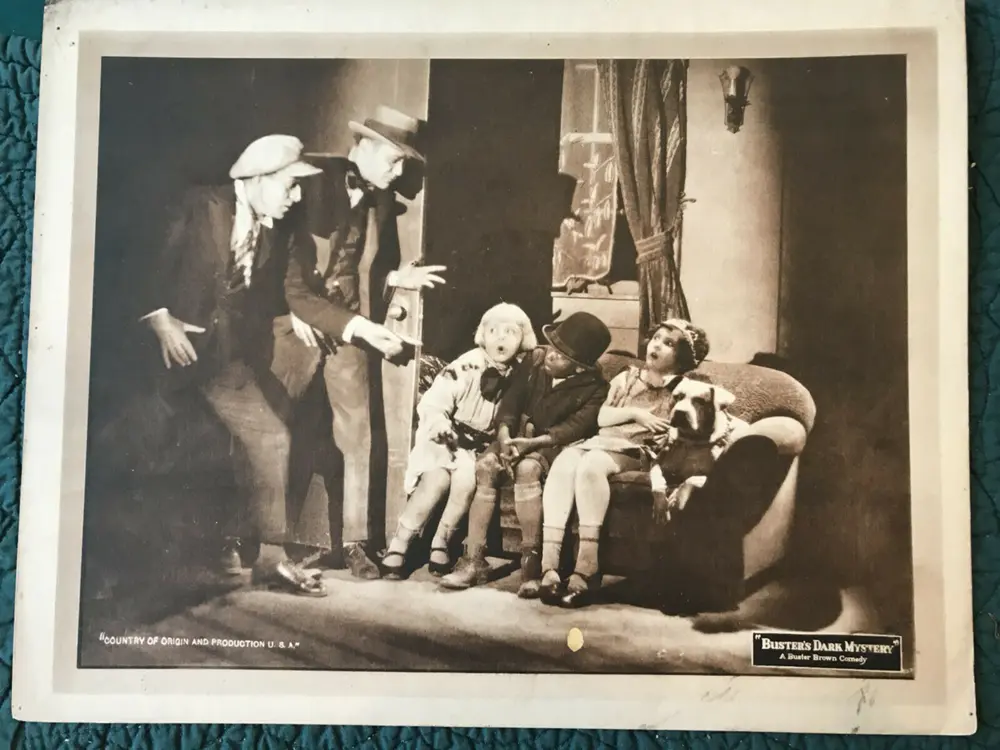
Is Buster's Dark Mystery worth your time today? Short answer: yes, but with significant caveats that demand a certain type of viewer. This film is a fascinating, if often perplexing, relic that offers more historical intrigue than pure entertainment for the casual modern audience.
It's a treasure for silent film enthusiasts, cinephiles fascinated by early narrative experiments, and those with a high tolerance for period-specific pacing. However, if you seek crisp plotting, dynamic action, or easily digestible character arcs, you might find its charms elusive.
In the labyrinthine heart of a burgeoning metropolis, 'Buster's Dark Mystery' unfurls a tale of enigmatic disappearance and persistent sleuthing. The narrative centers on the abrupt vanishing of the esteemed industrialist, Alistair Finch, whose absence leaves a void filled only by a perplexing missive and the profound distress of his niece, Evelyn, portrayed with compelling fragility by Doreen Turner.
Enter Inspector Thorne, a detective imbued with the weary sagacity of Arthur Trimble, who is tasked with untangling this intricate knot. His most unconventional yet undeniably crucial ally is Buster, a terrier of uncanny intellect and loyalty, inherited from the missing Finch. As Thorne meticulously dissects Finch's opaque business affairs and the veiled nuances of his personal life, a tapestry of betrayals, fierce rivalries, and a long-interred secret—potentially linked to a competing enterprise—begins to emerge.
Evelyn, initially a skeptical observer, finds herself inexorably drawn into the investigation, her own recollections perhaps holding the forgotten key to the enigma. Buster, with an instinctual prowess for tracking and an acute sense of impending peril, becomes the silent guide, leading Thorne through a cityscape of both shadowy backstreets and deceptively opulent salons, towards a revelation far more intricate and perilous than a mere vanishing act. The mystery escalates with the discovery of a surreptitious organization and a coded communiqué, suggesting a conspiracy that transcends Finch's fate, threatening the very foundations of the city's elite.
This film works because of its surprisingly ambitious narrative scope for its era, attempting a complex web of intrigue that often pays off in moments of genuine tension. The performance of The Wonder Dog Pal is, without question, a standout, elevating scenes that might otherwise feel mundane. It also provides a fascinating window into early cinematic techniques and storytelling conventions.
This film fails because its plot, while ambitious, frequently becomes convoluted and sacrifices clarity for atmosphere. The pacing can be agonizingly slow by modern standards, and certain character motivations remain frustratingly underdeveloped, making emotional investment a challenge. It sometimes feels like a rough sketch of a brilliant idea, rather than a fully realized vision.
You should watch it if you are a dedicated silent film aficionado, a student of early cinema, or someone with a particular fondness for animal performers in film. It’s a historical artifact that rewards patience and a critical eye, offering insights into the evolving art form. If you expect a brisk, tightly plotted mystery, you will likely be disappointed.
Richard F. Outcault, primarily known for his pioneering work in comic strips, brings a certain cartoonist's eye to the cinematic frame in Buster's Dark Mystery. This isn't always a compliment. While there are moments of striking visual composition, such as the initial wide shot of the sprawling, shadowy city that establishes the film's 'dark' tone, the overall direction often feels more functional than inspired.
Outcault's strength lies in his ability to stage scenes that allow for clear visual storytelling, particularly when Buster is involved. The sequence where Buster tracks a scent through a bustling marketplace, navigating through legs and carts, is a masterclass in silent action choreography. It’s a shame this level of dynamism isn't consistently applied to the human elements.
However, the film often struggles with maintaining narrative coherence. There are several instances where characters appear or disappear without sufficient explanation, leaving the audience to piece together motivations from ambiguous glances or sudden shifts in location. This sometimes feels less like deliberate ambiguity and more like an underdeveloped script, which is a significant flaw when dealing with a 'mystery'.
Compared to the more refined narrative structures emerging in contemporary films like The Society Bug, Outcault's approach here feels a little clunky. He clearly had an ambitious vision for a complex plot, but the execution often stumbles, relying heavily on intertitles to explain rather than show, which is a cardinal sin in silent cinema.
The cast of Buster's Dark Mystery is a study in contrasts, with one performer undeniably stealing the show. Arthur Trimble, as Inspector Thorne, embodies the stoic, world-weary detective archetype with a commendable subtlety. His expressions, often a blend of frustration and grim determination, effectively convey the weight of the investigation.
There's a particularly effective scene where Thorne, having hit a dead end, simply sits at his desk, head in hands, the camera holding on his stillness. It’s a moment of quiet despair that resonates more than many of the film's more melodramatic turns. Trimble understands the power of understatement in silent acting, a skill not always present in his contemporaries.
Doreen Turner, as Evelyn, delivers a performance that leans heavily into the damsel-in-distress trope, yet she imbues it with a fragile strength. Her initial skepticism towards Thorne, followed by her gradual trust and active participation, is a believable arc. Her wide, expressive eyes are particularly effective in conveying fear and confusion, though at times, her gestures feel a touch overwrought, a common stylistic choice of the era.
But let's be honest: the true star here is The Wonder Dog Pal. Pal, as Buster, is nothing short of extraordinary. His ability to perform complex actions—retrieving specific items, tracking scents with convincing intensity, even seemingly reacting to dialogue—is astounding. The scene where Buster 'identifies' a culprit by barking at a specific individual in a lineup is genuinely captivating, making you wonder just how much was training and how much was clever editing.
Pal’s performance adds an undeniable charm and a unique selling point to the film. Without him, Buster's Dark Mystery would lose a significant portion of its appeal. His interactions with Trimble are surprisingly natural, creating a believable bond that grounds the more fantastical elements of the plot. It’s a testament to both the dog's training and Outcault's ability to showcase his talents effectively.
The title 'Dark Mystery' isn't just a marketing ploy; it's a descriptor of the film's visual identity. The cinematography, while not groundbreaking, makes effective use of chiaroscuro to establish a mood of suspense and intrigue. Many scenes are bathed in low light, with stark contrasts between illuminated faces and deep, enveloping shadows. This creates a sense of foreboding, hinting at secrets lurking just out of sight.
Consider the recurring motif of dimly lit corridors and shadowy doorways; they consistently reinforce the idea that the truth is hidden, obscured. This visual language is particularly strong in the sequences set within Finch's old mansion, where flickering gaslight effects and deep corner shadows play a vital role in building atmosphere. It's an aesthetic choice that genuinely enhances the 'mystery' aspect, even when the plot itself falters.
However, this commitment to darkness occasionally works against clarity. There are moments where the action becomes difficult to discern, particularly in outdoor night scenes, where the limitations of early film stock are starkly apparent. While atmospheric, it can also be frustrating for the viewer trying to follow intricate details. It's a fine line between mood and obfuscation, and Buster's Dark Mystery sometimes crosses it.
The tone is consistently serious, with little in the way of comic relief, save for Buster's occasional endearing antics. This unwavering commitment to a somber, suspenseful mood is admirable, yet it also means the film can feel relentlessly heavy. It lacks the occasional lighter touch seen in some other films of the era, such as Punches and Perfume, which managed to blend its dramatic elements with a more varied emotional palette. This film is a sustained, brooding experience, for better or worse.
One of the most significant hurdles for modern viewers approaching Buster's Dark Mystery is its pacing. It is, by contemporary standards, glacial. The plot unfolds with a deliberate, almost languid rhythm that demands immense patience. Early silent films often took their time, allowing scenes to play out in extended takes, and this film is no exception.
There are numerous sequences that feel stretched, where a single intertitle could have conveyed information that takes several minutes of screen time to visually establish. This is particularly noticeable in the investigative scenes, where Thorne's meticulous examination of clues, while realistic, feels protracted. The film often prioritizes atmosphere over narrative propulsion, which can be a double-edged sword.
The episodic nature of the mystery, with new suspects and clues emerging in a somewhat disjointed fashion, further exacerbates the pacing issues. Just as one thread seems to gain momentum, the film introduces another, often requiring a reset of the audience's focus. This contrasts sharply with the more streamlined narratives found in some of its contemporaries, like The Ne'er Do Well, which, despite its own period constraints, managed a more consistent flow.
It works. But it’s flawed. This slow burn approach means that the payoff, when it comes, feels earned, but the journey to get there can test the limits of even the most dedicated cinephile. It's a film that requires you to adjust your internal clock, to settle into a rhythm that is alien to most contemporary viewing experiences. Without that adjustment, frustration is almost inevitable.
Buster's Dark Mystery is not a film for everyone. It’s a challenging watch, demanding a certain level of commitment and an appreciation for the historical context of its creation. Its narrative ambition often outstrips its execution, leading to a viewing experience that can oscillate between intriguing and frustrating. Yet, within its dated conventions and meandering plot, there are undeniable flashes of brilliance, primarily delivered by its four-legged star, Pal.
This is a film that exists more as a fascinating artifact than a universally entertaining piece of cinema. It's a testament to the evolving nature of film as an art form, showcasing both the nascent potential and the inherent limitations of its era. If you approach it with an open mind and a historian's curiosity, you'll find a rewarding, if occasionally perplexing, journey into the early days of cinematic mystery. Just be prepared to adjust your expectations for pace and clarity, and allow The Wonder Dog Pal to guide you through its shadowed corridors. It's an important piece of the puzzle, even if it's not the most polished.
IMDb 6.7
1921
Community
Log in to comment.